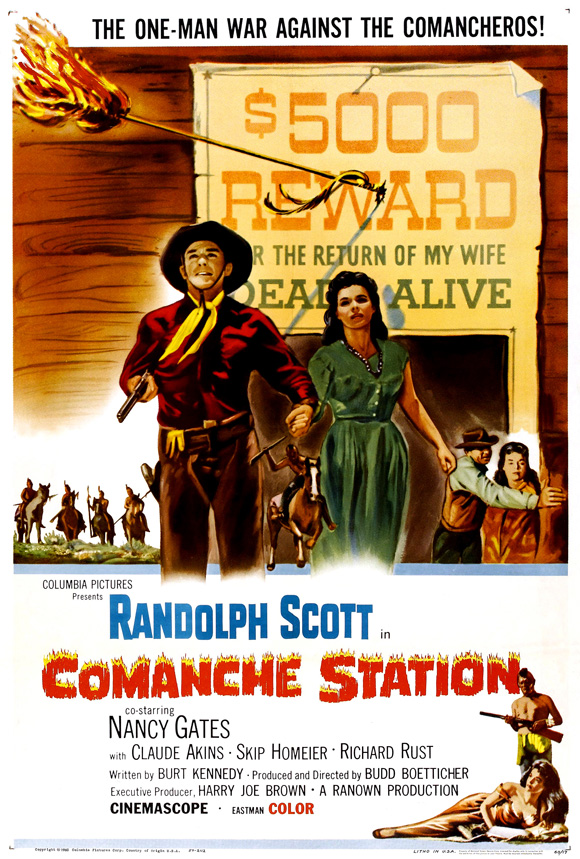
Well, tomorrow is the big day — five of the Randolph Scott/Budd Boetticher Westerns are going to be released on DVD for the first time, including Boetticher's masterpiece Comanche Station. The box set will mark a major moment in American film culture — a chance for many to see these extraordinary films for the first time. Though not as profound as Ford's Westerns, spiritually speaking, Boetticher's oaters are almost as exquisite cinematically, though in a subtle, quiet way. They're largely about the way men, on horseback and on foot, move through landscapes, inhabit space, and how this activity reveals who they are and what they're about. On that level they're examples of pure cinema, since only cinema can operate on that level.
Apparently there's some sort of election going on tomorrow as well, which will also be worth paying close attention to. I've posted a link to this clip before, but give it another look as we await the morrow's events:
This is Bob Dylan, joined by Joan Baez, singing Dylan's song at the march on Washington, 28 August 1963, the occasion of Martin Luther King's “I Have A Dream” speech. In the song, Dylan, twenty-two years-old, envisions, like King, a time when the dreams of the civil rights movement will be fulfilled. Like King, also, he draws on Biblical imagery, on the rhetoric of prophecy, which alone seemed appropriate then to such awesome hopes, bucking such awesome tides.
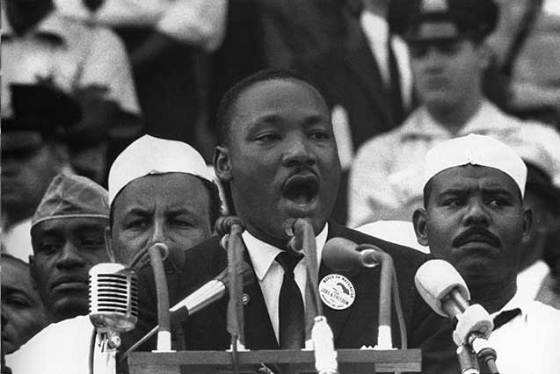
Today, the hour when the ship comes in may feel as though it was always inevitable. Back then, it was only proclaimed with assurance by voices crying in the wilderness, by those who put their strongest faith in God's justice, not man's. The times when the two converge are rare, times of jubilee.