
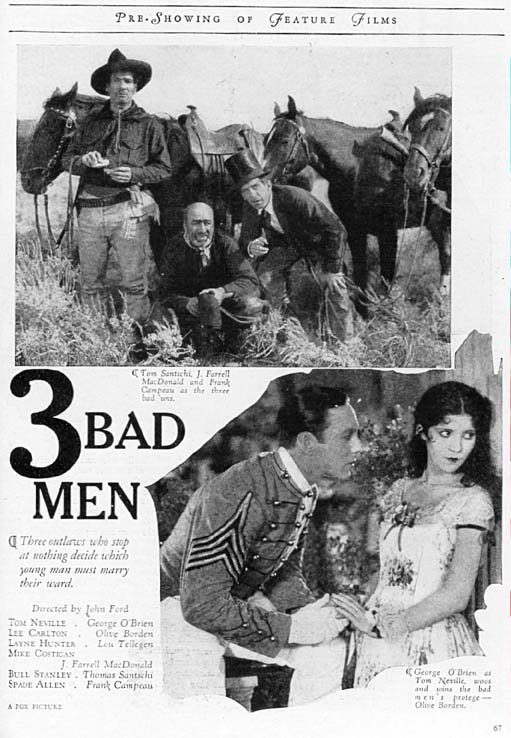
[Caution — this post contains plot spoilers.]
In
modern-day Hollywood it's fashionable to analyze drama in terms of
“character arc”. A character starts off a tale with a problem
which he or she must then develop the skills and inner resources to
solve, and this development follows a chartable arc. I think
corporate executives are drawn to this model of storytelling because it
reminds them of the charts and case studies they used in business
school — it reduces human experience to something resembling the
problem of growing a business or maximizing profits.
The model is useless, of course, for understanding the actual life
experiences of human beings or the great stories and dramas in the art
of the past. Achilles has no character arc, neither does
Hamlet. They both undergo various experiences which sometimes
reveal their characters, and sometimes make their characters seem
hopelessly mysterious. Neither of them “solves” anything.
The character arc model is particularly useless for analyzing the films
of John Ford, which are full of characters who suddenly do complete
turnarounds, often without the slightest explicit motivation — the
most famous case in point being Ethan Edwards in The Searchers.
Their “arcs” are unchartable, mysterious — they raise more questions
than they answer, but the questions are ones of profound interest . . .
they provoke moral thought in audiences.
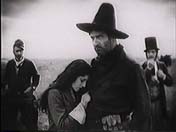
In 3 Bad Men, a silent film by
Ford from 1926, three criminals are suddenly converted into saints by a
young woman who mistakes them for heroes, and from that moment on they
behave like heroes, and in the end sacrifice their lives for her.
Such a tale would never make it past the first story conference in
Hollywood today. The film would have to spend most of its length
working up to that moment of conversion, showing the conflict within
the men as they struggled with the decision to be good.
Instead, Ford presents us with a mystery up front, and lets us spend
the rest of the film wondering what it means. For Ford, the
answer lies somewhere in the realm of the moral, the spiritual, the
religious. This is a realm not studied in business schools, not
relevant to ordinary business practice, and thus meaningless to the
corporate executives who run Hollywood today. In modern corporate
culture, which is Hollywood's culture, moral issues are covered by
charitable contributions, perhaps by a dedication to ethical behavior
or to worthy political causes. The issue of saving souls does not
arise.
But the saving of souls is what Ford's films most often concern, which
involves positing the existence of souls in the first place. 3 Bad Men
suggests that the worst of men have souls and are just waiting for a
chance to save them — just waiting for a call to goodness. And
it further suggests that goodness is not always approached on paths
with chartable arcs. Sometimes goodness descends on men like a
dove and changes them in an instant.
We may cheer when the hapless nerd grows his business or maximizes his
profits against all odds — but the bad men in Ford's movies,
unaccountably redeemed, make us cry. It can be argued that they
also make us wise in the actual ways of the human heart.
[With thanks to the Silents Are Golden web site for the images above.]