THE WIZARD OF OZ

Poster for the 1902 stage musical, which had at least as much influence on the 1939 movie as the books they were based on.

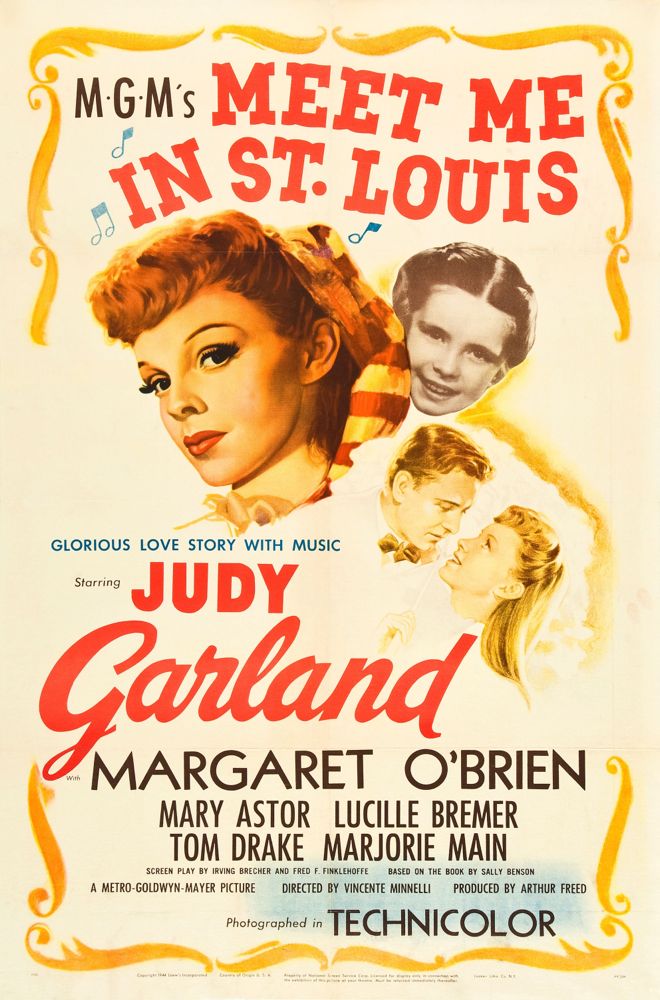
Many of the musicals Arthur Freed helped create at MGM were derived from the theatrical world of his youth, which he delighted in magically summoning back to life.  He would have been eight in 1902.  He would have been ten in 1904, the year in which Meet Me In St. Louis is set.

Click on the image to enlarge.

SUBLIME CINEMA

Click on the image or here to see something amazing.

This lip-dub musical number was staged as a surprise wedding proposal. As a gesture it’s heartbreakingly beautiful, but its also an exhilarating piece of cinema — it works because it’s all done in one shot, the performance tension just builds and builds, instead of getting dissipated in hysterical Baz Luhrmann or music video cutting. Hollywood once understood the power of elaborately choreographed musical numbers done in long takes — Busby Berkeley and the Freed Unit at MGM specialized in them — and people are still drawn to them, only now they have to make them themselves, because Hollywood is currently run by idiots.

This video will go viral because it’s so joyful and astonishing — the Hollywood mediocrity machine will take no notice.

PROMISES, PROMISES

My friends Mary and Paul Zahl made a lightning raid on New York City recently (from Florida!) to see the Broadway revival of Promises, Promises.  Here is Paul's report on the show:

LITTLE NOT BIG, THEREFORE BIG


I think critics make a mistake when they bring ideology to a production
of the theater.  In the case of the new revival of the 1968 musical
Promises, Promises
by Burt Bacharach and Hal David, with book by Neil Simon, a lot of
ideology has flowed out on paper.  A lot of energy has flown, for
example  to the performance of Sean Hayes, the lead actor, and whether
a gay actor can portray a non-gay hero.

Energy has also flown to the attitudes, within the story, concerning
relationships in the work place between men and women, attitudes that
are supposedly typical of the 1950s and early 1960s and no longer of
today.  (The musical was written and first performed in 1968, although
it is closely based on Billy Wilder's 1960 film The Apartment,  which he co-wrote with I. A. L. Diamond.)

As I say, a lot of present-day ideology has become involved in the
critical reception of this Broadway revival of
Promises, Promises.  No
matter that, however, Variety reports that
Promises, Promises is a
commercial success.  The weeknight performance my wife Mary and I
recently attended was sold out, not one empty seat; and the audience
was overwhelmingly appreciative, interrupting the show frequently and
offering the cast a long standing ovation at the end.

For myself, Promises, Promises is a little story, about a “little guy”
who wins the girl — because he really loves her and doesn't use her –
and therefore a big story.  In drama, so goes my notion, when a
personal story is well and compassionately told, that story becomes a
big story.  On the other hand, attempting to weight a personal story
with ideology, especially pre-conceived ideology, diminishes the
attempt.


Promises, Promises
narrates the disillusionment of a “little guy” at
Consolidated Life, whose crush on a “little” fellow employee turns out
to be a crush on the mistress of his married boss.  C. C. Baxter's sweet
and selfless crush on his “angel in the centerfold” ( reluctant
mistress to the unscrupulous Mr. Sheldrake) is crushed in the first
act, and on Christmas Eve!  However, when Miss Kubelik tries to commit
suicide out of her own disillusionment with Sheldrake — after a sorry
tryst in C. C.'s apartment — things both fall apart and come together. 
Baxter shows real love for his true love, who seems hopelessly and all
the time in love with another man.  With the merciful intervention of a
kind and honest doctor who lives next door, together with C. C.'s urgent
rising to the occasion of her overdose, Miss Kubelik rises from the
dead, or the near dead.

This love from a real and kind man, C. C.
Baxter, as compared with the cynicism and selfishness of boss
Sheldrake, touches her, and finally wins her heart.  The curtain “clinch” is credible, unsentimental, and very, very touching.  It is
made even more credible by the reprise, this time with a positive
vibe, of Bacharach and David's famous song “I'll Never Fall in Love
Again”.

Why does the audience cry at the end?  Why was the applause sustained
and very loud?  Why did the people leave moved, and happy?  I think
it's because the love of C. C. Baxter and Fran Kubelik is a universal
story enacted within a particular case.  C. C. wins Fran.  He saves her
life, both physically and emotionally; and at the very moment when her
long, passionate, hopeless affair with Sheldrake is exposed — at the
very moment!  This is a little story about little people.  It is
therefore big.  Why?  Because it's about everybody.  Everybody knows
about the little guy.  Almost everybody, male and female, is now or has
at some point been the little guy.  It comes with being born.


There are a lot of theatrical touches to
Promises, Promises that are
worthy of comment.  The notorious Christmas Party song entitled “Turkey
Lurkey Time” is a number people seem either to hate or love.  Mary and
I happen to love it.  I think we could say we LOVE it.  “Turkey
Lurkey Time” is just so unusual.  Is it about men being turkeys?  Mary
thinks so.  Is it about the Christmas turkey, soon to lose his head? 
Well, yes.  Is it a song about the sheer euphoria of Christmas revelry
and drunkenness?  Yes, too.  Is it a smashing production number with
great ensemble dancing and an unpredictable finish?  Yes, that, too. 
Anyway, “Turkey Lurkey Time” has to be seen and heard to be believed;
and I, for one, am still singing it.  (I made a mistake in the lobby at
the end, as we were leaving the theater.  I was too cheap to buy the T-shirt of “Turkey Lurkey Time”, with snowflakes against a brown
background.  Heaven: and I missed it.)

Then there is the unexpected moment of compassion for the “villain”,
J. D. Sheldrake.  He sings a song entitled “Wanting Things”, about his
compulsion for wanting things he cannot have.  The subject of the song
is what theology calls “concupiscence”.  As he tolls his confession,
shadows of the several women in his life, all in scarlet but
half-hidden by the lighting, approach him, then slowly walk away, and
vanish.  The number is haunting, and also even-handed.  No person is
completely a villain.


The producers of
Promises, Promises have added two songs from the
Bacharach-David repertoire to their revival of the show.  One of them,
“A House Is Not a Home”, has to be one of the great American pop
songs.  Both lead characters, Fran and Chuck (C. C.), sing it in
separate contexts, at different points in the narrative.  It is almost
unbearably affecting.  The actress Katie Finneran
(above) also has a star turn
as Marge MacDougall, the woman Chuck picks up in a bar on Christmas
Eve just after he has learned the truth about Fran's affair with
Sheldrake.  Critics of the show who panned it otherwise, mostly for
ideological reasons of one kind or another — you can adore
Mad Men
but you can't say a good word about
Promises, Promises — loved Katie
Finneran's extraordinary scene.  You have to agree with the critics
about the scene, and the actress.  But it's also true that Sean Hayes,
the lead, reveals a comic brilliance and timing as C. C. Baxter; and
Kristin Chenoweth has a lovely voice and compelling stage presence. 
(To me the actress seems a little petite for the role, given the
slightly tough persona she is supposed to have.)

Two other things to mention:


The character of Dr. Dreyfuss is played by Dick Latessa
(above, with Chenoweth and Hayes), who puts this
role on the map.  Dr. Dreyfuss is the physician/wise man/priest of the
play and even invokes God, sincerely, in a moment of crisis.  Also, the
number, “Where Can You Take a Girl?”, which is reprised twice by an
enthusiastic quartet of young executives, is comic and even slapstick. 
We would wish to believe that the kind of thinking expressed in the
song doesn't take place any more.  But it does, whatever one's moral
judgments are.  It's just that today the targets are not “secretaries” but “part-time staffers”, or “interns”, or “campaign workers”, of both
sexes.  “Where Can You Take a Girl?” is a spoof.  Everyone in the
audience laughed, even if they didn't quite want to.

Visually, the play is saturated in early '60s office decor. (Think
kidney-shaped ash trays.)  The art direction reminded me of Frank
Tashlin's 1957 Will Success Spoil Rock Hunter?.  But the props don't overwhelm the story and the music.  The
choreography is terrific.  The dancers and their costumes look right to
the period, and they're not small bodies.  Yet there are also not too
many of them.  The high points of the dancing occur at the very
beginning of the play and during “Turkey Lurkey Time”.  (As far as I am
concerned, you could almost rename the show “Turkey Lurkey Time”, that
song is so eccentric and memorable.)


Mary and I had a blast.  It's rare you do something on an impulse –
like getting on a plane within a few hours of deciding to go, with the
sole purpose of seeing one show you hope you're going to like — and it
works. 
Promises, Promises works.  It works on almost every level.  If
you are going to take offense — at anything — on purely ideological
grounds, I guess you could infer something you didn't like.  That may
be true of almost any piece of popular art.   But I think it would be
doing an injustice, here, to the combined talents of Billy Wilder and
I.A.L. Diamond, of Burt Bacharach and Hal David, of Sean Hayes and
Kristin Chenoweth, Dick Latessa and Katie Finneran; and of Neil Simon. 
Together they bring together a story of a little yearning man and a
little beat-down woman (Kerouac's understanding of a “beat-ness”),
whose love affair becomes a big story.

JUST BEFORE JAZZ

Thomas Riis's fascinating book Just Before Jazz examines the influence of black composers and performers on American musical theater between 1890 and 1915 — that is, just before the era in which the modern book musical began to take shape.

The songs of black composers were very similar in many ways to the popular songs written by white composers, even the white composers of operettas.  A number of black composers in this period (like Will Marion Cook, below) were highly sophisticated, classically trained musicians, capable of writing and performing in any style.  (Many of them were “slumming” in popular theater because of barriers to their involvement in more refined areas of practice.)

What distinguished their work was the incorporation of the sort of syncopations found in ragtime, which became a popular sensation around the turn of the century.  Their work didn't emphasize such syncopations to the degree that ragtime did — they were more like stylistic inflections — but they thrilled audiences of the time.

Among the most popular songs in this period, an astonishing percentage were written by black composers, and they included not only minstrel-type songs but ethnically neutral ones.  It was the purely rhythmic lilt that made the difference.

Almost all of these songs were first done for musical shows originating in New York City, often in Broadway productions, leading Riis to argue that black composers bear the primary credit for introducing black musical strains into the American musical.  Berlin and Kern and Gershwin weren't “reaching down” into an exotic black musical culture for inspiration — they were responding, artistically and commercially, to developments in the world of musical theater all around them.

You have to wonder why these black composers aren't better known today.  Partly it's because the lyrics of many of their songs are offensive to modern ears — the “coon song” was a typical genre, with its caricatures derived from minstrel shows.  As black songwriters became more powerful, however, they toned down the uglier aspects of these caricatures, leaving stereotypes comparable to those attached to other ethnic groups like the Irish and the “Dutch” (as Germans were once called.)  These stereotypes aren't congenial to our present tastes, perhaps, but they aren't exactly vicious, either.

More importantly, these black composers failed to achieve wider celebrity, and failed to enter our cultural memory, because they could not participate fully in the flowering of musical comedy in the later decades of the 20th Century.  Their songs were bought and performed by white performers in vaudeville, were sometimes interpolated into shows with white casts and were disseminated nationally via sheet music, but in the theater, they wrote primarily for all-black shows.  Broadway had a place for such shows, but it was a limited place.

Black composers were very rarely hired to provide complete musical programs for shows with white casts — they never became part of the mainstream of producers, musicians and writers who created the ordinary run of Broadway musicals.  White composers adapted the style of their black peers within an establishment that stayed predominantly white.

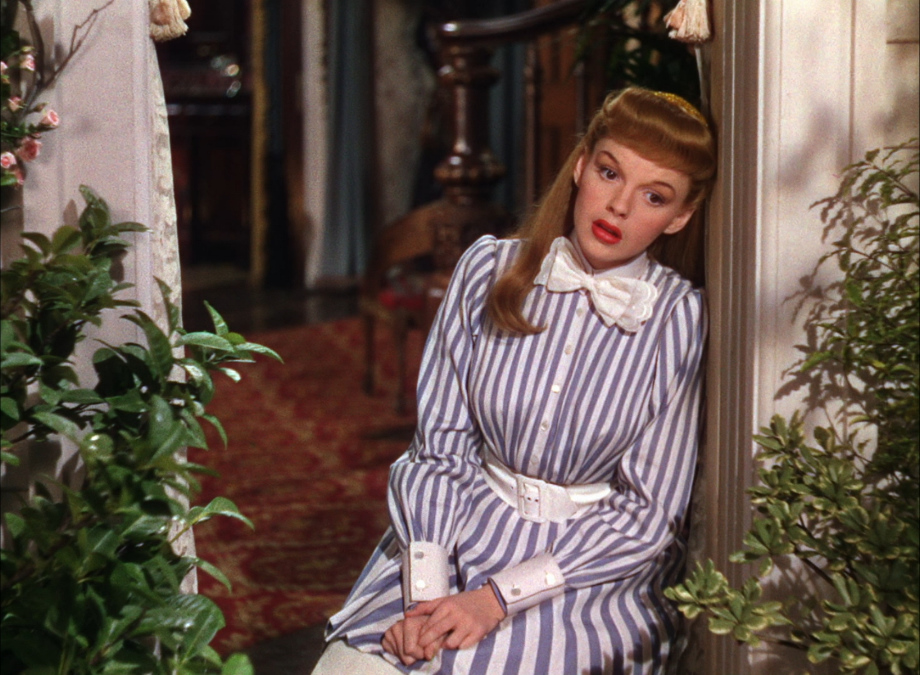
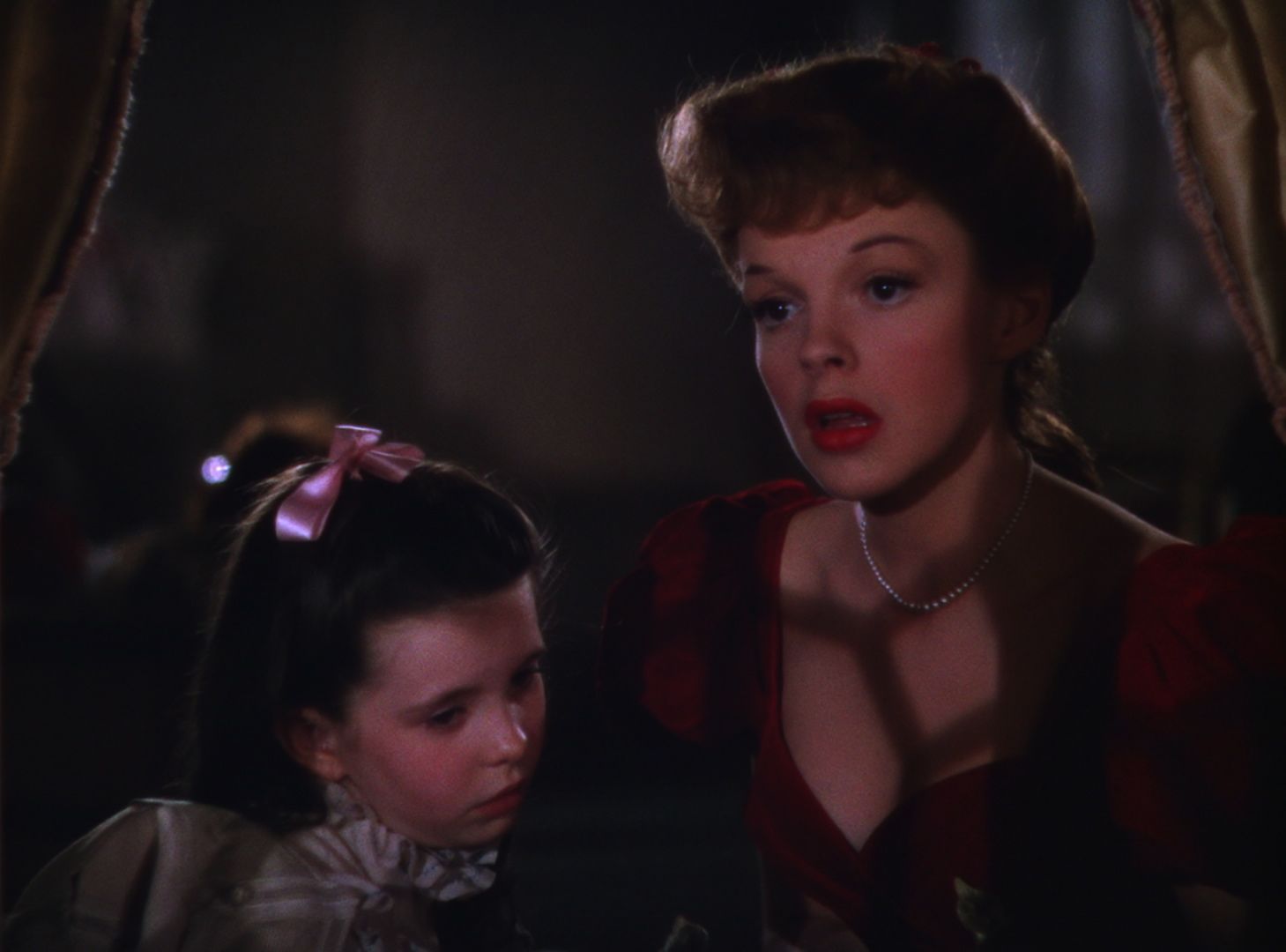
So today, when we hear Judy Garland and Margaret O'Brien singing “Under the Bamboo Tree” in the movie musical Meet Me In St. Louis, we likely have no idea that this song, a monster hit in 1903, with a tune that is still familiar and still infectious, melodically and rhythmically, was written by three black men, James Weldon Johnson, his brother Rosamond Johnson and Bob Cole.  Below, a portrait of Cole and Rosamond Johnson:

But the past, of course, as an old Russian saying has it, is always unpredictable.

A ROOM SOMEWHERE

I'm a child of rock and roll.  The first song I remember hearing on the radio, when I was seven years-old, was Elvis Presley's “All Shook Up”.  I don't have a distinct memory of hearing “Hound Dog”, which came out a year earlier, on the radio but I remember some of the cultural fall-out it caused.  I lived in a tiny town in rural North Carolina at the time, and a kid in my first-grade class who lived on a nearby farm brought his guitar to school one day and played the song for us.  I guess it was the first time it dawned on him that knowing how to play the guitar might be seen as a cool thing by his peers.

I remember seeing Elvis perform the song on the Ed Sullivan show, later that year.  A year after that, Jailhouse Rock was the first movie I was ever allowed to go see at night.

I can't say, though, that any of Elvis's songs got to me at that age.  They were just part of the landscape — part of the soundtrack of everyday life.  I didn't really start to appreciate Elvis until I was in my twenties, and didn't own recordings of any of those early hits until then.

The first popular music that got to me came on an LP record.  It was the first LP record my family ever owned, bought to play on our first record player, which my dad brought home as a surprise one day in 1956 and which looked something like this:

It's possible that the LP came with the set, but more likely that my dad bought the player so he could listen to the LP.  It was the Broadway cast recording of My Fair Lady.

This LP was even more popular than Elvis's LPs back then — the My Fair Lady cast recording still holds the record for the most weeks on Billboard's top forty charts.  If my dad bought our first record player just so he could hear it, I'm sure he was doing what tens of thousands of other Americans were doing at the same time.

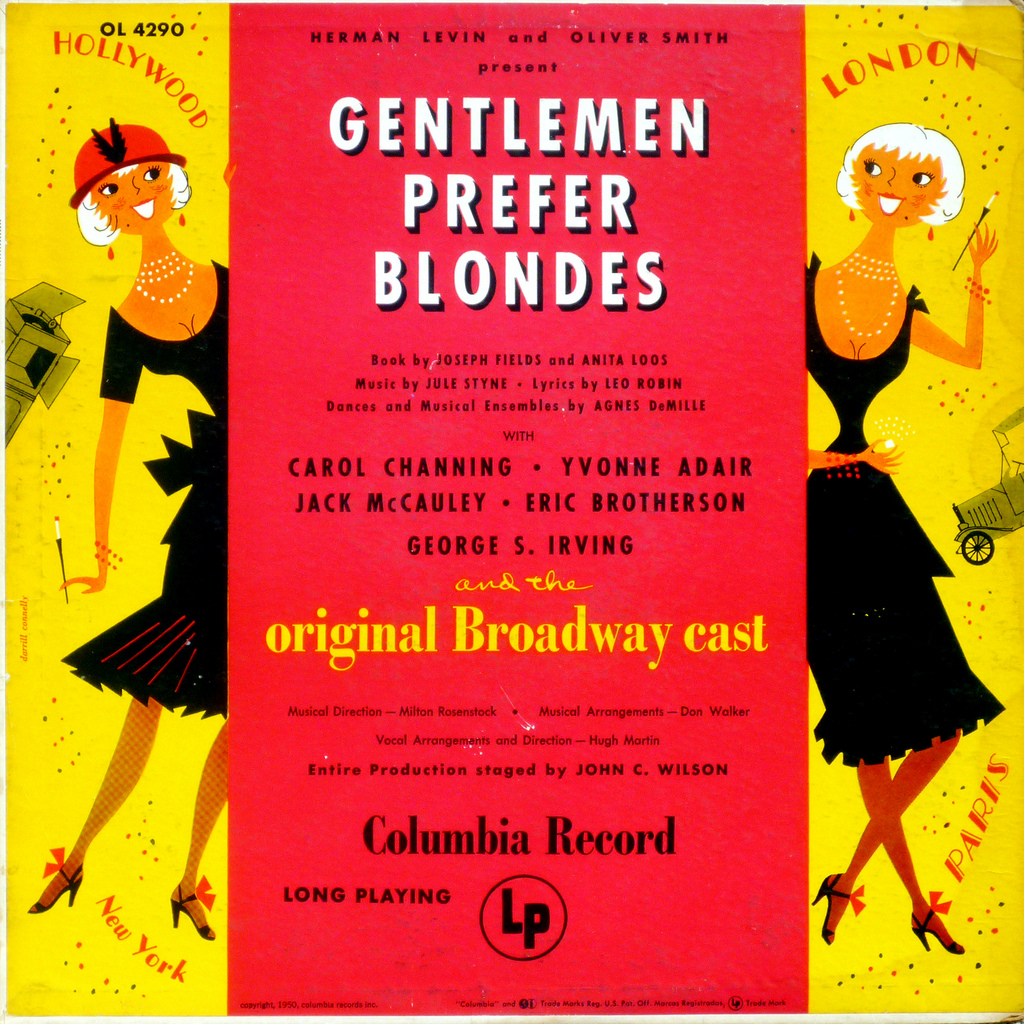
The extended-play LP — which could fit 26 minutes of music on a side — was only four years old in 1956.  It was developed primarily to fit all the songs from a typical musical on one record, and it was the cast recordings of popular musicals like Kiss Me Kate and My Fair Lady that really established the format.

My dad loved the recording of My Fair Lady and played it over and over.  The song I remember him liking the most was “A Hymn To Him”, with the refrain “Why can't a woman be more like a man?”  The song that got to me was “Wouldn't It Be Loverly?” with its sweet melody and its air of longing:

All I want is a room somewhere,
Far away from the cold night air,
With one enormous chair –
Oh, wouldn't it be loverly?

I'm not sure what I might have been longing for back in those happy times, but the feeling of it struck a chord.

My family always bought the recordings of the big hit Broadway shows — The King and I, Flower Drum Song, Camelot, The Sound Of Music, Funny Girl.  I always loved them, played them over and over, found myself touched by the ballads in particular.  For all that, I never thought of Broadway show tunes as “my music” — when I got to the age when I could choose my own records to buy, they were records of folk and then rock music.  The show tunes were just hidden away somewhere in my heart . . .

. . . until one day, very late in life, I realized what they'd meant to me, what good companions they'd been, what good companions they are and always will be.

“Wouldn't It Be Loverly?” from that 1956 LP still takes me back with uncanny efficiency to the den in my family's house in Belhaven, North Carolina where I first heard it at the age of six.  No other version of the song does this.

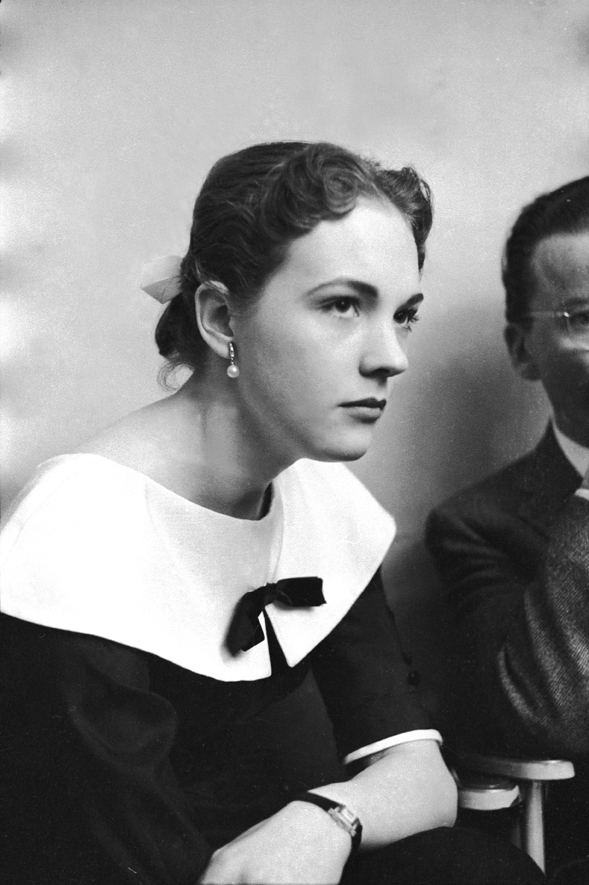
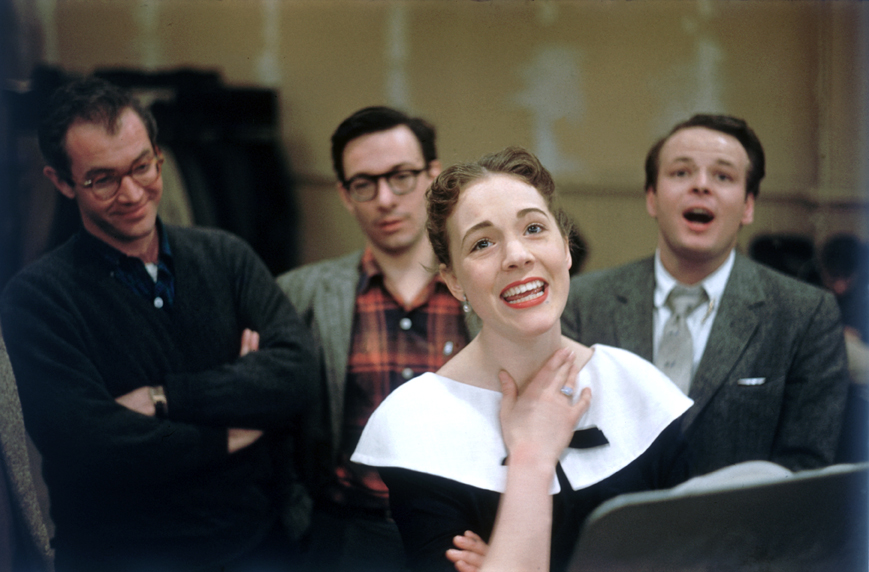
Julie Andrews, by the way, was only twenty years-old when she recorded it: