LOUISE BROOKS

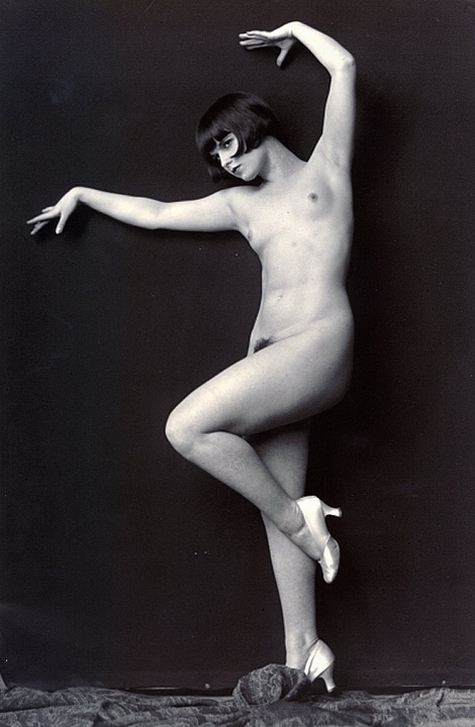
2006 marks the 100th anniversary of Louise Brooks’s birth.  It’s been
celebrated by the release of a cool new picture book about the star,
“Louise Brooks: Lulu Forever”, by Peter Cowie, and a special DVD
edition of her most famous film, “Pandora’s Box”, put out by Criterion,
with lots of extras.


Brooks was, like Garbo, a creature who had her being on film — her way
of moving through cinematic space could transcend the films that tried
to contain her, transcend the normal conventions of “screen acting”.
Early in her career she played second lead in a mediocre comedy called
“The Show Off”.  She doesn’t seem to be part of the film at all — she
looks like someone who has wandered onto the set while the cameras were
rolling and decided to stay and observe the curious behavior of the
people around her.  She appears to have found this behavior only
vaguely amusing, and in this delivers a wise critique of the film from
within the film itself.  The effect is bizarre.


G. W. Pabst used her uncanny mixture of detachment and sensuality to
brilliant effect in “Pandora’s Box” — he was one of the few directors
who seems to have realized that a film had to defer to her phenomenal
screen persona or risk evaporating around her.  It’s a film you should
watch at least once this year.

Happy birthday, Lulu.
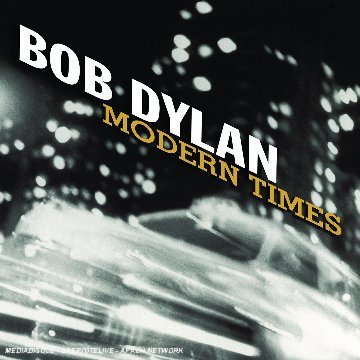
MODERN TIMES

Bob Dylan’s new album “Modern Times” sounds as though it was made by people playing musical instruments, by a man singing with his voice, all in
some sort of space that might actually be encountered in the real
world. This is very unusual in modern popular music, and you might call
it revolutionary, even though it harks back to the sound of recorded
blues, rhythm & blues and rock & roll well into the 70s. (A
sign that the album’s title might be ironic is that its cover sports a
black-and-white photograph from the Forties.)

Beginning in the 70s, popular music began to take on what Theodor Adorno would have called a “phantasmagorical” quality — a process which he
explained in terms of the modern commodity culture, which tends to
produce objects which do not easily reveal how exactly they were made.
The commodity seller benefits from this because it obscures the fact
that he himself has not made the object he’s selling but appropriated
the labor of others to make it (perhaps unfairly.)

Adorno saw the same process at work in the music of Wagner, where a great wash of sound enchants us away from an appreciation of the fact that the
music is produced by individual musicians playing individual
instruments. (Stravinsky, who hated Wagner’s music, once wrote
passionately against the practice of listening to live music with one’s
eyes closed — he felt that one should never forget the physical
process of making music.)

R & b and rock sounded revolutionary in the Fifties quite apart from
their raucous beats and suggestive lyrics — they sounded revolutionary
because they sounded as though they were made by individual musicians,
not by workers in corporatized music factories. But with the rise of
disco and synthesizers and multi-track recording in the 70s, all fine
things in themselves, the recording industry had tools for resubmerging
individual performance into a corporatized “sound”. It commodified rock
and roll — made it phantasmagorical, in Adorno’s sense.

For some reason hard to fathom, “Modern Times” debuted at #1 on Billboard’s
charts and has been one of Dylan’s most successful albums ever. Perhaps
it’s attributable to the nostalgia of baby-boomers, hearing music that
takes them back to the golden age — perhaps it’s attributable to
younger listeners having their ears and minds opened up by something
that sounds different, new.

Most likely it’s a combination of the two — part of the old rascal Dylan’s strange alchemy whereby old forms and old language are somehow deconstructed and recombined to reflect the peculiar aura of the present moment.

TOURNAMENTS


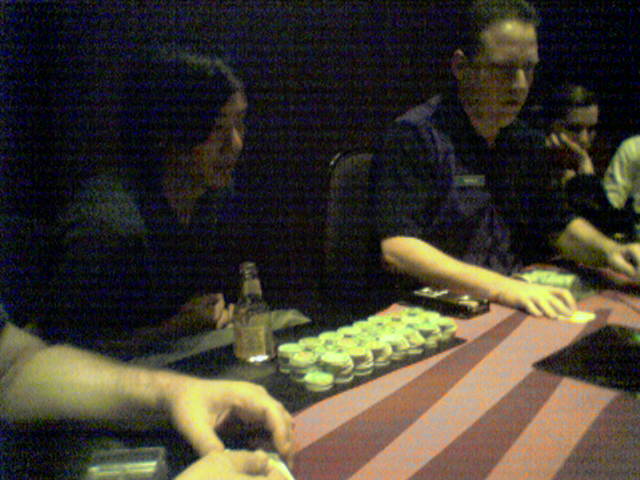
My friend Jae has been in town recently, visiting from Brooklyn, and
we’ve been on a mini poker marathon.  Neither of us had been doing too
well until we discovered a cool little no-limit Hold-’em tournament at
the Fiesta in North Las Vegas, held nightly at midnight.  The card room
at the Fiesta is one of the last places in Vegas which allows smoking
around the clock, which means that it attracts a better sort of player,
cheerful, tolerant, democratic in a style you don’t find much in
American society today outside of casinos.

There are usually about thirty players who sign up for the tournament,
many of them regulars.  The buy-in is $25, with an optional $10 re-buy
at the break.  We’ve played it four times now — each time Jae has made
the final table but never cashed until last night, when he went out in
4th place and got his buy-in back.  (Only the last three players are
guaranteed prize money, but when it gets down to the final four there’s
a tradition of voting to reimburse the buy-in of the player who goes
out in 4th — which has the effect of speeding up the game at a stage
when everbody is playing super tight to avoid finishing one out of the
money.)


On the first three nights I busted out about halfway through the
tournament but last night I made the final table with Jae — was chip
leader at about 3am when my two tablemates urged that we split the
potential prize money three ways then and there so they could go home
and get some sleep.  I agreed reluctantly, but they were nice guys and
it seemed like the friendly thing to do.


I won $218 as my share of the prize money, my best take ever at a poker
session.  I got amazingly good cards all through the tournament, and
one miracle river card when I was close to all-in, but I played the
cards well and didn’t make any calamitous boneheaded blunders.

It was a sweet night.

HELLHOUNDS ON MY TRAIL

In the wake of the Nevada smoking ban I feel a bit like Nathan Bedford
Forrest after the surrender of the Confederate armies in 1865. Riding
along with a companion, Forrest reached a crossroads. “Which way?” his
companion asked. “Sir,” said Forrest, “if that road led to Mexico and
the other to Hell, I wouldn’t much care which one I took.”

Since I also feel that there are hounds from Hell on my trail, sick, vicious
duppies driving me from home to home, refuge to refuge, I’m inclined to
think that Mexico might be the better of Forrest’s alternatives. It’s
where Americans have often gone to lick their wounds and get their
bearings again after the world collapsed around them.

I find my spirit drawn to the ocean as well, “la mer toujours recommencee”,
always recommencing, obliterating time with each new wave, like a new
deal of the cards. Wanting a romantic landscape, too, and a relative
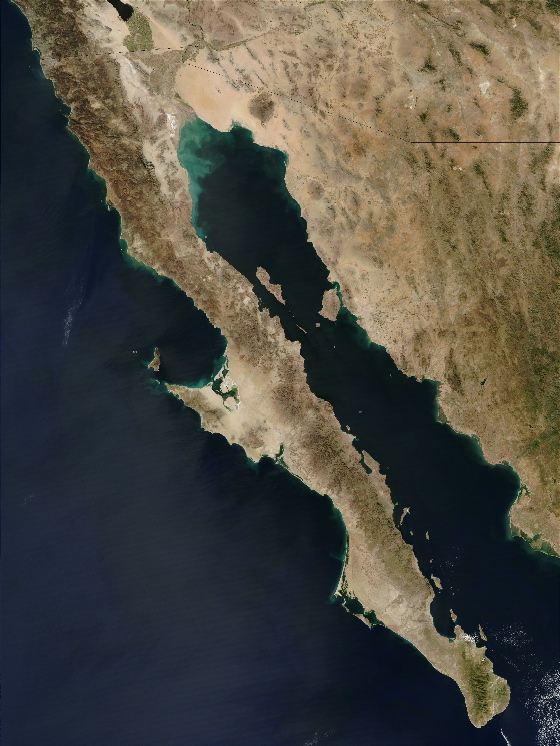
absence of American tourists, my mind drifts to the Mar de Cortes, the
Sea of Cortez, also called the Gulf Of California, that legendary sea
between the Baja peninsula and the Mexican mainland.

There is a town there called La Paz, with a seaside promenade and palapa huts
serving fresh fish tacos and Tecate beer, a port town from which the
Mar de Cortes can be explored and fished in a small open panga boat.
The land behind it is severe and mystical desert, the sea before it is
teeming with marine life of every description, much of it good to eat .
. . clams and oysters and octopi and shrimp, lobsters and tuna and
skipjack and crab.

Maybe I’ll see you there one of these days . . .