The shoes, the shoes . . .
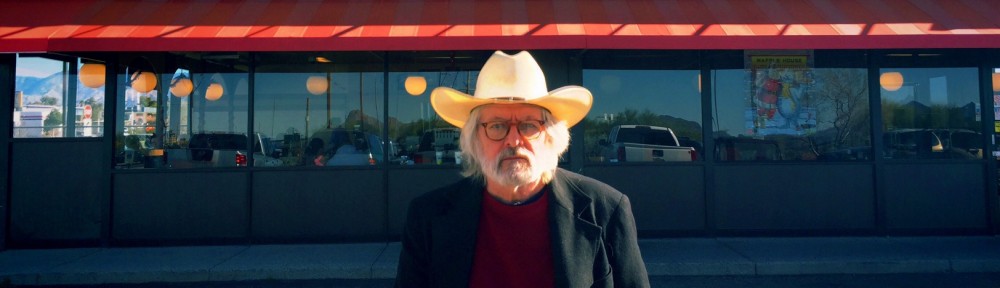

Come, my friends,
‘Tis not too late to seek a newer world.
Push off, and sitting well in order smite
The sounding furrows; for my purpose holds
To sail beyond the sunset, and the baths
Of all the western stars, until I die.
— Tennyson
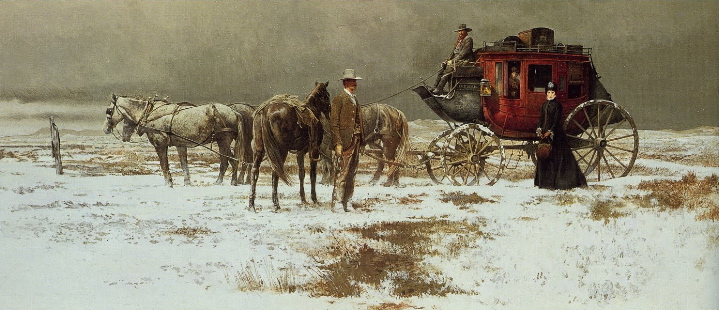
Red River Valley
The composition is a bit static, though I guess you could also call it monumental, iconic. Pretty cool, all the same.
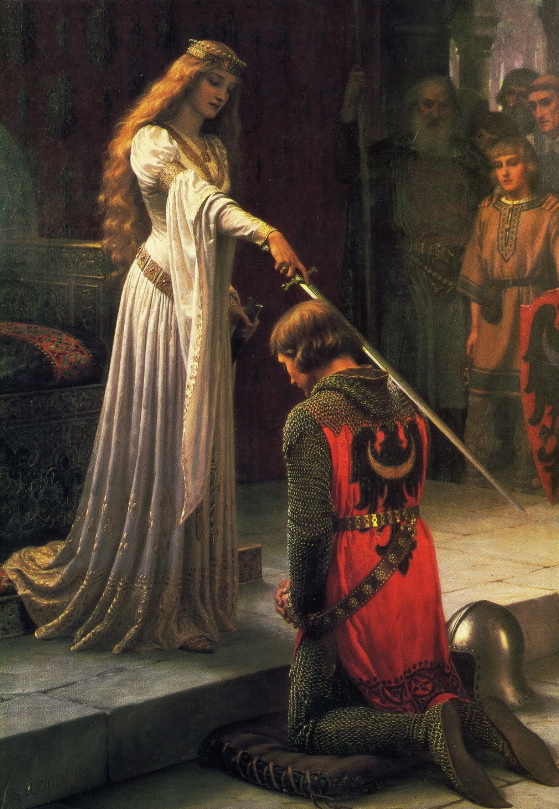
Here's something you don't run across every day . . .
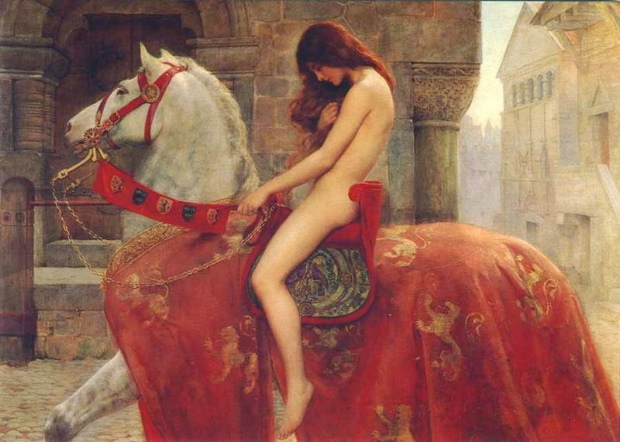
[Image by Edmund Blair Leighton from the gallant Golden Age Comic Book Stories.]
Ventura and Oxnard, the city it bleeds into towards the southeast, are
by volume mostly agricultural. Along the 101 Freeway that bisects them
is a succession of malls and outlet centers, and using only this artery
one could supply all the needs of life without ever thinking of these
cities as anything other than highway sprawl. You could miss entirely
the old downtown of Ventura, that runs along Main Street for a few
blocks near the restored mission, or the tiny beach community where I
live, “on the lanes”, as the older residents say — the little lanes
like mine that run off Pierpont Avenue and dead-end at the sea.
But if you take the surface roads that lead from my lane to the backs
of the shopping centers and malls, you drive through a landscape of
cultivated fields, some of which run down almost to the state beaches,
and grow strawberries and mushrooms and many other green things which I
do not recognize.
Downtown and the lanes, like these open fields, seem frozen in a
time-warp, images of the California coast towns long ago. It can't
last. Already one sees industrial parks and condo developments sitting
preposterously isolated on the edges of the farmland. In our lifetimes,
probably, the fields will give way entirely to such things, as they
have over the course of the last century in Los Angeles and in the San
Fernando Valley.
One navigates this dreamscape with a sense of loss already. One wants
to photograph it all, just to prove it really exists — to be able to
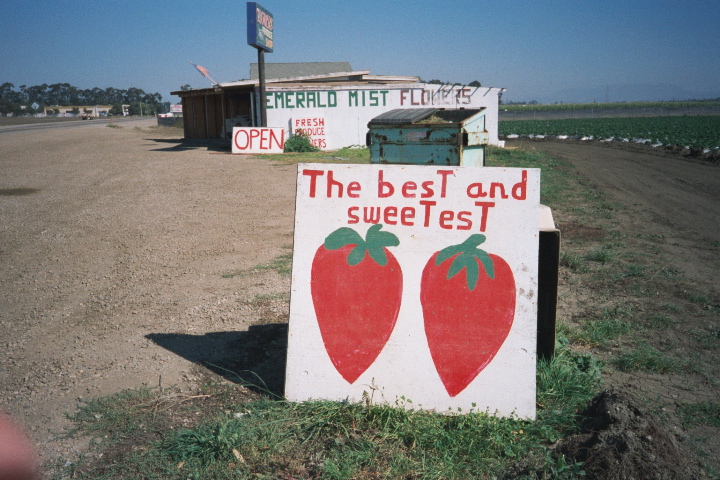
prove it once existed. The bright hand-painted signs at the fruit stands
near where Telephone Road becomes a dirt lane, minutes from the great
outlet malls of Oxnard, brood in melancholy gaiety.
They will not be preserved, like the Olivas Adobe, which sits surreally
on the edge of the Olivas Park Golf Course, testifying unconvincingly
to the age of the Spanish land grants. The tiny beach shacks on
Weymouth Lane where I live, where lower middle-class families could
once live within spitting distance of the Golden Coast, will not
survive another generation.
Ventura is a strange place, culturally arid, hard to love for any
obvious reasons — but the quiet doom that invests all of it makes it
very sweet . . . charms the spirit.
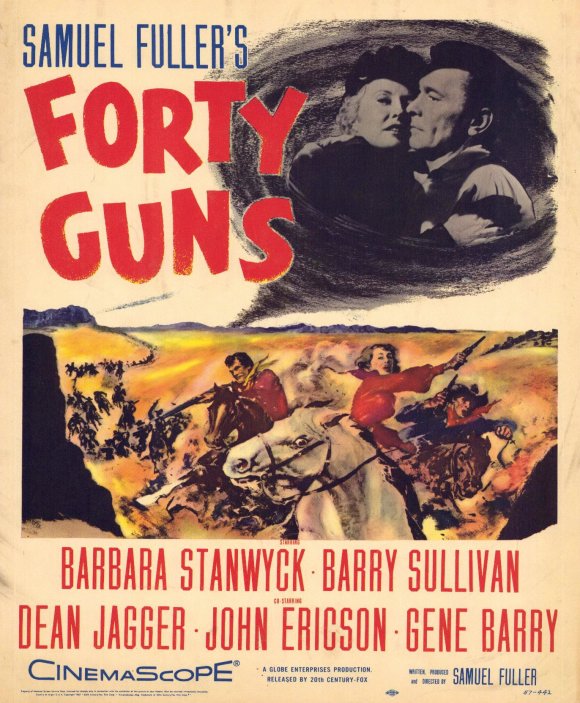
If you haven't seen it, there's no way I can convey to you how strange this 1957 Samuel Fuller Western is. I can tell you it's about a mythically powerful woman who rides the territory of her ranch with forty hired guns, like an escort of armed valets. She is a primal variant of the femme fatale, wreaking havoc on a world of collapsed males. Her type is not unknown in films of the Fifties, especially in film noir, but here she takes on the dimensions of a Greek goddess, terrible and timeless.
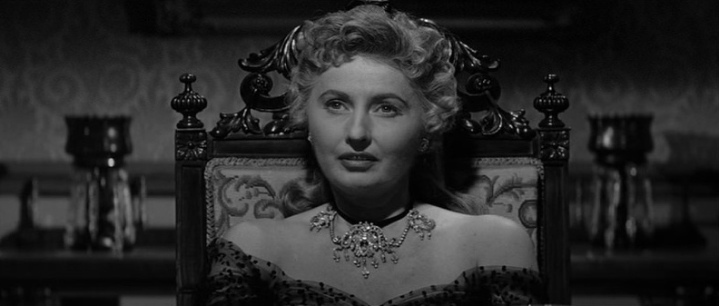
Her power is contested, and ultimately overcome, by a man willing to stand up to her, reducing her to a state of pliant femininity — which rarely happens in film noir — but at the same time she's such a vivid embodiment of the nightmare of the collapsed male that the triumph of the hero here feels provisional. She might have been vanquished in last night's dream, but she'll be back in tomorrow night's dream — you can count on it. The threat she poses is eternal. (Fuller had a darker fate in mind for his fatal femme but the studio vetoed the idea.)
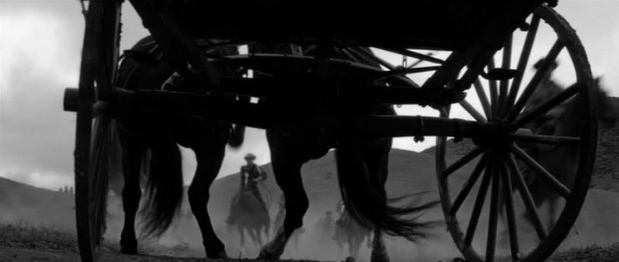
What I can't convey is the American-Gothic vision of the Old West Fuller has concocted — it's as though Poe has lit out for the territory and found the same sickly-sweet decay in the Western myth that he found in the European myths back east.
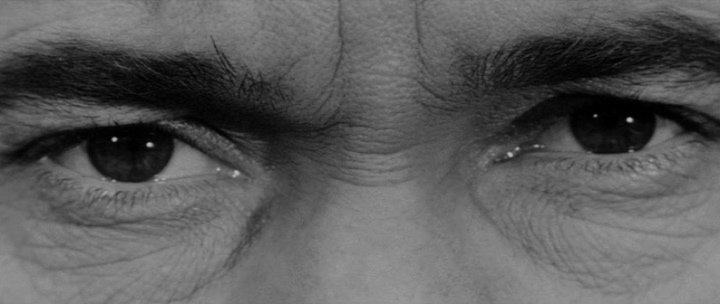
Fuller deconstructs the classic beauty of the best-looking Western films, of Ford and Wyler and Hawks, by pushing their methods into realms of extreme self-consciousness. His camera travels endlessly on tracks, swoops deliriously on cranes, exaggerating the conventions into a new form, one with no restraints on style.
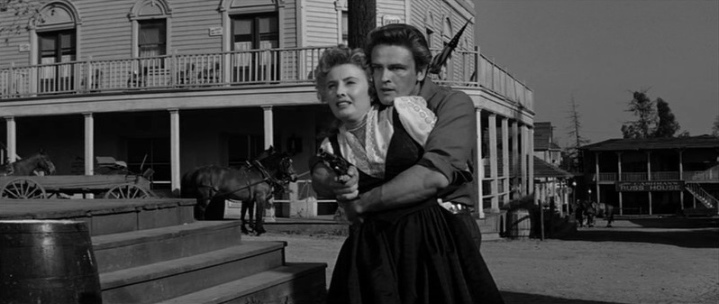
This is a Rococo Western, in which style breaks loose from narrative goals and serves only archetype.
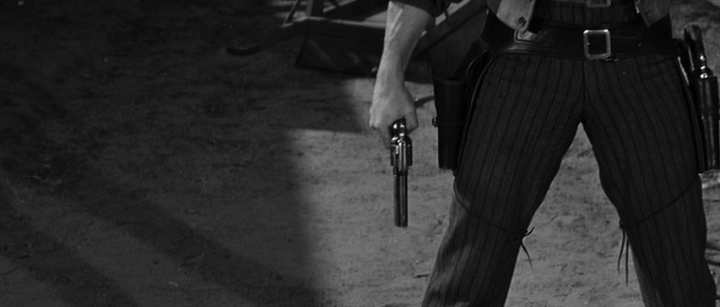
It's a very odd and very beautiful film, and not like any other I know. By the time directors like Godard began to embrace Fuller's daring methods of self-conscious filmmaking, they were ready to abandon genre itself, except as an ironic referent. (It's worth noting, however, that Godard quoted a shot from Forty Guns in Breathless — it was clearly on his mind as he began to forge his own style.)
Fuller stays inside the Western genre in Forty Guns but lays waste to it mercilessly from within. Only a man who loved the form could have done this, just as only a man who loved women could have feared them as much as Fuller fears the commander of the forty guns, the high ridin' woman with the whip.
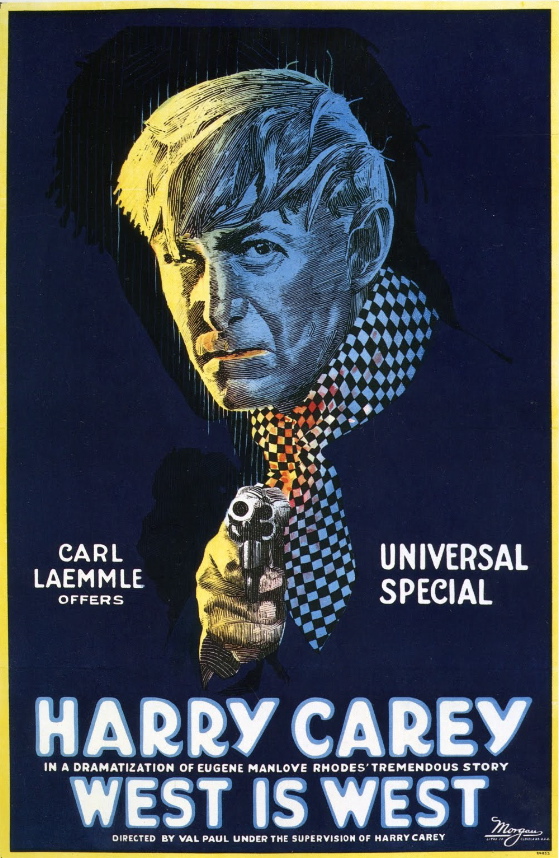
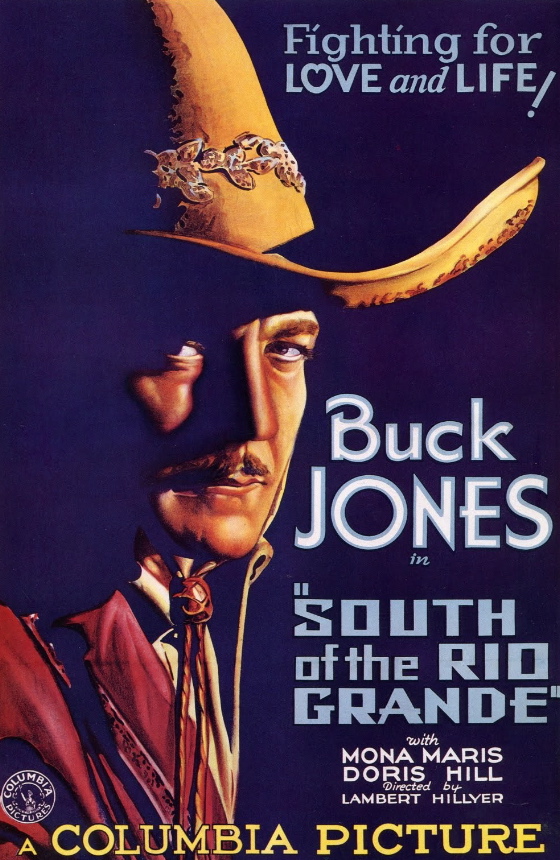
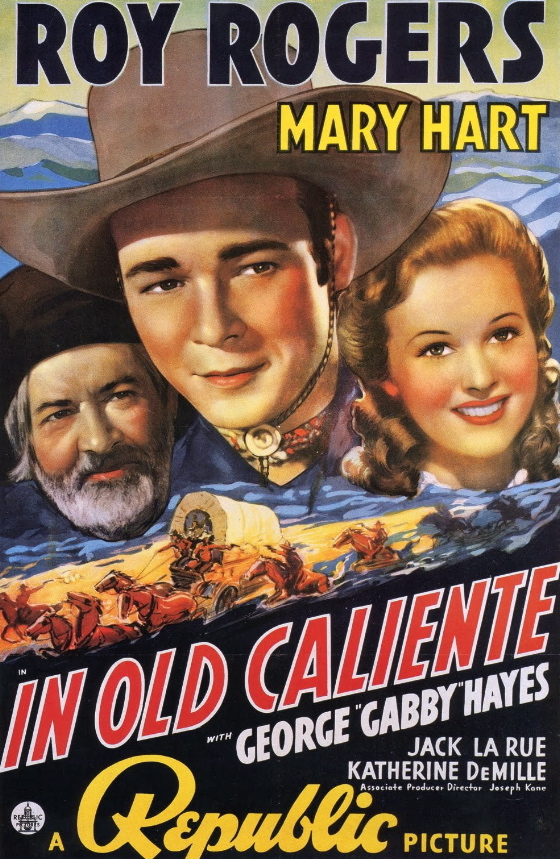
From 1920, when Westerns were Westerns and movie posters were works of art.
[From (where else?) the wondrous Golden Age Comic Book Stories.]
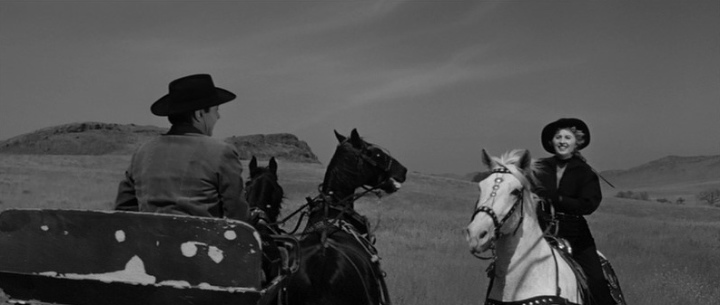
I love the way she sits a horse — looking to sign on as her forty-first gun.
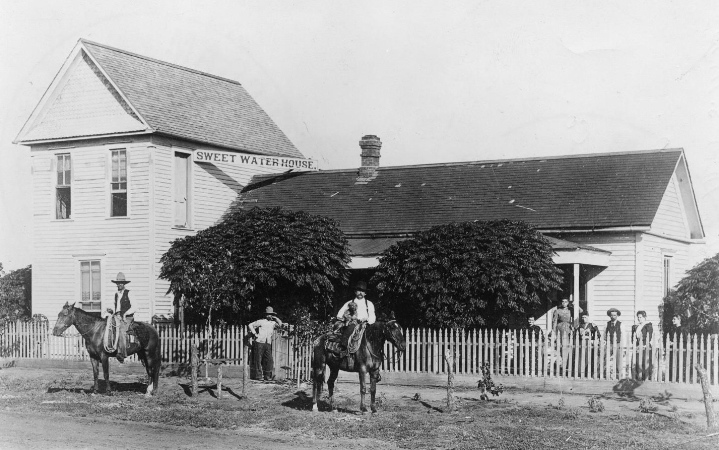
In the 1880s. Note the rider in the center holding a dog in his lap.
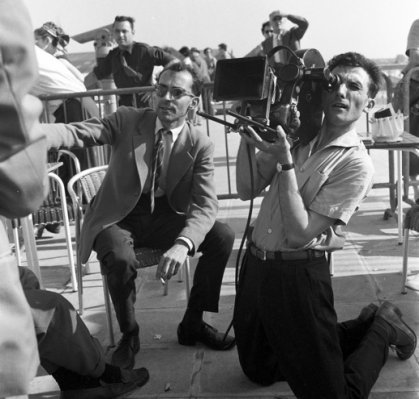
Jean-Luc Godard always had a strong identification with Bob Dylan, a sense that their careers, their artistic journeys and even their lives were somehow linked, even though they never worked together. The idea is not as strange as it sounds. Both were artists steeped in tradition, the tradition of cinema in Godard's case and the tradition of American music in Dylan's. Both were looking for ways to bring what they loved from those traditions into the present, to give them a form that would be alive for the future. Both were re-mixers, who made startling recombinations of old things that they then inflected with a purely contemporary resonance.
Both also had serious motorcycle accidents that resulted in periods of seclusion.
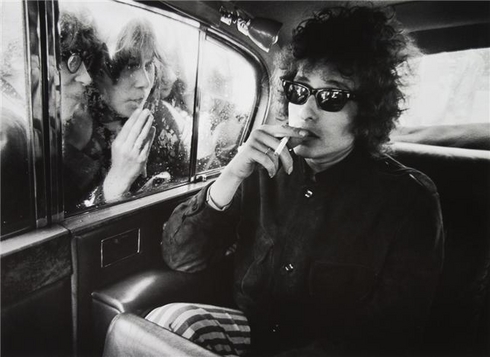
In the late 70s, each artist began to lose touch with his traditional audience — Dylan wasn't making much of a showing on the charts anymore, Godard was finding it harder and harder to get financing for his films. They weren't cutting the same figures on the cultural stage that they had in previous years.
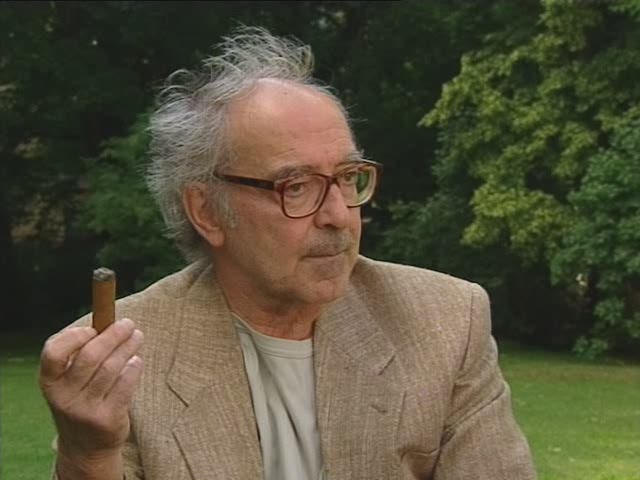
Godard took an interest in Dylan's fortunes, kept track of his successes and failures — since they seemed in some ways to mirror his own. It wasn't just a question of sympathy with a fellow artist in a similar predicament — it was a question of an almost mystical identification with one of the only artists of the 20th Century operating at his level of genius and accomplishment, and thus one of the only artists of their time who could possibly understand what it felt like to be Jean-Luc Godard in commercial and cultural isolation.
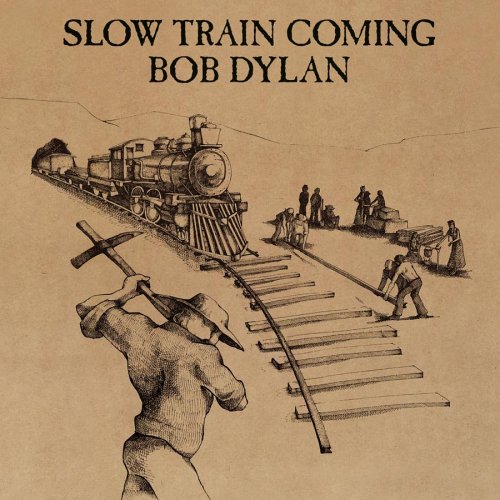
Most surprisingly, Godard has reported that when Dylan “turned to Christ” in 1978, he said to himself, “That will happen to me, too.” Then he forgot about it, until he made Hail Mary in 1984. “Look,” he said. “Dylan warned me.”

[Photo by Jae Song]
Another micro movie essay on cinema, from the usual suspects, Kendra and the three J's — Champs
Contre Champs, French for shot-countershot, one of Jean-Luc Godard's
bêtes noires. Find out why!
Micro Movie Essay #4 — Champs Contre Champs:
YouTube
Facebook Fan Page
Prescription for the future of cinema — go back to the beginning and rethink everything.
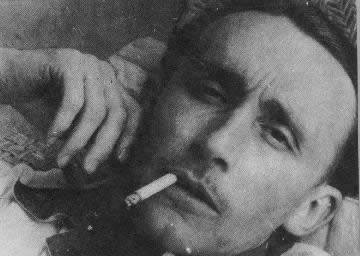
André Bazin (above) wrote some of the most penetrating analyses of how screen images work, but, as I’ve suggested before, he had a blind spot in his obsession with a movie’s connection to visual fact, its function in providing “evidence”. He was saying something important about the psychological effect of the camera’s intimate relationship to physical reality, but his theories can’t explain why the imaginary spaces created in animation, for example, can have the same emotional and psychological power, the same cinematic power, as spaces recorded photographically.
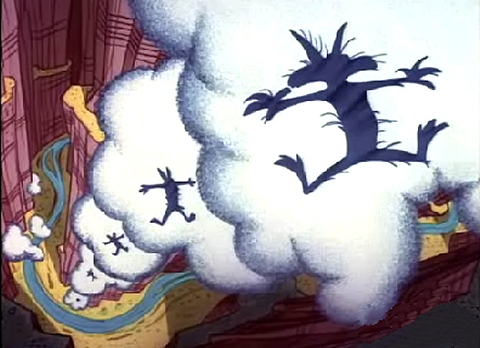
This blind spot also led Bazin to draw a misleading contrast between stage space and screen space. With stage space, he argued, we’re always half aware of the backstage machinery that creates theatrical illusion, while a screen image gives the illusion that it’s only a window onto a wider, complete world.
This is not always true, even — perhaps especially — in the work of one of Bazin’s heroes, Orson Welles. I recently ran across a passage from the critic Chris Fujiwara which sums the issue up nicely:
In radio, all space is “off” and is evoked by sound, which alone has
materiality. From his experience in radio, Welles sometimes brings to
film a purely vocal offscreen space, as in the scene of the dying Major
Amberson contemplating something that “must be in the sun.” But
offscreen space as conjured by the looks and movements of characters to
impose an imaginary spatial coherence – this is something Welles has
little interest in. He prefers to leave offscreen space unfilled, to
reorganize the world with each cut, or to deny the offscreen by
enfolding all space, all revelation within a single shot. Welles’s
cinema is a forgetting of offscreen space, a denial of its potency.
This strikes me as quite true. The amazing long take in The Magnificent Ambersons of George eating strawberry shortcake in the kitchen as he talks to Fanny and then to Uncle Jack behind him in a deep onscreen space, seems to me to represent a precise and wholly self-contained theatrical environment. Even though the shot records a convincingly “real” place, I still feel that Uncle Jack enters the scene in the far background from “the wings”.
Welles has thoroughly theatricalized that space — we have no appreciable sense at all of a wider, complete world beyond it.
[The Fujiwara quote comes from a special issue of La Furia Umana, an online cinema magazine, devoted to Welles — which I found via Wellesnet. The issue contains articles on Welles in English and in other languages.]