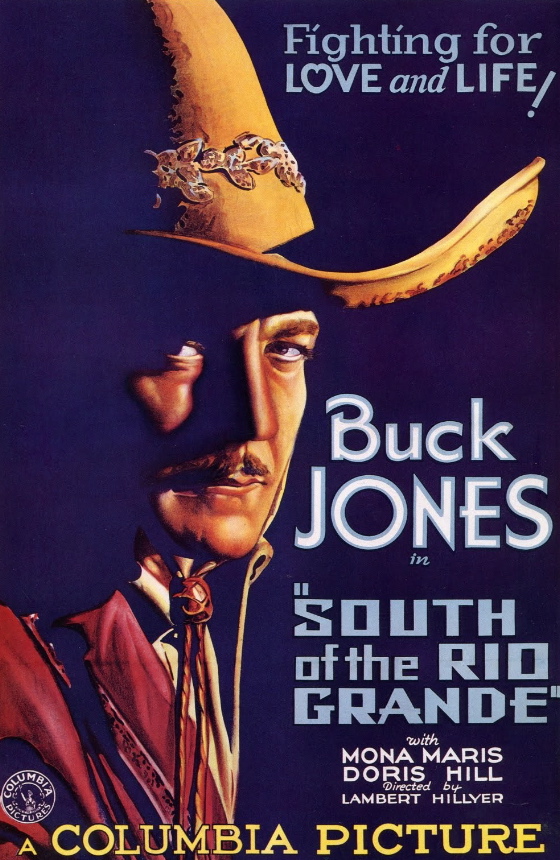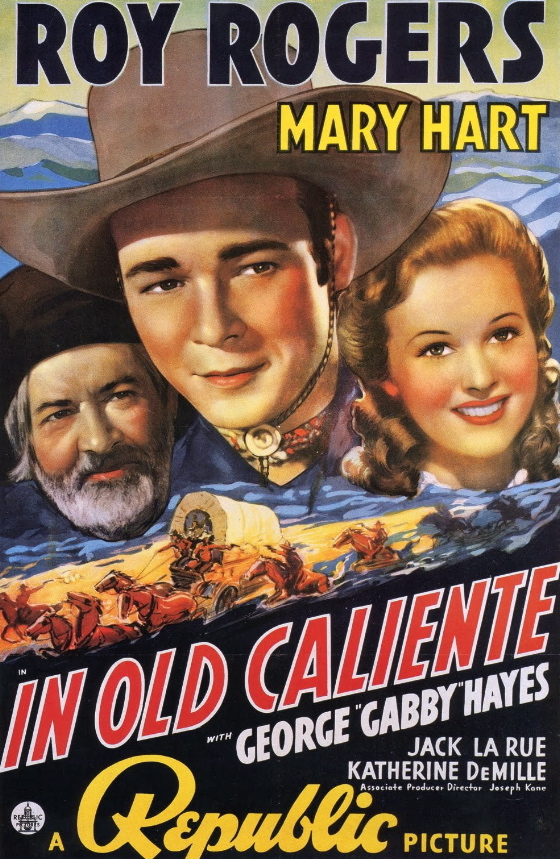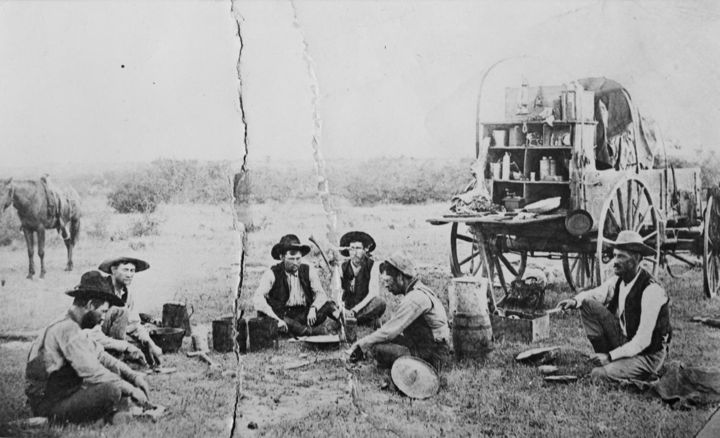
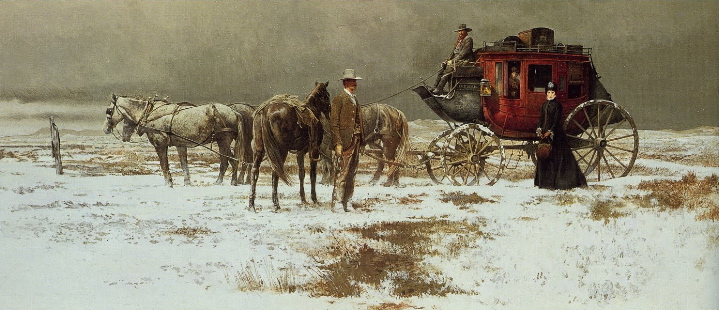
. . . on the Texas plains in the 1880s.
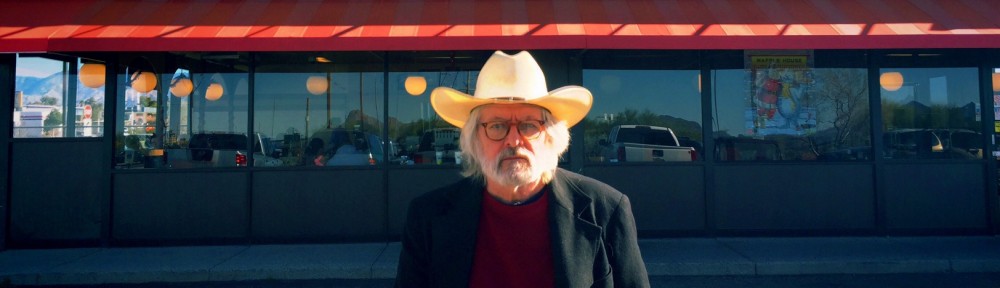
. . . on the Texas plains in the 1880s.
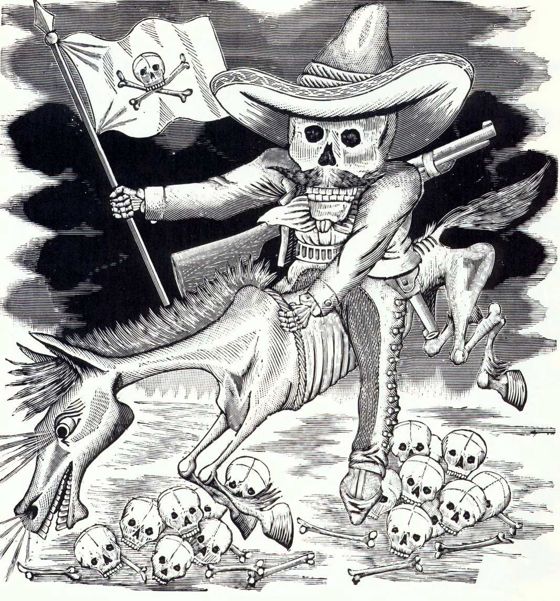
Zapatista calavera, by José Guadalupe Posada, early 20th Century.
The girls of Little River they're sweet and they're pretty
The Sabine and the Saber have many a beauty
The banks of Nacogdoches have girls by the score
But down by the Brazos I'll wander no more
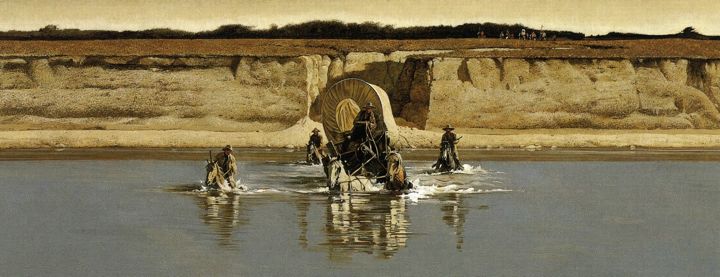
Another wonderful Western painting by Robert McGinnis. Horses and wagons crossing rivers are seminal images in movie Westerns — for Ford and Boetticher they had a spiritual quality. They would create little poems out of them, little arias, stopping the narrative to show the process in detail.
Here's Don Edwards singing the cowboy song quoted above — a Homeric catalogue of Western river names, laced with rue over a lost love:
Down By the Brazos
[Right grateful to Golden Age Comic Book Stories for the image.]
. . . a boy ever had.
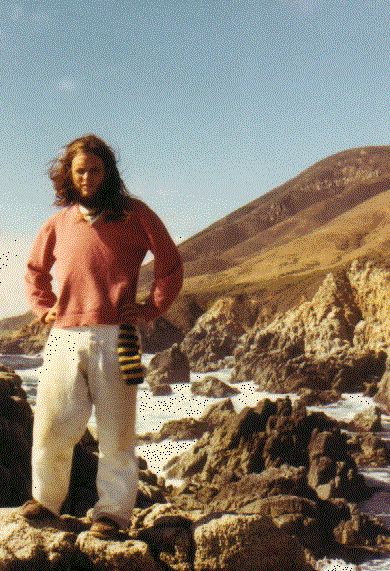
On a drive up the Pacific Coast Highway with my friend Deane Evans, in a time before disco . . .
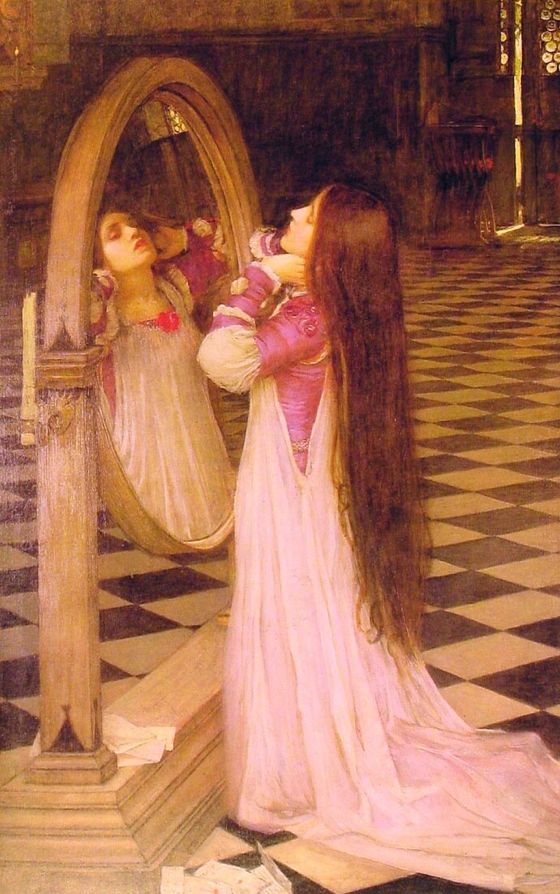
Percy Bysshe Shelley howls at the moon:
Art thou pale for weariness
Of climbing heaven and gazing on the earth,
Wandering companionless
Among the stars that have a different birth,
And ever changing, like a joyless eye
That finds no object worth its constancy?
[Image by John William Waterhouse.]
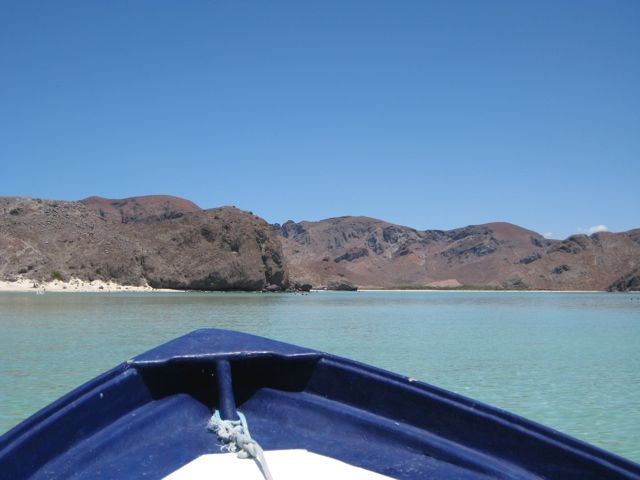
Come, my friends,
‘Tis not too late to seek a newer world.
Push off, and sitting well in order smite
The sounding furrows; for my purpose holds
To sail beyond the sunset, and the baths
Of all the western stars, until I die.
— Tennyson
Red River Valley
The composition is a bit static, though I guess you could also call it monumental, iconic. Pretty cool, all the same.
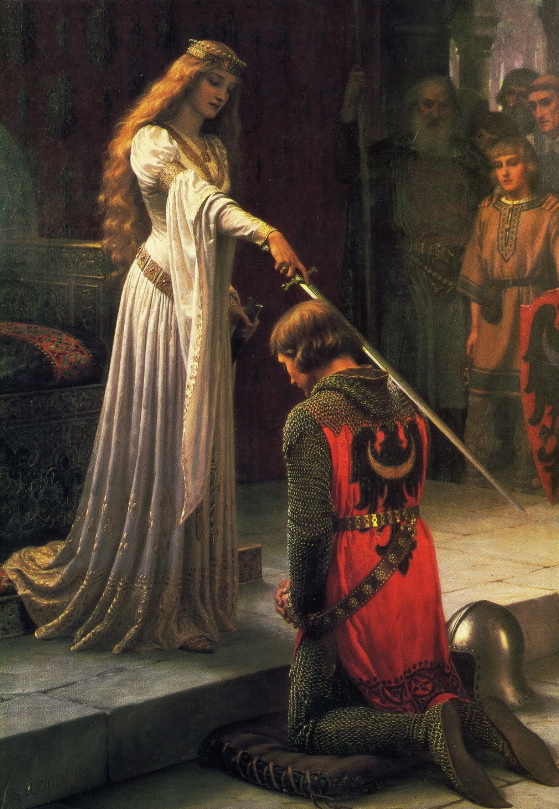
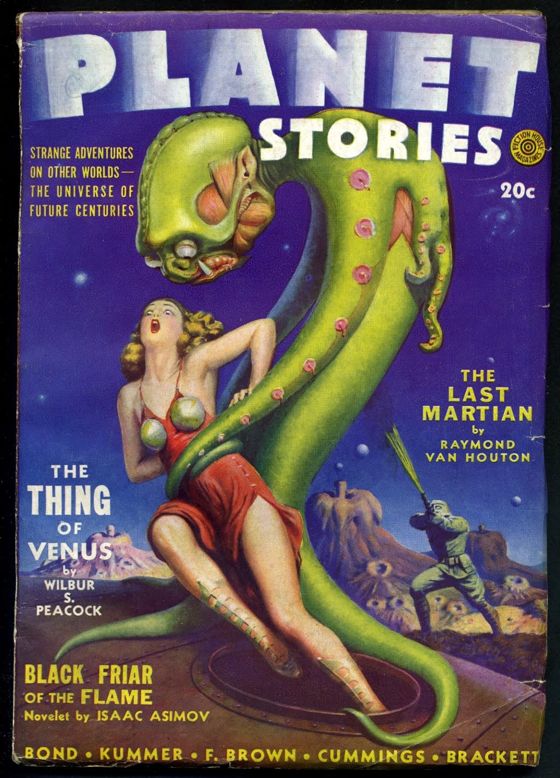
Here's something you don't run across every day . . .
[Image by Edmund Blair Leighton from the gallant Golden Age Comic Book Stories.]
Ventura and Oxnard, the city it bleeds into towards the southeast, are
by volume mostly agricultural. Along the 101 Freeway that bisects them
is a succession of malls and outlet centers, and using only this artery
one could supply all the needs of life without ever thinking of these
cities as anything other than highway sprawl. You could miss entirely
the old downtown of Ventura, that runs along Main Street for a few
blocks near the restored mission, or the tiny beach community where I
live, “on the lanes”, as the older residents say — the little lanes
like mine that run off Pierpont Avenue and dead-end at the sea.
But if you take the surface roads that lead from my lane to the backs
of the shopping centers and malls, you drive through a landscape of
cultivated fields, some of which run down almost to the state beaches,
and grow strawberries and mushrooms and many other green things which I
do not recognize.
Downtown and the lanes, like these open fields, seem frozen in a
time-warp, images of the California coast towns long ago. It can't
last. Already one sees industrial parks and condo developments sitting
preposterously isolated on the edges of the farmland. In our lifetimes,
probably, the fields will give way entirely to such things, as they
have over the course of the last century in Los Angeles and in the San
Fernando Valley.
One navigates this dreamscape with a sense of loss already. One wants
to photograph it all, just to prove it really exists — to be able to
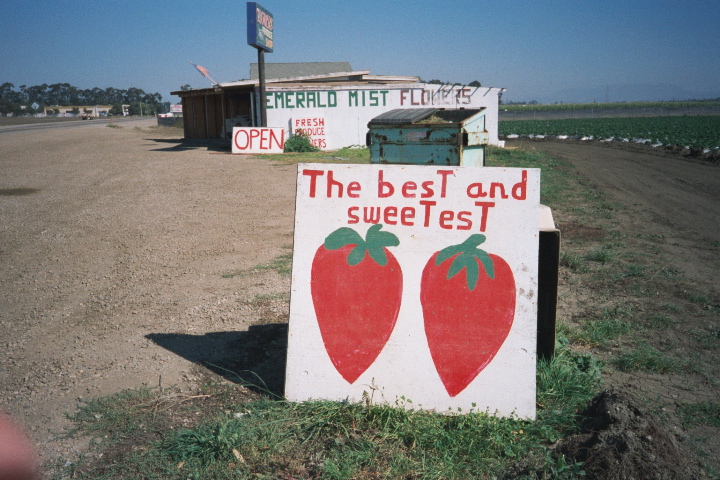
prove it once existed. The bright hand-painted signs at the fruit stands
near where Telephone Road becomes a dirt lane, minutes from the great
outlet malls of Oxnard, brood in melancholy gaiety.
They will not be preserved, like the Olivas Adobe, which sits surreally
on the edge of the Olivas Park Golf Course, testifying unconvincingly
to the age of the Spanish land grants. The tiny beach shacks on
Weymouth Lane where I live, where lower middle-class families could
once live within spitting distance of the Golden Coast, will not
survive another generation.
Ventura is a strange place, culturally arid, hard to love for any
obvious reasons — but the quiet doom that invests all of it makes it
very sweet . . . charms the spirit.