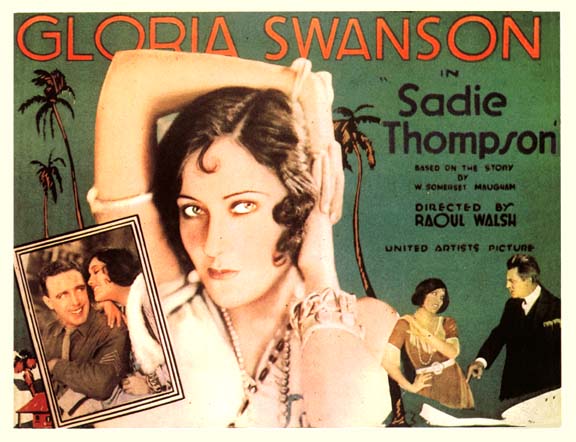
GLORIA SWANSON’S SADIE THOMPSON

In 1947, an old, bitter, alcoholic has-been named D. W. Griffith
complained to a journalist that movies had lost something — “the
beauty of moving wind in the trees, the little movement in a beautiful
blowing on the blossoms in the trees” is how he summed it up. It’s sort
of an odd thing to say, since movies never stopped moving, and when
there are trees on screen you can often see the wind moving their
leaves.


But of course Griffith was talking about something more profound — harking
back to his own heyday as a filmmaker, when those moving blossoms were
not just a grace note, an accident of location, which might possibly
affect the taking of live sound, but in some real sense what movies
were about . . . movement, the illusion of movement in space, the
transformation of that illusory space, drawing us into it
imaginatively, investing it with emotional drama.


Griffith was bemoaning the loss of the discursive style of cinematic narrative,
in which the accumulation of passages of plastic transformation were
not simply the accouterments of style but the very method of
storytelling, of emotional communication, in film. He was bemoaning the
terrible efficiency of the studio method, in which those moving
blossoms became incidental decoration, garlands gracing the elegant,
ruthless machinery of narrative exposition.


Those of us who love Westerns love them in part because the Western genre
alone for many years after the coming of sound preserved that
discursive style — in which they way people and horses and things
moved and penetrated and transformed the spaces of a room or a street
or a landscape carried the burden of the drama, the narrative
exposition being pretty much formulaic and predictable.


Raoul Walsh, a Griffith protege, became a brilliant craftsman of the studio
style in the sound era, with an eye for plastic values which lifts most
of his work above the ordinary. But not far above the ordinary. His Sadie Thompson, from 1928, is a masterpiece, however — and a film
that in many ways defines the crossroads movies had come to in
Hollywood on the eve of sound.

Sadie Thompson is a very slick film, of great narrative economy — a studio
picture in that sense. But in scene after scene the narrative momentum
is suspended dreamily as we are invited to appreciate, to inhabit
intimate spaces and moments — to linger in them languorously. Swanson
plays a hardboiled dame, but we can sense the girlishness and innocence
that has survived her smarmy past — and Walsh takes time to let us
inside that quality of hers . . . not with a line of thought-balloon
dialogue, but in a rapturously lit scene at her window with O’Hara, in
which the way she looks at him illuminates her face from within,
absolutely breaks your heart. It’s like a movie within a movie, and
when you’re watching it, it seems as though this is what the whole
story is about.


Walsh doesn’t have a soundtrack to deliver the incessant noise of rain, so he
lingers on moments of transition between the wet outdoors and the dry
interiors, physical business with umbrellas and ponchos and damp
clothes. He luxuriates in exploring the fabulously atmospheric and
spatially intriguing inn set designed by William Cameron Menzies. He
rarely moves the camera, but when he does it has an emotional purpose
— Sadie being drawn into the interior of the island after she gets off
the ship, surrounded by the marines, O’Hara trying to carry her away
from Davidson and his creepy spell.


One of the most powerful moments is also one of the most subtle. Just before
the climax, Davidson looks down at the redeemed Sadie, slumped in a
wicker chair. She’s removed her make-up and straightened out her hair,
but still looks beautiful, in a severe way. Then Walsh pans down very
slightly from a close-up of Swanson’s face — just enough to let us see
her upper chest moving as she breathes. There’s no skin — we don’t
even see the curve of her breast under her dress — but the very
subtlety of the shift of attention is wildly suggestive and erotic. We
know exactly what Davidson is thinking.
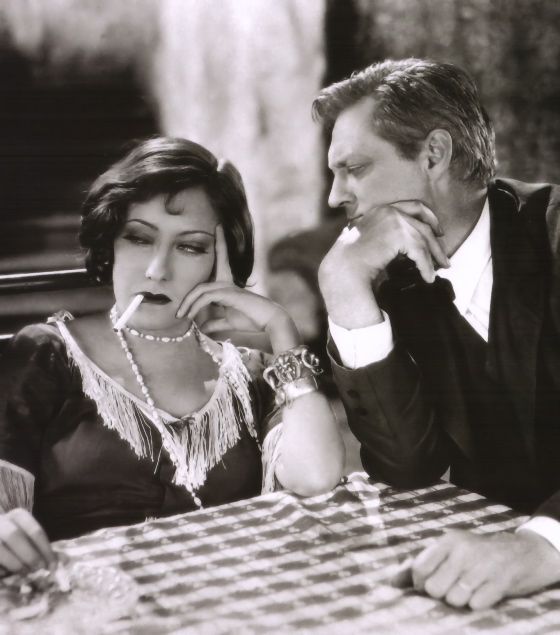
Lionel Barrymore, as Davidson, looking gaunt and somewhat terrifying, plays an
extreme character, but his performance is beautifully nuanced,
particularly at the beginning. We feel the sensual pleasure he takes in
tormenting sinners, which prepares us for his surrender to another kind
of sensuality at the end. It’s far more effective than Walter Huston’s
more tasteful and buttoned-up take on the character in the 1932 sound
remake.
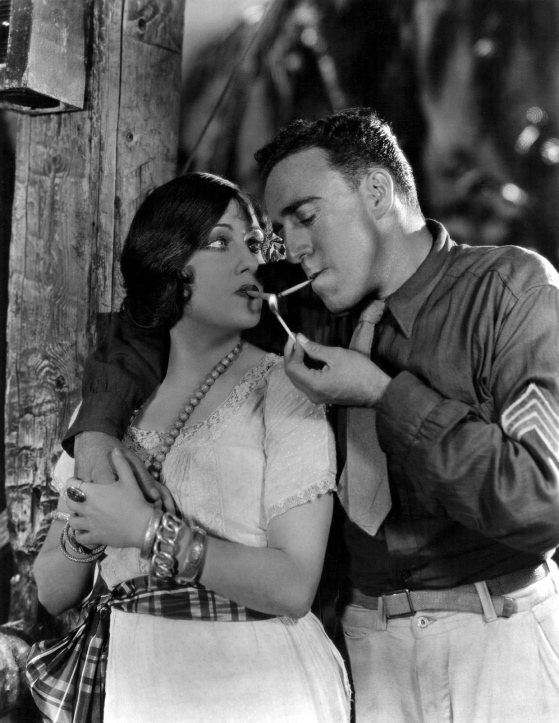

The simplicity and reserve of Walsh’s performance as O’Hara (above) serves the role well — he used his very inexperience as an actor to sell O’Hara’s shy, straightforward decency.

Swanson is brilliant — and brilliantly inconsistent. Her tough-girl swagger is
charming, and not entirely convincing, which makes her sweetness with
O’Hara, her innocent faith in his love, believable, and her sudden
breakdown in front of Davidson plausible as well . . . she was never as
hard and self-possessed as she seemed to be, and her first look into
the face of irrecoverable loss unhinges her completely. Joan Crawford’s
Sadie in the 1932 remake is a one-note impersonation by comparison, and
could have been played almost as well by a man in drag, which is what
Crawford sometimes suggests.


It’s a shame the last reel of the film has been lost — though the reconstruction of it on the Kino release is well-done and as satisfying as possible under the circumstances.

It’s a wonderful movie, with a foot in two different eras of Hollywood filmmaking, but with its heart and soul in Griffith’s.

A SHAKESPEARE SONG FOR TODAY

O mistress mine, where are you roaming?
O stay and hear! your true-love's coming
That can sing both high and low;
Trip no further, pretty sweeting,
Journeys end in lovers meeting–
Every wise man's son doth know.

What is love? 'tis not hereafter;
Present mirth hath present laughter;
What's to come is still unsure:
In delay there lies no plenty,–
Then come kiss me, Sweet and twenty,
Youth's a stuff will not endure.

It's from Twelfth Night.


Trip no further, pretty sweeting,


Journeys end in lovers meeting . . .

Are there any lovelier lines in all of English poetry?

What I like about them most is that they combine the lover's faith with the storyteller's faith.

The reference to singing both high and low is apparently mildly obscene, but I'll leave the details of it to your imagination.

The carpe diem message of the
song is not unusual, but the gossamer delicacy of the tone is
rare.  As I've suggested before, A. E. Housman got it down pretty
well:

Clay lies still but blood's a rover,
Breath's a ware that will not keep.
Up, lad, when the journey's over
There'll be time enough to sleep.

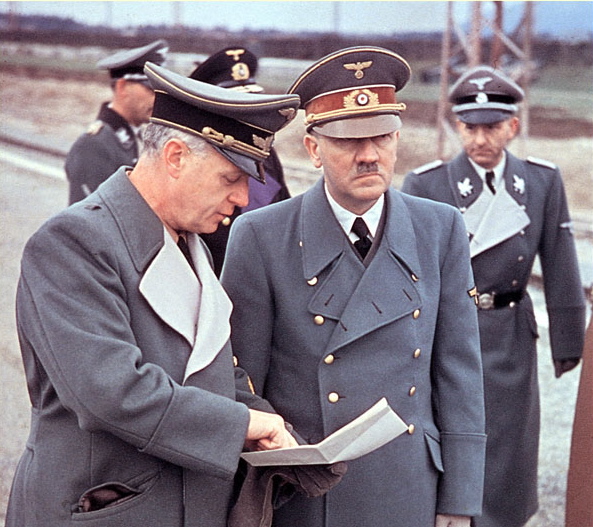
HITLER'S WAR

Early
in his career the brilliant but unbalanced British historian David
Irving became convinced that most of the history of WWII as written by
the victors was suspect — infected with a mythology of moral
superiority which wasn't always supported by the actual documentation
available.  He set about to correct this.

Irving became an indefatigable researcher, particularly in the German
archives whose contents few historians had mastered.  His sense of
sympathy for the Nazi regime also encouraged many German survivors of
the war, or their heirs, to make available to him private documents
which had not been available to other historians.

The result of this was, eventually, an extraordinary book, Hitler's War,
which the great military historian John Keegan has called one of the
essential works of WWII historiography.  It is, Keegan says, like
the memoir Hitler never wrote.

The book takes us through the war from inside Hitler's headquarters,
and from Hitler's perspective.  It doesn't minimize Hitler's
bloodthirsty ruthlessness, but it offers many instances of the
bloodthirsty ruthlessness of his enemies — the sorts of things that
Hitler might have used to justify his actions in his own mind.

The detail in the book is mind-boggling — it's almost a week by week
record of Hitler's habits, movements, decisions, moods.  It's like
viewing all the events of The Lord Of the Rings from inside Mordor.

It can't be said that the book gets us inside Hitler himself, inside
the man.  Even his closest associates would admit in later years
that they never managed to do that.  He remains an enigma — a
hollow human being.  That may have been one source of his power — he
was a vessel in which the mighty currents of history, both good and evil,
could collect.  But the book does bring us into his uncanny
presence.

Irving takes care to point out that no hard documentary evidence
exists that Hitler knew of or approved the Final Solution of the
“Jewish problem” as it developed in the last years of the war.  Irving uses this gap in the record to
argue that Hitler was in fact unaware of what Himmler was really doing
out in the field.  Even Keegan admits that the proposition is
illogical — but for Irving, apparently, it was an important one. 
It allowed him to see Hitler as a brilliant monster, along the lines of
Napoleon, say, but not as a demon in human form.

This desire to see Hitler as less than purely evil was, as it turned out, the seed of something darker in Irving,
which has gradually marginalized him as a historian and as a man. 
His sympathy for right-wing neo-Nazi movements and his personal racial
prejudice came to the fore.  He eventually decided that the
Holocaust, as it's generally understood, did not exist — that the
Final Solution was not a Nazi policy but a series of ad-hoc actions by
local commanders in the final months before Germany's defeat.
  (In the most recent edition of Hitler's War,
from 2002, Irving has amended the text to reflect his later views of
the Holocaust — so it's worth tracking down an earlier edition if you
plan to read it.)


By allying himself with the lunatic fringe of Holocaust deniers and
neo-Nazis, Irving has become something of a joke, a very unpleasant
joke — and yet . . . the core of his achievement remains.  The
massive research supporting Hitler's War,
the vast accumulation of detail in it, is indispensable stuff, even
though it may be presented in the service of unacceptable attitudes and
prejudices.  You simply cannot understand WWII without
reading it.

[For Irving's perspective on all this you can visit his web site here.]

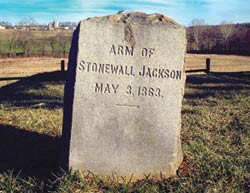
JACKSON'S END

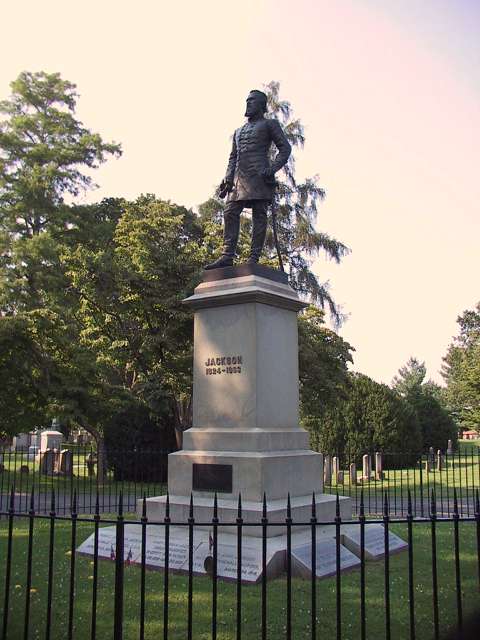
Stonewall
Jackson is buried in Lexington, Virginia, near the Virginia Military
Institute, where he taught before the Civil War.  But his arm,
which he lost at Chancellorsville, where he received the wounds that
killed him, is buried near that battlefield.

When Jackson's shattered arm was cut off after the battle it was
thrown onto a pile of amputated limbs, as was customary, but his
chaplain decided to retrieve it and he took it to the nearby farm of a
relative, who buried it in the family plot.  Eventually a small
stone marker was erected over its final resting place.

The grave can be visited today, but it's not easy.  When I toured
the Chancellorsville battlefield two summers ago, with some relatives,
we had to park at a gate about a mile from the cemetery and walk to the
grave.  My eighty year-old mom was along, and she made the trek
with the rest of us, in the hot Virginia sun.

The cemetery was beautiful — a small fenced-in plot on a knoll
overlooking cornfields, shaded by old trees.  There was no
particular emotion associated with visiting the site.  An arm is a
tool.  It was like visiting the grave of Stonewall Jackson's
sword.  It was the walk with family that was moving — and
surreal, like the Civil War itself.  We Americans are going to
take up arms and kill each other in great numbers, they said back
then.  We are going to make a pilgrimage to the grave of Stonewall
Jackson's arm, we said generations later.  Somehow it all made
sense.  I kept thinking of Jackson's famous last words:

Let us cross over the river and rest under the shade of the trees.

There are some mysterious, unexplainable journeys that just have to be made.

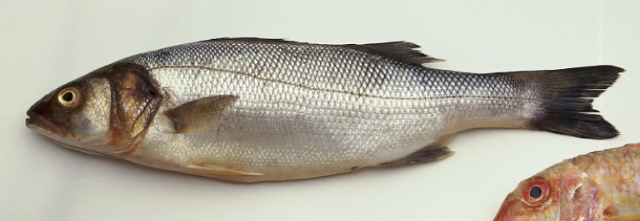
LOUP GRILLÉ AU FENOUIL

Loup grillé au fenouil, translated precisely from the French, means wolf
grilled with fennel. Those familiar with Mediterranean cooking will
recognize, however, that the wolf, the loup, referred to here is loup
de mer
, the wolf of the sea, or sea bass. Sea bass grilled with fennel
is one of the glories of southern French cuisine.


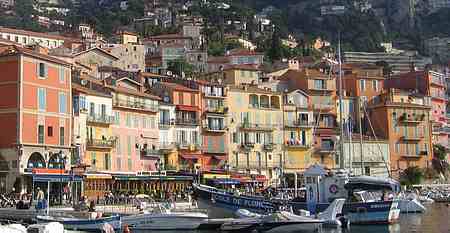
I first encountered it in one of the restaurants facing onto the harbor
of Villefranche, a small town just east of Nice — a restaurant called
Mère Germaine. There are several restaurants just like it facing the
harbor, and loup grillé au fenouil is not prepared better in Mère
Germaine than in any of the others, but Mère Germaine is where I first
had it, and so that must remain the center of my nostalgia for the
dish.

It has certainly never tasted better anywhere else — except perhaps on a
terrace barbecue in Seattle once. A friend living there had discovered
wild fennel growing near him in a vacant lot, and used its seeds to
season the fish, its stalks to fuel the fire beneath, resulting in a
wholly satisfying sensory experience.

Nostalgia is a potent spur to culinary ambition. One day while peeking into
the tiny seafood selection at my local supermarket I noticed a
tempting fillet of Chilean sea bass. I bought it, along with some dried
fennel seeds from the spice racks, and decided to see how close I could
come to recapturing the taste of those long ago nights on the Côte
d’Azur.


I coated a small pan with olive oil, salted and peppered the bottom of
the pan, then covered it with fennel seeds.  I placed the fillet of sea
bass in the pan and made two slits in the fillet. I coated the top of
the fillet with olive oil, salted and peppered it, and covered it with
fennel seeds, filling up the slits with extra seeds.


I set it under the broiler in my oven until the fennel seeds
were brown and thoroughly roasted, at which point the fish was cooked through but still moist.


I ate it with a respectable Chardonnay from the Coppola vineyards, and the
wine was fine, but a drier one would have suited the taste of the fish
better. The taste of the fish was miraculous — light but flavorful —
and the toasted fennel seeds gave a pleasant reminder of the dish as
it’s prepared on the shores of the Mediterranean.


It was not by any means loup grillé au fenouil as you’d encounter it there, cooked on a real charcoal fire, seasoned with fresh fennel. But it was poignantly close.

A MCGINNIS FOR TODAY


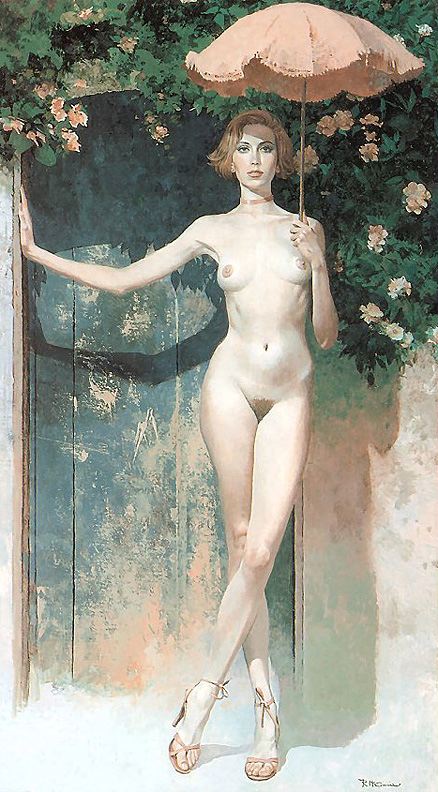
The women on Robert McGinnis'
paperback covers were often scantily clad, looking as though they might
slip out of whatever they were wearing at any moment, but he also did
straight-ahead nudes.  The modest parasol here, warding off the
sun's gaze, gives this example a certain teasing piquance.

AMARILLY OF CLOTHESLINE ALLEY

I fell in love with Mary Pickford when I watched this film a few years ago. I know you’re
probably thinking, “What took you so long?”, but I really hadn’t seen
much of her work before — some of the Biograph shorts she made for D.
W. Griffith and Sparrows, one of her later silents. I liked Sparrows a lot, thought it was a very well-made film, and admired Pickford’s craft extravagantly . . . but there was something self-conscious about it, something built into the idea of a masterful
artist playing a child, which had the flavor of a brilliant (a really brilliant) stunt.


But when I watched Amarilly Of Clothesline Alley all my resistance
melted. First of all, Pickford plays a sexually mature female, innocent
by choice but well aware of her options — and she’s very sexy, very
self-possessed and powerful, which makes her goodness all the more
vexing. The whole film is permeated with a strong aura of female power,
expressed most poignantly and convincingly in the easy camaraderie
between Amarilly and her mother — you get a sense that there’s no
problem on earth these two can’t solve . . . and haven’t solved, in a
sense, keeping a fatherless family together in crushing poverty. (You
also get a clear echo of Pickford’s actual early life, growing up too
fast, more of a peer than a daughter to her own mother.)


The wry eye they throw on the rest of the world, especially the world of
men, delightfully underlined in the snappy intertitles by Frances
Marion, their exuberant enjoyment of each other’s company, and of life
itself, exactly as it is, suggest a whole universe of female
self-sufficiency and dominion which our culture has managed to
eradicate almost entirely from the mainstream of popular art. (I begin
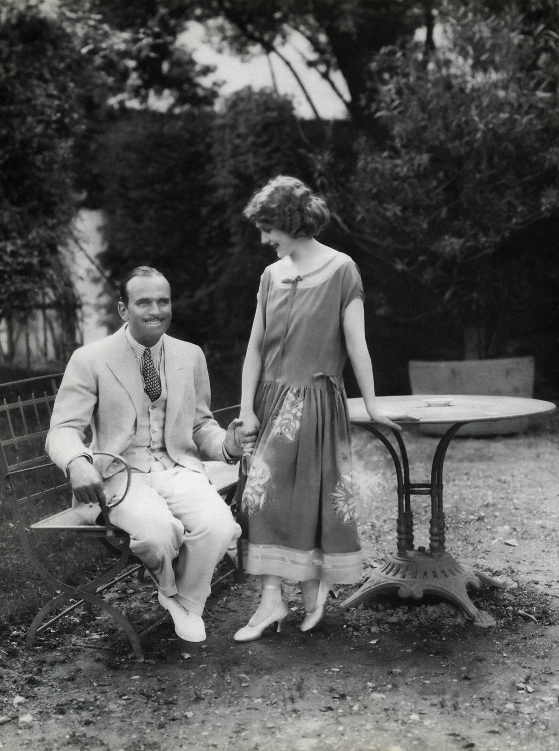
to think that the national euphoria over Pickford’s marriage to Douglas
Fairbanks may have reflected America’s pride, and perhaps relief, that
the country managed to produce a man worthy of her.)

The style of the film as a whole, and Pickford’s performance in particular,
is shockingly casual, fast-paced, breezy and naturalistic — Amarilly
seems to have a whole and real and complicated inner self which she
chooses to share with others, and with us, out of sheer generosity and
goodwill. Virtue has never seemed so alive, so glamorous.


Well, I’m not the first person this has happened to, and thanks to the miracle of DVDs, I won’t be the last.

DEBORAH KERR

Over at the Alternative Film Guide, Andre Soares has a wonderful appreciation of Deborah Kerr (who died recently at the age of 86) in which he tries to unravel the mystery of her subtle erotic appeal.  Such mysteries are ultimately unravel-able, of course, but Soares comes close, and reminds us why Kerr’s performances are always so alive and vexing.

I’ve written about her previously in a review of The Sundowners.

AN A. E. HOUSMAN POEM FOR TODAY

These, in the day when heaven was falling,
The hour when earth’s foundations fled,
Followed their mercenary calling,
And took their wages, and are dead.

Their shoulders held the sky suspended;
They stood, and earth’s foundations stay;
What God abandoned, these defended,
And saved the sum of things for pay.

The title of this poem is Epitaph on an Army of Mercenaries.

It’s one of my favorite poems of all time because it looks at things so
coldly and reminds us that sincerity is not the highest of
virtues.  Today we tend to think of virtue as a state of mind —
if you mean well, you’re a good person.  To Housman, as to the ancient Greeks, virtue was action, pure and simple.

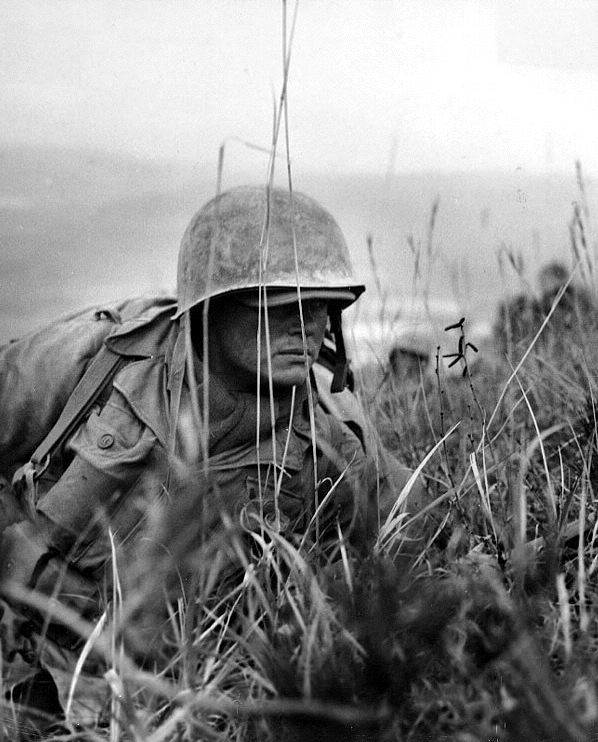
THE COLDEST WINTER

When he died in a car crash this Spring, David Halberstam had just finished his 21st book, The Coldest Winter,
an epic study of the Korean War.  It's partly a work of military
history, with combat narratives based on interviews with veterans of
the conflict, but its greater value lies in the way Halberstam places
the war in the context of the post-war world, of American and global
politics and strategy.

It fills in yet another piece of the puzzle of America's mood after
WWII — dark, anxious, bewildered, unsure of its new role as a world
superpower, veering between arrogance and lunatic paranoia.

There are many lessons for our own times to be learned from the book —
not least about the ways the Republican party managed to box the
Democrats into policies they mistrusted under the threat of being labeled
“soft on Communism”.  Substitute “terrorism” for “Communism” and
you will see the same dynamic at work today.

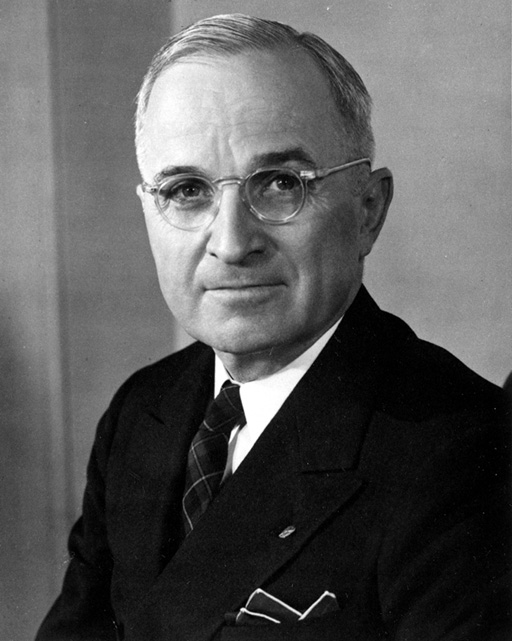
The war in Korea all but wrecked Truman's presidency, but he was
confident that history would judge him more kindly than his
contemporaries, as indeed it has.  Among the high-ranking soldiers
and politicians, Matthew Ridgway and Truman emerge in Halberstam's book
as the true heroes
of the war.  Ridgway learned how to fight the Chinese because he
was willing to take them seriously, to respect them as soldiers,
something the racist high command under MacArthur could not do. 
Truman was willing to buck popular sentiment and
risk political ruin to oppose MacArthur, whose madness served the purposes
of the right-wing Republicans in Washington but whose insubordination
threatened the very core of the American system of government, the principle of
civilian control of the military.

Among the boots on the ground, there were heroes by the thousands,
though they got no glory out of it, or even much recognition from the
folks at home.  Korea was a war Americans wanted to forget, even
while it was happening — which is just the kind of war that needs to
be remembered and studied with care.  We're in one like it
right now — part of the price a nation pays for forgetting the
grievous mistakes it has made in the past.

THEME TIME RADIO HOUR

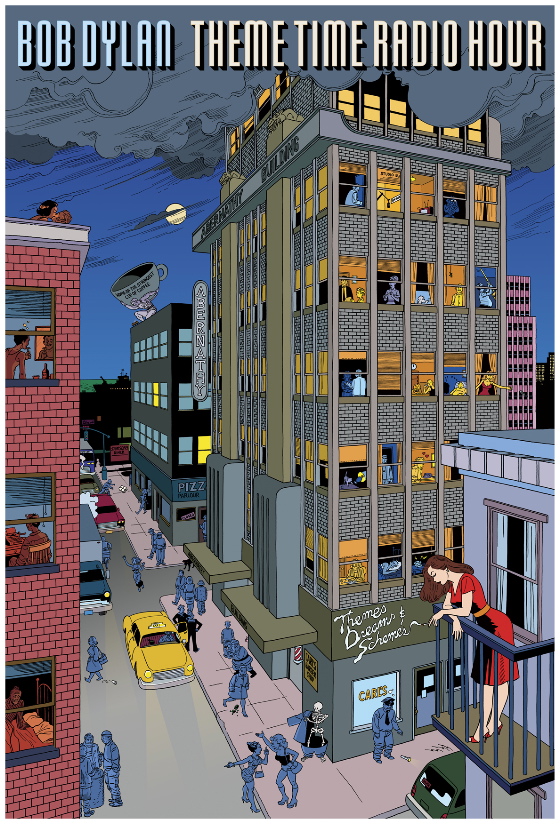
This is a poster designed by Jaime Hernandez, of the awesome comics duo
Los Bros Hernandez, for Bob Dylan's great show on XM Satellite Radio,
which might be the best radio music show of all time.  Each week
Dylan plays songs he likes on a given topic.  The songs are great,
but it's also great to see how Dylan organizes music in his mind. 
It's much the way he organizes images in his songs — according to
associations and affinities that don't follow conventional rules or
categories.


I don't listen to the show much because like more and more people these days I have a hard
time dealing with scheduled entertainment — unless it's something live
like a baseball game.  If it's digital and I can't download it or
get a copy of it to enjoy at my leisure, it's too much trouble, too
annoying — too much about the convenience of the provider and not
enough about my convenience.


[With thanks to
Boing Boing for the link.]

A SCHOOLYARD RHYME FOR TODAY

It is in the rock, but not in the stone;
It is in the marrow but not in the bone;
It is in the bolster, but not in the bed;
It is not in the living, nor yet in the dead.

This is a riddle, of course.  Can you guess the solution?

[From I Saw Esau, edited by Iona and Peter Opie.]

A DEGAS FOR TODAY

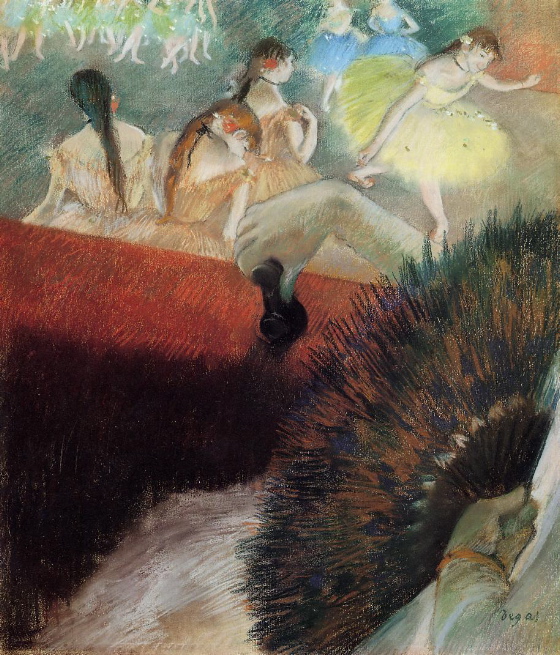
Degas' work is an odd combination of academic and Impressionist
strategies.  His draftsmanship tended to be rigorous, almost
photorealistic — he often worked from photographs — and he shared the
academic's preoccupation with the dramatic, expressive possibilities of
space.  At the same time his surfaces shimmered with a life of
their own, in the Impressionist way, creating a powerful counter
tension.

The image above is very unusual.  The design offers a bold
recession of spaces, in three dramatic stages, while the treatment of
the surface flattens it all out again, as in a Japanese print, also a
strong influence on Degas' style.

I can never feel comfortable calling Degas an Impressionist, but he wasn't an academic, either.  He was just Degas.

A SHAKESPEARE SONG FOR TODAY

Fear no more the heat o' the sun,


Nor the furious winter's rages;


Thou thy worldly task hast done,


Home art gone, and ta'en thy wages;


Golden lads and girls all must,


As chimney-sweepers, come to dust.


Fear no more the frown o' the great;


Thou art past the tyrant's stroke:


Care no more to clothe and eat;


To thee the reed is as the oak:


The sceptre, learning, physic, must


All follow this, and come to dust.


Fear no more the lightning-flash,


Nor the all-dreaded thunder-stone;


Fear not slander, censure rash;


Thou hast finished joy and moan;


All lovers young, all lovers must


Consign to thee, and come to dust.


 No exorciser harm thee!


 Nor no witchcraft charm thee!


 Ghost unlaid forbear thee!


 Nothing ill come near thee!


 Quiet consummation have;


 And renownéd be thy grave!

I've always loved this song, from Cymbeline, one of Shakespeare's late plays, especially this couplet:


Golden lads and girls all must,


As chimney-sweepers, come to dust.

It's so
Shakespeare — speaking of the gravest things in the lightest and most
lilting way.  I can't help but see it as a reflection of the
country humor Shakespeare grew up with, when hard things, all too
familiar, needed to be tossed off carelessly at times — sort of like
the phrase “he bought the farm.”

At any rate, the tone echoed through English literature — A. E. Housman derived a whole oeuvre from it, as in the following:

With rue my heart is laden
For golden friends I had,
For many a rose-lipped maiden
And many a lightfoot lad.

By brooks too broad for leaping
The lightfoot boys are laid,
The rose-lipped girls are sleeping
In fields where roses fade.


I also love the image in this couplet from Shakespeare's song:

Thou thy worldly task hast done,


Home art gone, and ta'en thy wages . . .

Though
Shakespeare became a wealthy man and a speculator later in his life, he
never got too far, imaginatively, from his working-class roots. 
Life to him was always a job of work, literally and
metaphorically.  He died soon after giving up his trade as a
playwright — in his heart, I suspect, the end of work and the end of
life were more or less the same thing, as they were for most English country folk of the time.

It took me a while to realize where the image in the couplet above
comes from, specifically — Saint Paul's letter to the Romans, where
the apostle writes, “The wages of sin is death.”

Saint Paul didn't exactly mean that death was a punishment for sin,
or that if you lived a sinless life you could escape death, because no one can live a sinless life.  He
was just making a general observation, as Shakespeare was, about the
condition of man, imperfect by nature, doomed to die.  When you
take your last wages in this world, all you can buy with them is the
farm.