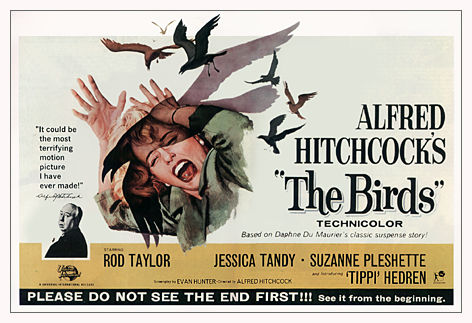
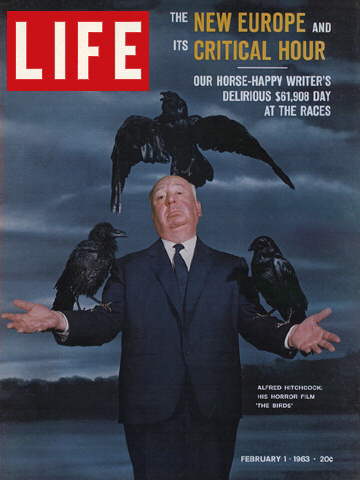
THE BIRDS


Robin Wood’s thoughtful and penetrating analysis of The Birds in Hitchcock’s Films Revisited is ultimately
disappointing
to me, because I don’t think Wood gets at the thematic heart of the
film, although he does acutely perceive its nature, it’s basic aesthetic
strategy, which is one it shares with all of Hitchcock’s great films —
and I think
The Birds is one of Hitchcock’s great films.

The characteristic strategy of The Birds is to lure
the viewer into largely unconscious emotional reactions to images and
situations and then to shift the perceptual ground slightly (or
shockingly, as the case may be) in such a way that the viewer is
compelled to become conflicted about those reactions, consciously or
not.

The goal with Hitchcock is always to heighten moral
and/or spiritual awareness but his methods never involve pronouncements
of any kind, and thus rarely involve symbols than can be reduced to a
precise intellectual meaning.  He is only interested in the psychic
currents
which he can tap, appeal to and uncover within the experience of the
viewer as he or she watches the film.

All great artists work this way of course, but if you
think that Hitchcock is just an entertainer, a supplier of sensation
for its own sake, a clever if eccentric practitioner of genre, you will
miss (at least on a conscious level) the full depth of his art.

So when Wood says that the birds in The Birds don’t
symbolize anything specific he is quite correct.  But what the birds
do, and when they do it — their function as psychic agents in a
narrative about characters we are alternately drawn to and suspicious
of
— are crucial issues.

The film opens with a man in a pet shop trying,
unsuccessfully, to buy a pair of lovebirds as a gift for his young
sister.  In the shop he meets a woman who’s attracted to him, later
buys the pair of lovebirds and drives them up to the remote fishing
village where the man’s sister lives, and leaves them for her.  The
film ends with the young sister carrying the birds on an escape through
an apocalyptic landscape — devastated by a lethal revolt . . . of
birds.

What’s going on here?  The lovebirds are not symbolic
per se in the artistic scheme of the film — they’re an image that
means different things to different characters at different stages of
the narrative.  What’s crucial, it seems to me, is that the lovebirds
are a couple and that they live in a cage.  They incarnate a paradox —
are they trapped, or are
they safe?  They’re both, obviously — but which condition is most
important?  That’s the question the film poses, and answers, after a
fashion.
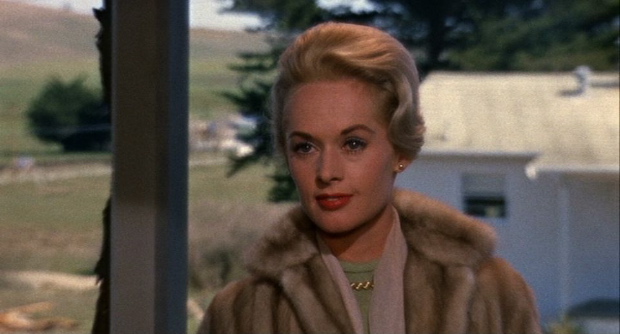

The woman in the pet shop is an irresponsible heiress
— a bird in a gilded cage, as Wood observes, but alone.  When she runs into a man who
wants lovebirds in a cage, she develops what seems to be an irrational
attraction to him.  The imagery is very ambiguous here, but suggestive.  Is she looking
for company in her cage, a man who’ll share her prison with her? 
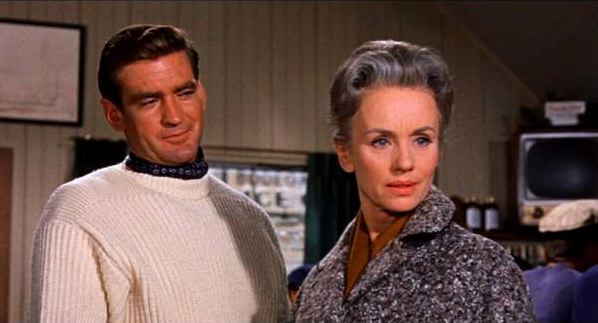

It turns out that the man is the son of a woman who
lost her husband, his father, and is thoroughly traumatized by the
loss.  She clings to her son, interferes with his desire to find a
partner of his own — places an intolerable burden on him to become the
head of the family, father to his sister.  The mother’s grasping is not
Oedipal, exactly — it’s more a terror of being alone, of being
incomplete.  The family’s loss of its father/husband has created a
vacuum in which neurosis breeds.

So the lovebirds, to the man, are an image of the
wholeness he can’t supply — a magical substitution which might allow
him to seek his own wholeness in a new relationship.

The lovebirds may not mean exactly the same thing to
the man and the woman in the pet shop but they crystallize each
other’s
deepest needs and desires.  How could they not fall in love in the
presence of such an image?

But the image won’t stay put — won’t stabilize itself
for either of them.  Other birds, uncaged birds, gather above them
menacingly.  The man catches the woman delivering the lovebirds to his
sister, is
touched, intrigued, drawn to her, as she obviously is to him.  At that
moment a seagull attacks the woman, for no apparent reason.

Later, the woman reveals to the man that her mother
deserted her when she was child.  At that moment a flock of birds
suddenly attacks the children at the sister’s birthday party.  It’s as
though the creatures have emerged demonically from the woman’s ravaged
psyche.
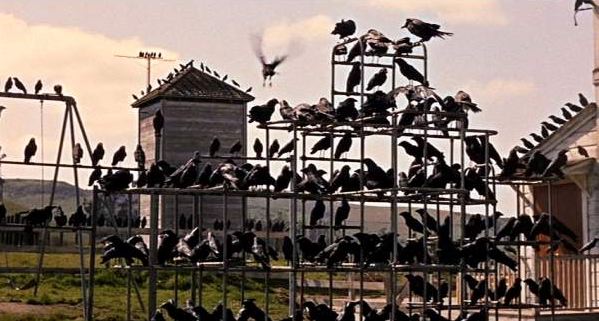

The bird attacks grow more numerous, more lethal, more
surreal.  They attack the man and the  sister and the mother in their
own home, where the woman is visiting.  There seems to be no defense,
no hiding place.  But a new family is forming, as the man and the woman
fall deeper and deeper in love, as the sister comes to rely on the
woman emotionally, as the mother slowly softens towards her.

The birds pause in their attack.  The family decides
to make a run for it.  The sister insists on carrying the lovebirds in
their cage.  As they drive away though fields of menacing, roosting,
temporarily placid birds, the mother takes the woman in her arms, in a
mother’s embrace.

The lovebirds in their cage have become a talisman of
salvation — an image of the confinement of commitment, the cage of
family and love, but also of immunity from outright destruction.  It’s
like the bait and switch Hitchcock engineered in Shadow Of A Doubt,
where the “oppressive” and suffocating prison of the family, as we see
it at the beginning of the film, is revealed as the only refuge against
forces darker than anyone in that family could ever have imagined.

Only the lovebirds in their cage are free,
provisionally at least. Outside the cage is simply irrational,
meaningless horror.  This is not exactly a conservative or romantic
endorsement of committed love and family.  Happiness is not really at
stake here, much less moral rectitude or an all-encompassing psychic fulfillment — only
survival.  So why is that mother’s embrace at the end of the film so
powerful, so profound, so moving?  Because it’s something, set against
nothing.
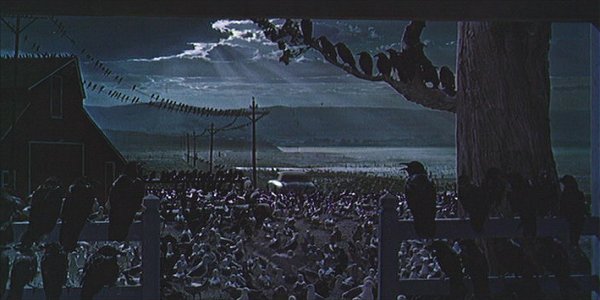


The newly constructed family drives off jammed into a
small sports car, caged.  They incarnate a paradox — are they trapped,
or are they safe?  Both,
obviously — but which condition is most important?  It’s clear enough
which way the film leans on this issue, but Hitchcock isn’t making any
promises.  He insisted that “The End” not appear at the film’s close —
partly as a gimmick (“The birds are still out there!”), partly to keep
the psychic and moral tension alive in the audience . . . but also
partly, no doubt, because he knew subconsciously that he would return
to the female protagonist of this film again, would explore her
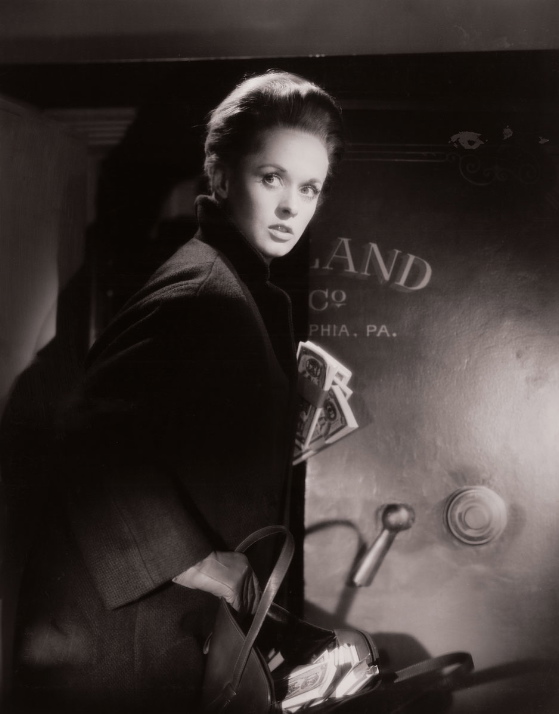
existential jeopardy in greater depth, which he did
in Marnie, using the
same actress, playing a very similar lost soul in search of a mother’s
embrace.


The hidden, poisoned springs of many Hitchcock films run through the
pathology of dysfunctional parents, shattered, perverted families,
wrecked marriages — and the provisional redemption these films offer
often involves new families reconstructed on the ruins of old
ones.  Hitchcock’s view of the family, all families, was ambiguous
— and his passionate defense of the family as a bastion against
terror, against meaninglessness, was inflected by this ambiguity. 
Even so, his view was inaccessible to many critics, like Wood, who
were, for personal and political reasons, deeply suspicious of the
family as a social phenomenon — an attitude that became fashionable,
almost a matter of faith, among 20th-Century intellectuals.  Wood
wanted to analyze
The Birds
as a vision merely of conflict between order and disorder, missing the
fact that, for Hitchcock, this conflict was centrally bound up with the
idea of family.


Hitchcock was canny.  He knew that society cannot face its deepest
concerns, its deepest fears, directly.  He knew that those fears
had to be displaced in art, given an indirect expression — blamed, as
it were, on the birds.
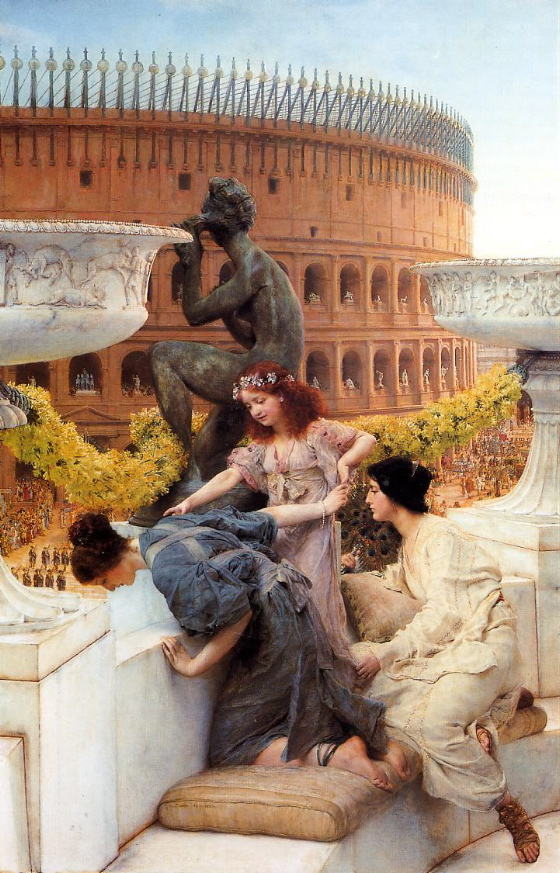
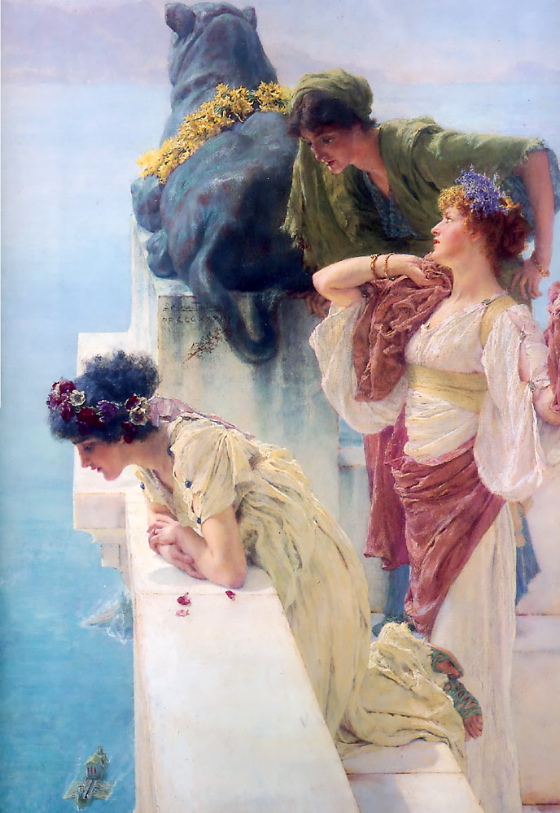
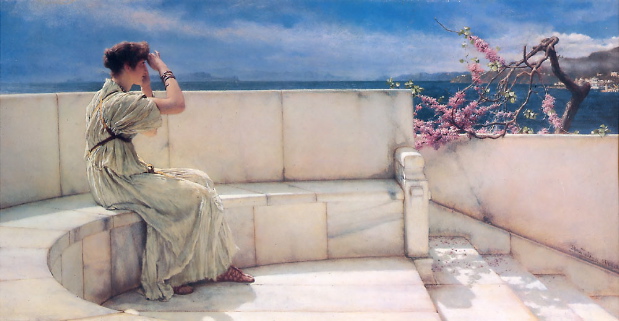
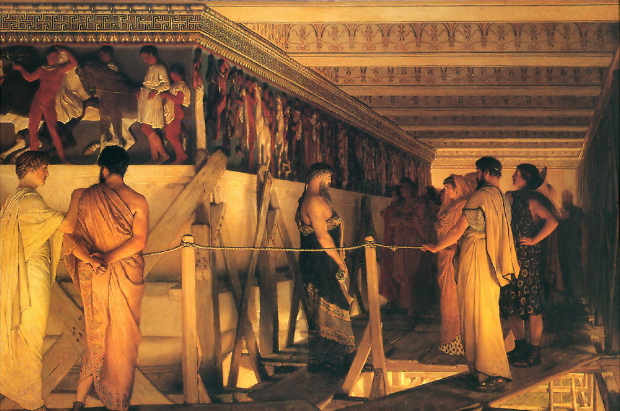
SIR LAWRENCE ALMA-TADEMA: A VICTORIAN ARTIST YOU SHOULD KNOW


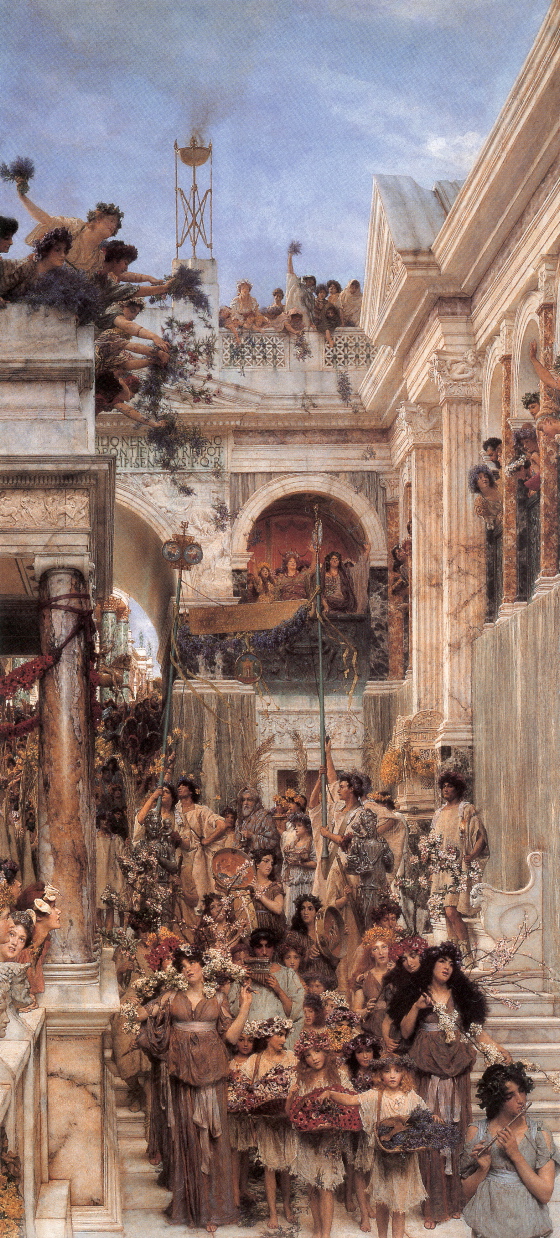
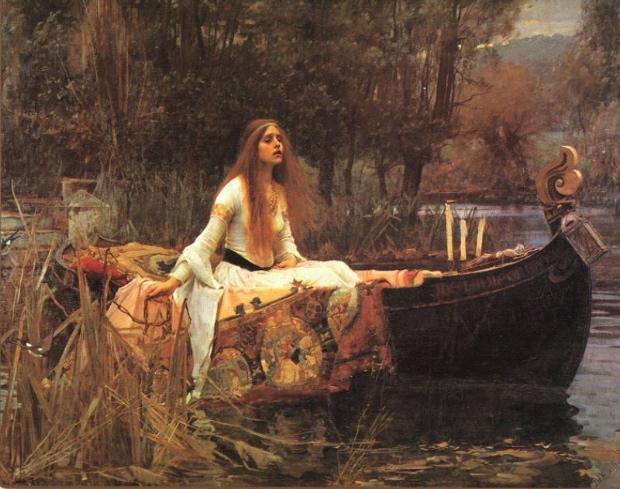
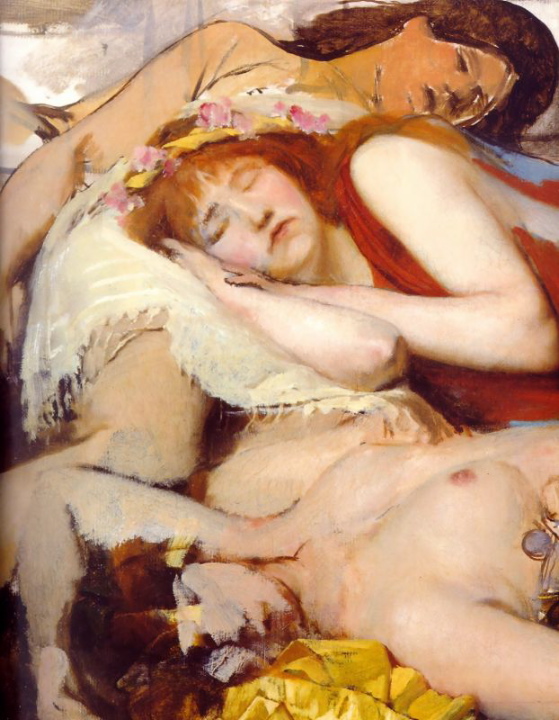
Sir Lawrence Alma-Tadema might be the most ravishing of all the Victorian academic painters.  His luminous photo-authoritative images of the ancient world are sensually and historically seductive — they seem to lay antiquity before us as it might have appeared in real life were we to be magically transported back into it.

In truth his visions are romantic, concentrating as they do on sunny Mediterranean light, color, luxury and spectacle — but they convince the eye.  His preoccupation with the illusion of spatial depth draws us imaginatively into the scenes he conjures up, gives us a visceral sense of participation in them.


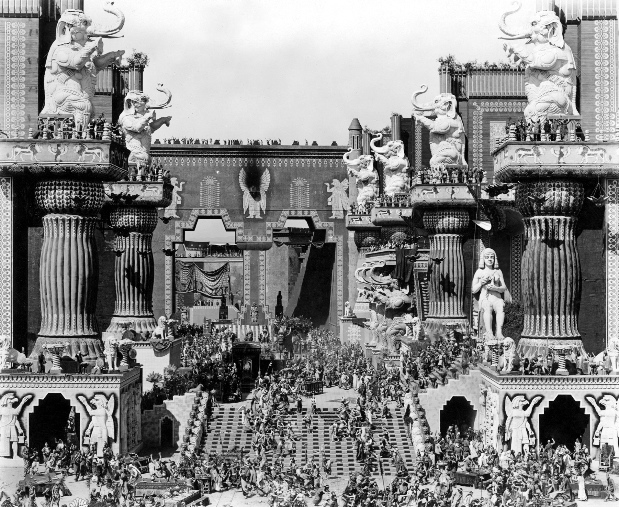
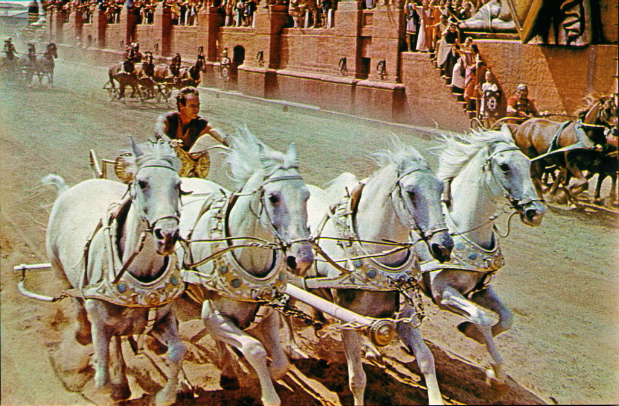
The tradition of the Biblical epic in cinema pursued Alma-Tadema’s aims by other means but rarely achieved them with such magnificent authority.  The chariot race in Wyler’s Ben-Hur perhaps comes closest to involving us in a vision of the ancient world that possesses a comparable enchantment and illusion of truth.


Wyler, and second-unit director Yakima Canutt, who actually supervised most of the filming of the chariot race, used the tracking shot in spectacular ways to draw us into the cinematic universe of the sequence.  A camera moving through real spaces, photographing real people driving real chariots was a powerful tool, but in a way its very power highlights the effects Alma-Tadema was able to achieve with just paint and canvas.

He was fine painter, as well as a fine storyteller — the study below gives a good idea of his purely painterly gifts, scarcely inferior to Degas’, for example:


The 20th-Century art establishment became suspicious of the meticulous “finish” the academic painters gave their works, but the über-photographic illusion they were after, and the narrative ambitions it served, remain potent and charming.

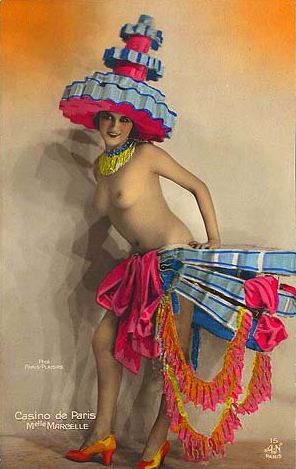
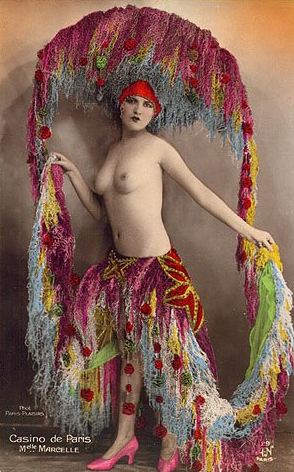
CASINO DE PARIS

If you search a bit on the web you can find collections of hand-colored vintage postcards of performers from the Casino de Paris.  These ladies were the forerunners of the Vegas
showgirl by a line of direct transmission — the legendary topless revues in Vegas were staged by artists who’d worked at places like the Casino de Paris.

Donn Arden, for example, who created Jubilee! more than twenty years ago, once worked for the Cafe Lido in Paris, home of the famous Bluebell girls and one
of the classic French topless revues.  Jubilee! is the last of the traditional showgirl revues still surviving on the Vegas Strip.


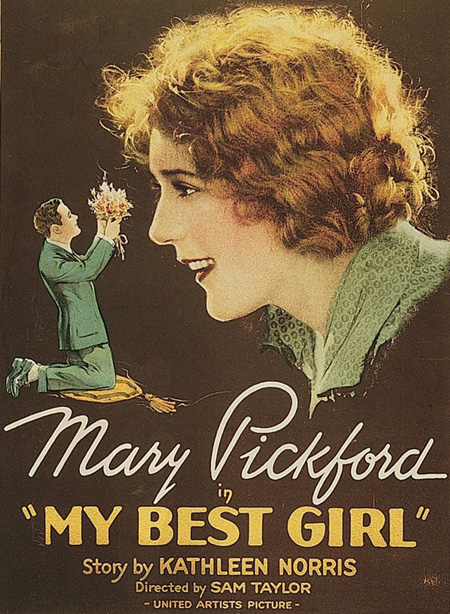
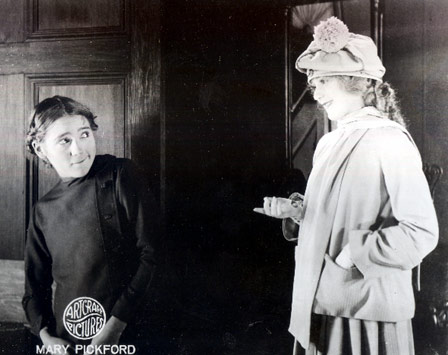
MY BEST GIRL


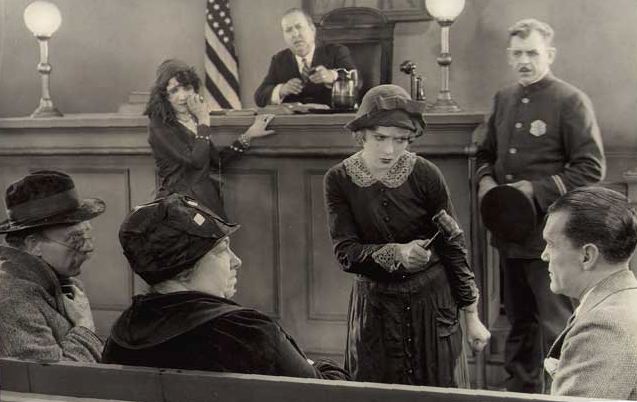
If I hadn't fallen in love with Mary Pickford watching
Amarilly Of Clothesline Alley, watching My Best Girl
would have done the trick just as well.


This
is one of the best romantic comedies ever made and perhaps the
sweetest, with the possible exception of Griffith's
True Heart Susie.
It's also a transitional film, I think — preserving some of the
bucolic innocence of
Susie while pointing the way to the screwball
drawing-room comedies of the Thirties.


The
plot is conventional and silly, about on a level with
Pretty Woman in
that regard — a young working-class woman with a job in a department
store gets involved with the wealthy son of the store's owner, who's
working there incognito to get to know the business he will inherit.
The film itself, however, is anything but a trifle. When films this
simple are this great, there's extraordinary art at work — a comment I
would also make about Murnau's
Sunrise, which My Best Girl
resembles in some crucial ways. Both are simple love stories about
simple, utterly ordinary people, done without a trace of condescension
and with moments of poetry which are profound.


I'm
beginning to realize that Pickford's range as an actor was awesome.
There's a core star persona that migrates from film to film, bits of
business and attitude that reference the expectations audiences brought
to her films, but the characterizations are unusually diverse for a
star, especially a silent film star. Gish always played Gish in silent
films, though the complexity of Gish was endless — Chaplin always
played Chaplin, though the inventiveness of Chaplin was inexhaustible.
But Amarilly is not
My Best Girl's Maggie — you have a sense of meeting someone
wholly different in their respective stories. (And Unity Blake, in
Stella Maris, inhabits
a different universe from either of them.)


Mostly
this is the result of Pickford's uncanny ability to suggest an inner
life — to create reactions to conventional situations which are
quirky, distinctive. This has nothing to do with the roles as written,
because the roles are somewhat generic, but with Pickford's absolute
commitment to the moment, to the cinematic present. It's one of the
reasons you can't take your eyes off her.


Buddy
Rogers is a charming looking fellow, a competent actor and a very
skilled light comedian, but he doesn't convey a lot of gravity when
he's onscreen by himself. Yet when Pickford looks at him with an
expression that says, “This guy might amount to something,” you believe
it without question. So many great performances by actors on film are
created in the faces of the actors playing opposite them — Hepburn, for
example, wonderful as she is, reaches a whole new level in her work
with Spencer Tracy . . . he just very quietly gives her her scenes, and
makes us love her in a way we very rarely do when he's not around.


Pickford
does the same for Rogers here — and for the film as a whole, really.
This same film, shot for shot, with another actor as the female lead,
would be next to nothing. But
My Best Girl utterly transcends its
apparent limits.


Which
is not to say that the filmmaking isn't superb — and such a treat to
experience in the DVD . . . a stunning transfer of a stunning print.
Director Sam Taylor knew exactly what he was doing. There are wondrous
tracking shots in the film, always associated with key moments in the
romantic relationship between Maggie and Joe — starting with the
thrilling shots from the moving truck where Maggie waits for Joe to
catch up with her, racing after her on foot. Plastic metaphor doesn't
get any more eloquent.


Then
there is the sudden, almost jarring pull back from the crate where
Maggie and Joe are having lunch, which becomes not just a cute reveal
but an evocation of breathlessness. It releases an emotion already
created by Pickford's performance — the physical jolt of pleasure,
surprise and fear she conveys when he accidentally puts his arm around
her, the anticipation and hopefulness in her darting eyes when he opens
her birthday present. Both moments made me cry, simply because they
were so heartfelt, yet so subtle — almost thrown away.


And
there are the fine, lyrical follow-shots as the two sweethearts walk
through the city in the rain, in the first flush of romance, dodging
cars and people, echoing a similar device in
Sunrise where the bond
between two people is reinforced by their common path through an
indifferent urban landscape. In some ways, the simplicity of the shots
in
My Best Girl, the fact that they don't draw metaphorical attention
to themselves, makes them more powerful.


To
illustrate the brilliance of the choices Pickford makes as an actor in
My Best Girl would be to recapitulate most of her scenes in the film.
One that stood out for me was the moment when Maggie first meets Joe's
fiancée. She doesn't look at Joe, with hurt and outrage — the obvious
way to play it. She stares at the fiancée — sizing her up, calculating
the difference between them, looking into the fiancée's eyes for the
truth about what's really happening. It's heartbreaking, and a perfect
moment of perfectly observed human behavior.

It's
heartbreaking, too, to think that this was Pickford's last silent film.
You get a feeling from
My Best Girl that there was some possibility
of a synthesis between the silent sensibility, Pickford's belief in
simple goodness, and a more modern style. In the final confrontation
with Joe and his father in Maggie's kitchen, Pickford seems to be
addressing this very issue — pretending to be a flapper, a hot mama,
almost pulling it off . . . but with a bitterness that seems to say,
“Is this what you really want from me?”


American movies, and American culture, lost more than we may yet realize when that synthesis didn't happen.

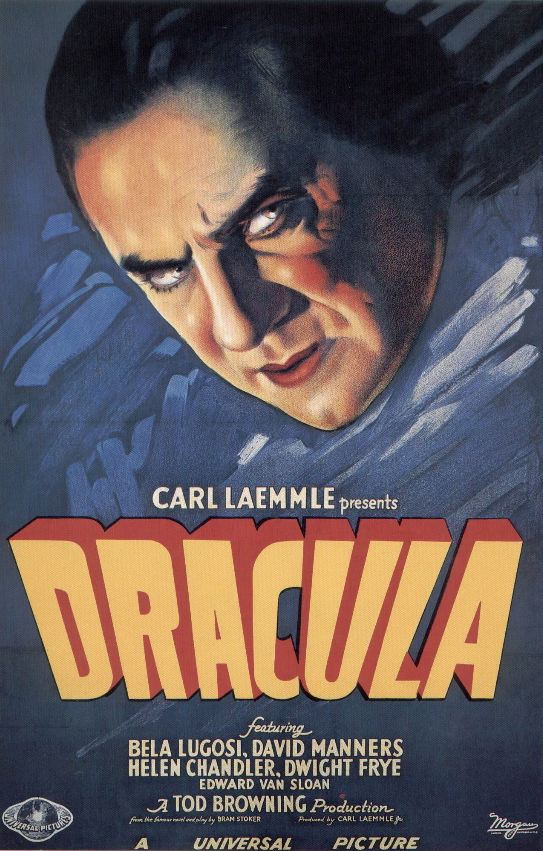
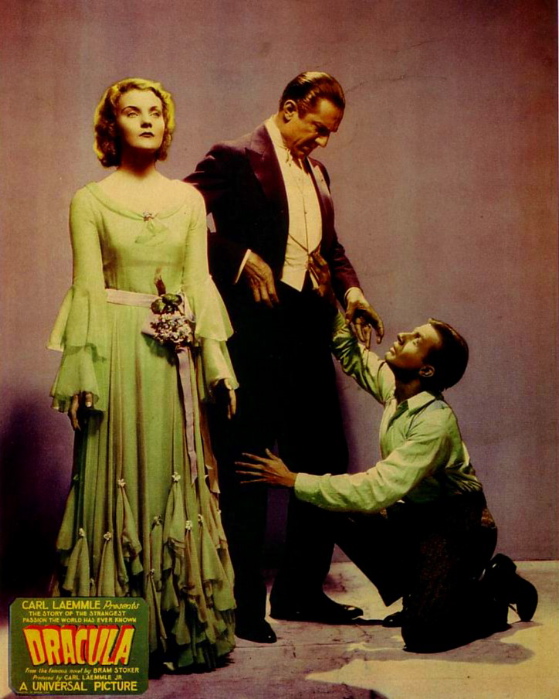
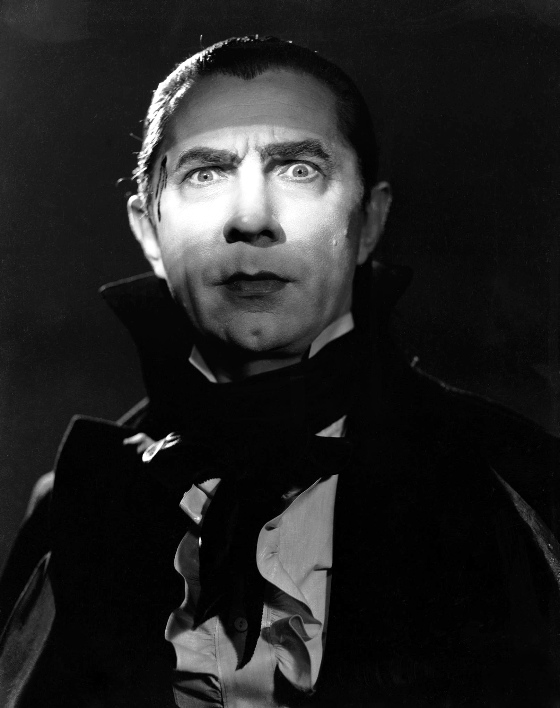
DRACULA (1931)

I saw the 1931 version of Dracula so many times as a kid, and listened so
often to a tape of its soundtrack I made off the TV, that at a certain
point I couldn’t see or hear it anymore. Even watching it today I
sometimes find myself speaking the lines before they’re delivered, with
the exact (and always eccentric) vocal inflections of the actors.


I stopped watching it in my late teens, a bit embarrassed by its
clunkiness and lack of sophistication — so it was something of a
revelation to see it again recently in the restored version now out on
DVD and find myself wondrously entertained.


It is a truly demented film, in a way none of the other classic Universal horror films are — and the dementia must be credited largely to Tod Browning, because it echoes the perversity of so many of his silents.

Everyone in the film looks drugged — moves like a sleepwalker or someone in a
woozy erotic reverie. The slow pace can perhaps be attributed in part
to the recent transition to sound — to the need for actors to avoid
stepping on each other’s lines and to the silent-era habit of lingering
on movement for character or narrative exposition that could now be
supplied by the dialogue. But a bigger part I think is a stylistic
choice by Browning — his way of creating an otherworldy and yet
insistently sensual mood.


It’s not quite campy, as James Whale’s style can be — there’s no real wit
to it, no winking at the audience to let them in on the joke. We simply
seem to be watching a film in some unfamiliar Kabuki-like performance
tradition, which demands from its performers a greater degree of
deliberation and a slower pace than we’re used to. The effect is
unsettling but adds to the uncanny atmosphere.

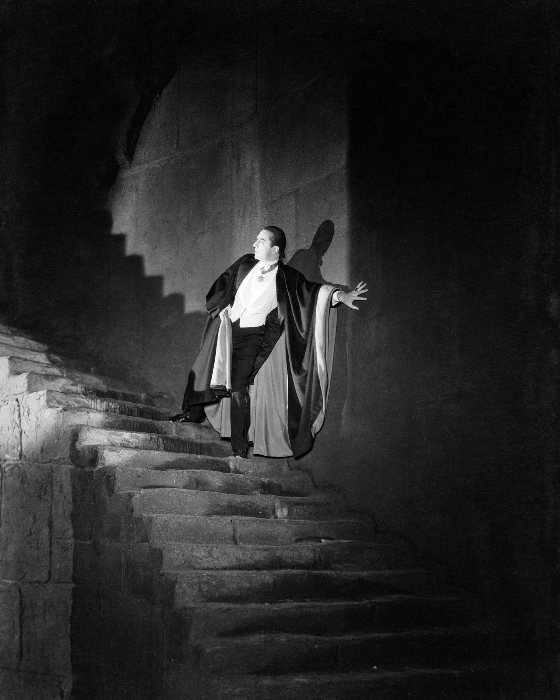
The restored version gives one a chance to appreciate how beautifully the
film is shot — with exquisite lighting and infrequent camera moves
that are nevertheless always effective, either in enlivening an
otherwise static interior scene or in giving the spectator a sense of
being drawn in to a forbidden precinct. The film is so much more
stylish visually than most of Browning’s work that I guess one must
credit the speculation that cameraman Karl Freund was a kind of
co-director on the film — or at least that Browning gave him total
license in creating the look of it.


It has many lapses of continuity, a few of which are really jarring — evidence,
as has been suggested, that someone took the shears to Browning’s
original cut. But when the film slows down in the second half, with its
maddening repetition of expository material in the dialogue, you find
yourself wishing for the shears yourself. The script is simply very
clumsy, and I’m convinced the cutting was done to eliminate unnecessary
dialogue rather than to address any directorial lapses by Browning, who
after all was charged with shooting the script approved by the studio.


The film is never scary, exactly — but it’s creepy, spooky, strange, in
its own unique way. It has a dreamlike quality that allows its
subversive themes to gain sway over the spectator’s unconscious
experience of the film.

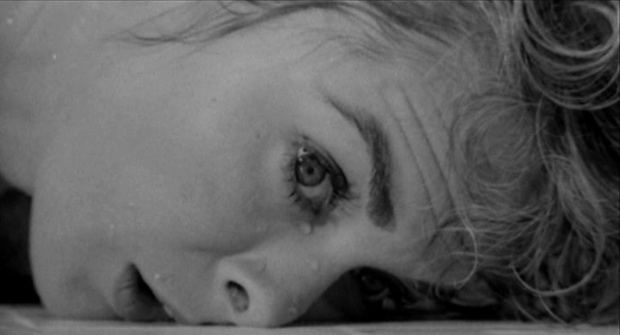
THE UNCUT PSYCHO

The original cut of Psycho
which Alfred Hitchcock delivered to Paramount ran just under nine
hours.  Hitchcock lobbied hard to have the film released at this
length, in a special day-long presentation with two intermissions, but
violent reactions from audience members who saw test screenings of
the nine-hour version (including, reportedly, at least two
unpublicized suicides) convinced the director to cut the film
drastically and release it at a normal length.


All prints of
the original cut were thought to have been destroyed — until early
this year when one somehow turned up in the basement of a house under
demolition in St. Louis.  The house had once belonged to a man
who owned a small chain of movie theaters in the Midwest, and apparently at least one
print had made it to one of those theaters, presumably for test
purposes.


Robert Harris, who has restored several classic films, including Hitchcock's Vertigo, and will be restoring the uncut Psycho,
is one of the few people who's watched the new footage in its
entirety.  Harris reports that the famous shower scene runs to
forty-five minutes in Hitchcock's original cut and personally made him
sick to his stomach.  “It's film history,” says Harris, “and needs
to be preserved, but I can't say I'm happy that this new version has
survived.  The world would be a better place without it.”


Picture
negative and original sound elements for the new footage do not survive, so the
reconstruction will be uneven.  Universal, which now controls the film, plans to release the
uncut
Psycho in a three-disc special edition late in 2008.


THE CATHOLIC HITCHCOCK AND THE PROTESTANT HITCHCOCK


Alfred Hitchcock was raised a Catholic and educated by
the Jesuits.  The influence of his Catholic upbringing is evident in
his films, sometimes in surprising ways.

On a purely psychological level, Hitchcock was
attracted to stories in which someone is judged unfairly,
mistaken for someone else and asked to pay for that other person’s
sins.  This is a common enough response to the harsh and demanding educational
system of the Jesuits — a sense of living under perpetual (and
seemingly unjust) accusation.  In many Hitchcock movies the unfairly
accused protagonist redeems himself by heroic actions — which in
theological terms might be related to the doctrine of justification by
works, the idea that a man can, with a little help from God, save
himself by his own actions.

But there’s deeper and more complex theology at work in certain of
Hitchcock’s films — most notably in I Confess and The Wrong Man.
Interestingly enough, these are two of the director’s most naturalistic
films, shot in great part on location and in black and white.  It’s odd
that when he wanted to delve most deeply into religious themes he
should have chosen to present them in a quasi-documentary form.

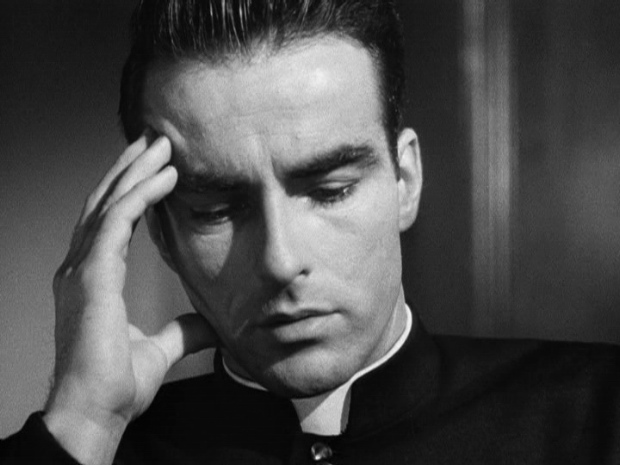
In I Confess a priest, played by Montgomery Clift, is unjustly accused of a
murder.  The real killer has confessed to him, but he can’t, as a
matter of religious conviction, tell anybody about it.  In this film,
the protagonist does not redeem himself except by passive sacrifice.
His heroism is simply to accept his fate humbly, stick to his faith.


His convictions here are church-related — he must
sacrifice himself to the principle of the sanctity of the confessional,
to ecclesiastical procedure.  He’s saved from paying the ultimate
penalty by the witness of another character, who sacrifices herself to
reveal his innocence.  Presumably his own sacrificial posture has
inspired her to this act.

So far we are well within the Catholic tradition, which sees the church, personified in the figure of the priest, as a divine agent in the world — adherence to its doctrine and ritual leads to salvation.

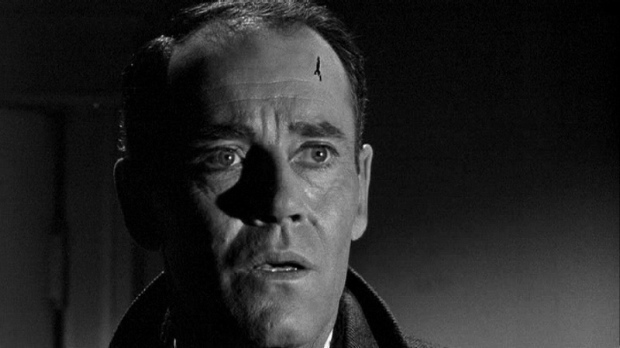
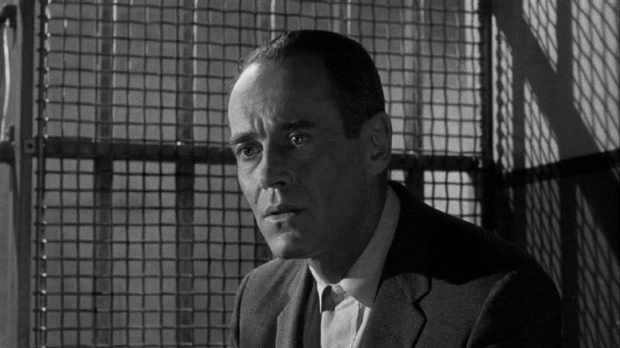
But something very different is going on in The Wrong Man.  Here an innocent man, played by Henry Fonda, is accused of a crime and his whole life is
shattered.  He’s a religious man, and carries his rosary beads with him
through his ordeal — but it doesn’t seem to help.  The wheels of
justice, the oppression of the legal system, operating quite reasonably
on the face of it, crush him like an insect.


Finally his mother asks him to pray — and he does,
not with the rosary beads, not in a church, but directly to an image of
Jesus.  Instantly, the real criminal appears and is caught — the
accused man is redeemed.

This is a long way from Catholic theology in that the
church plays no mediating role.  It’s just between “the wrong man” and
Jesus.  He’s saved by no action of his own, not even by the humble
acceptance of his fate.  He’s saved by a simple cry for help.

We’re now, oddly enough, in Protestant theological territory, closer
to the doctrine of justification by faith, in which neither the church
nor the suffering man play any role whatsoever in the man’s salvation,
which is a gift of Grace from God, pure and simple.

It’s clear that in these two films Hitchcock was not just expressing resentment over the terrors and the residual guilt inculcated by a Catholic
education.  He was articulating complex themes in Christian
thought, trying to dramatize them in an entertaining way but also to
situate them in the real world, in a plausible evocation of modern-day
Quebec, where I Confess is set, and New York, where The Wrong Man
is set.


“Film is not a slice of life,” Hitchcock famously
said, “it’s a slice of cake”.  But there’s very little cake on display
in either of these films — and in the mean streets of The Wrong Man,
in the suffocating rooms and cells and hallways of police stations and
prisons and courthouses, there is only wormwood and gall.

The two films stand out as great and profound works of
Christian art, explicit meditations on Christian theology in a century
(and an industry) not noted for such concerns.  Like all good parables
they can be enjoyed simply as stories, but Hitchcock makes it very
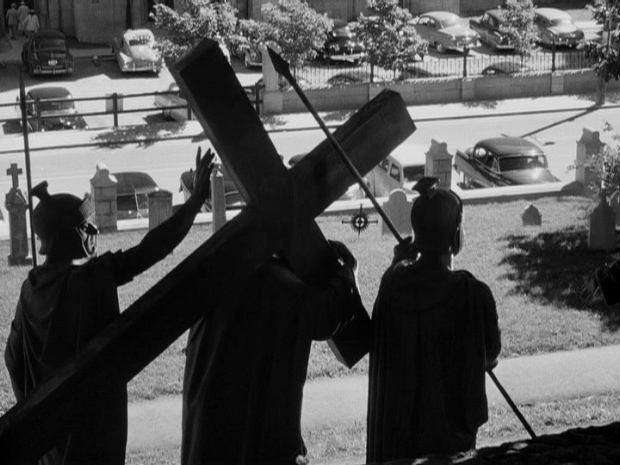
clear (see the image from I Confess at the beginning of this post) that he had heaven on his mind when he made them, that he was
asking deep questions about the nature and the mechanism of salvation.

VICTORIAN ART AND THE CINEMA

In the mythology of modern art history the realist painters of the
Victorian era fought a losing battle with the photograph and eventually
capitulated to the dominant aesthetic of 20th-Century art, with its
irresistible (and progressive) trend towards a greater and greater
abstraction, abandoning both pictorial realism and almost all narrative
ambitions.


In fact, however, realist painters of the Victoria era conducted an
exciting and productive dialogue with the photograph, incorporating its
apparent authority but also, at the same time, extending its range of
representation beyond the technical limits of the 19th-Century camera.


Academic art surrendered not to the abstractions of the 20th-Century
painter but to the great artists of the early cinema, who assumed the
narrative and representational ambitions of academic art in a medium
which had, at least as far a popular taste went, better resources for
realizing those ambitions.  You could almost say that the academic art
of the 19th-Century was born again, gloriously, in a new medium, which
it deeply influenced.


Academic art taught movies how to orchestrate photo-realistic elements
into theatrical forms, using lighting, framing and the placement of
figures in space to create a hyper-realistic illusion that had the
coherence of actual visual experience even when departing from it in
fabulous ways.  Because film could capture motion, and thus emphasize
the plasticity of space far more expressively than the easel-painter,
it rendered the academic easel-painter’s art passé.  It was motion and
the greater illusion of spatial depth it allowed which lost academic
art its popular following.


But much more than that was lost, especially in the realm of color.  Up
until very recent times, color film stocks couldn’t begin to reproduce
the range of lighting conditions which the Victorian realist painters
gloried in.  By marrying, through draftsmanship, an almost photographic
realism with an über-photographic sensitivity to color and light, the
Victorian painters anticipated cinematic effects which remain difficult
to achieve even today.


The attempt to devalue the work of Victorian painters, seeing them as
obstinate blocks to the steady progress of art, was a strategic ploy on
the part of 20th-Century modernist painters and their apologists in the
academy and the marketplace.  Engaged in a project which would divorce
art from popular taste and arrive at an aesthetic dead end before the
end of the 20th century, they posited a straw man in the person of the
reactionary academic practitioner which lent their own schools an
undeserved glamor and prestige — even as the academic practitioner was
informing and inspiring the great new popular art form of the movies.


But the intellectual disgrace of the Victorian painters also helped
impoverish cinema, because, after the first glorious blossoming of the
art in the silent era, filmmakers forgot academic painting.  To get
back in touch with its lessons, they had to get back in touch with the
masters of the silent era, like Griffith, Vidor, Murnau and Ford, for
whom Victorian academic painting was a living form and a direct
inspiration of their techniques.  The filmmakers who followed them had
to engage Victorian academic art at one remove, and thus lost touch
with the very forms which had inspired and instructed the original
pioneers of cinema.


The propaganda of the modernist painters, understandable from their
point of view, resulted in a great loss to the visual culture of the
20th-Century.  It couldn’t obliterate the glories of Victorian academic
painting, which survived, transformed, in movies and in popular
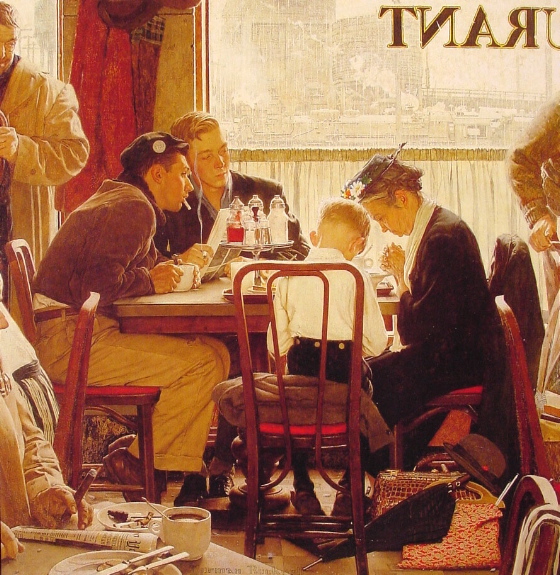
illustration (through the work of artists like N. C. Wyeth and Norman
Rockwell.)  But it distorted the intellectual appreciation of a visual
tradition which might have been of great use to artists, film artists
especially, if they hadn’t been shamed into despising it on principle.


I would argue that a new appreciation of Victorian realist painting has
the power to recharge the art of cinema in our time — quite apart from
the pleasures to be gained by directly encountering a vital and
ravishing visual tradition.


IMAGES


One of the most delightful sites on the Web is
Dr. Macro's High-Quality Movie Scans
Wandering through its galleries of movie stills, star portraits and
promotional graphics is a ravishing experience.  Check it out.


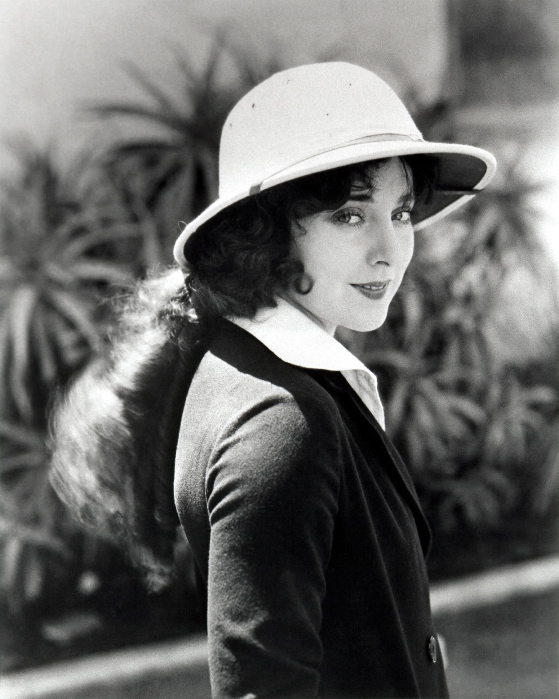
[Above is the lovely and always vexing Jobyna Ralston, who co-starred
with Harold Lloyd in many of his best silent films.  Below, a seminal
image from
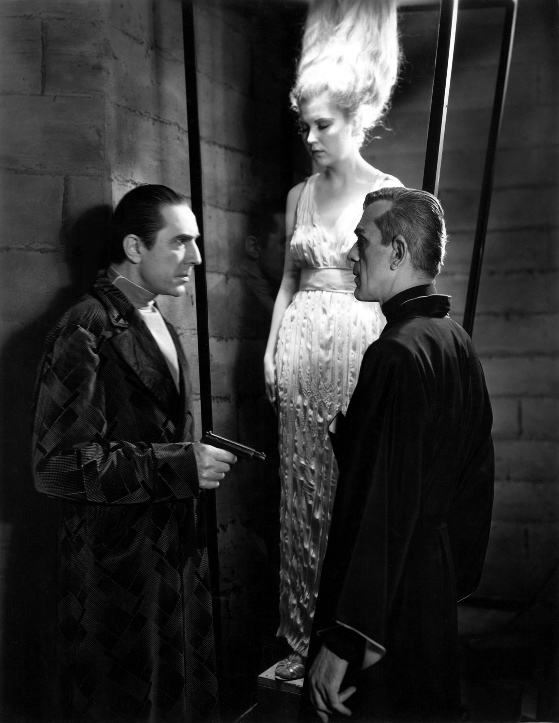
The Black Cat.]


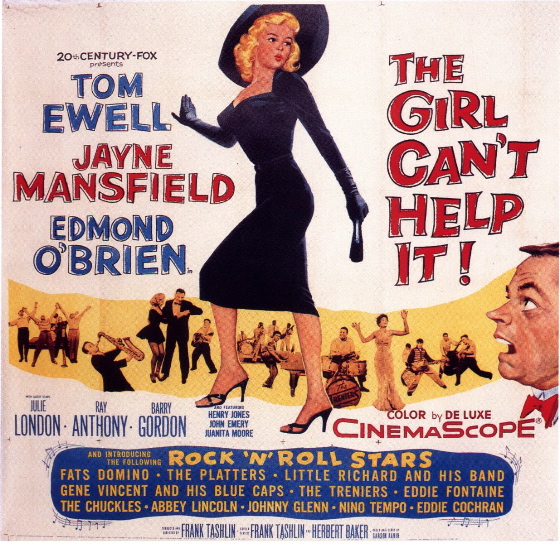
THE GIRL CAN'T HELP IT


Frank Tashlin was the nut-case genius who unleashed
the nut-case genius of Jerry Lewis as a filmmaker.  Before Lewis became
a director, Tashlin directed him in some important movies that helped
set the tone and strategy for Lewis' later work.

Tashlin basically showed Lewis that if in a film you
deconstructed the process of making movies and let the audience in on
the deconstruction in a lighthearted, complicitous way, you could
vastly expand the range of comic eccentricity possible in a mainstream
film.  As long as the audience knew you were violating convention
deliberately and “just for laffs” it would then allow you to do and say
almost anything.


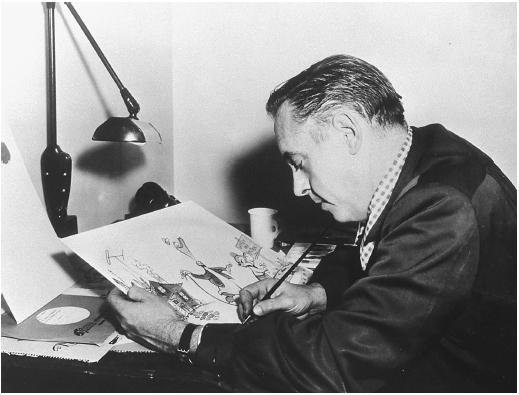
Tashlin started out in animation, so he had a good
idea of how much surrealism and aesthetic self-reflexiveness a
mainstream audience would accept.  It was his genius to show how this
receptivity could be appealed to in live-action comedy.

The Girl Can't Help It, Tashlin's masterpiece,
starts out in black and white and in Academy ratio.  Tom Ewell, the
male star of the film, steps forward towards the camera and announces
directly to the audience that the film they're about to see is in
Cinemascope.  He waves his hands and the sides of the image expand to a
Cinemascope ratio.  He also announces that the film will be in color —
more prestidigitation and the image becomes saturated with color. 
“Sometimes,” he confides to the audience, “you wonder who's minding the
shop.”

Instantly Tashlin establishes a bond with the audience
based on the suggestion that the powers that be in Hollywood would give their customers
less than they wanted if they could get away with it — but Ewell, acting
on the audience's behalf, won't let the industry get away with it.  The
implications of this are profound.  Hollywood is the establishment,
part of the cultural compact of the nation.  Once you're seduced into
suspecting Hollywood, you're ready to suspect everything.

But Tashlin doesn't leave it at that.  As Ewell
chatters on, telling us that this movie is going to be about rock and
roll, Tashlin tracks in on a jukebox playing the title song, sung by
the highly suspect cultural icon Little Richard, and the song drowns
out the end of Ewell's monologue.  Don't even trust the star, Tashlin
seems to be saying — don't even trust me.

I think it's probably a mistake to parse this film, and
Tashlin's work in general, looking for a programmatic critique of
movies or of American culture.  Tashlin, like Nietzsche, is offering a
perspective from which a critique is possible, but he leaves the
conclusions to the viewer.  Tashlin was interested in creating a
transgressive frame of mind, a frame of mind in which anything and
everything could be questioned — he wasn't interested in formulating
answers to the questions themselves.  He liked, I think, the giddiness
of abandoning, of shattering received forms, the license it gave him to
free-associate — and that's what he does in this film.


The center of The Girl Can't Help It is the
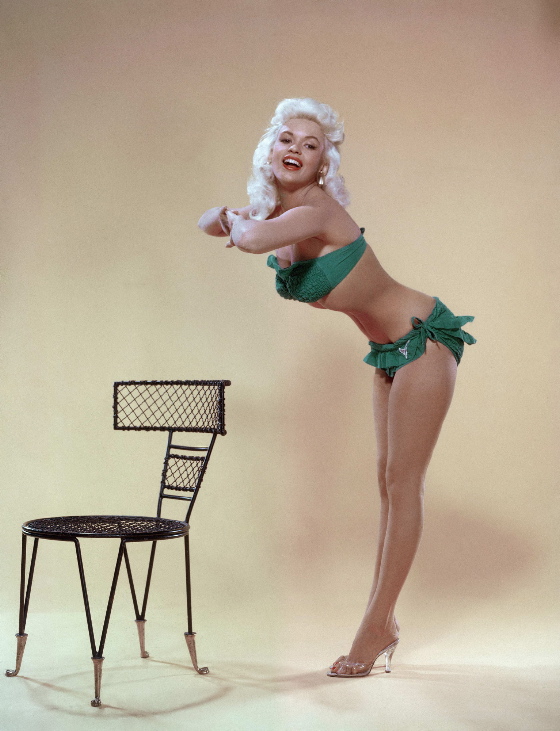
iconic, cartoon-like image of Jayne Mansfield.  Somehow Tashlin sensed
that the psychic chaos that could be induced by her sheer carnality was
somehow connected to the energy of rock and roll — that there was a
cultural matrix that generated both.  There are times in the film when
he seems to be mocking this matrix, times when he seems to be
celebrating it.  In fact he was just observing it in wonder — and
asking the audience to wonder about it, too.

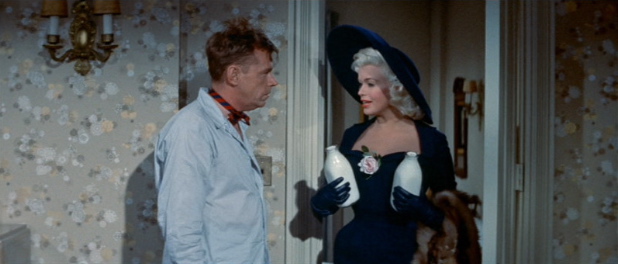
There's a famous scene in which Mansfield bursts into
Ewell's apartment carrying two bottles of milk she's picked up from his
doorstep on her way in.  She holds them up to her breasts like
extensions of those already preposterous attributes.  On one level it's
a dirty joke.  On another level it's a symbol of Mansfield's
innocence.  On a deeper level it can be read as an acute analysis of
the male breast-fixation in post-WWII America — not a sexual thing at
all, at bottom, but an infantile regression, a lust for the
alma
mater
.


There are any number of such suggestive images in The Girl Can't Help It
The complex ways African-Americans are presented in the film deserve an
essay of their own.  One image can serve as an example — the
gorgeous African-American singer Abby Lincoln, dressed in a spectacular
sparkling evening gown, sexy and elegant, is shown on a cabaret stage lit in lurid colors . . .
singing a Gospel song.  This is beyond satire, beyond surrealism
— it's an image as strange as American culture itself.

The lines of thought are never clear in Tashlin's best
work — and that's its value.  In the
social currents he observed colliding and redirecting each other, echoed
in the wildly clashing colors of his cinematography, Tashlin uncovered
perplexing contradictions in America culture and threw them in our
faces like so many custard pies.  All we can do in response is wipe the
custard out of our eyes and wait for the next one.

His work in the Fifties was excellent spiritual
preparation for the Sixties — a cultural slapstick routine that still
challenges complacency in any form.

ALFRED HITCHCOCK: THE MASTERPIECE COLLECTION


Alfred Hitchcock: The Masterpiece Collection
,
a 15-disc DVD box set, might be the best bargain in the entire history
of entertainment.  It includes 14 films plus a bonus disc of
extras, and can be had from Amazon for $84.99, possibly less from other sources
— about $5.70 per disc or about $6 per film.  Four of these films
are indeed masterpieces of world cinema, two are minor masterpieces,
two are interesting misfires, and the rest are just superior
entertainment with bravura passages of pure, breathtaking cinema.


Each of the films has, among other extras, a short documentary about the making of it,
including some fascinating interviews with Hitchcock collaborators, and
the bonus disc has longer documentaries about the making of
Psycho and The Birds.  The Vertigo
disc, which offers the best DVD transfer of the film currently
available, has an excellent commentary by one of the film's producers
and by the two men who did the comprehensive modern-day restoration of
Hitchcock's masterpiece.


If you invest in this set, and an equally wondrous companion set called
Alfred Hitchcock: The Signature Collection,
which has another 9 of Hitchcock's best movies for about $53, you will
never spend another restless rainy night at home in front of the
television.  You will have an endless supply of enchantment.  Just add popcorn.


You can check out the contents of the sets and buy them here:


Alfred Hitchcock: The Masterpiece Collection


Alfred Hitchcock: The Signature Collection

A TISSOT FOR TODAY

Ces Dames de Chars.
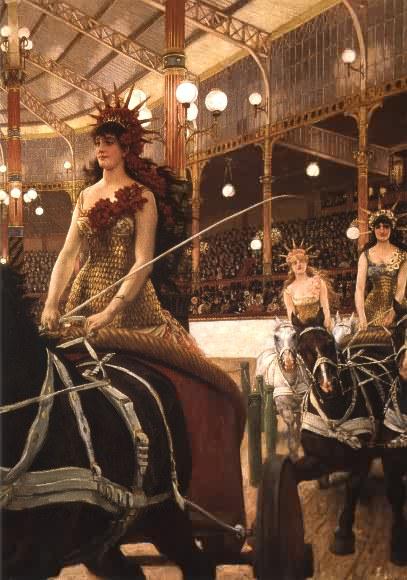
Notice how the lead horse gallops into an imaginary space in front of
the canvas, while the eye is simultaneously drawn in the opposite
direction, through a series of distinct interior spaces within the image — the bright covered arena, the darkened audience galleries — that open up
behind the lady charioteers.

To read more about Tissot go here.

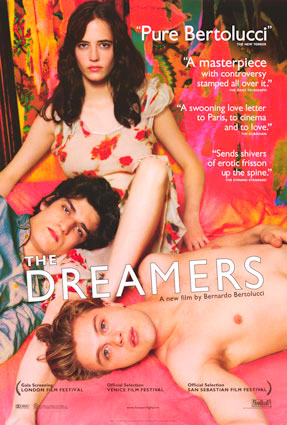
THE DREAMERS

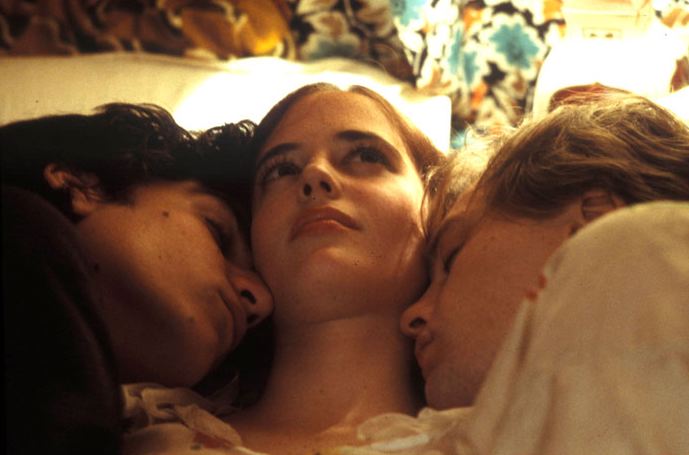
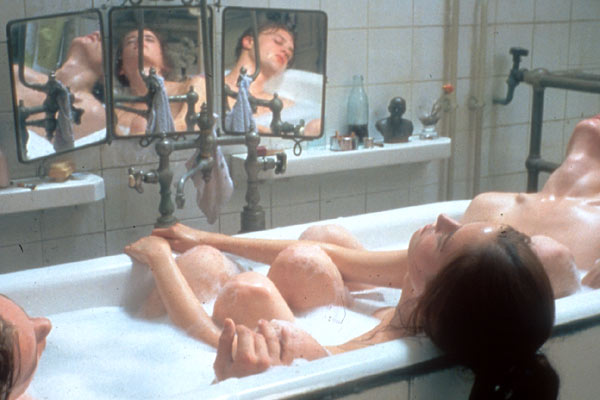
Bernardo Bertolucci is one of the great masters of cinema, but he has rarely found film stories and/or scripts equal to his genius. There are passages in almost all of his films as extraordinary as any in the history of movies, but he has made more bad movies than almost any other important director. The Dreamers is one the most misguided of his misses — a stilted, inauthentic evocation of the Sixties stifled by the nostalgia of old men for their youth (the movie is based on a novel by a guy who, like Bertolucci, was a young man in the Sixties.)  Indeed, nostalgia is too strong a word for it, since nostalgia implies
at least a trace of yearning, of passion — and this movie is basically a smug intellectual appreciation of the Sixties, and of youth, disguised as a drama.

There’s lots of sex and nudity — almost no real sensuality or erotic joy. And kids in the Sixties never talked the way the kids talk in this movie — not even the ones who were intellectual film buffs. The Sixties rock songs on the soundtrack and the intercut clips from films of the French New Wave, especially those by Godard, still seem fresh and alive — almost mocking the tired vision of the screenwriter and director. There are great visual passages in the film, and Bertolucci’s director’s commentary is brilliant — indeed, the film
is best seen as a pale and unconvincing illustration of that commentary.

LYNN RANDOLPH


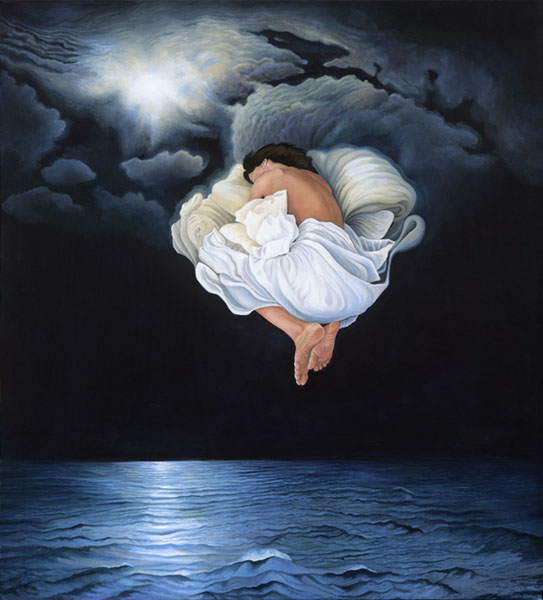
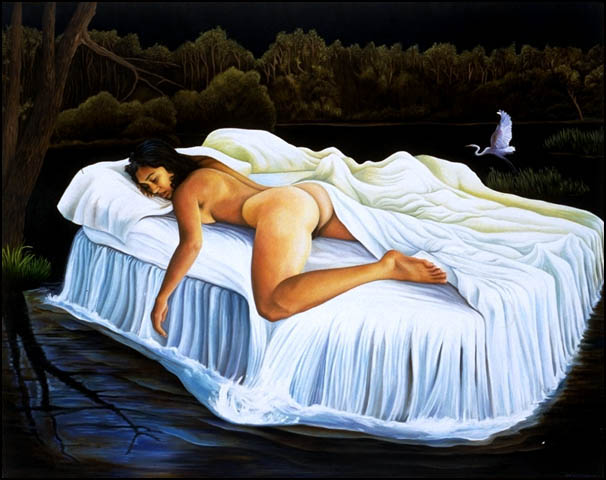
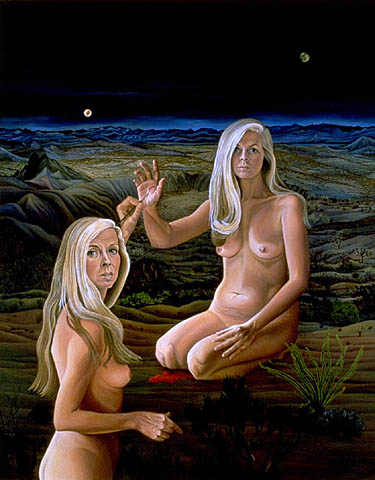
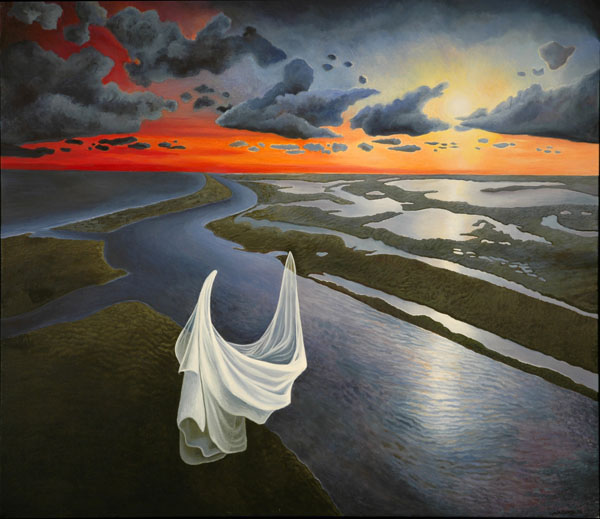
Here are some of the astonishing images of Houston-based artist Lynn Randolph.  At times Randolph’s work harks back to the paintings of Frida Kahlo in its contrasts of bold, warm colors and in the placid, self-possessed sensuality of its female subjects. But it also echoes at times the hard lines and the precisely delineated dream landscapes of the painters of the Northern Renaissance. Certain paintings, like the nude on the bed below, entitled The Wetlands Of Desire, suggest the calm derangement of Magritte.

Randolph’s art exists in lively conversation with the past — not trying to be new but also transcending pastiche, as her disciplined dialogue with the vanished masters ends up revealing her eccentric sensibility more clearly than aggressive innovation might have.


The painting directly above, which must certainly be a self-portrait, offers an intimate connection with the viewer, as the artist’s eyes seem to engage ours in a moment of unguarded confrontation, just as some of Rembrandt’s self-portraits do — yet the painted image within the painted image, raising its hand as though to welcome the sensual touch of the brush, speaks of another kind of intimacy, between the artist and her work, her vision, which we cannot quite share. It has an odd auto-erotic charm.

Recently Randolph has done a series of magical dream-seacapes, like the paintings at the beginning and end of this post, which are really breathtaking.

For more info on Randolph and to see more of her paintings go here:

Lynn Randolph