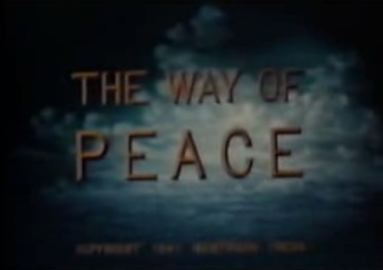
TASHLIN'S APOCALYPSE


Frank Tashlin's comic critique of American culture was
so anarchic, so all-inclusive — encompassing even the cinema itself,
the medium he worked in — that it's hard to identify a point of view,
a philosophy, behind it.  He just seemed to celebrate the
idea of
transgressive thought.


Still, critics have often intuited a dark side in
Tashlin's work, which suggests that it might not have been as
innocently and cheerfully irresponsible as it seems.  Peter Bogdanovich
wrote, “As comic as Tashlin's movies are, they also reflect a deep
unhappiness with the condition of the world.”

But what might have been the source of this
unhappiness, the perspective on the world which determined it?

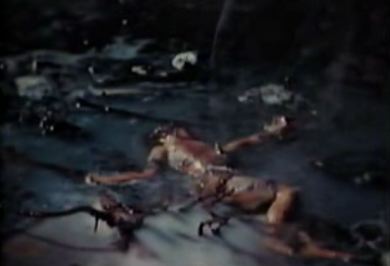
An interesting clue can be found in a short, 18-minute
stop-motion animation film he made in 1947 called The Way Of Peace
My friend Paul Zahl, a distinguished Anglican theologian, recently
tracked down a copy of this obscure film — which is surprising, even
startling.

Tashlin started out in the world of animated cartoons,
and a few years before beginning his career as a live-action feature director
he made
The Way Of Peace — which was, as far as I can
tell, his only foray into stop-motion puppet animation.  The
stop-motion work was done by Wah Ming Chang, who later did the
stop-motion effects for The Seven Faces Of Dr. Lao and The Time
Machine
.  The film was narrated by the actor Lew Ayres.

But
here's the startling part — the film was made for
the Evangelical Lutheran Church Of America, and it's an unabashedly
religious, Christian work.  Most of it is concerned with the
destruction of the world by nuclear holocaust, presented as an
inevitable consequence of abandoning Christ's “way of peace”.  (A
Lutheran pastor provided the “story conception” for
The Way Of Peace, but
Tashlin wrote the script and clearly devoted a lot of care to the
inventive, often beautiful, often terrifying images of the film.)

One might think, given the puppet-cartoon medium it's
made in, that it was a film addressed to children — but the
apocalyptic destruction it portrays is very dark and disturbing.  At
any rate, it's probably not something you'd want to show to very small
children — the natural audience for animation of this sort.

It turns out, however, that Tashlin wrote a number of
picture books for children which are far more explicit in expressing
his fears for human civilization than his Hollywood movies ever tried
to be.  Tashlin's fears were founded on a dread of nuclear war but also
on the spiritual decline of civilization through materialism —
something he satirized mercilessly in his films.
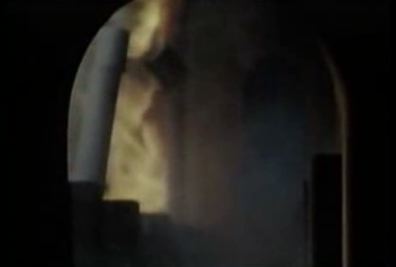

Tashlin being Tashlin, of course, his critique of the
modern world did not preclude a critique of the church — he was no
apologist for organized religion.  A church is shown being obliterated
in the finale of
The Way Of Peace, and one of his children's books, The World That Isn't, criticizes churches for their complacency.

I think all of Tashlin's work needs to be re-examined
in light of
The Way Of Peace and his children's books.  The Way Of Peace even offers a clue as to Tashlin's oddly affectionate, even
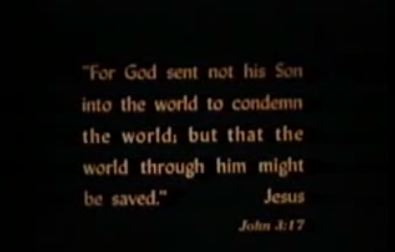
celebratory style of satire.  The short ends with a quote from John's Gospel:

Paul
Zahl points out that there is Tashlinesque irony in the quote, since
we've just witnessed the destruction of the entire planet — but the
theology is sound enough from a Lutheran perspective, and perhaps from
Tashlin's. God hasn't destroyed the world for rejecting Jesus, the
world has destroyed itself by rejecting Jesus's “way of peace”.  There
is no judgment involved, per se — just a kind of spiritual physics that reflects a very grim view of human nature.

Tashlin's mainstream Hollywood work never passes judgment on anyone or anything (The Girl Can't Help
It
!) . . . but was it meant to save sinners, instead of just tweak them
for
their follies?

Tashlin, along with his disciple Jerry Lewis, was
probably the most eccentric director of comedy in 50s and 60s
Hollywood.  Was he perhaps even more eccentric than we've imagined —
and more profoundly serious in his deconstruction of American
civilization?  In The Way Of Peace he
portrays a puppet world on the brink of annihilation.  Was that
perhaps what he was trying to do, between the lines, in his live-action features as well?

Another of his children's books offers an intriguing image which might be the best clue to the real Tashlin and his methods — The Possum That Didn't
In it, a happy possum hanging upside down has his smile mistaken for a
frown.  A bunch of do-gooders take him to the city, where he's
unhappy, but his upside-down frown there is mistaken for a smile.

To
me this sounds an awful lot like a warning directed at anyone inclined
to take Tashlin's topsy-turvy comic vision at face value.  At the
very least it should make us question whether his smile is ever quite
what it seems.

[The Way Of Peace can now be seen, in a somewhat
fuzzy online version, at the web site of the Evangelical Lutheran
Church Of America, which holds a copy of the film.  It's really a
remarkable and provocative piece of work.  Thanks are owed to that
organization for putting it up, and to Paul Zahl for tracking it down
there.]
JOHN WILLIAM WATERHOUSE: A VICTORIAN ARTIST YOU SHOULD KNOW

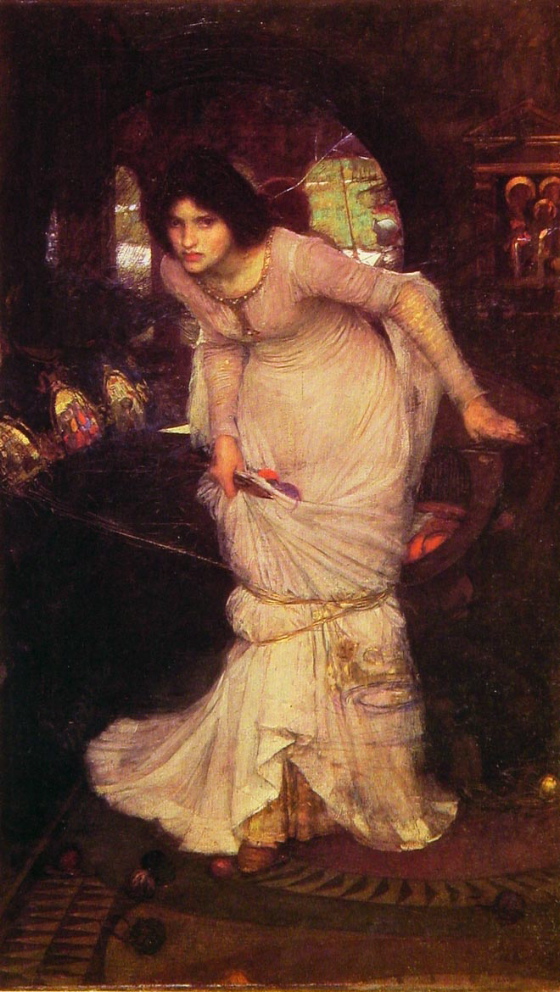
Actually, if there’s a Victorian artist you do know, it’s probably John William Waterhouse.  Prints of his paintings are quite popular, and it’s not hard to see why.  He
combines the dreamy Romanticism of the Pre-Raphaelites with a bold
modeling of forms and an optical integrity that suggests a nearly
photographic realism, however free his treatment of the paint surface.

His process seems to have involved a strict linear draftsmanship to
which he applied sketchy strokes of paint as he worked out the color
scheme of the final image.

He then blended the colors into more modeled forms for the finished
work, but retained something of the freshness of his sketches.

Impressionism was a stage in his process, never an end in itself.
His primary goal was narrative suggestiveness and the creation of a
world, theatrical as it might be, which convinced the eye with the
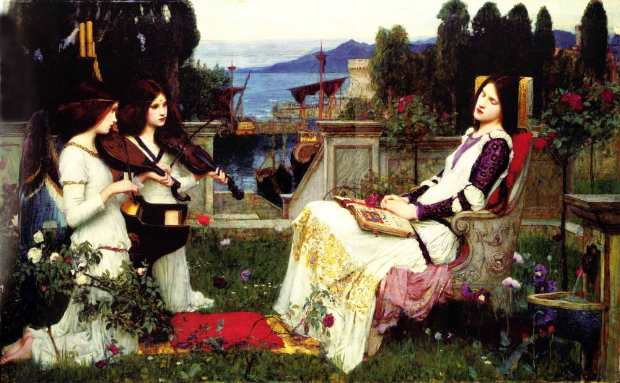
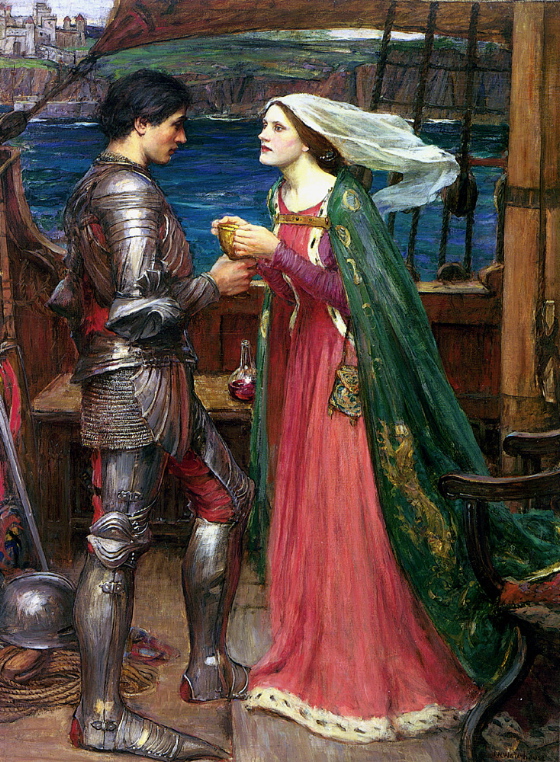
illusion of space and stereometric forms.  Note the sharp relief
of the figures in the painting at the head of this post and the
sketchier view of the coast behind them.  The contrast of
treatment itself creates a sense of deeper space.


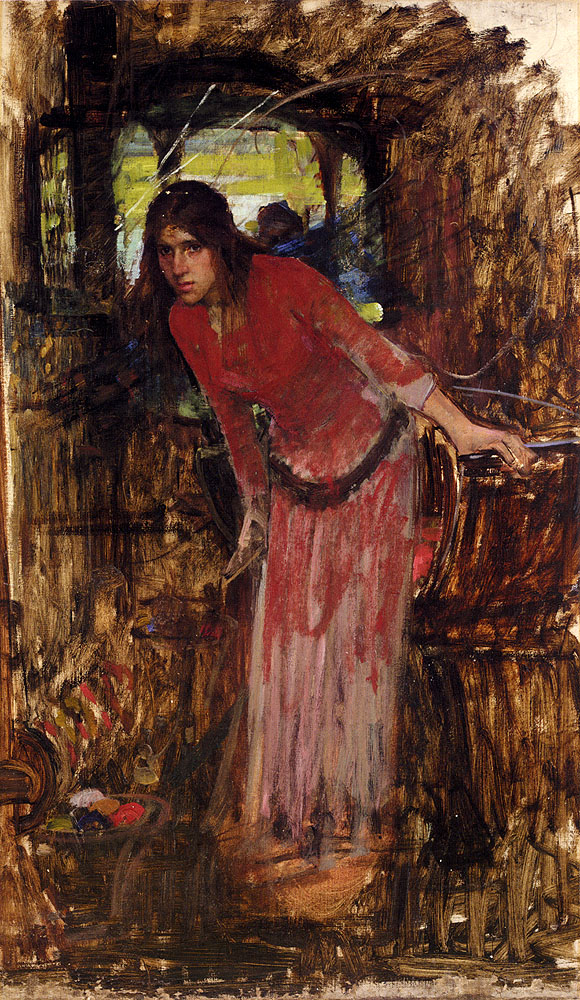
Andrew Lloyd Webber owns the painting below.  I’d have bought it, too, if I had his resources — it’s just miraculous:

OUT OF THE PAST

As opposed to murder mysteries (for example), which are basically
intellectual puzzles organized around a frisson or two, great suspense
thrillers — which include many different kinds of movies, from
Hitchcock to classic film noir — are rarely about their nominal subjects.  Their plots are
constructions designed to investigate and expose various modes of
existential dread which would be too uncomfortable to face directly but
which are thrilling to experience when disguised as mere
amusement.  The process is very similar to what happens in dreams,
in which we find visual and plastic equivalents to inner tensions which
the conscious mind prefers to avoid confronting head-on.


There’s a smooth continuum between the suspense thriller and the horror
film, the latter category being reached when the subject of death,
bodily decay and destruction is foregrounded and taken right up to the
edge of what the mind is willing to process within a work of
entertainment.  (Convention and the age of audience members play
a large part in determining where that edge begins.)


The film noir tradition, which began during and flourished just after WWII, expanded the limits of dread which American movie audiences would accept — and obviously the
horrors of the global conflict played a determining role in this development.  Film noir
reflected a new cynicism about politics, since politicians had failed
to prevent the war, about civilization, which had been exposed as a
veneer beneath which savagery lurked, and about human nature, because
ordinary people did unspeakable things to each other in the course of
the war.


But most of all, film noir, at its heart, reflected a new insecurity about manhood.

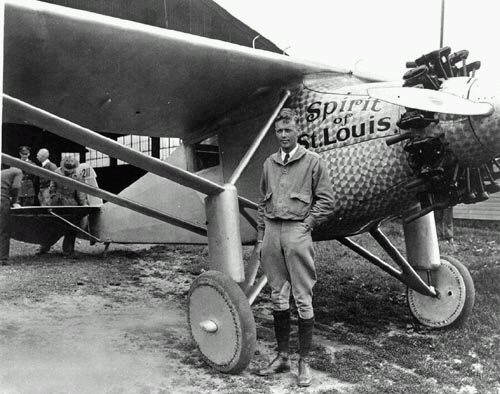
Charles Lindbergh, before the war, wrote of his fear that a truly
global conflict would sap the virility of the civilized world and
create a vacuum in which demons would breed.  He wasn’t just
talking about the young men who would be killed but the young men
whose experience of war would exhaust their spirits — leave them unfit
for the business of domestic life, the hard work of peacetime
civilization.


I think this was a profound insight, and helps explain the crisis of
manhood which afflicted 50s America and which came to fruition in the
epidemic of divorce in the 60s, along with a general retreat from male
responsibility to the institutions of marriage and the family.
The greatest generation had given all it had — its reserves of service
and sacrifice were used up.

This also helps explain the disaffection of youth in the 50s and
60s, the nihilism of the Beats, the rebellion of rock and roll, the search
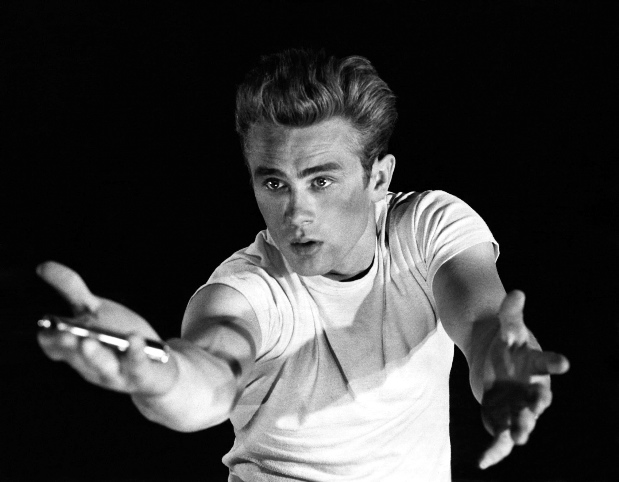
for newer and more authentic male role models like James Dean and Elvis
Presley — all of which culminated in a radical rejection of older male
paradigms in the 60s, in the de-sexing of the male which began with the
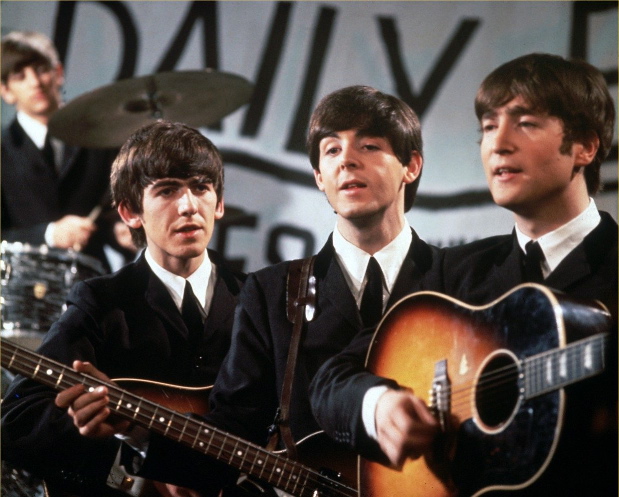
adolescent image of the early Beatles and ended with the long-haired
male flower child.

There was much that was positive in this cultural shift, but its root
causes and possible consequences remained largely unexamined, along
with its dark side — which was an increasing fear and hatred of women,
who could not help but represent an accusation aimed at male
uncertainty and insecurity.


It’s curious, I think, in an age which celebrates feminism and the new
sensitivity of males, that our popular culture degrades and commodifies
women to a far greater degree than earlier, frankly patriarchal
societies.  Camille Paglia provided the key to this paradox when
she observed that the status of women today is determined not by a
patriarchy which has gown too powerful but by a patriarchy which has
collapsed, grown unsure of itself.


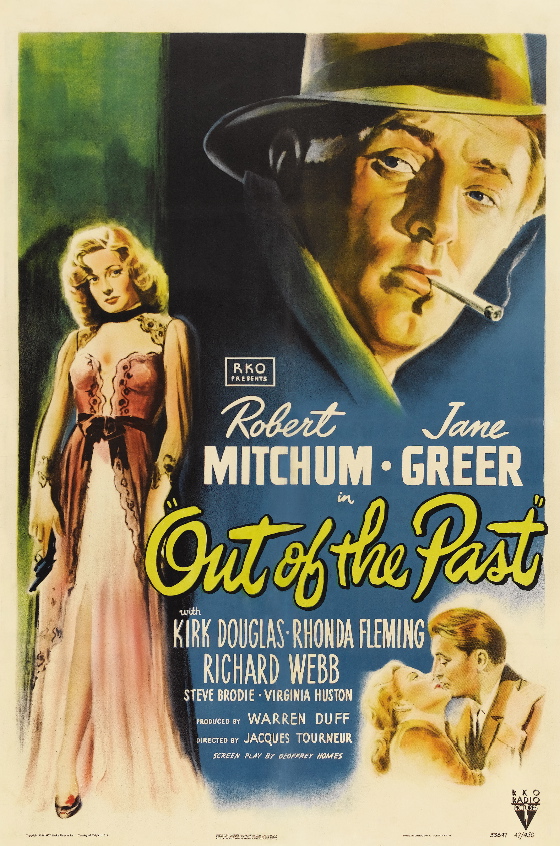
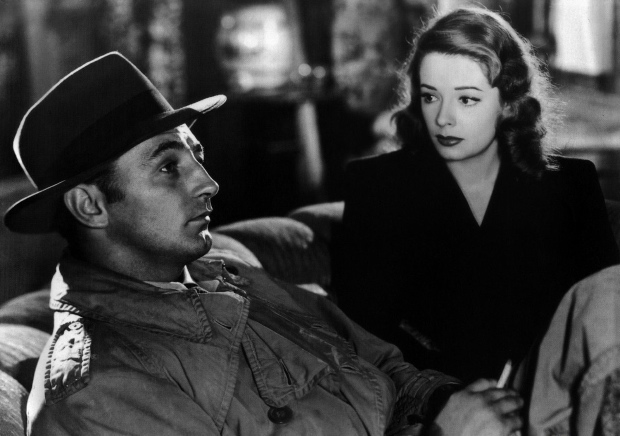
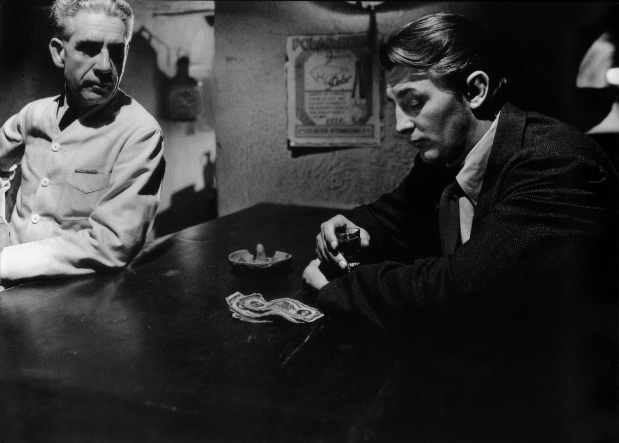
Film noir is the place to begin a study of this whole, strange phenomenon.  Look at a film like Out Of the Past, one of the classics of the tradition.  On one level it’s a crime
thriller, an exposé of social corruption, an exercise in cynicism about
everything.  But this level is superficial.  At the heart
of its tension is a vision of things gone horribly wrong between the
sexes — the dream of a lost romantic paradise, the fear that real
partnership and co-operation were no longer options, the nightmare of a
fraudulent and impossible romantic redemption.


At the center of most great filmsin the noir tradition is the femme fatale
— a tough, independent, alluring figure who’s dangerous precisely
because she exploits the impotence of her male counterpoint.  The
collapsed male projects, as he always must, his own inner chaos onto
the female who exposes his weakness, his existential nullity in a
culture that no longer knows what it means to be a man.


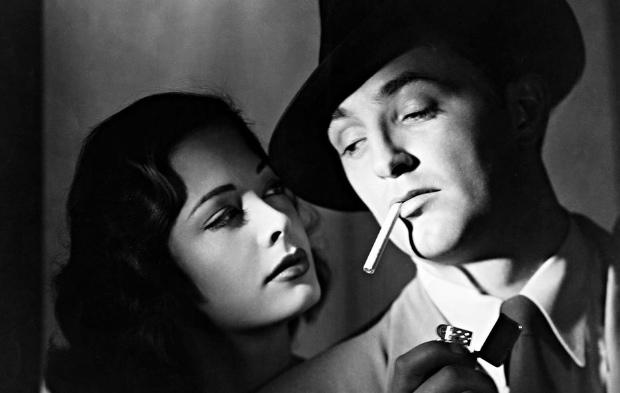
Check out the image below, where Robert Mitchum holds on to his
inadequate cigarette-phallus and Jane Greer seems to ask, “Is that it
— is that all you’ve got?”:

Cigarettes are almost always more than cigarettes in film noir.
The tough guys always reach for them when they’re trying to be hard and
cool — and when a woman smokes a cigarette, she’s usually getting
ready to un-man somebody.


The femme fatale of the film noir tradition is the mother of our modern world.  It has no father.

MONUMENTS


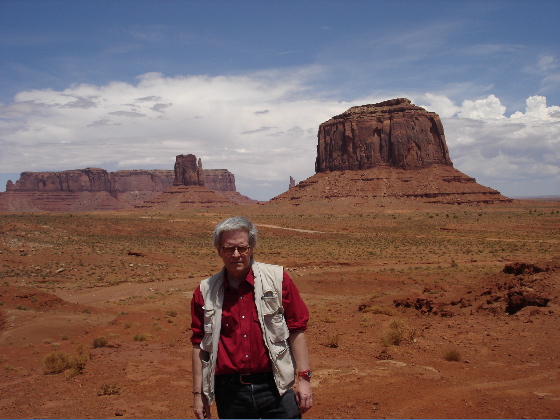
Last summer I made an epic 7,000-mile road trip with my sister Lee and her two kids, Nora (who was 9) and Harry (who was
12 when we started the trip and 13 by the time it was over.) 
We
drove from Las Vegas to the coast of North Carolina then back by way of Upstate New York.


In the course of the journey we made pilgrimages to sites of deep Americana, the first of
which was Monument Valley, which straddles the Utah-Arizona border.
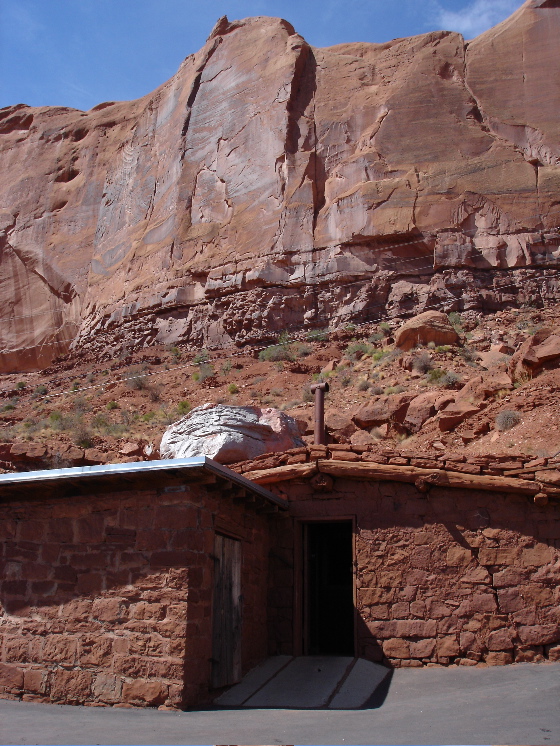
This of course is where John Ford filmed many of his Westerns. The inn
his company stayed at when on location there is still in business, with
a museum and part of the outbuilding that doubled for Colonel Nathan
Brittles' quarters in
She Wore A Yellow Ribbon:


[The boulder on top of the roof is a prop.]
You
can see immediately why Ford loved this location. Although its mesas
and rock formations are indeed monumental, they have an almost human
scale — unlike the Grand Canyon, for example.  (If the Grand
Canyon can be ranked among God's masterpieces, Monument Valley was a
pièce d'occasion.)   And the formations in Monument Valley are scattered
about in a pattern that yields new vistas, a new sense of space, every
few hundred yards. It might have been built as an epic movie set.


It's
weird to visit a place you feel you know well just from movies, and
moving to visit a place that a great artist has appropriated as part of
his myth about America, a myth that has helped shape what America is,
or at least how it sees itself. The scenic route through the valley is
still just a dirt road, rough even on my high-slung 4-WD vehicle. The
valley is heavily visited, but you still get a sense of being in a
wilderness, or a dream of wilderness . . . the other tourists are like
fellow audience members in a dark movie theater, there but not there.


JUBILEE!

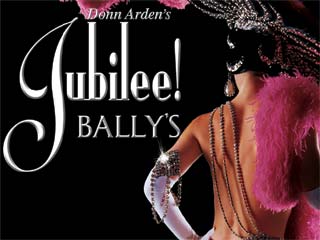
                                                                        (Image © Paul Kolnik, 2006)

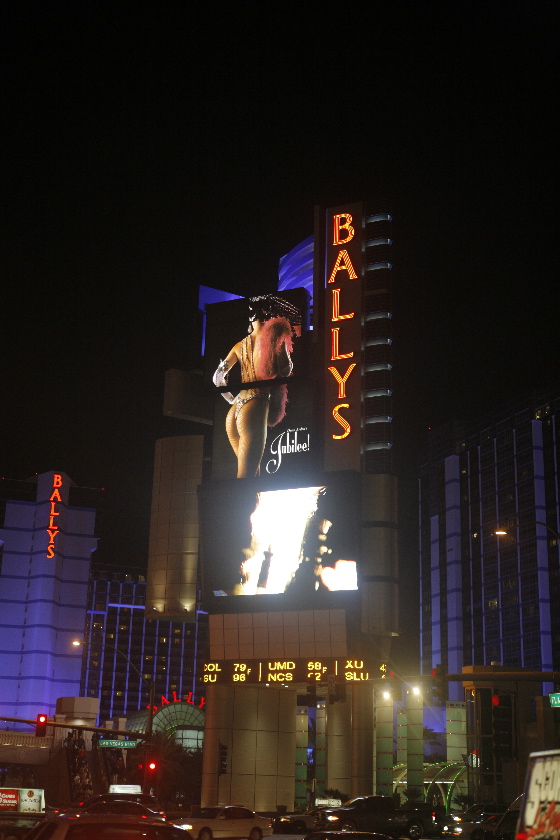
Jubilee! is one of the last two classic showgirl revues still playing on the Las Vegas Strip. It’s an extraordinary cultural artifact that seems to exist outside of time.

At the core of the classic showgirl revue are the choreographed parades of
the half-naked showgirls, bare-breasted but fantastically costumed,
mainly above the ears, in the elaborate headdresses they manage to
balance miraculously as they go through their parade evolutions.


The display of female pulchritude is almost overwhelming. The traditional
showgirl has a fantastic body and knows how to move with a dancer’s
grace and so it is with the girls in the Jubilee! revue. They all
have lovely breasts, of course, but what’s really stunning is that all
of them seem to be real. Real breasts have become a novelty in Las
Vegas — and not just in the strip clubs — so it’s really breathtaking
to see so many of them in one place, bobbing gently as the girls
promenade, in their wondrous variety of natural shapes, with no trace
of the overstretched, shiny skin that so often gives away the presence
of an implant.


It’s all so much more erotic than the bumping and grinding of girls with
artificial tits and no dancerly grace in the lap-dance emporia of this
town. I think that most strip clubs are designed to help men feel
temporarily superior to women, but at Jubilee! this is not possible
— there are too many of them, they are too poised and dignified. You
must worship them or slink away like a whipped cur.

It’s the numbers of naked women appearing onstage at any given moment that
turn the show into a celebration of Woman, that keep it from becoming a
spectacle-display of women. The show is also an object lesson in the
concept of nudity. Sometimes the women wear slightly transparent bras,
sometimes they wear spangled strings that outline their breasts,
sometimes they wear no tops at all. There is no progression here, as in
a strip-tease, just a witty and seductive kind of play.


The lines of naked women make entrances at various times throughout the
variety show — then, in the second act, there is a long section (about
the sinking of the Titanic, of all things) where they make no
appearance at all . . . so that when at last they do reappear the
moment is joyous. There is clearly a long tradition of showgirl-revue
theatrical practice being drawn on here, and the skillful calculation
of it is impressive. The late Donn Arden, who created Jubilee! more
than twenty years ago, once worked for the Café Lido in Paris, home of
the famous Bluebell girls and one of the classic French topless revues
from which the showgirl revues of of Las Vegas descended.


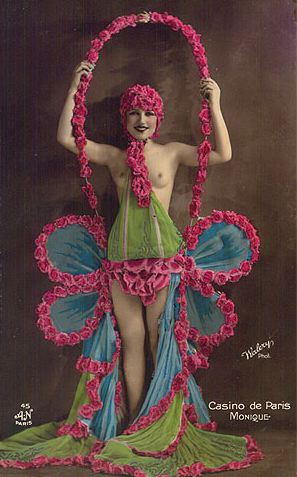
Here’s a vintage performer from a Paris club:

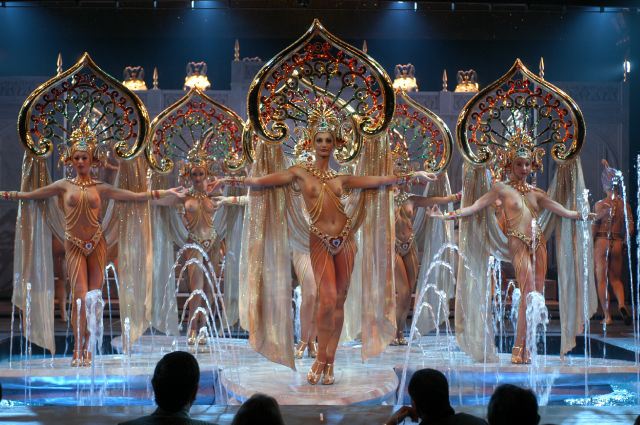
And here’s a modern incarnation of the Bluebell Girls:

What’s perhaps most impressive about Jubilee! is the fact that its traditional style is offered up without a wink, without quotes around it, without apology.
It’s as though the years since 1957 never happened — we are in a
timeless, mythical place while the show plays, the Land of the
Showgirls. The singing and dancing and juggling and acrobatics that
make up the bulk of the revue itself are professional and sometimes
awesome, but they are just there to set off the girls, to serve as
reminders that there is simply nothing like a dame — nothing you can
name that is anything like a dame.


LOOK!

Recently I've been in the grip of Hitchcock mania.  He's one of
those artists whose work is so rich that you experience it completely
differently at different stages of your life.  As a teenage film
buff I thought his work was delightfully cinematic but shallow. 
Truffaut's book of interviews with the director got me to take him a
bit more seriously, but not for too long.  I went through an extended
period when I thought of him as primarily a master of style.

Recently, however, I've re-watched almost every movie he ever made, and
the work opened up to me in a new way.  Films I'd considered minor,
like The Birds, began to reveal their subversive depths, and films I'd greatly admired, like Vertigo,
began to take their place for me among the greatest achievements of
film art — indeed, among the greatest achievements of any art.

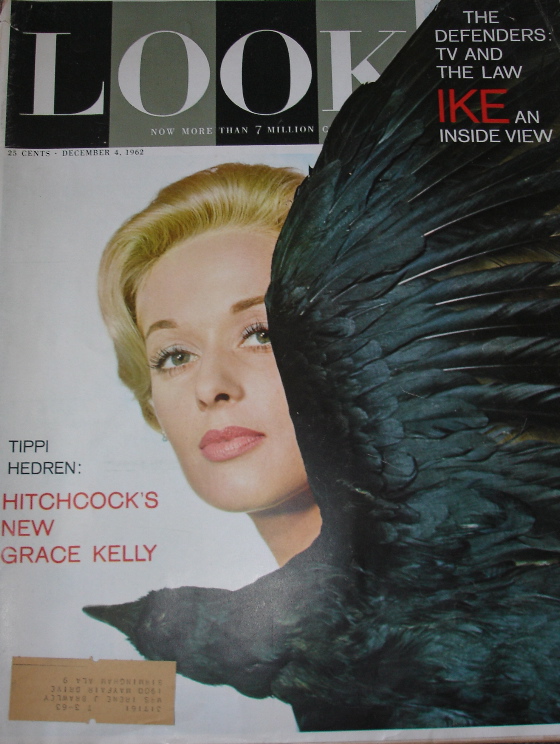
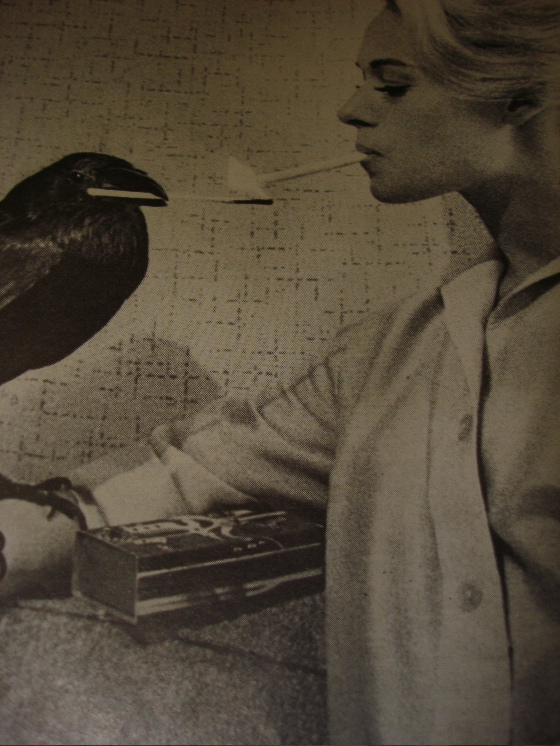
In the midst of this mania a package arrived from my friend PZ containing the copy of Look magazine pictured above, from 1962, the year PZ and I met, featuring some pre-publicity for The Birds.  An object like this obliterates time — allows you to imagine The Birds
not as a famous classic from the past but as an enterprise in the
working life of a director, enmeshed in the practical contingencies of
filmmaking, which for Hitchcock always included close attention to
publicity.

In the article inside the magazine this image appears — another time
capsule, from an age when smoking was considered elegant and sexy:

Call me degenerate but it still looks elegant and sexy to me.

The art critic Dave Hickey once observed that it was hard to imagine
any culture being both risk-averse and sexy — and it's undeniably true
that American culture has become less sexy (though arguably more
pornographic) since the baby-boomer Yuppies took control of it.

Hitchcock's movies are sexier than movies today because he recognized
the connection between moral jeopardy and the erotic.  In an
amoral society, or one that confines its most passionate moral concerns to areas
of personal health, the erotic simply vanishes.

If your soul isn't on the line in a sexual encounter, in any encounter,
you might as well
be playing ping pong.  Hitchcock believed in souls, and knew that
souls are always in danger, always in jeopardy, always in
suspense.  Leading a healthy lifestyle, practicing safe sex, or
safe ping pong, can't deliver you from this fact — however persuasively our culture argues otherwise.

AN ALMA-TADEMA FOR TODAY


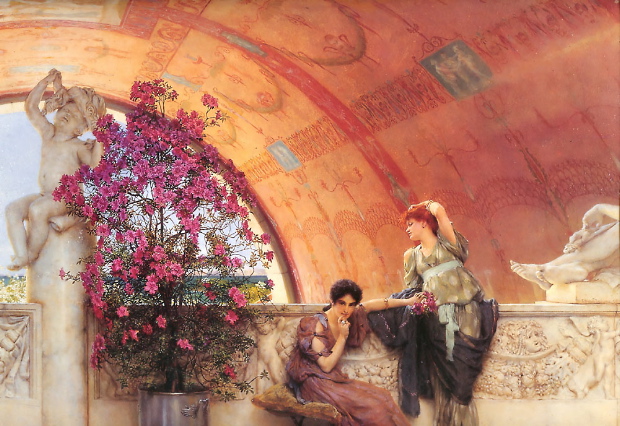
The title of this painting is Unconscious Rivals,
implying a narrative content that isn’t really apparent in the work
itself but suggesting how Alma-Tadema’s imagination worked.  He
wanted to present the ancient world as brand new, almost
photographically convincing in visual terms, and to people it with
humans exactly like ourselves, as opposed to classical emblems of
virtue or vice.  In this he was following the classical style more
closely than some of his neo-classical peers in 19th-Century art.
Even when Greek sculptors in antiquity were depicting mythological
beings, they always endowed them with an essential humanity just as
vital as their symbolic personae.

The play of light in this painting is magical yet perfectly naturalistic, and I
love the way Alma-Tadema has obscured our view of the distant sea,
which only makes us look deeper into the space of the painting to
register it.  It also makes us imagine walking up to the railing
for a better view — drawing us into the foreground space as we imagine
navigating it.

THE MARRIAGE CIRCLE

At first it seems as though this film, like a Seinfeld episode, is going
to be about nothing, but in an amusing way — about flirtation not
love, suspicion not jealousy, pique not passion. From the start you
just don’t care, because it’s all done with such delicacy and style.


The performers hardly seem to inhabit the same artistic universe as
Pickford, Keaton, Lloyd — the brash, innocent, plastically
explosive world of mainstream Hollywood movies in the silent era.
There’s a languor, a subtlety, a world-weary wittiness in the playing
that contribute to an overall tone which Lubitsch seems to have
imported wholesale from Europe (by way of Chaplin’s A Woman Of Paris) and cast like a spell over his American actors and crew. No collision of aesthetic strategies here, of the sort we see even in some of the greatest Hollywood silent films — this
artistic vision is of a piece, totally assured, astonishingly mature.


And though this vision derives to some degree from literary sources, from
turn-of-the-century European plays and novels, it has been
fundamentally reimagined in visual terms — intertitles are sparse and
virtually irrelevant. Lubitsch’s visual style is not, however, one of
great plastic power — the felicities of it are on a small scale,
restrained and minutely observed:


A flower falls accidentally from the hands of a woman and lands, in close up, at the feet of a hopeful suitor. There is a pause — we sense the suitor looking down at it in wonder — before he picks it up.

A happily married couple are having breakfast — Lubitsch lingers in close up on the egg he’s breaking, the coffee she’s stirring, until they abandon the tasks and embrace . . . off screen.

A woman at an indiscreet garden rendezvous throws off her scarf
seductively and it blows away — we see it land in close-up at the feet
of her indiscreet partner’s wife, somewhere else in the garden, catch
on the foot of the wife’s importunate companion . . . it’s carried
along by him, still in close up, until the wife steps on it, and they
both realize something is amiss.


A straw hat travels about town during the course of one romantically disastrous night, passed along from one lover and would-be lover to another, forgotten, discovered, brandished, claimed.

Gradually, as the tiny missed connections between people accumulate, as the
minute, half-conscious indiscretions gather momentum, as the
unhappiness of Mizzi, the character at the center of the tale, radiates outward and infects all those around her, the movie becomes profound. Inconsequential acts fill the void at the
center of feckless lives and melancholy, incurable because it’s unexamined, creeps into the farce.

When Mizzi, to distract her husband from some incriminating bit of romantic
evidence, embraces him and says, “I need to be loved,” it’s both a ruse
and a true confession — and the look of bemusement and surprise on the
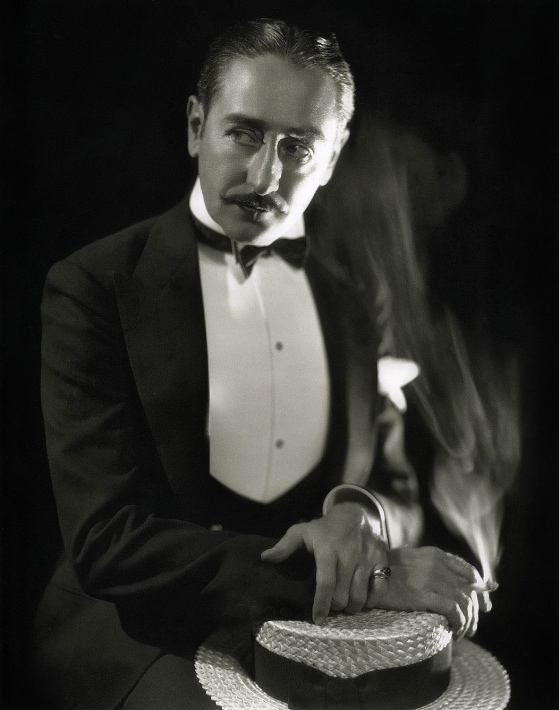
face of her husband, played with miraculous precision by Adolphe
Menjou, is actually heartbreaking. Just for a moment he believes her —
until that darned straw hat turns up once again and his habitual
cynicism is confirmed.

Nothing is ever quite what it seems in this film, a fact that is admitted and
even celebrated in the finale between the “happy” married couple — who
achieve their reconciliation by a double ruse in which each is deceived
and each the deceiver. Only we, the audience, know the whole story. The
suggestion is that the difference between a good marriage and a bad one
is luck, a healthy dose of ignorance, and just a little extra — almost
imperceptible — application of goodwill.


In the end, The Marriage Circle is not about nothing after all — issues of enormous consequence are caught up in its gossamer threads. It’s very great filmmaking and very great art.

A BRAND-NEW PAINTING


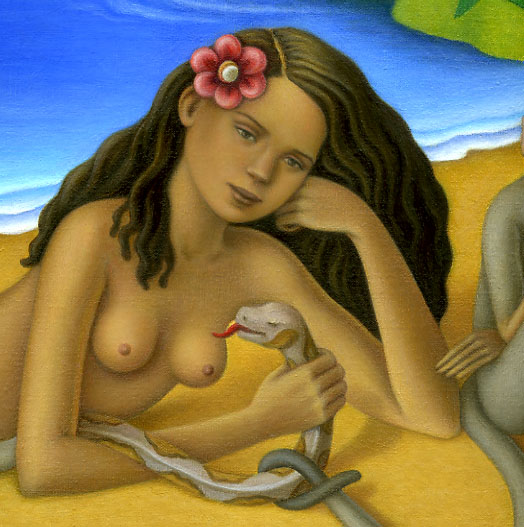
Amy Crehore, the artist whose blog
Little Hokum Rag offers a running
record of the images that inspire her, has posted a first look at a new
painting — teasing us with just some details for now.  One of the
virtues of the Internet is allowing artists to share their productions
in real time like this — the paint on Crehore’s canvas is probably not
even dry yet.  It’s the virtual equivalent to a “visit to the
artist’s studio”, always considered a privilege of the well-connected
connoisseur.

[Update — the whole painting has now been revealed on Crehore’s site and it’s really wonderful.]
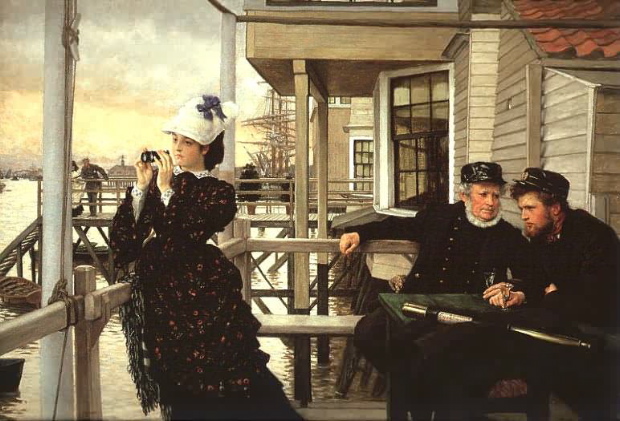
A TISSOT FOR TODAY

The porch and table with figures creates its own space, echoed in the space
of the pier with figures behind it, drawing our eye deeper into the
image, to the spars of the docked ship, the buildings and the course of
the Thames winding into the distance.


The girl, the captain’s daughter of the painting’s title, looks in the
other direction, counterpointing our attention.  We feel that if
we just turned our heads we would see what she’s seeing.


We’re not simply looking at something — we’re inside the painting . . . we’re somewhere.

SAUL STEINBERG AND ALFRED HITCHCOCK

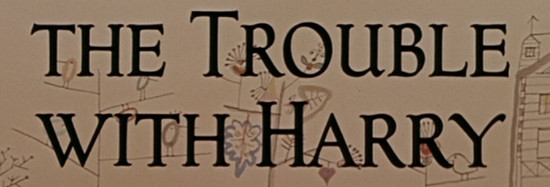
The delightful drawings behind the opening credits of Alfred Hitchcock’s 1955 film The Trouble With Harry were done (uncredited) by famed New Yorker artist Saul Steinberg, riffing on images from the paintings of Paul Klee.  Hitchcock was a collector of Klee’s work and may well have asked Steinberg to incorporate the homage.

The Steinberg drawings seem to echo a style in 50s design and animation called “cartoon modern”, which I wrote about in an earlier post — though of course the cartoon modern style derives from the whimsical abstractions of artists like Klee and Steinberg, not the other way around.  It’s an example of the way artistic ideas percolate up and down the scale from high to popular art.  In 1955, Klee was high-brow art, Steinberg (at least when he was publishing in The New Yorker) was middle-brow art and Hitchcock was low-brow art.  Today you could hardly rank Hitchcock below either of the other two on any scale of art — which just goes to show how silly and ephemeral such distinctions are, and ought to make us wonder what art today is undervalued because it’s stuck into some temporary and ultimately meaningless hierarchy.

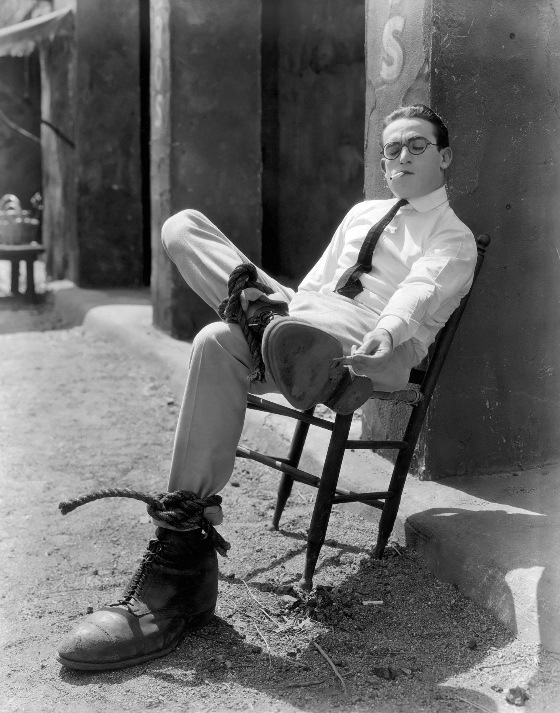
WHY WORRY?


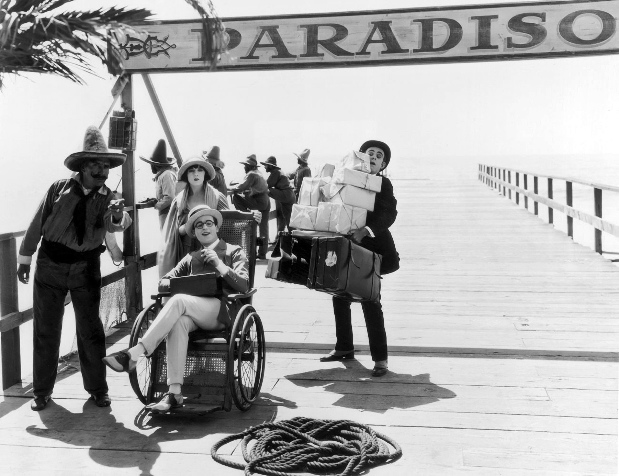
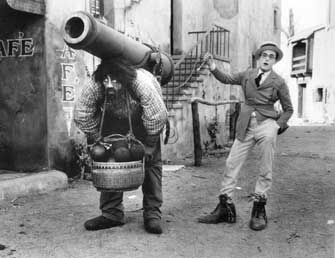
Harold
Lloyd's
Why Worry? (from 1923) is an almost perfect film. Its scale
is relatively small compared to the films that bracket it in the Lloyd
canon, with a more modest action finale. It lacks the breathtaking
spectacle of the climactic sequence of
Safety Last and the epic
momentum of the race to the rescue in
Girl Shy, but it makes up for
this with a delirious escalating rhythm and a truly romantic lyricism.
The “love interest” is effectively integrated into the plot and
unusually strong for a slapstick comedy.


One
fair criticism one can make about
Safety Last concerns the decidedly
unromantic notion that Harold must become financially successful to win
his true love. This leads him into acts of physical courage by the end
of the tale, but we never quite lose the idea that he's risking his
life for cash — the girl comes to seem like a trophy that goes along
with it.


Girl
Shy
has a more developed love story but, again, financial success is
the sine qua non of romance, and even when Harold attains it, his final
triumph is still predicated on the fact that his rival for the girl's
affection is already married. The actual, personal love story gets lost
(or perhaps cheerfully abandoned) somewhere along the way.


The
issue of acquiring wealth doesn't arise in
Why Worry? because Harold
starts off rich, and that's his problem — he's selfish, spoiled and
self-involved. It's almost a relief to see this critique of the wealthy
set down amidst Harold's more familiar personifications of the
single-minded near-manic American go-getter.


His
character here is a hypochondriac, obsessed with his health. He travels
with his nurse, the ever-vexing Jobyna Ralston, and his butler to a
small tropical country for “recuperation” from his non-existent
maladies. Ralston is secretly in love with him, apparently seeing
something in him that we can't — at least not yet. He'd be in love
with her, too, we sense, if he could ever look beyond the end of his
own sniffling nose.


When
they arrive in paradise, the little country is in the grip of a
revolution. The gag that propels most of the rest of the comedy is that
Harold can't imagine that anything that happens in the world isn't
taking place for his personal convenience. He fails to notice the
mayhem around him. Paradoxically, this makes him behave heroically —
since he doesn't perceive the jeopardy, he overcomes it easily at every
turn.


One
can read this as an image of American arrogance — what's a little
revolution in a third-world backwater to us? One can read it
simultaneously as a sort of ironic vindication of American optimism, of
a naive Yankee ingenuity. What one can't read it as, in the context of
the story, is genuine heroism. Harold isn't actually triumphing over
danger, since he doesn't see anything as really dangerous — not to
him.


But
eventually things become more complicated and interesting. When he gets
thrown into jail by the insurgents, he finally begins to realize that
something is amiss — he thought they were escorting him to his hotel.
He's locked into a cell with a violent and gigantic maniac, whose
violence is currently exacerbated by a howling toothache. Harold's
refusal to take him seriously as a menace seems to perplex the giant,
and soften him. “Let's escape,” says Harold, with blithe practicality.
They do, and Harold manages to extract the aching tooth — making the
giant his pal for life, and very soon his accomplice in putting down
the revolution and restoring order.


This
is the first stage in Harold's moral rehabilitation — his democratic
solidarity with the outcast giant and his act of simple, practical
kindness towards him get for Harold in return the giant's awesome
strength, which, combined with Harold's wit, makes for an unstoppable
force.


Meanwhile,
Ralston has gotten lost and is hiding out from the insurgents dressed
as a man, a caballero. Somehow this makes Ralston even more vexing,
both to us and to Harold. When their paths cross again Harold is able
to see her, out of the usual nurse's uniform, as a distinct person —
not just as a provider for his needs. All his defenses crumble. “Why
didn't you tell me I was in love with you?” he demands petulantly.
That's the residue of a character he has already started to shed.
Seeing Ralston in danger makes this whole revolution personal for
Harold — his half-conscious or merely practical heroism now becomes
deliberate and important. He is prepared to enter the world fully,
engaged not just as a restorer of order but as a committed lover. He
has grown up.


He and
Ralston and the giant, equal partners now, quickly defeat the insurgent
army and sail off happily for America, where the giant gets a job as a
traffic cop and Harold and Ralston get married. The film ends, sweetly,
with Harold collecting the cop to come and celebrate the birth of his
child.


The
lyricism and romantic conviction of the tale unfold in an unbroken
chain of evolving slapstick incidents which tumble into each other like
the incidents of a dream — perfectly logical until you think about
them for a second. The gags, always ingenious and funny, become
beautiful, too, as they do, for example, in the train sequences of
The
General
. The girl becomes more than a sidekick or a goal — she
becomes, in fact, the whole motor and point of the story.

At the
beginning of the film, there's a beautiful blue-tinted scene set on the
deck of the steamer taking the party south — a dance lit by strings of
lanterns, with a calm sea rolling along behind them. It's there that we
realize that Ralston is in love with Harold and there that we decide he
ought to be in love with her. It prepares us for a romance — and that
is what we get in the end, in the unlikeliest and loveliest of ways.

ANDERS ZORN

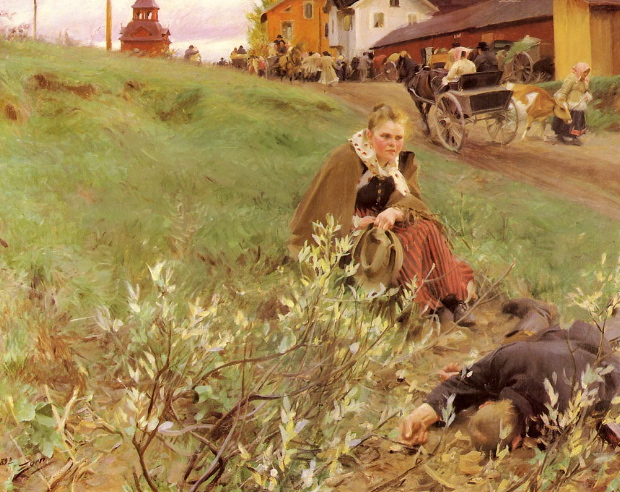
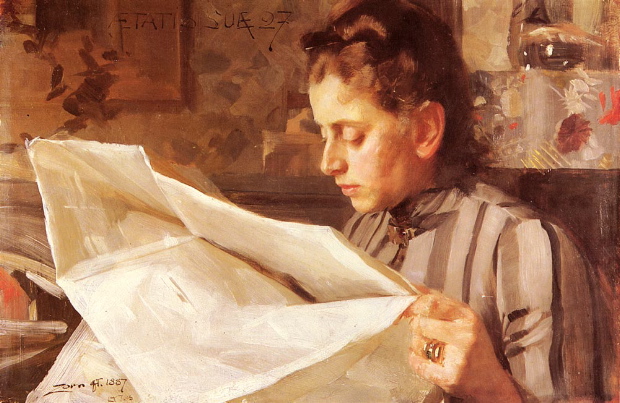
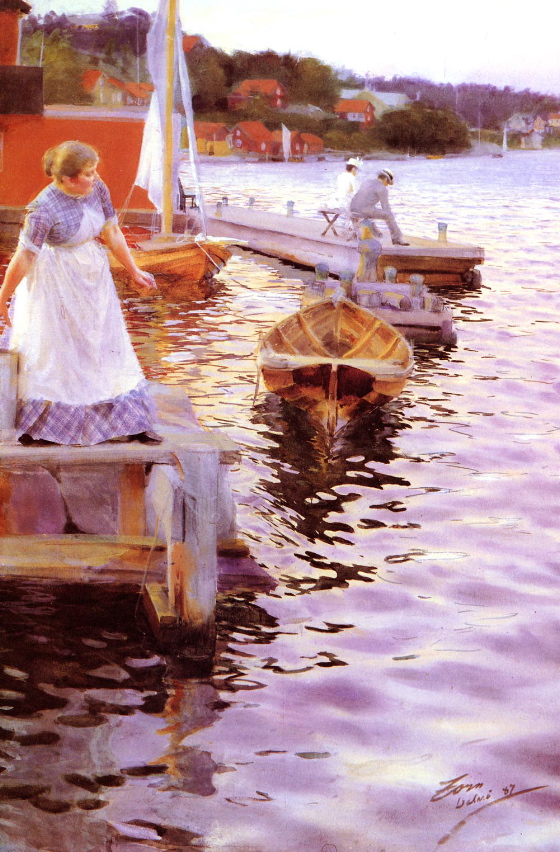
Recently, thanks to Amy Crehore’s blog Little Hokum Rag, I discovered the work of the amazing Swedish painter Anders Zorn.  Zorn started his career in the Victorian era and his paintings share some of the attributes of the Victorian academic schools — an almost photo-realistic style combined with an emphasis on the dramatic use of spatial depth in the image (see above.)

But Zorn worked into the first two decades of the 20th-Century and like Sargent, another quasi-academic, he was attracted to the free brushstrokes and painterly surfaces of the Impressionists.  Indeed, some of Zorn’s wonderful  portraits of women can stand favorable comparison with Sargent’s work:

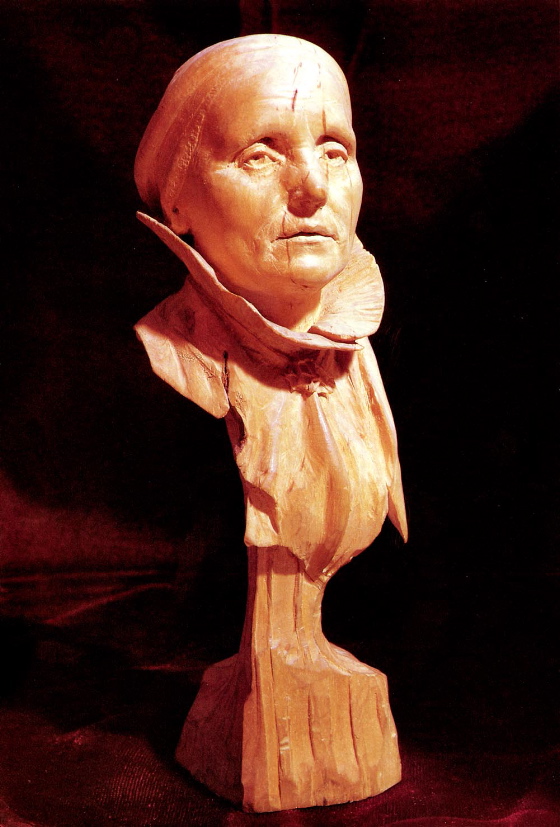
Like Gérôme, Zorn’s interest in stereometric forms led him to work also in the medium of sculpture:

Zorn was justly celebrated for his images of water, in which the sensual brushstokes render with convincing precision the surfaces of sea or river or lake:

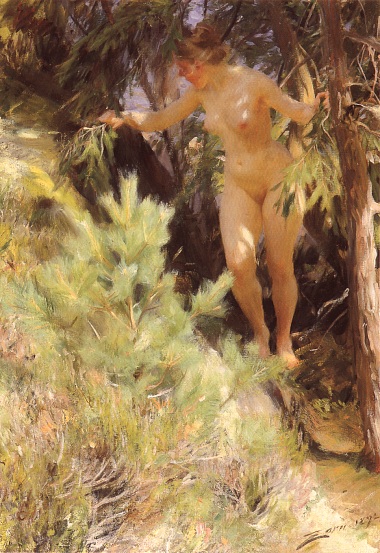
Zorn is perhaps most famous for his plein air nudes.  In them he abandons any hint of the allegorical or classical, which tended to inform the Victorian academic approach to the nude, for a frank celebration of the female body in a natural setting.  I wouldn’t be at all surprised if these nudes influenced Andrew Wyeth’s portraits of naked women out of doors — which have the same sort of directness, as though we, the viewers, had simply stumbled upon a woman walking around naked through the woods:

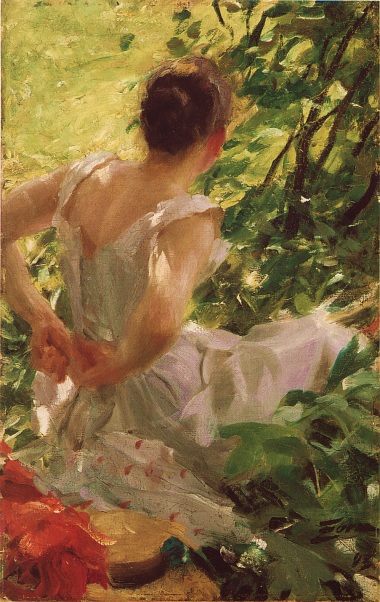
There’s a hint of the voyeuristic in the approach — you get a sense that Zorn’s models might be startled (though perhaps not embarrassed) to find someone looking at them.  The image below seems to reflect something of Zorn’s attitude — seen from behind, one of his models appears to be disrobing for him out of doors, or getting dressed again after posing, but Zorn appears to be spying on her without her knowledge.  There’s no sense of violation — just of a secret delight.

I think it’s one of the sexiest images in all of art: