
PALACE OF DREAMS

This building, in the small town of Belhaven, North Carolina, used to
be a movie theater, a palace of dreams.  It was a tiny palace, as
you can see.  The set-back led to doors which opened directly into
the theater — there was no lobby.  Popcorn, the only snack sold,
was dispensed from a movable cart set up on the sidewalk just under
the marquee, which is now gone.  I made a pilgrimage to the
building this past summer, because it was such an important part of my
life, once upon a time.


In 1956 and 1957 this theater was a few minutes walk from my home, and
I made that walk every Saturday, when the feature film always
changed.  A kid’s ticket cost 25 cents, half my allowance, and
popcorn cost 15 cents.  A Five and Dime next door sold popcorn for
10 cents, but you had to sneak it into the theater, past the watchful
eyes of a teenage usher.  I was five and six years-old in those
years, and I don’t think I ever missed a show.


Here are the ones I remember most clearly:
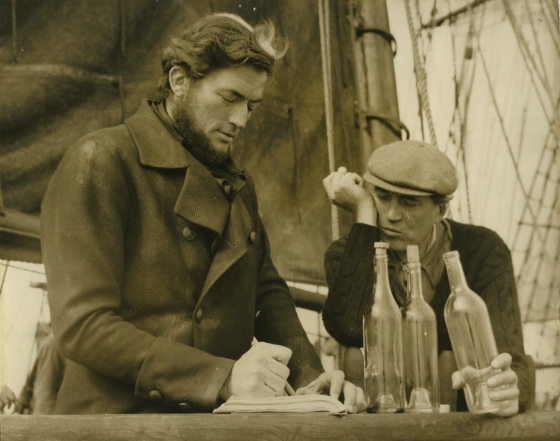
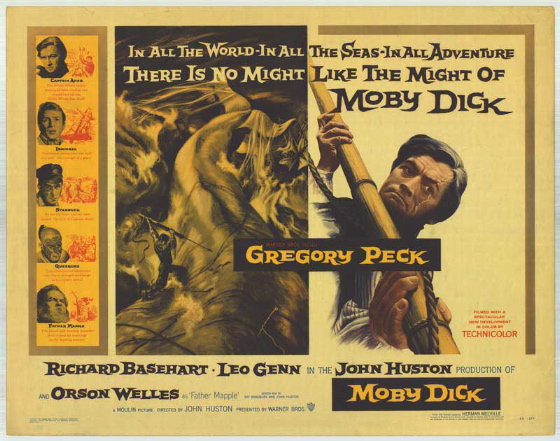
MOBY DICK

The John Huston version with Gregory Peck.  When I looked at the
poster and the lobby cards outside the theater before going in I
wondered if the film could possibly deliver the spectacle it
promised.  It did — beyond my wildest anticipation.
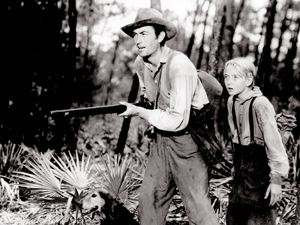
THE YEARLING

This movie affected me as deeply as any work of art ever has.  It
was really the first work which showed me how powerfully art can move
the heart.
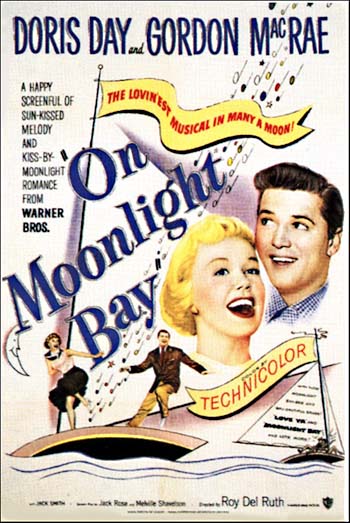
ON MOONLIGHT BAY

I don’t remember this movie very well, though I remember the poster clearly.  The song On Moonlight Bay always gets to me, though, and that must have something to do with having heard Doris Day sing it in this film.
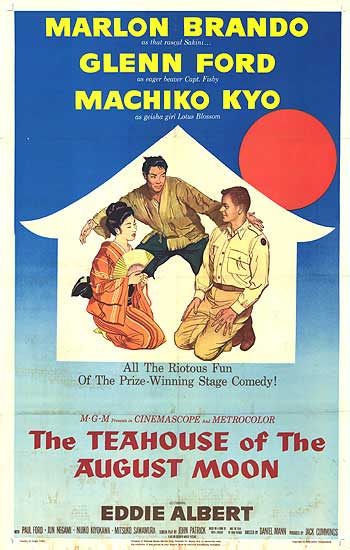
THE TEAHOUSE OF THE AUGUST MOON

I don’t remember this one very well, either, and I haven’t seen it
since, but I have the impression that some sort of miracle occurred at
the end of it which was delightful.
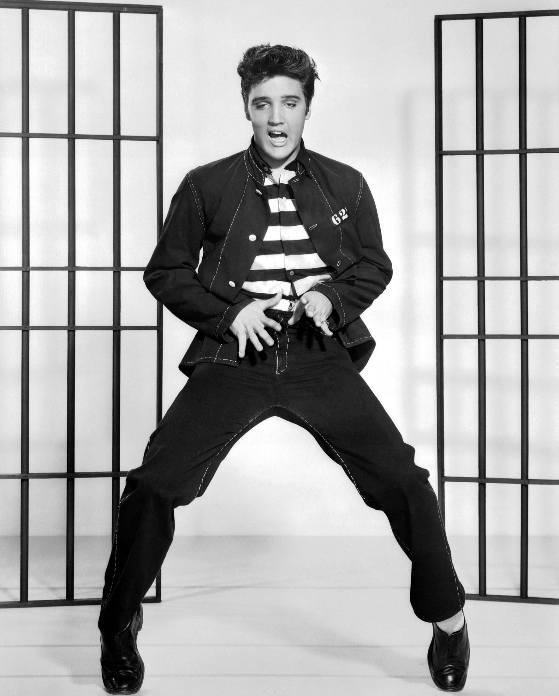
JAILHOUSE ROCK

This was the first film I was ever allowed to go see at night without
adult supervision.  Our babysitter, a girl in her early teens,
escorted my sister and me and a few neighborhood pals to the
show.  The crowd was different at night, older, better behaved,
even for this rock and roll classic.  The evening screening seemed
like a window onto another world.
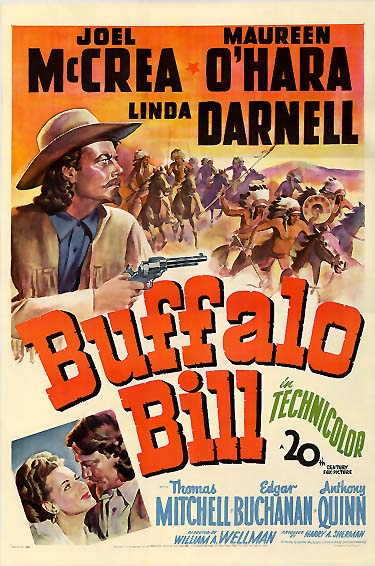
BUFFALO BILL

I only saw the first half of this film because I was suddenly
gripped by a profound sense of homesickness — for a home that was
practically in sight of the theater I was in.  When I got back
there I was unaccountably relieved to find my mom in the kitchen — as
though she’d be anywhere else an hour or so before suppertime.
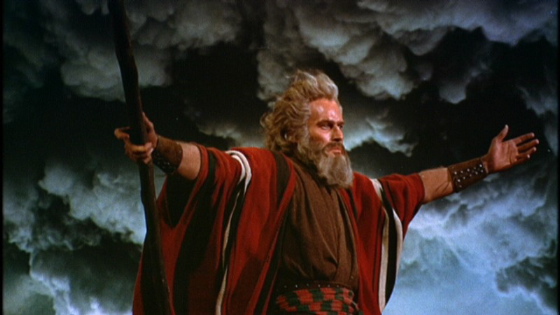
THE TEN COMMANDMENTS

This film did not screen on Saturday, but on a Wednesday afternoon,
when the theater was always dark.  I assume this was because it
wasn’t a big enough house to rate a print of the newly released epic,
which was something of a sensation at the time, on a weekend.
(Many of the films I saw in Belhaven were older releases — whatever
prints the theater could get hold of when the new releases were tied up
in bigger towns.)  This Wednesday was a school day and I had to get special permission from my second-grade teacher to skip afternoon classes to go see it.
Permission was granted, undoubtedly because of the uplifting nature of
the motion picture in question.  No one else in the class wanted
to go see it but me, and there was almost no one else in the theater when it played.
Consequently I felt even more overwhelmed by the spectacle than I might
have otherwise been.  It was almost as though the drama was being
played only for me.


The movies I saw at this little palace of dreams have a kind of glow about them, in my memory, which time has never dimmed.  Even watching the films again and discovering that they weren’t quite as magical as they seemed back then doesn’t really
alter my memory of them.  I saw the films I saw, they were what
they were, and they set the standard of enchantment against which I
measure all other films.
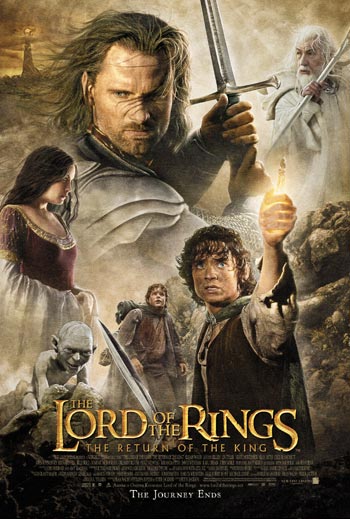
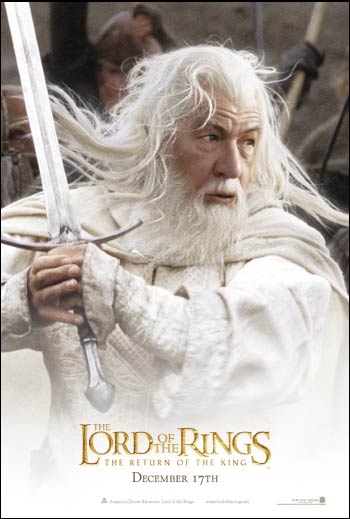
THE LORD OF THE RINGS


This trilogy is so well-made and possesses such magnificence of spirit
that it
seems truly churlish to wish that it was better — but I do. It is,
nevertheless, faut de mieux, the great epic film of our time — the
embodiment of the all-but-hopeless struggle just beginning against the
corporate control and perversion of all human life and an image of the
inevitable victory of humane culture in that struggle. Its faults are
primarily the faults of the book — a very vague appreciation of female
power, a coziness that avoids the true terror and complexity of the
genuine epics that inspired it, an avalanche of dazzling invention that
only rarely rises to the level of authentic enchantment. (The second film
of the series,
The Two Towers, is the best of the lot, if you only
have time for one of them.) But its heart is in the right place, its
moral sense steady and true. Mordor is on the march — time to set the
beacon fires. I'll light one if you will.


MARY AND CATHERINE


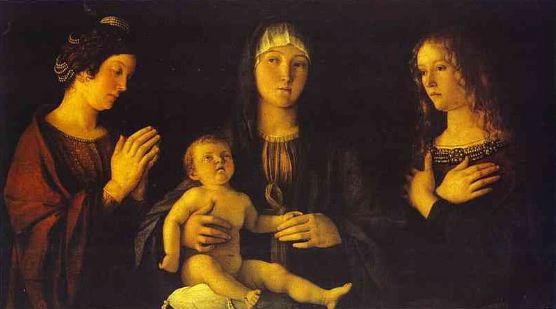
My
favorite image of Mary Magdalene in art is part of a triple portrait by
Bellini at the Academia in Venice showing the Virgin and child flanked
by St. Catherine (left above) and Mary Magdalene (right above.)


I'm assuming that this St. Catherine is St. Catherine of Alexandria,
known as “the pure”, selected as a pendant to Mary Magdalene, the
“impure” — and indeed the Magdalene here does seem to have a
penitential air, as though meditating on past sins.  An
allegorical interpretation is inevitable since St. Catherine lived
after the time of Jesus and Mary Magdalene would not, according to tradition, be in a
state of penitence until she encountered Jesus at the time of his adult
ministry.  The Magdalene's carnal nature is not unduly stressed,
however, which means one is not necessarily impelled to view her
in the context of her fraudulent identification as a reformed prostitute.


In any case my admiration of the portrait has nothing to do with
theology — I just find it enchanting for the beauty and sweetness of
the figure, its authoritative evocation of whatever real-life Italian
girl of the Renaissance sat for the painter.  When you stand before
the painting in Venice you feel you are in her living presence, echoing
through time.


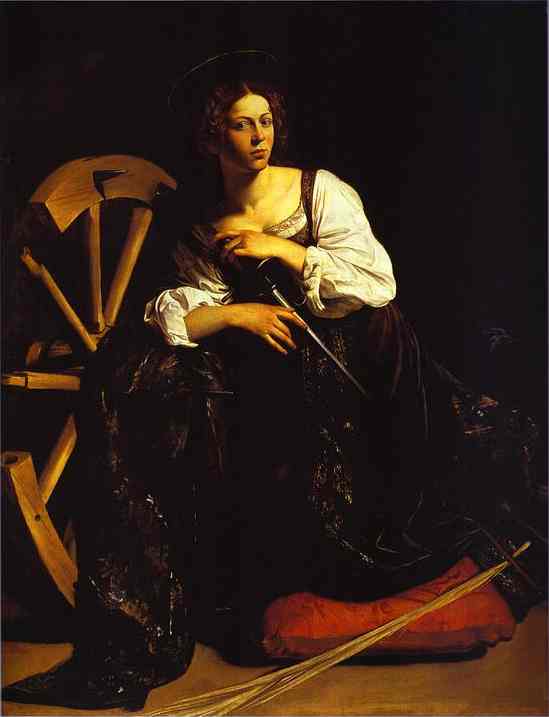
St. Catherine of Alexandria lived, according to legend, in the 3rd
Century and was martyred for her faith.  She was initially
condemned to be broken on the wheel, a kind of torture rack, but when
she touched it the wheel broke instead, and she was beheaded.  The
Catherine Wheel thus became a symbol of the martyr's metaphorical
triumph over persecution.  In 1969 St. Catherine of Alexandria
lost her day in the
Roman Catholic calendar of the saints
because of a lack of evidence as to her actual existence, though she
was a figure of great importance in the history of the church. 
(One of the oldest monasteries in the world, in the Sinai desert, bears
her
name.)  She got her day back in 2002.  Perhaps some day Mary
Magdalene will get her reputation and good name back.


Below is Catherine with her wheel as imagined by Caravaggio:


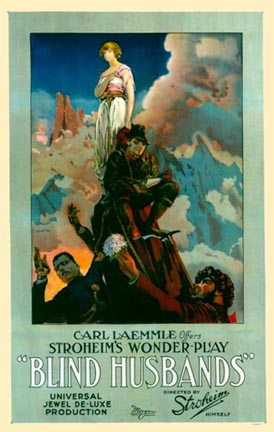
BLIND HUSBANDS


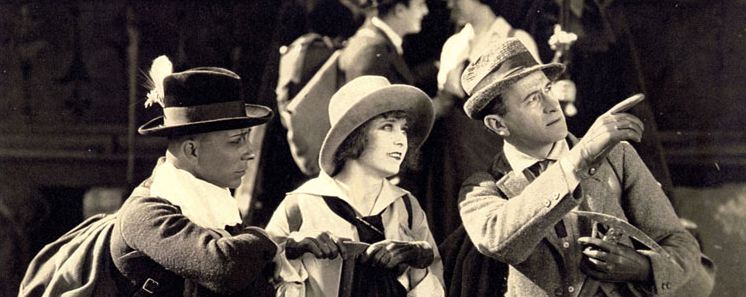
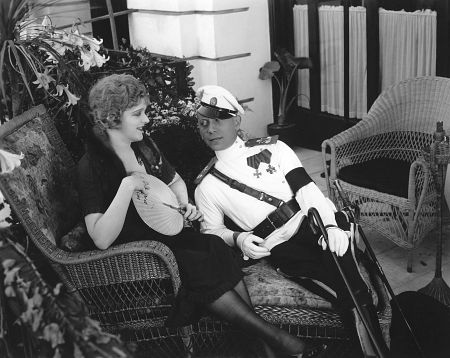
Blind
Husbands
(from 1919) remains the most astonishing directorial debut in
the history of American movies. The film has been compared to
Citizen
Kane
in that regard, but it has also been pointed out that Welles's
startling debut was preceded by a significant body of work in theater
and radio which brought him serious critical acclaim as well as
national prominence, and made the phenomenon of
Kane less surprising.


Erich
Von Stroheim had worked as an assistant in various capacities on the
Griffith lot and for director John Emerson, and he'd made a name for
himself as a character actor doing variations on his trademark wicked
Hun impersonation. He had, in fact, more practical experience of
filmmaking than Welles did before he made
Kane — but there was
nothing in his resume which could have prepared anyone for the mastery
of the medium, the creative brilliance, on display in
Blind Husbands.


In this
film he managed to refine the documentary power of Griffith at his best
and combine it with an expressionistic visual poetry worthy of Murnau.
It has the feel of a work conceived for its medium alone, with no
echoes of stage practice — not surprising since Von Stroheim had no
significant stage experience himself. (He had written one unproduced
play.)


In his
biography of the director, Richard Koszarski points out that Von
Stroheim saw the importance of Griffith's obsessive concern with detail
and authenticity in costumes and settings — this was a key way of
enthralling an audience and trumping stage practice, no matter how
elaborate. Yet because Griffith usually looked to the melodramatic stage
for his narratives and only occasionally explored interiors in purely
cinematic ways, an aesthetic tension remained in his work — he always
seemed to have a foot in both worlds, that of the stage and that of the
cinema.


The tension is dissolved in Blind Husbands. There is no sense, in either interiors or exteriors, of the theatrical
“set”. The camera seems to be exploring real places — however idealized or fantastical.


Much
has been made of Von Stroheim's obsession with seemingly insignificant
details, as though it represented some kind of pathology, but this was
crucial to his method — to get actors to behave as though they were
inhabiting real places, to convince audiences that they were watching
(and vicariously inhabiting) real places.


Audiences
and critics of the time recognized the power of this approach, even if
they didn't always appreciate how it was achieved — how it moved
cinema one step further from the Victorian stage. Griffith could throw
Lillian Gish out onto a real piece of ice on a frozen river, and in the
same film shoot and stage an interior as though it were being enacted
within a proscenium arch. It was the totality and integrity of Von
Stroheim's realized vision of a cinematic universe that made
Blind
Husbands
an immediate sensation.


The
film cost a bit more than $100,000, and Universal spent slightly
more than that promoting it — but it brought in over $300,000
during its first year of release, at a time when the average Universal
film was bringing in just over $50,000.


Making
a film like
Blind Husbands was obviously riskier than churning out
programmers, but it represented a formula for commercial success all
the same — and one curiously similar to the blockbuster event-film
formula currently followed in Hollywood. Today the money is most often spent on
special effects — but in Von Stroheim's day, his obsessive recreations
and presentations of reality must have struck audiences as very special
effects indeed, and every bit as thrilling, as cutting-edge, as
exploding Death Stars.


It should be added that Von Stroheim's method is still thrilling, some 85 years on, in a way the startling digital effects
of our time may not be in a few generations.


The
film tries for a greater psychological complexity than conventional
melodrama, and presents adulterous temptation with an erotic frankness
unusual in its time, but it is still a rather ordinary love triangle at
heart. It's the organic integration of the physical world into its
drama and the power and beauty of its images which make it magical and
memorable — a purely cinematic masterpiece.


(All
versions of the film available today derive from a cut-down re-release
from 1924. About twenty minutes were removed, and the clumsy pacing and
hurried feel of so many sequences in this version suggest that much of
the cutting simply involved the trimming of individual shots. One can
only imagine the power of the film if its images could be relished at a
more leisurely pace.)


VICTORIAN ACADEMIC PAINTING

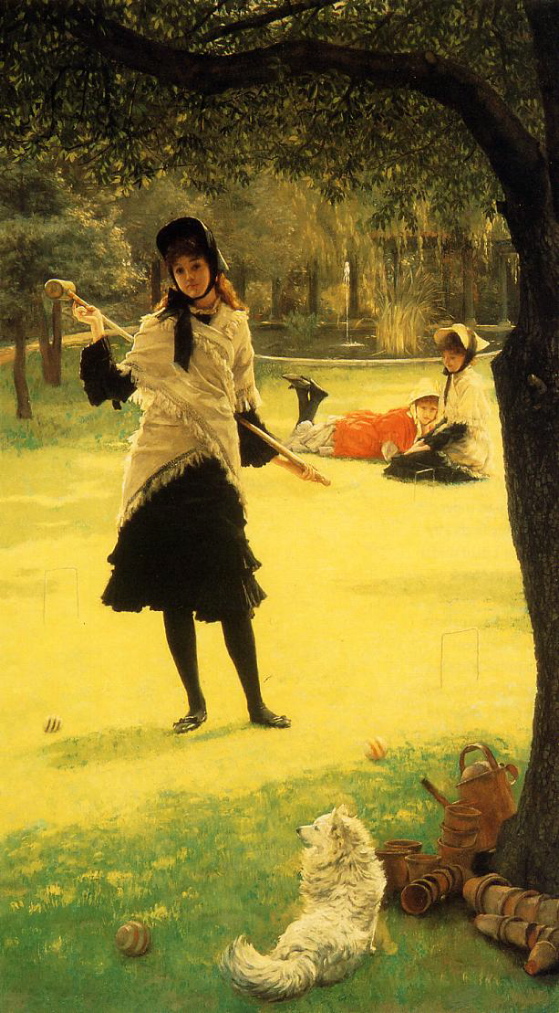
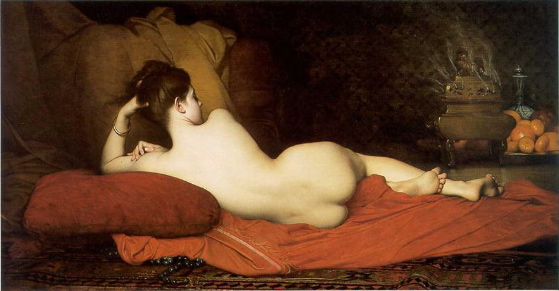
Faced with the invention of photography, academic painters of the Victorian era (like James Tissot above and Jules Lefebvre below) at first tried to compete with the new technology on its own terms — by creating super-realistic images that had the advantage
of being in color and could convey a more convincing suggestion of narrative or of the flux of ordinary life.  Posed photographs tended to look posed, largely because long exposure times required subjects to stay frozen in fixed positions for many seconds at a time.  The
academic painter could achieve effects with his figures that seemed in some ways, paradoxically, more naturalistic, more lifelike than anything the 19th-Century camera could capture.  These effects constituted the realist painter’s only areas of advantage over the
“scientific” authority of the photographic record.


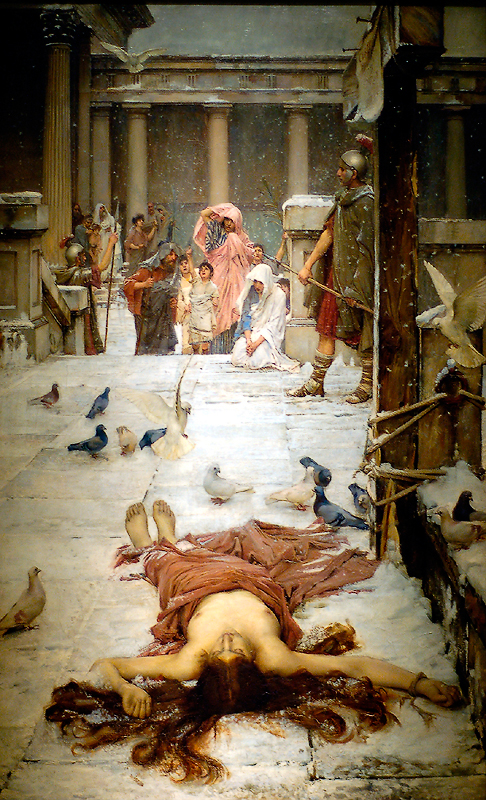
The Victorian academic painters concentrated on producing an illusion of depth in the image (again competing in this with the photograph and especially the stereoscopic photograph) and located their expressiveness in the drama of space itself, drawing the eye into the painting as a prelude to seducing the mind into the emotional content of the scene depicted, as in the painting below by John William Waterhouse:


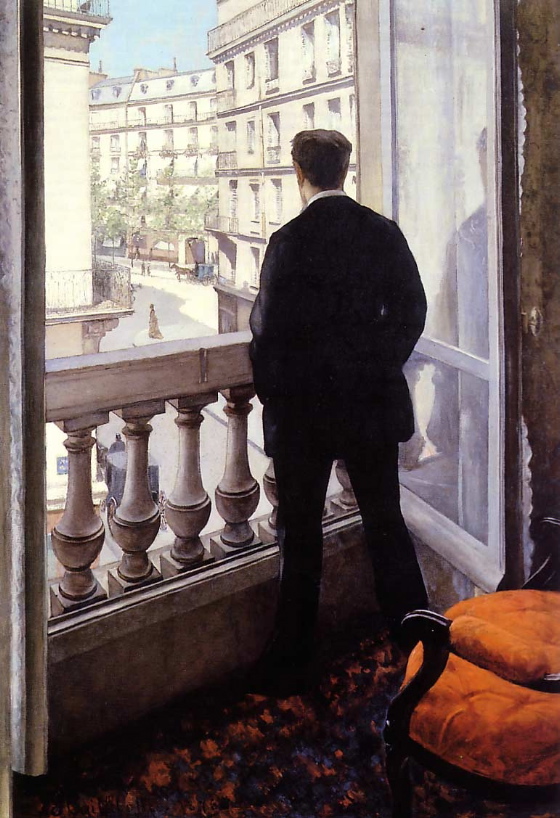
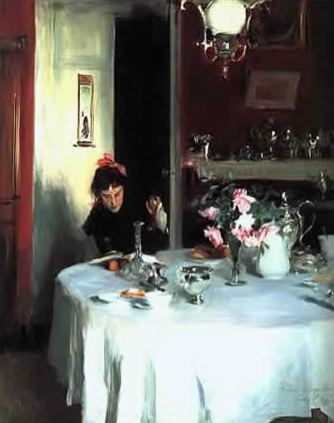
They were enormously successful in this, across a wide range of genres — from historical tableaux to contemporary social observations.  The Impressionist school which challenged the academic style tended to downplay spatial drama and bring the surface texture of the painting itself, and the sheer drama of color, into prominence.  The Impressionists generally abandoned historical subjects and concentrated on contemporary scenes.  There were some painters who almost straddled the two schools, like John Singer Sargent and Gustave Caillebotte — but to me these two painters remained primarily in the academic camp, because a precise, stereometric modeling of forms and an insistence on the drama of space tended to loom larger in their work than either the free treatment of paint on canvas or the pure celebration of color as an end in itself.

Caillebotte hung out (and hung his work) with the Impressionists but his best paintings, like the scene below, are almost categorically academic:

Sargent, though he made his living primarily by painting portraits of the sort of people who favored academic art, was enchanted by the Impressionists’ free use of paint, but even at his most unruly in this regard he remained at heart captivated by the drama of space and solid forms, which can be seen in this exquisite interior whose subtly dramatic framing draws our eye past the surface of the canvas into the room depicted:


The invention of movies almost instantly obliterated the academic approach as a popular style, just as the radical freshness of the Impressionist school had discredited it among the intellectual
elite.  Movies could render the illusion of space far more eloquently and convincingly than any painting, and were also capable of theatrical effects and a narrative complexity beyond the range of the easel painter.


A vital school of art thus virtually disappeared overnight — surviving
only in magazine and book illustration as practiced by artists like N.
C. Wyeth and Norman Rockwell.  But the influence of the school
endured, because filmmakers drew on it for basic strategies of
composition in cinematography, basic notions of how to charge space
with emotion.  Indeed, Victorian academic painting had far more to
do with the development of movies as an art form than Victorian
stagecraft, which is usually the arena from which movies are presumed
to have sprung.


Victorian academic painting is now thoroughly discredited
intellectually and appreciated only as kitsch, but it’s far more than
that.  It was an exciting and entertaining form which deserves to
be taken seriously and studied far more carefully than it ever has been
in its relationship to the development of cinematic style.  Some
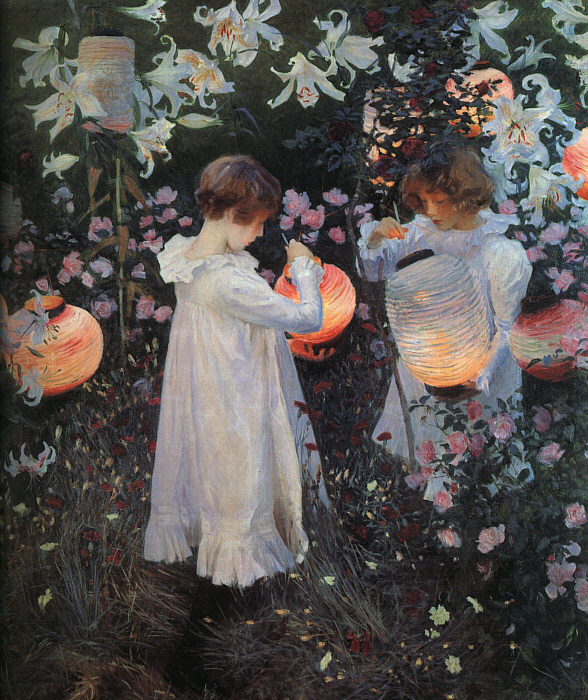
of it, like the painting by Sargent below, was very fine stuff indeed.

SAVED


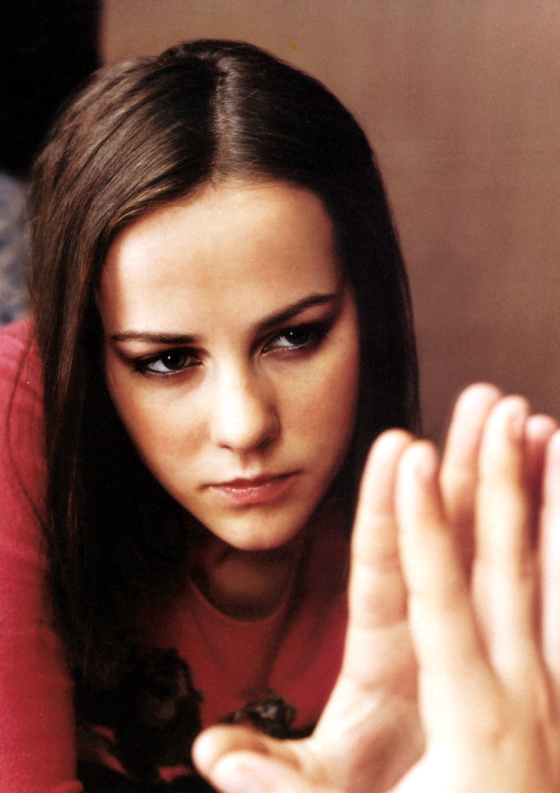
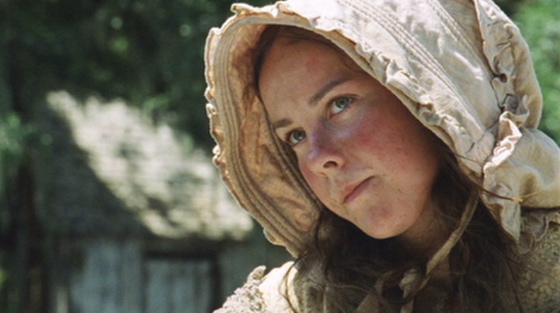
The best thing about the movie Saved is the wondrous Jena Malone, who’s
brilliant in just about everything she does but has never gotten a
break-out role. Saved is a gentle satire of young fundamentalist
Christian teens, with a sentimental but overly-familiar message at its
core — real goodness isn’t always found in the dogmatic pronouncements
of the self-appointed true believers. Since this was a big part of
Jesus’s message, you could argue that this is really a Christian film
at heart, for all its barbs at the fundamentalist types. It’s pretty
funny but gets a little too sloppy and preachy at the end.


Malone is probably best known for her role in Donnie Darko but check out her little cameo in Cold Mountain as well — scary . . .

WHORES: A VALENTINE’S DAY MEDITATION

Baudelaire searched the dark back streets of 19th-Century Paris for harlots whose
painted faces, whose company and whose smiles offered him a glimpse into the abyss, exciting because it was profound. There was more than a commercial or sexual transaction going on between the poet and his flowers of evil — there was a bargaining between lost souls, a danse macabre beyond the pale of bourgeois stasis and despair.

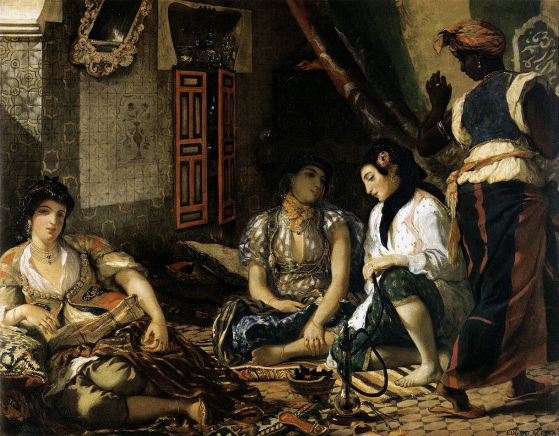
Of the painting by Delacroix above, Women Of Algiers, Baudelaire wrote, “This little poem of an interior . . . seems somehow to exhale the heady scent of a house of ill repute, which quickly enough guides our thoughts toward the fathomless limbo of sadness.” Quoting this in his Arcades Project, Walter Benjamin chose to emphasize the word fathomless.

When Baudelaire visited whores he was engaging in genuine depravity, knowing that he was violating something sacred and thus committing a profound act.  He did this out of a kind of rage at what the world was becoming, a place where the sacred and the profane had no meaning, in which all values and all faiths were trivialized.  He saw the birth of the world we now inhabit, the province of bourgeois superficiality, meaninglessness.  He believed that this world had obliterated heaven and the possibility of heaven, but he also believed that in violating its hypocritical code of decorum, by embracing hell, he could still feel the grandeur of the profound.

Alas, even this desperate but oddly heroic depravity is denied to modern man.

What would M. Baudelaire have made of the harlots of modern-day Las Vegas, sitting at the elegant casino bars playing video poker, indistinguishable by sight from the non-working girls passing through those same bars? What would he have made of the billboards and taxicab ads, in plain view in the bright desert sun, featuring exotic “dancers” from the “gentlemen’s clubs”?

In the commercialized sexual transactions of modern-day Las Vegas, souls do
not figure. The terror of damnation is reduced to a haggling over access to body parts and the means by which a bodily emission is induced. Whatever intercourse results is undoubtedly difficult to distinguish from congress with a rubber sex doll.


Prostitution in Las Vegas has entered the realm of bourgeois commercial trafficking — honest, innocent, drained of life. Today we speak unselfconsciously of “sex workers” and the “sex industry”. In the Arcades Project, Walter Benjamin remarks that “Prostitution can lay claim to being considered ‘work’ the moment work becomes prostitution.”

Today, it’s not just the proletariat which is alienated from its labor, but the bourgeois, too, even the haute bourgeois — the moneyed class that patronizes the “respectable” whores who work the classy casino bars.

There are undoubtedly more desperate sisters of the night working the dark
back streets of Vegas’ shabbier neighborhoods who more closely evoke the lost ladies of Baudelaire’s world, but the distinction today is more apt to seem one of style and economic status than of existential depravity. The only time you can readily distinguish a working girl from a female tourist in a casino bar is when the former opens her mouth to speak and reveals a kind of slow-witted banality of mind.  (“Nobody gets into my pants for less than, like, $500,” I once heard one say — the “like” being an inelegant indication of her willingness to bargain.) She is simply less educated than her non-commercial sister, with a less developed sense of irony and play.


We’re all in hell now but we have no perspective from which to deduce that fact, and consequently there is no more glamor in damnation.


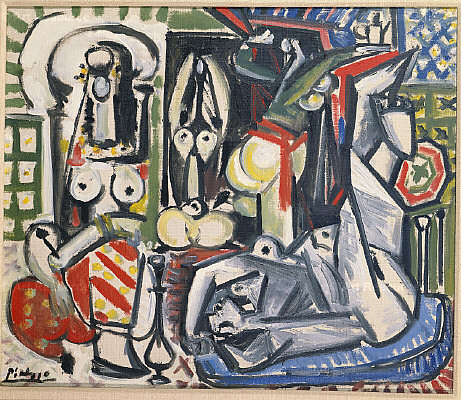
In the painting above, Picasso goofs on the Delacroix painting at the head of this post, deconstructing it. It’s not just an aesthetic exercise.  It seems to me that Picasso is appropriating the bourgeois male’s hatred and fear of the female and using it to dissect the female into lifeless, if vivid and lurid, component parts. It’s possible to see cubism in general as an attempt to render three-dimensional reality on a two-dimensional surface. It’s also possible to see it as an attempt to reduce three-dimensional reality to a two-dimensional object, to make it superficial, and thus conformable to the sterile bourgeois psyche.

Study the two pictures and come to your own conclusions about Picasso’s aims. Consider the use of body doubles in movie sex scenes, where disassociated, anonymous parts of the naked female body are made to stand in for the whole woman. Consider the question of whether Delacroix’s willingness to confront fathomless sadness is not more courageous than Picasso’s hysterical attempt to master it, to bring its contents up to the surface and lay them out on a butcher’s table. It may lead you to conclude that one goal of modern artists ought to be restoring the image of the whole woman to art, whatever the psychic consequences for men.

SHOW PEOPLE


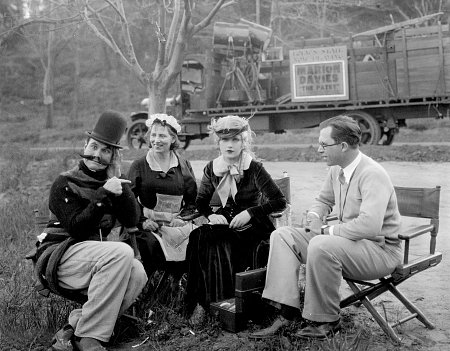
Show
People
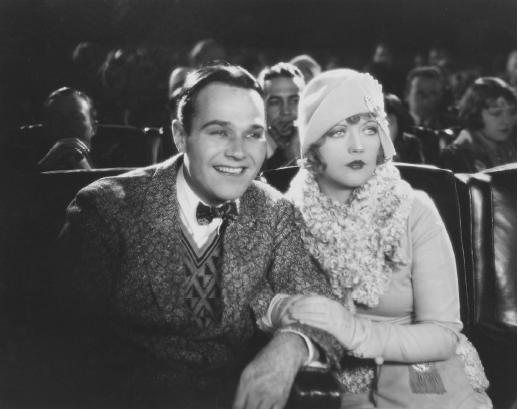
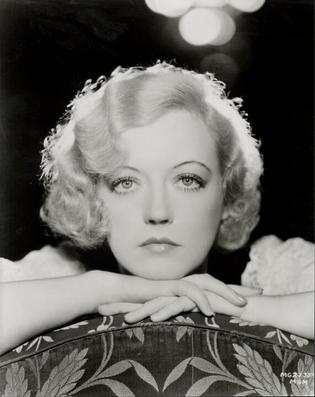
, a silent film directed by King Vidor, is one of those rarest and most delicious of movie confections
— a romantic comedy that's truly funny, truly zany and also
emotionally affecting. It was my first encounter with the work of
Marion Davies and I was curious about her for all the usual reasons.


Welles's
caricature of Davies as Susan Alexander in
Citizen Kane is so
effective and so devastating that most subsequent commentators have
gone out of their way to point out that it was unfair — that Davies
was a truly talented woman. I wondered how much of this was merely
apology for a patently ungallant attack and how much a considered
judgement.


For
the first few scenes in
Show People I wasn't really sure. Davies is
certainly beautiful and charming, but she has a kind of eerie calm for
a movie star, an unwillingness to reach out to the audience. She's
willing to mug goodnaturedly in the service of the film, and seems like
a regular kid, but I wondered if her reserve was the assurance of a
confident artist or the smugness of a hostess in a castle. Were the
goofy faces she pulled just genial parlor tricks?


Then
came the wonderful scene where she makes her debut in a slapstick movie
and gets hit unexpectedly with a blast of seltzer water in the face.
Her affronted reaction is effective comically and dramatically as well
— she looks truly humiliated and bewildered. And then, retreating
behind the flats, she falls apart and your heart just goes out to her,
as does the heart of Billy, her romantic leading man. When he carefully
re-does her make-up and re-applies her lipstick, we start to care about
him, and about the couple. It's the heart of the movie.


William
Haines is an effective leading man in this very light role, though I
found his mugging, whether slightly manic or slightly fey, unappealing.
It's called for by the part, but a star in a romantic comedy has to be
able to make a complete idiot of himself and still be loveable, and
Haines wasn't quite, for me. What saves the situation is Davies. When
she becomes an insufferable star she launches into her famous
impersonation of Gloria Swanson, which is dead-on, hilarious, and
occasionally downright demented. She doesn't just strike poses, she
also from time to time starts pursing her lips so fast that the
behavior reads as borderline psychotic. The goofiness of Peggy Pepper
which keeps busting out of Patricia Pepoire echoes Billy's goofiness
and reminds us that they belong together.

It's
odd to find in this genial portrait of Hollywood filmmaking in 1927 a
nostalgia already present for Hollywood filmmaking in the Teens, the
days of knockabout improvised comedy. The collision of the two location
casts, when a Sennet-like troupe passes like a dream through the
already dreamlike parody set of a high-class Pepoire vehicle, out in
the sunny California countryside, has a Bergmanesque, melancholy edge
to it. The Hollywood past has already become surreal, even within the
surreal arena of filmmaking itself.


This
episode is one of the few breathtaking bits of visual poetry that
remind us we're watching a film by the man who directed
The Big
Parade
— though there are shrewd bits of plastic calculation
throughout. The first shot we see of Peggy Pepper's slapstick debut at
the screening of her first film is a furious tracking shot looking back
at Peggy running madly, pursued by a car-full of clowns. It's an
exhilarating evocation of the spirit of early film comedy, with all its
excitement and joy.


By the
end of the film, I admired Davies enormously, and liked her, too —
she's good company on film, as apparently she was in life. But I still
felt some element of reserve — between her and Haines, and her and the
audience. There was no smugness in it, more like a dimension of
vulnerability she was willing to admit but not quite willing to share.
It gave her a mysterious resonance, partly alluring and partly sad. But
perhaps it's just the ghost of Susan Alexander I was sensing, the
gossip and suspicion and envy out of which Welles created his malicious
portrait, and which Davies had to live with long before
Kane. It's a
phantom which poor Marion Davies will never really be able to shake.


OLD FRIEND FROM FAR AWAY


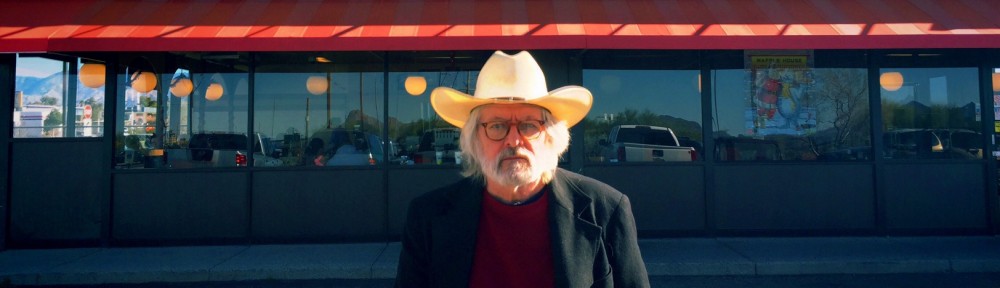
Above is a picture of Paul Zahl, the dean of a prominent
Episcopalian divinity school.  He's my oldest friend.  We met
when we were 12 years-old and he introduced me to
Famous Monsters Of Filmland
— and the rest is history.  We were both somewhat nerdy bookworms
who shared a (for me anyway) life-changing realization — that we could
apply our intellectual powers to the stuff we really loved, like movies
and monster movies in particular . . . that we could take them
seriously.  That gave me, among other things, a vocation in life
— filmmaking — as well as a source of never-ending intellectual
joy.  It meant, for example, reversing the dynamic, that I could
find as much fun in Shakespeare as I did in
The Bride Of Frankenstein
that I didn't have to make the sort of value judgments between forms
that official high culture uses to diminish the prestige (and disguise
the power) of the popular arts and to turn the classics into dust.

Paul and I quickly discovered another classmate, Bill Bowman, who
shared our love of horror films, and like so many other children of Famous Monsters
in our generation we immediately started making our own versions of the
classics in 8mm, and these little epics survive as testaments to our
passion.


Paul and I
hadn't seen each other for more than two decades but when he showed up
for a visit last weekend we started jabbering away at each other with
all the excitement we shared as teenagers — talking about
The Searchers, The Bride
(as we always called the mother of all Universal horror films), Blake, Dylan and theology in a continuum of appreciation that
crackled with the action of genuine intellectual adventure.


The eclectic
craziness of Las Vegas helps encourage this way of thinking about
things, in which disparate visions illuminate and deepen each
other.  We sat on the terrace of Mon Ami Gabi at the edge of a
recreation of Paris, within sight of a recreation of ancient Rome and
an evocation of Lake Como and discussed the plastic eloquence of John
Ford, the precise relationship of incarnation and atonement in the
Gospels, the sly wisdom of Bob Dylan and the best images in
The Creature From the Black Lagoon . . . as though all in the same breath.


It was the sort
of thing we had given each other permission to do in our youth and I
realized again what a blessing that permission truly was.


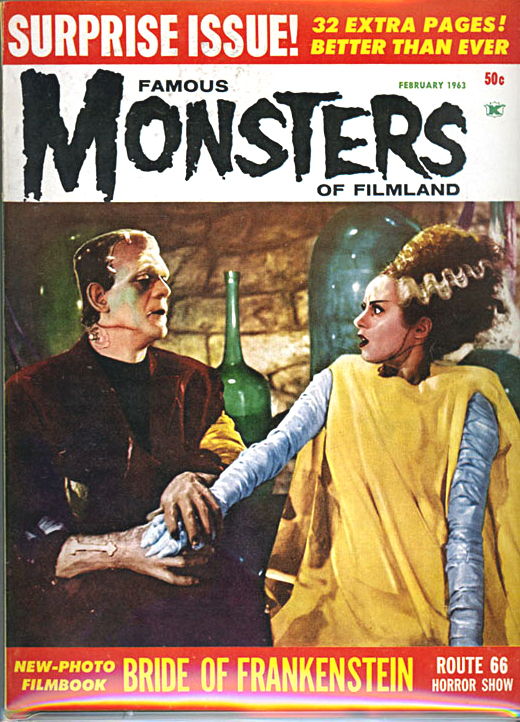
Paul brought with him a gift — the February 1963 issue of
Famous Monsters, the legendary double issue on The Bride Of Frankenstein
with the stunning cover by Basil Gogos.  When we saw this cover
for the first time at a newsstand, when we were 13 years-old, our pulses quickened.  Looking at
it now, my blood still runs high.  It's just cool.  Always
was, always will be.


MARY MAGDALENE


Artists have created a complex view of Mary Magdalene through the ages.


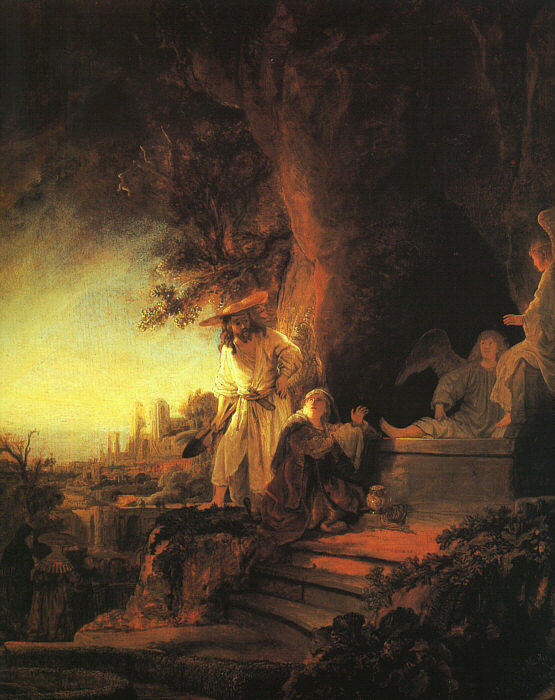
She was the first person to see the resurrected Christ (as depicted by Rembrandt above.)  She went and told the apostles about it and they didn’t believe her, which is why she is sometimes called the apostle to the apostles.  You would think this would be enough to settle once and for all the question of women in the Christian priesthood, but church tradition weighs more than the plain lessons of Jesus in many (if not most) cases.

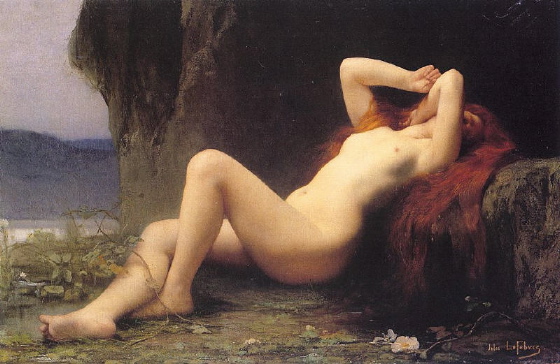
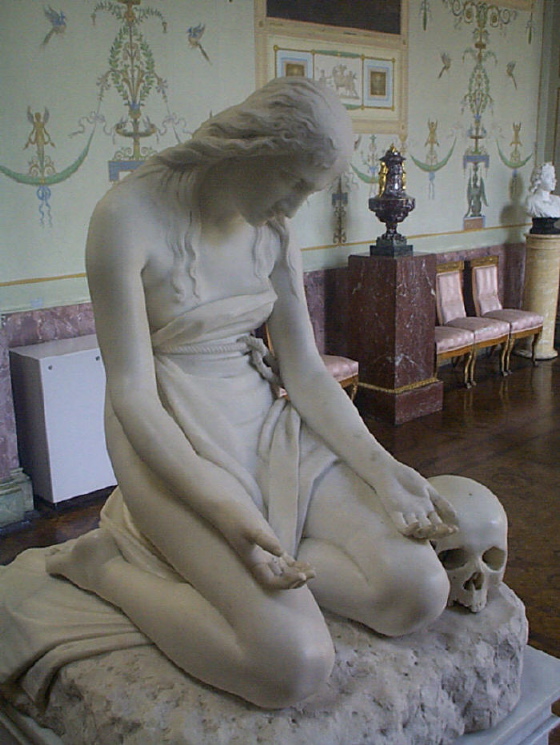
Her extraordinary position at the center of the miracle of the resurrection was further undermined by the later church legend that Mary Magdalene was a reformed prostitute, identified with one of the prostitutes Jesus encounters in the Gospels.  There is no Biblical justification whatsoever for this identification, but it served the church fathers in subtly undermining the position of the Magdalene and it was a Godsend to artists through the ages, allowing them to bring some raw sex into New Testament imagery. Jules-Joseph Lefebvre has a go at it in the painting at the beginning of this post, Antonio Canova in the statue below, both works of the 19th Century.  Cecil B. DeMille milked the legend for all it was worth in his his silent epic King Of Kings.


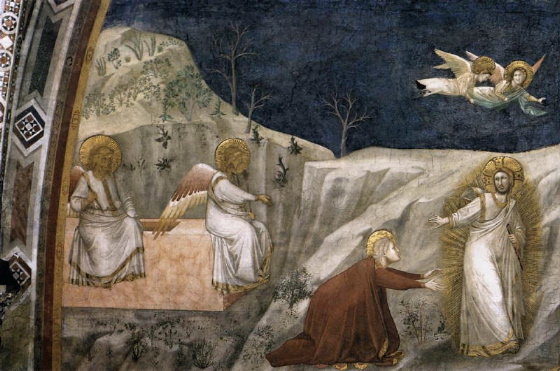
Giotto (probably supervising two students working more or less in his style) takes us back to the source in his powerful fresco of Mary Magdalene’s encounter with her risen Lord, at the church of St. Francis in Assisi.  Bold, severe, painted with simplicity and awe, it shows us the Mary Magdalene of the Gospels — a woman at the center of a majestic mystery:


THE ECSTASY OF INFLUENCE


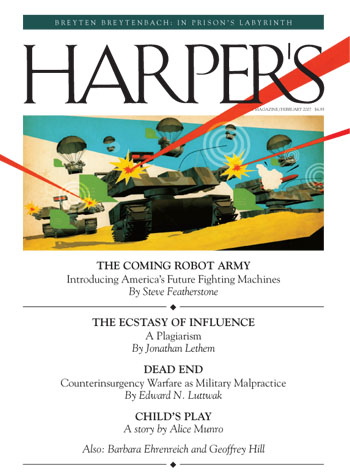
If you care about culture — what it is, where it is right now and where it's going — you
must read this essay by Jonathan Lethem from a recent issue of Harper's magazine, which deals with corporate efforts to commodify,
control and own the conversation of culture that has always been at the heart of artistic enterprise.  You can find the article here:

The Ecstasy Of Influence

An interview with Lethem about the piece can be heard here:

Jonathan Lethem on Open Source

Lethem's essay will very likely become a seminal document in the great fight to reclaim culture in our time.

As an addendum, I offer this quote from Igor Stravinsky:

“I love Mozart, and I steal from Mozart, and I feel I have right to steal from Mozart, because I love him.”

VILLA RIDES


The Mexican Revolution coincided with new developments in photography,
smaller cameras with faster lenses, and became the first major military
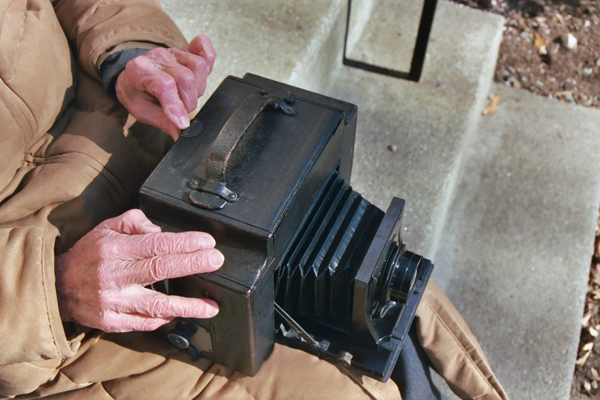
conflict in which action was convincingly captured.  Below is a picture of
the Kodak Graflex camera, introduced in 1902 and constantly improved,
which had shutter speeds up to 1/1000th of a second — it was
considered the best small professional camera on the market and was
often used to record incidents of the Revolution:


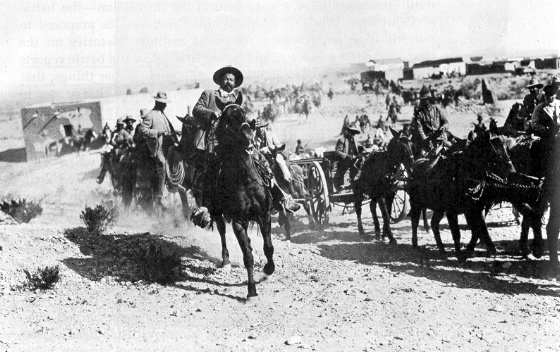
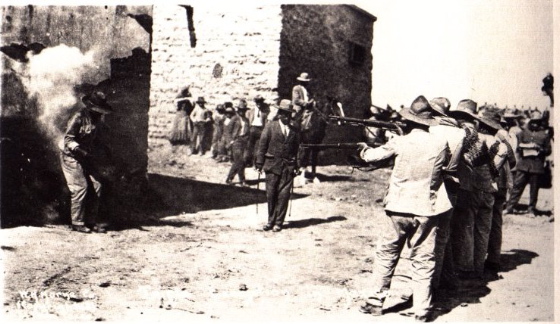
Border incursions by Mexican revolutionaries and intervention by the American military made the Revolution hot news in the U. S. and motivated a number of photographers to record images of the fighting for commercial exploitation, mostly through the sale of picture postcards.  They weren’t above staging scenes for their cameras, but they made astonishing images of actual events as well, like the image above of Pancho Villa riding at the side of his troops.  Photographs of the dead were big sellers, and one photographer even caught some shocking images of executions by firing squad, in which we can see the bullets kicking up dust in the wall behind the victims, who are still on their feet after being shot.  Here’s one of them:

The Mexican revolution marked a major development in the depiction of violence in photographic images, adding a new element of action to long-established practices of recording only the aftermath of war’s horror.

Click here to learn how to operate a Graphex camera . . .

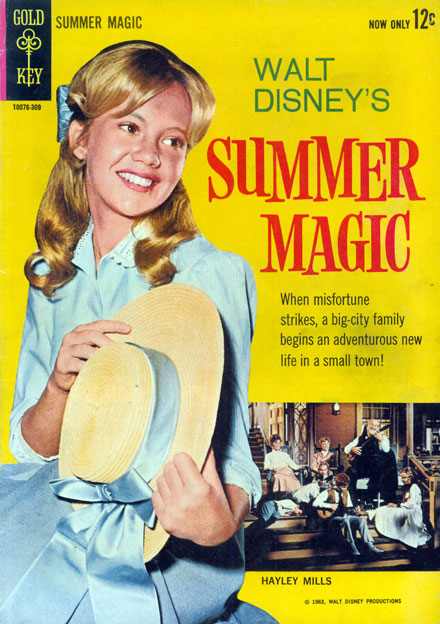
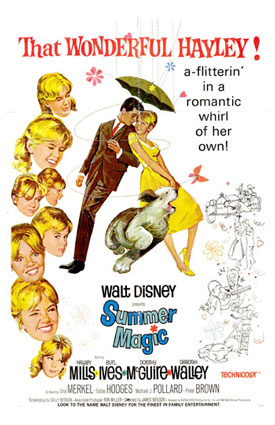
SUMMER MAGIC


I
saw this film when it first came out, in July of 1963, when I was
thirteen. It was showing at a theater a couple of miles from my home in
Washington, D. C. I took a bus to the theater but afterwards I had an
urge to walk home, which I did, in a kind of dreamy state. The film is
not a great one but it has a kind of sweetness you don't find in
movies anymore, and a kind of modesty — it wasn't meant to be an
event, just a pleasing way of passing the time on a summer's afternoon
or evening. If you were a kid in 1963 you'd go see any Disney film that
came out, knowing you'd like it, more or less.


I was
on the cusp of puberty then and Hayley Mills was a person of deep
fascination to me. I might not have identified my interest in her as
sexual, consciously, but she was a sexy girl — not just cute but
self-possessed in an alluring way. Her good-natured charm allowed one
access to her female power, made it approachable.


A few
months after this film came out Kennedy would be assassinated and a
few months after that the Beatles exploded on the scene, and the
Sixties officially got going. It's tempting to think that the dream
state this film induced in me, and the long walk home I took in order
to prolong it, arose from a presentiment that this summer would be the
last innocent one of my life — that sex and tragedy and cultural
derangement would soon transform me and transform America.


I was taking a deep breath, perhaps, knowing that the slow climb of the rollercoaster had reached its zenith and that the
delirious fall was about to begin.


RENOIR ON VON STROHEIM


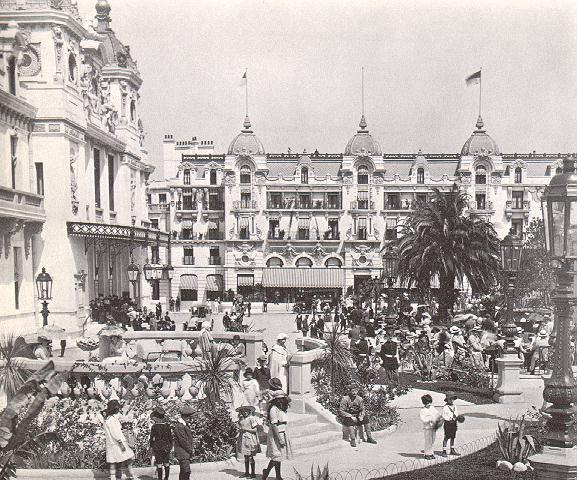
When Erich Von Stroheim was supervising the construction of the Monte
Carlo sets (pictured above) for Foolish Wives on the Universal lot in 1921, he insisted that a series of real and very large plate-glass windows be installed in the Cafe de Paris facade so that he could film in them the reflection of the facade of the building opposite.


The windows cost $12,000 — an enormous sum at the time.  But as Von Stroheim biographer Richard Koszarski points out, the effect of the reflections remains startling, if subtle — it creates the illusion of a whole real world, including buildings behind the audience.  It is an effect beyond the means of any theater, and purely cinematic.


It is also emblematic of Von Stroheim's vision of cinema — radical for its time.  Koszarski supplies us with a quote from Jean Renoir which sums up this vision eloquently.  Renoir said he saw Foolish Wives at least ten times, and that it was this film which inspired him to dedicate his life to filmmaking.  Renoir said that the film impressed him with “the possibility of creating within a film a world that might differ greatly from reality but still would be experienced as having a wholeness and coherence like that of the world we live in.”


All great directors from Griffith onwards have at least intuited this fundamental and unique potential of the film medium, but Von Stroheim was the first to use it consciously as the basic organizing principle of his style.


It's almost impossible to overestimate the importance of Von Stroheim's creative insight to the art and subsequent history of film.  Without it, just for starters, Jean Renoir might have decided to go into some other line of work.


CHERRY 2000


Above
is a cool French poster for the film
Cherry 2000. It's a vision from
the 1980s (cast in a sort of sci-fi version of
Coppelia) of sexual
relations in the 21st Century — and it wasn't far off. It tested
horribly with audiences back when it was made and was never released
theatrically in America, but it's now available on DVD. I don't know if
it's a cult classic yet but it will be, sooner or later. The direction
is not up to the level of the story and script but it's definitely worth
checking out. You can buy it here:


Cherry 2000