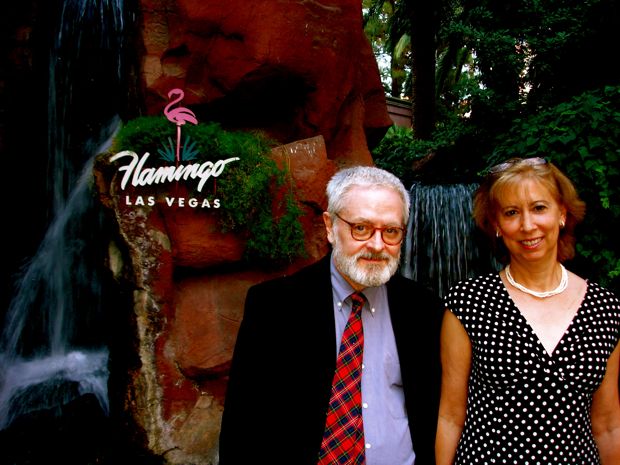
A WEDDING AT THE FLAMINGO

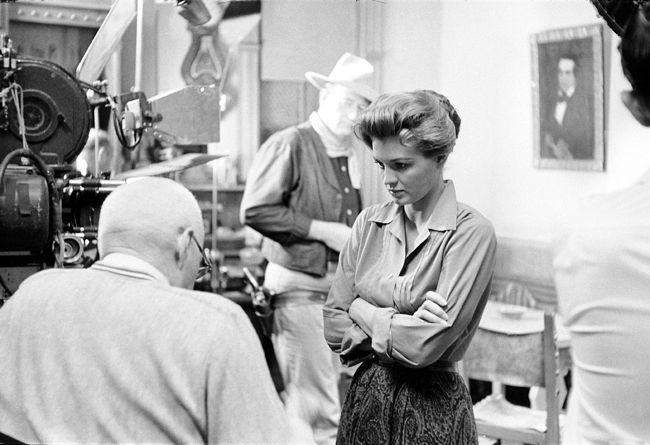
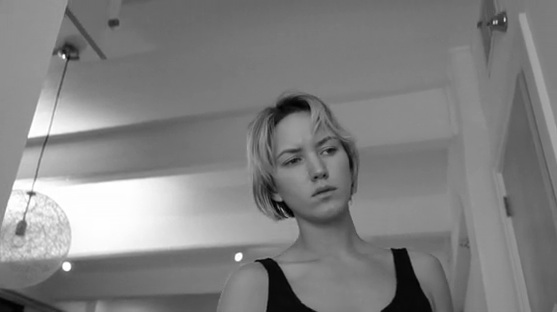
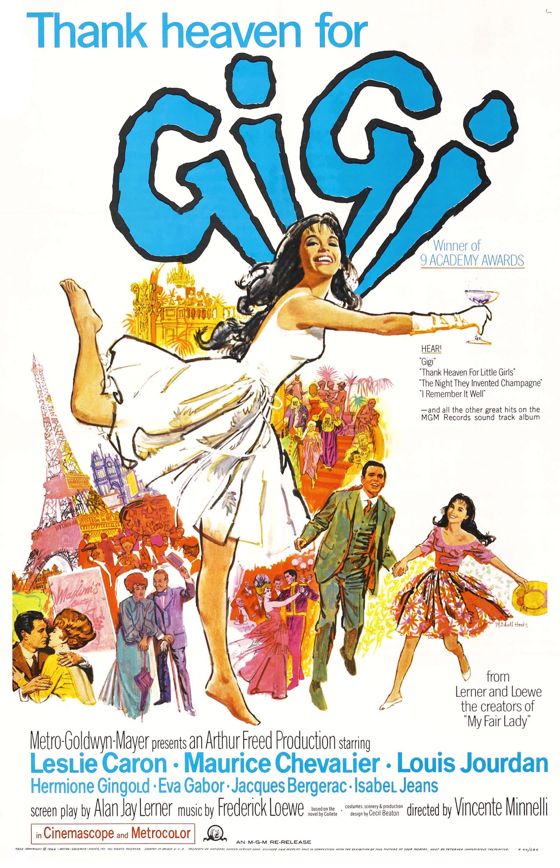
My friend Patty Giovenco (above) rolled into town from Brooklyn on Wednesday to attend the wedding of her brother Carmen, held at the Flamingo yesterday.  Since her husband couldn't get off work for the occasion, I got to be her date.

You see lots of wedding parties sweeping through the casinos here, especially around this time of year, but I'd never actually attended a Las Vegas wedding.  This one, held in the Flamingo's Garden Chapel, off the pool and garden area (where they keep the live flamingos), was very well done, with a presiding minister who was warm and folksy but serious about the serious things.



Father Ed, a young priest and cousin of the bride who'd flown in from St. Louis, gave a fine blessing that put the seal on the sacramental nature of the proceedings.  Besides Patty, I didn't know any of the people involved in this wedding except Carmen, whom I'd attended a Mets game with once, back in New York, but I still got choked up during the service.

Weddings always affect me that way.
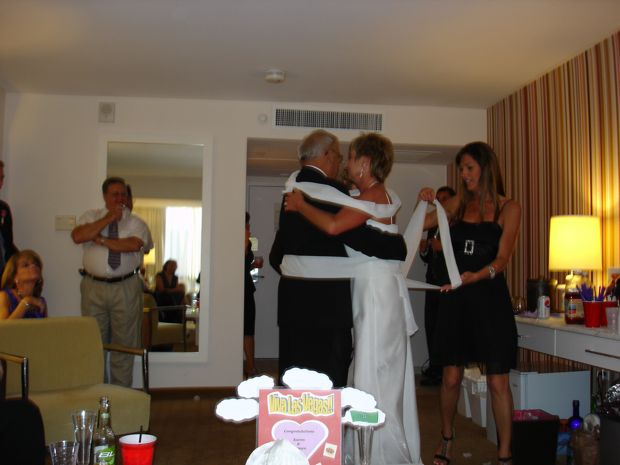


There was food and drink afterwards in the newlyweds' suite, where they danced and got wrapped up with toilet paper — a family ritual I had never encountered before.  Then a grand feast at Battista's Hole In the Wall Italian restaurant.
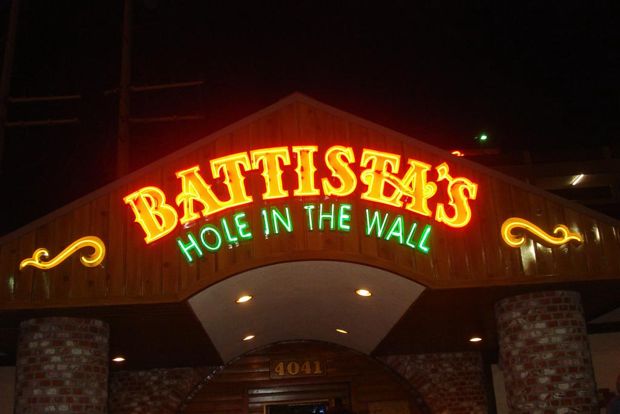
Battista's is a venerable Las Vegas institution, dating back to Rat-Pack days, and apparently unchanged since then — the atmosphere is fun, the food is hearty, and a wedding party is excuse enough for everyone seated within sight of it to raise a toast and a cheer to the bride and groom, loud enough to make the welkin ring.  Of course there is a strolling accordion player who also dates back to the Rat-Pack era.
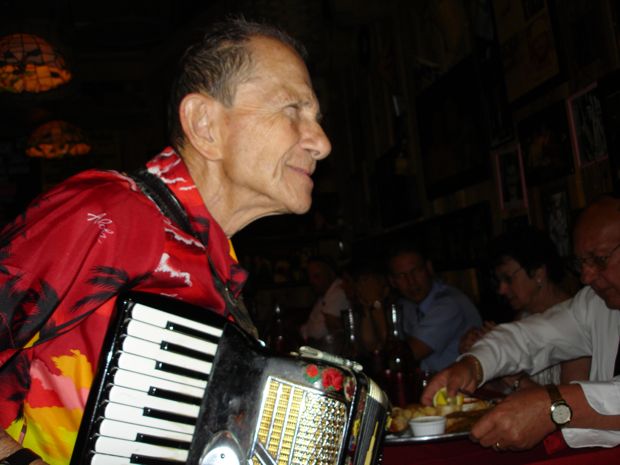


The most cheerful of occasions was thus well and truly celebrated — and the bride and groom seemed to be having at least as much fun as everybody else, which is only right.



Walking back to to the Flamingo after dinner, Father Ed suddenly broke out into an Italian song, in a great, sweet, soaring tenor voice.  In Las Vegas, this sort of thing just happens in the natural course of events and does not seem strange.  Earlier Father Ed had told me that Las Vegas was his kind of town.  In truth, it's everybody's kind of town, or ought to be.
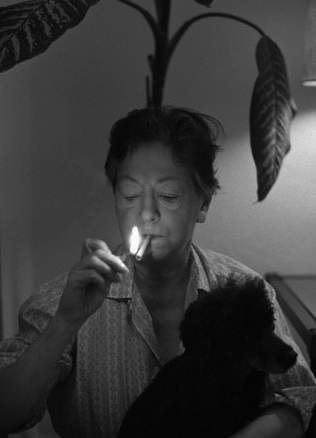
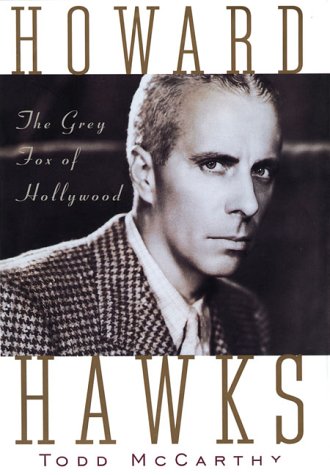
HOWARD HAWKS: THE GREY FOX OF HOLLYWOOD

I just finished reading Todd McCarthy's biography of Howard Hawks.  It's one of the best of all film director biographies, extremely well-written, entertaining and wise.

Like Ford, Hawks was an elusive man, personally — his second wife called him “a great big pillar of nothing” — but he was a canny and ruthless operator, who played the Hollywood studio game as well as it has ever been played by a great artist.  It was his good fortune to want to make the kind of popular art the studios wanted to make, but he always wanted to do it on his own terms, and found ways to accomplish that.


His artistry is elusive, too — so simple and straightforward on its surface that it's hard to see how he manages to tell such exhilarating stories in such effective ways.  He probably wouldn't have been a fun guy to hang out with, except perhaps on a hunting trip, but as a filmmaker, he's almost always the best of company.

IT MAY AGAIN BE SO

It may be that there are no real men left in America.  Some of us, however,
take an occasional crack at keeping alive the memory of what men once
were — or fanning the hope of what they may be.  Once, for instance,
men behaved with compassion toward women; they were even interested in
how women feel; what women did was actually important to men — once.
It may again be so.
                                                                                                        — Philip Wylie

CHAUVET

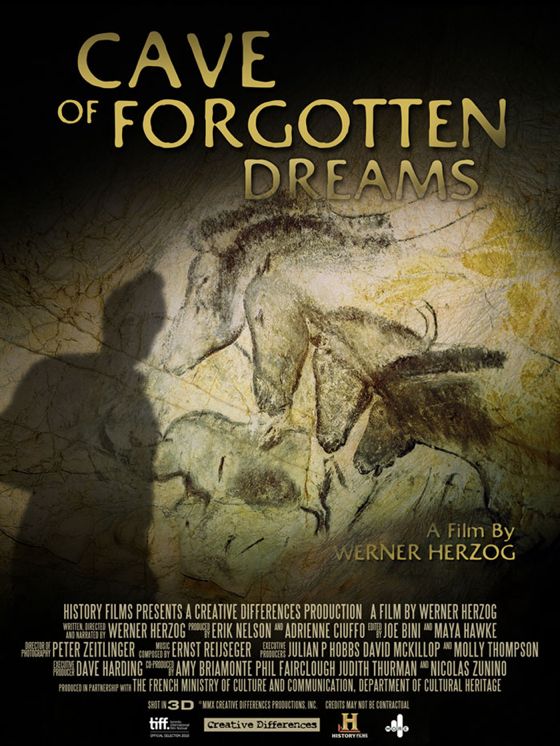
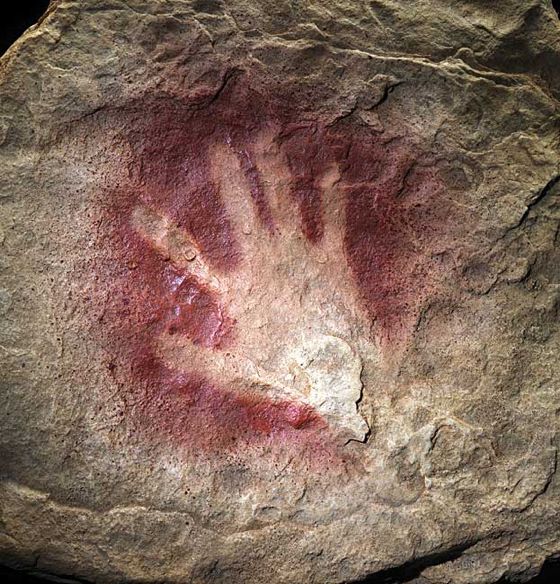
Yesterday afternoon I sat in a dark movie theater in the middle of the Mojave Desert and, thanks to some 21st-Century technology, stared into a dark cave in the south of France whose walls contain what are thought to be the earliest paintings by human beings ever discovered, some 30,000 years old.

I was, of course, watching Werner Herzog's 3D documentary Cave Of Forgotten Dreams.  Because of the precious nature and fragility of the cave paintings, the public has never been and never will be allowed to visit the cave, which is accessible only to scientists and historians, but Herzog was allowed to film it to show off its wonders to the world.


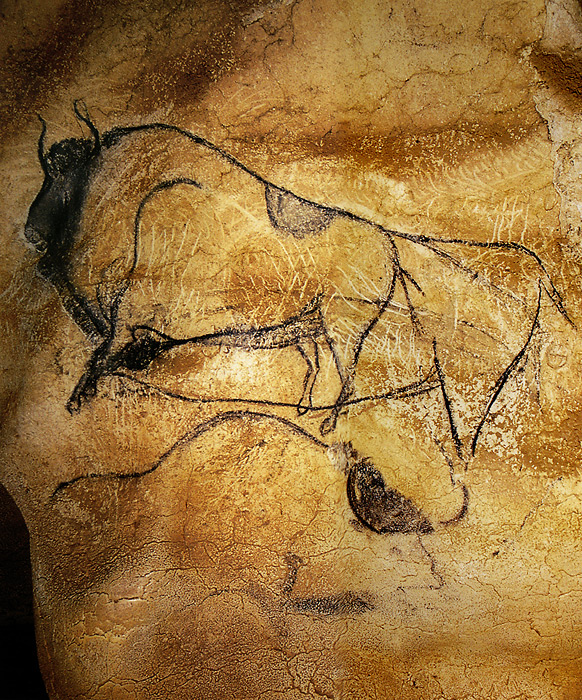
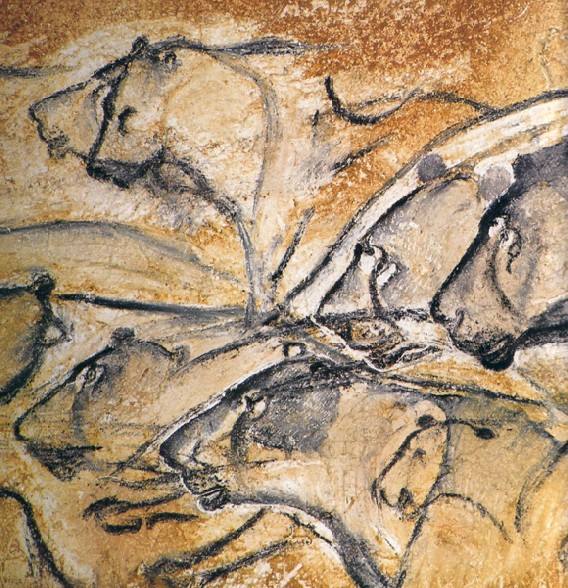
The 3D process he used is illuminating, not only because it conveys a visceral sense of the spooky cave environment but also because the artists who made the paintings used the irregular surfaces of the cave walls as elements of their work, often suggesting the physical mass of the animals they depicted, giving the images at times the quality of relief sculptures.

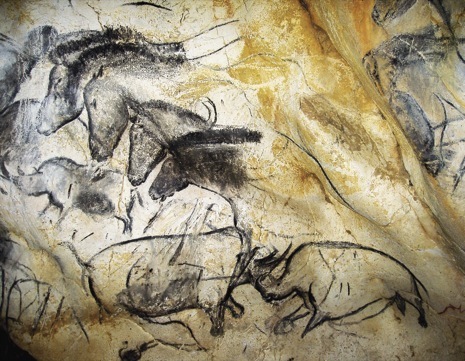
One has to strain to imagine the age of the paintings because they do not look old.  They are well preserved, because the cave was sealed off by a rock slide about 10,000 years ago, but the art itself is fresh and alive, and breathtakingly beautiful.  The images pulse with desire — they mostly depict animals that were hunted by Paleolithic men for survival — but also with awe and respect.  The animals are rendered with powerful suggestions of movement and grace, their beauty as living creatures fully appreciated.


Here, for example, are the earliest painted representations of horses, and they can stand as works of art alongside the horses of the Parthenon Frieze, the Byzantine Horses of San Marco, the horses in a John Ford film.  They summon up the vital spirit of horses in the flesh and in movement.


Human beings have created no greater works of art in the 30,000 years that have passed since “primitive men” crafted these images.  This is humbling in one sense, but also invigorating.  The images remind us of what is distinct about our species, this ability to make not just useful things, of increasing complexity, but sublimely beautiful things, of inexhaustible complexity.  It's a complexity that transcends the material plane, and can only be called spiritual, and it's found, fully developed, in Chauvet Cave.

Our ancestors were fully human when they made these works of art — when one of them stenciled the outline of his hand on the cave wall — and we can look at them to remind ourselves what being fully human means.

LEST WE FORGET

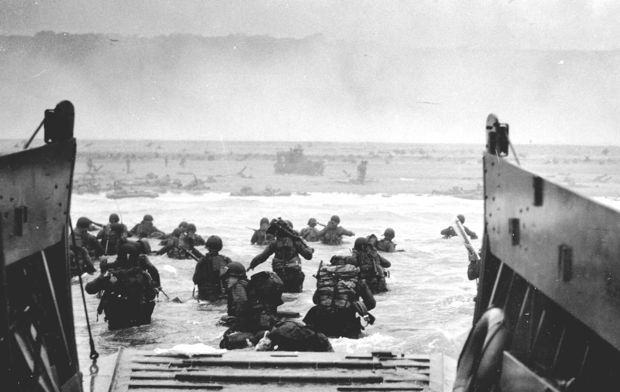
American Cemetery, Omaha Beach.

There are many forms of service and sacrifice for one's country, but no one can give more than they gave, which was everything they had — all their tomorrows for us and our tomorrows.


Ernie Pyle, the great poet of the dogface solidier in WWII, once told an interviewer that he never ceased to be amazed at the casualness with which an American soldier would lay down his life for his fellow soldiers.  “And they didn't do it for parades or statues or glory,” Pyle said.  The interviewer asked, “Then what would be a fitting memorial for a soldier like that?”  “Well,” said Pyle, “the next time you pass a soldier's grave, just stop and take off your hat and say, 'Thanks, pal.'  That's what they did it for.”

THE BOUNTY HUNTERS

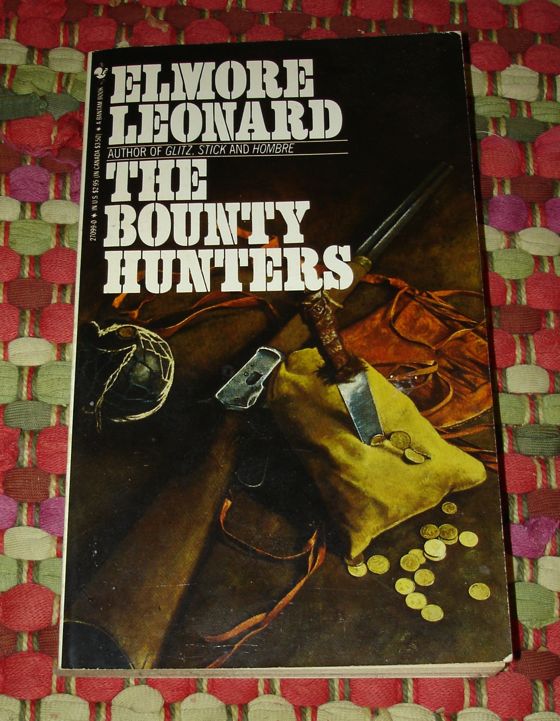
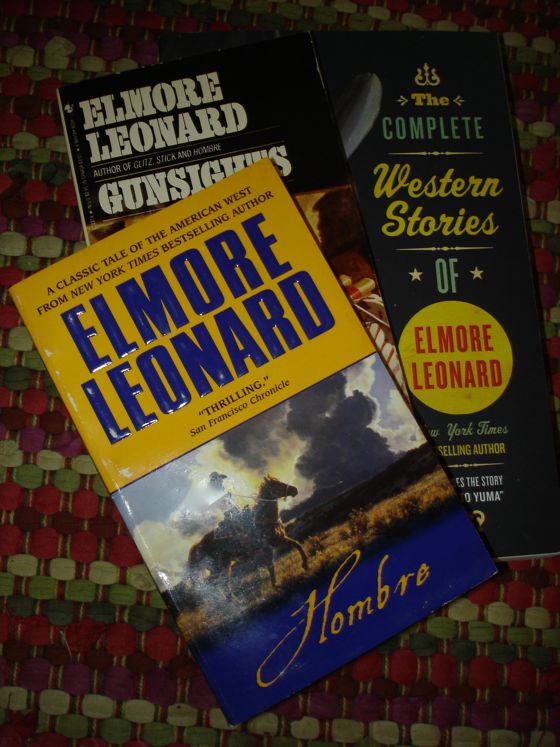
Before he became the best writer of crime thrillers in modern times, and one of the best novelists of modern times, Elmore Leonard wrote Westerns.  He started out writing Western short stories for the magazines that used to print such things and then in 1953 he published his first Western novel, The Bounty Hunters, which I just read.

Although it was his first novel in any genre, it possesses most of the virtues of his later works — a taut, suspenseful plot, eccentric characters, startling episodes of violence, creepy villains and a protagonist who's cool but not too virtuous.  It's invested with a strong sense of place, in this instance the Arizona Territory and Mexico, and the prose is spare but lively.  The story moves.

The tale reworks a lot of familiar Western conventions, as most Westerns do — that's part of the challenge of genre fiction.  One can see elements borrowed from Western movies and given a harder, sharper edge.

It's a fine piece of writing and a superbly entertaining read.


I'm going to go back now and read all the short stories Leonard wrote before The Bounty Hunters, and then proceed on to everything he wrote in the Western genre.  Having read most of his contemporary thrillers, I feel as though I've discovered a brand new author.  There are reports that he's thinking of writing a new Western.  I hope it's true, because it would be fascinating to see how he'd approach his first love after achieving mastery and fame with other kinds of material.

Come on, Elmore — let's go to Missouri.

SPICY

If you're into erotica, of a decidedly explicit type, you might enjoy
this
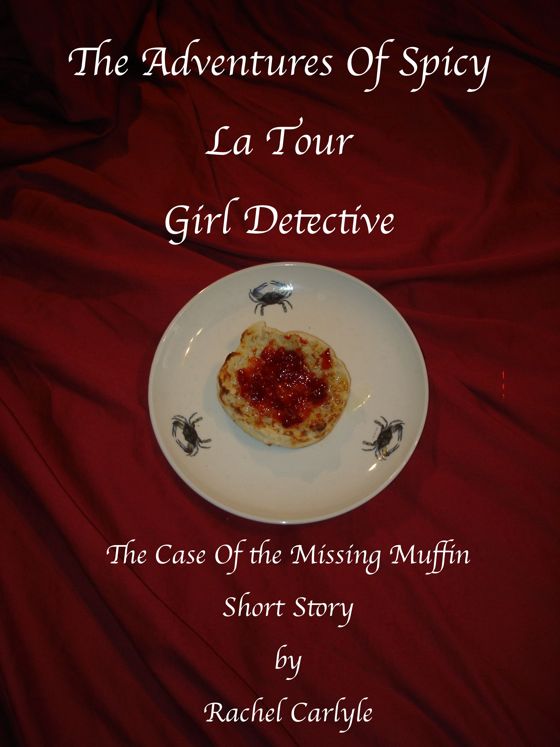
short story I just discovered, by Rachel Carlyle, about a
naughty girl detective, set in 1936.  Quite
graphic — this is fair warning — but done with tongue firmly in cheek (among other places):

The Adventures Of Spicy La Tour, Girl Detective: The Case Of the Missing Muffin


Available for the Kindle — or for Kindle readers, which can be
downloaded
for free and used on most computers and portable devices.  It costs 99 cents.

THE HATS OF THE MAGNIFICENT SEVEN

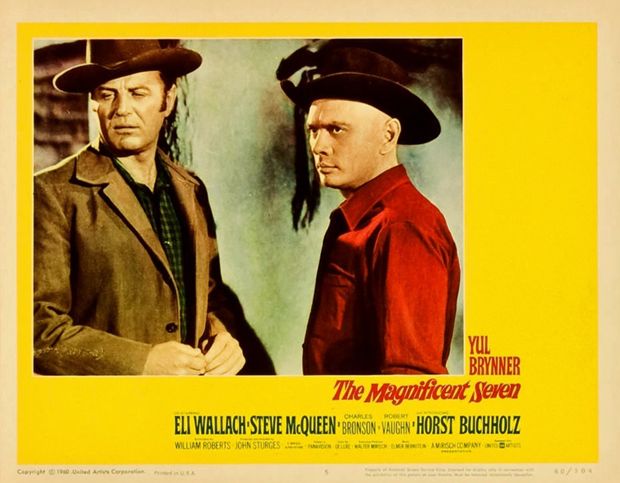
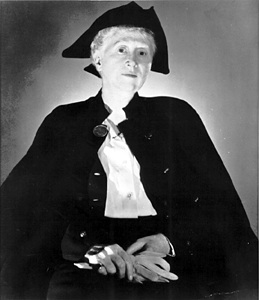
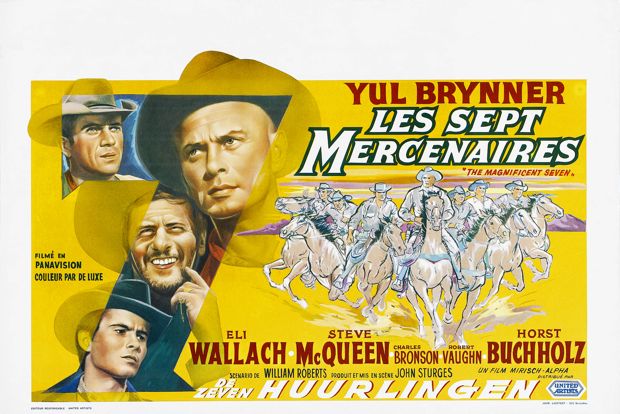
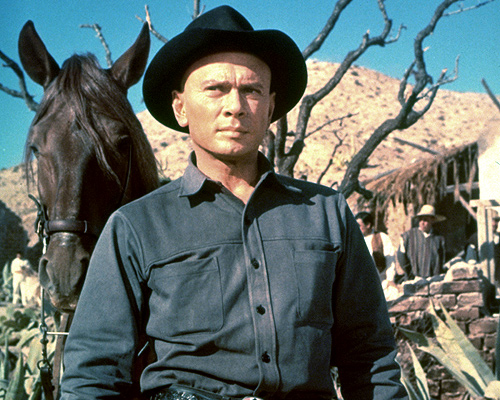
The Magnificent Seven is one of the most entertaining and influential Westerns ever made but it has some problems that keep it from being a great Western and they start with the hats worn by the seven gunslingers, too many of which are small and jaunty.  They're TV cowboy hats, Rat Pack cowboy hats.  Yul Brynner's is the worst.  It's sort of a tiny tricorne, like the one the poet Marianne Moore sometimes wore.  On her it looked cute.  On Brynner it looks cute.  A cowboy's hat should not look cute.

An actor playing a cowboy may not need a hat with a brim wide enough to keep the sun out of his eyes, or with a tall crown to keep his scalp cool, because he doesn't spend all day on horseback under a blazing sun — he has a trailer he can retire to between rides.  But the character he's playing should look as though he could spend all day under a blazing sun and have a hat suitable to the activity.


Steve McQueen, Charles Bronson and James Coburn wear hats that are adequately large, barely, but they've rolled the brims up on the sides to convey a kind of hip jauntiness.  Hip jauntiness is not a primary cowboy virtue.  Still, it's worth pointing out that the three actors who wear more or less acceptable hats all went on to have careers as the stars of memorable action films, including many Westerns, while those who wear hats that aspire to the condition of the modern fedora did not.

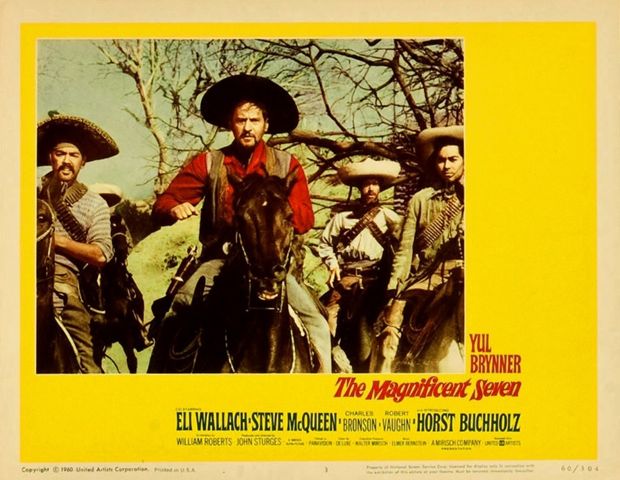
When Eli Wallach and his band of Mexican thieves gallop onto the scene, with their grand and authentic-looking sombreros, your first impulse is to root for them in the battle over the beleaguered peasant village, because they wear the hats of men.

In a Western, wearing clothing that at least approximates the style of the period the film is set in has one great advantage — the film has less of a tendency to date.  It always looks classic.


Brynner doesn't give a bad performance in The Magnificent Seven, but he doesn't quite inhabit the Western genre.  He has a peculiar regal walk which commentators on the film have often drawn attention to — the walk of an actor who has played the king of Siam a few too many times.  It doesn't have the natural, fluid grace of a real cowboy's walk, a real horseman's walk.  He also has a Russian accent, which the film tries to sell as a Cajun accent — a preposterous ploy that only draws more attention to its anomalous quality.

His silly little hat becomes a symbol of his unconvincing Western persona — inescapable even when he's not talking or walking.  A respectable Western hat would have gone a long way towards reconciling us to that exotic persona.

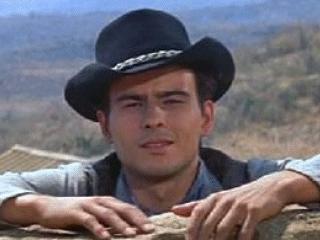
The same is true of the German actor Horst Buchholz, whose German accent the film tries to sell as Mexican.  He has the physical grace of a cowboy, and when he dons a big sombrero for a few scenes he actually looks like a cowboy.  At all other times his dainty little hat brands him as an impostor.

What were they thinking?