
My niece Nora, 14, wrote a report for school on Orson Welles's infamous “War Of the Worlds” radio broadcast. It's really superb — check it out here:
The War Of the Worlds: Essay by Nora Rossi

My niece Nora, 14, wrote a report for school on Orson Welles's infamous “War Of the Worlds” radio broadcast. It's really superb — check it out here:
The War Of the Worlds: Essay by Nora Rossi
“Something’s wriggling out of the shadow . . . It’s as large as a bear and glistens like wet leather. But that face, it . . . it’s indescribable . . . The eyes are black and gleam like a serpent. The mouth is V-shaped with saliva dripping from its rimless lips that seem to quiver and pulsate . . .” It’s a war of the worlds! It was 1938, a Sunday, on the eve of Halloween just as the sun made its way below the horizon, and the moon began to warily take its place. Little did the people of the seemingly secure Grover’s Mill know that this could very well be the last night sky they would ever see. The last sky the entire planet might see . . . Millions of Americans sat glued to their radios as a familiar evening broadcast of dance music was suddenly interrupted by an urgent new bulletin. Invaders from Mars were attacking! This spine-chilling broadcast bent believers to its will in such a way that it is still considered the single most important event in radio history today.
The “War of the Worlds” radio-play was the brainchild of Orson Welles, a talented, 23-year-old actor, producer, and theater director. In order to fill empty air space, CBS offered Welles and his dramatic group, the Mercury Players, a program every Sunday night called Mercury Theater on the Air. The program was broadcast out of New York City, and included dramatic adaptations of plays and books. On the night in question, Orson Welles was presenting an adaptation of the famous book The War of the Worlds by H. G. Welles (written 1898). Orson, his partner John Houseman, the writer Howard Koch, and the small cast of Mercury Players, decided to present the War of the Worlds as if it were the actual event happening in real time. The audience was lulled by the “soothing” sounds of the dance band music, when suddenly one of the actors in a carefully planned interruption pretended to be an actual CBS network announcer with frightening breaking news, from New Jersey. America was under attack from Martians in giant war machines. For the next hour, the story escalated, with more detailed information as the event unfolded. According to the “newsmen,” cities were being destroyed, state militias were demolished, dark, poisonous alien gas was purposefully unleashed across the country, citizens were getting eaten by the invaders, and others were being crushed by huge, metal Martian machines. Clearly the end of the world was at hand. The precision, detail, and very powerful acting made the broadcast realistic, and created doubt even in the minds of people who thought they could just shrug it off as “nonsense.”
It is estimated that there were about nine million Americans across the country listening to the broadcast that night. Many were entertained and amused. Many did not know what to think or how to react. There’s no way to know how many people were actually frightened. But we do know that about 1,750,000 people were scared enough to take some action. (Bogdanovich, Welles, 346) Despite the fact that there were multiple reminders that it was just a fictional presentation, imaginations ran wild.
Panic was rampant. Emergency switchboards were on overload. People blocked off their doors and hid in their attics and basements. Shops closed, theaters closed, churches were filled, guns were cocked, and people were screaming in the streets, “The world is ending! The world is ending!” Many fled. Others organized small, armed resistances. Some people thought bigger. Governor Earle of Pennsylvania volunteered his state’s militia to help New Jersey fend off the Martians. A group of twenty families ran out of their apartment building with wet towels on their faces to “repel Martian rays.” Hospitals were flooded with offers from nurses and doctors to help out with all the “war casualties.” A modern day Paul Revere, blowing a loud horn and screaming warnings of the Martian invaders, motored through the streets of Baltimore. One man “bound for open country” had driven away for about ten miles, until he realized that his poor dog was still tied up in his backyard, so he sped all the way back to rescue him, “risking” his life against the aliens. It was recorded that one man almost drank a bottle of poison, telling his wife, “I’d rather die this way than that!” (Although were no actual deaths or suicides on record.) Rhode Island’s electric company was prompted into considering turning off all the lights in the entire city “to make it a less visible target.” (Oxford, 184 and 185)
Why did so many people believe that the broadcast was real? One of the reasons was the artistry of the broadcast itself. Orson cleverly planned every detail. He used real names of actual places and simulated both the “live” band music and the “broadcasters” with perfect skill. He knew what competing radio shows were on that night and when people would be likely to switch over to CBS. The actors did a superb job, including imitating the voice of President Roosevelt. Orson also knew how to build the intensity of the story for maximum dramatic effect. Another reason that the broadcast was so believable was that many listeners came in part way during the story and did not hear any of the four announcements reminding people that it was just a radio-play. Even more people heard about the alien invasion second-hand. Rumors spread like wild fire. Rumors and wild imaginations led to many false, eyewitness reports. Panic caused people to see and hear things that were not actually occurring, which only increased the panic in a vicious cycle. For example, one man in Grover’s Mill shot up a deathly, alien war machine with his shot gun, only to discover later that is was just his neighbor’s rather humdrum water tower. Some New Yorkers believed they heard Martian flying machines, or weapons firing, or saw the city on fire. Another man flipped his car over twice as he drove 80 miles an hour trying to escape Martian death rays. (Oxford, 184, 185) False eyewitness reports were widespread and fed the story even more convincingly than the broadcast itself. Another contributing factor was the newness of radio. In 1938, people were naïve about joke broadcasts. These were days before, Saturday Night Live’s “Weekend Updates,” or Monty Python’s Flying Circus, or Steve Colbert. If the news (especially CBS) said something was true, people tended to believe it.
It’s one thing to try to understand why people believed it, but it’s another thing entirely to try to comprehend why people were so afraid. To grasp this, it is necessary to look at the historical context of the event. The stock market crash of 1929 and the Great Depression that followed it had a profound emotional and psychological effect on the American people. (Rosenburg, 1) Their sense of security in their society had been badly shaken. In 1938, most Americans were still struggling to get back on their feet. Optimism for the future was at all time low. Equally important were the events unfolding in Europe and Asia. Spain was in the middle of a civil war between socialists, fascists, and royalists. Japan began a series of invasions into China, killing thousands of innocent people. (Miller, 1and 2) Hitler was on the rise, making inflammatory speeches and building up a massive military. His attacks on Jews were escalating. In 1938, he invaded and took over Austria, and began his invasion of Czechoslovakia. (World History, 1938-1939, 3) Many Americans watched newsreels or listened to radio broadcast of Hitler’s speeches. In response, America was building up its army and its navy. Many Americans began to think that we would be drawn into another World War, so soon after the first one. This created an atmosphere of tension, and underlying fear. (Rosenburg, 1, 2) In fact, when Orson’s broadcast reported that “shells were falling” towards Earth, many believed that it was the beginning of Hitler’s assault of America. (Lovgen, 1) Houseman himself recognized later the importance of the historical context, when he said, “Only after the fact, did we perceive how ready and resonant the world was for the tale.” (Oxford 189)
Newspapers saw themselves as the voice of calm reason in troubled times. This made them particularly hostile about the broadcast. As it turns out, many of the newspaper reports were inaccurate and exaggerated. Newspapers reported suicides, heart attacks, and widespread destruction of property, and held the Mercury Theater responsible. Some accused the newspapers of being spiteful and jealous because newspapers had been losing more and more popularity and advertising money to radios. Newspapers used Orson’s broadcast as a way of pointing out the dangers of impulsive broadcasts. As a form of mass media, radios were capable of trickery and deception.
Before the “War of the Worlds” broadcast had even ended, cops were already storming CBS Studios. Fortunately, they didn’t know who to arrest — or even what the crime was — but they were ready. By the next morning, the stories were all over the newspapers. When people learned that it had all been a hoax, most responded with good humor. Many did not. The mayor of Flint, Michigan threatened to personally find Orson Welles and punch him in the nose. Some legislators, led by Iowa’s Senator Herring, called for new laws to prevent anything like this from happening again. The federal communications commission, the government agency which supervised radio, called Orson Welles a “terrorist” and tried unsuccessfully to decide on a new balance between censorship and free speech. Many denied ever having been duped in the first place. The newspaper, however, kept their pressure on Orson Welles, and soon he was facing $12 million in lawsuits (Bogdanovich, Welles, 19). In time, people came to the conclusion that the broadcast technically wasn’t even a legal offense, so the lawsuits were dropped.
Instead of punishment, the Mercury Theater’s popularity shot up. Campbell’s Soup became their first sponsor. And as for Welles, he instantly became an international celebrity. Throughout the start of the innumerable interviews Welles faced, he claimed over and over that all along that he and his crew had “no idea” that people would take the broadcast so seriously.
Hollywood offered him contracts and he went on to direct major motion pictures, including Citizen Kane, and The Magnificent Ambersons. In later years, Welles revealed that he did, in fact, know exactly the response his “War of the Worlds” broadcast would create, just not quite the magnitude (Bogdanovich, Welles, 18). He admitted that he apparently had said to Mercury Theater players, “Let’s do something impossible, make them believe it, then show them it’s only radio.” (Taylor, 38)
In 1938, it was easy for Americans to see how Hitler manipulated the media to create
fear, panic, and blinding hatred. But no one believed that it would ever happen here. Orson Welles showed the country how susceptible we all are to the powers of the media. It has been over seventy years since the “War of the Worlds” broadcast, but the issues it raised are just as relevant today. With the birth of television and Internet, news can spread quicker than ever before. Not all the news that gets spread is accurate, of course, but it can still influence the way people think and how they act. Networks, broadcasters, and websites need to be thoughtful and responsible. Different networks are run by different political sides, which makes their credibility suspect. (For example: Fox News VS. MSNBC) Therefore, it is crucial that every individual be smart about how he or she interprets, believes, and handles mass media “news.” As Orson Welles decorously described, “War of the Worlds’” was, “The Mercury Theater’s own radio version of dressing up in a sheet and jumping out of a bush and saying ‘boo!’” We must always to remember to look for the sheet.
Bibliography
Edward, Oxford. “Night of the Martians.” American Experiences: Reading in American History. Volume 2. New York: Pearson Education Inc., 2005. 179-190. Print.
Gale. “Welles Broadcasts the War of the Worlds, October 30, 1938.” DISCovering World History. Online Detroit, 2003. Web. 22 Jan. 2011.
<http://find.galegroup.com>.
Lovgen, Stephan. “”War of the Worlds”: Behind the 1938 Radio Show Panic.” National Geographic. N.p., 17 June 2005. Web. 24 Jan. 2011. <http://new.nationalgeographic.com>.
Miller, David. “World History Timelines, 1938.” Din-Timelines.com. N.p., 2002. Web. 24 Jan. 2011. <http://dintimelines.com/1938_timeline.shtml >.
Rosenburg, Jennifer. “”The Great Depression.” About.com. N.p., n.d. Web. 21 Jan. 2011. <http://history1900s.about.com>.
Taylor, John. Orson Welles. Boston: Little, Brown And Company, 1986. Print.
Welles, Orson., Peter Bogdonavich., and Rosenbaum, Ed. This Is Orson Welles. New York: HarperCollins Publishers, 1992. Print.
“World History, 1938-1939.” MultiEducator, Inc., 2000. Web. 20 Jan. 2011.
<http://www.historycentral.com>.


Bob Dylan turns seventy today.
I first heard a Bob Dylan song in the summer of 1963, when I was 13.
It was Peter, Paul and Mary's cover of “Blowin' In the Wind”. Just
about everybody heard that version of the song in the summer of 1963 —
it made it to number 2 on the Billboard charts and got lots of radio
play.
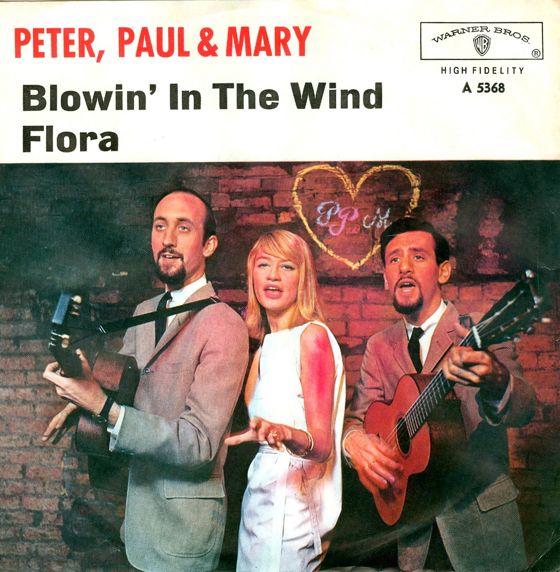
In the Fall of that year I went off to boarding school and a classmate
had brought with him an LP of The Freewheelin' Bob Dylan. That was the
first Dylan album I ever heard.
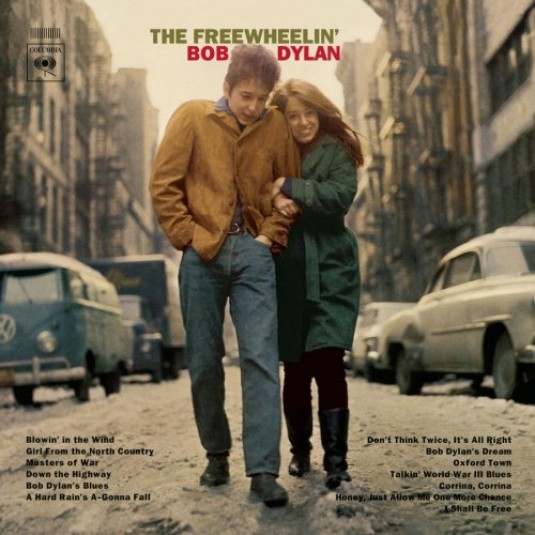
So from the onset of puberty until today, Bob Dylan has been with me. He helped me grow up when I was a teenager, he helped me get
old. He helped me with belief and with unbelief.

Most of all he helped me with the problem of losing things. All of
life is about losing things — loves, innocence, friends, dreams. In
the end, we lose everything, in that pine box for all eternity. And
this is cool — it's what we're here to do. Lose. “The stars are
threshed, as souls are threshed from their husks,” is how William Blake
put it. Dylan said, “Just when you think you've lost everything, you
find out you can always lose a little more.”
The world, especially the modern world, tells us we can have
everything. In truth, we can have nothing, except what's left when
we've lost everything. Dylan sings about what that is, too.
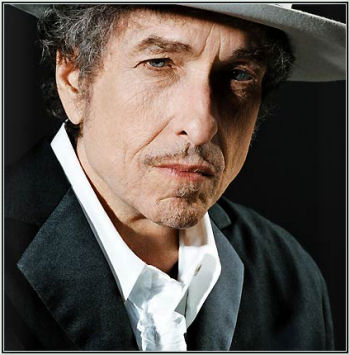
Prophet, wise counselor, mentor, heckler, song and dance man — Bob Dylan has walked beside me every
step of the way through my adult life. Even when I lost sight of
him, he kept up with me, and was there when I needed him. Even when I gave up on him, he never gave up on me. “You might need this song someday,” he's always said, “so here it is.”
I know he would not want any thanks for this — the gifts he had to
give weren't his. He found them somewhere, and passed them along. He
never got adjusted to this world, and has reminded me that I shouldn't
get adjusted to it either. We've got business elsewhere.

. . . to think about Françoise Dorléac.
[Image courtesy of Facebook friend Farran Smith Nehme.]
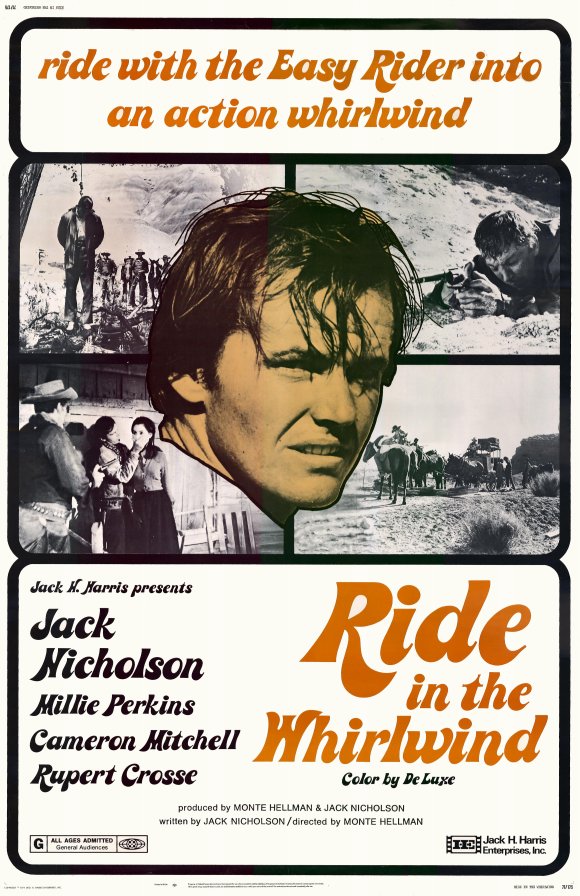
This is a poster from a 1971 re-release of the film, orginally made in 1965. The tag line of course references Easy Rider, released in 1969, which had made Nicholson a marketable personality. The film was financed by Roger Corman and made back-to-back with another Hellman Western, The Shooting, near Kanab, Utah. The films were then sold to a distributor who sold them directly to television. Ride In the Whirlwind was subsequently released theatrically on a couple of occasions and became a huge hit in France, especially among cinéastes there, who have lionized Hellman ever since.
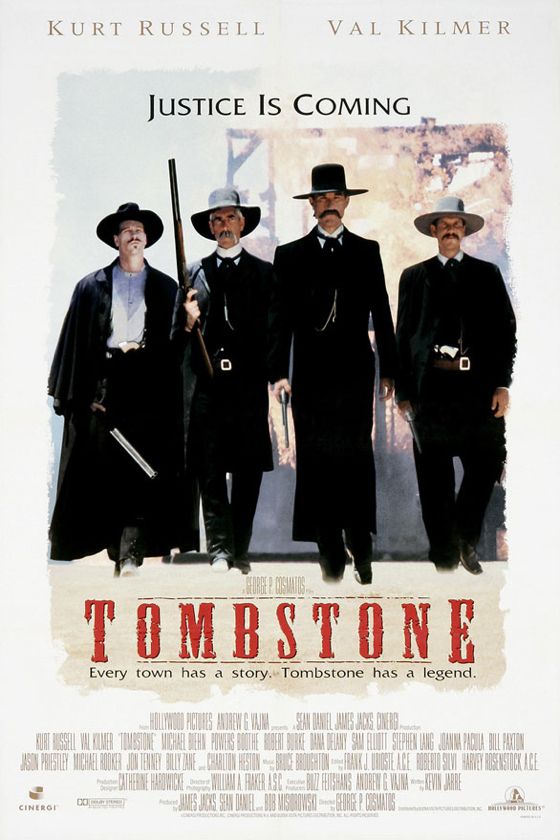
In the wake of my friend Kevin Jarre's recent death, I decided, fearfully, to re-watch the movie that might have been his masterpiece, Tombstone, released in 1993 as “A George P. Cosmatos Film”.
I watched it for the first time, when it came out, in a state of sorrow, but this time I watched it in a state of rage. Then, one could see it as a lost opportunity for cinema, for the Western, and for Kevin. Now that he's gone one has to view it as the last opportunity for Kevin, who had the ability once to resuscitate not just the Hollywood Western, but Hollywood itself.
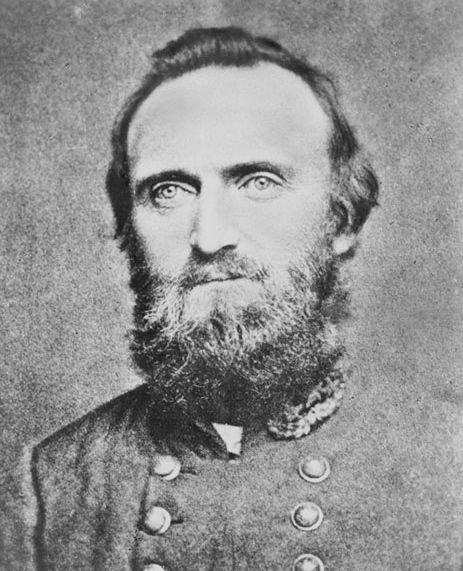
When I read his original 138-page draft of the script, not long before Kevin went off to start directing the film, I believed I had encountered something momentous. “This movie,” I said to him, “is going to be like Jackson's flank march at the Battle of Chancellorsville.” That march was a recklessly bold move by most of Lee's available forces to strike the rear of the overwhelmingly superior Union forces confronting him. While Jackson was on the move, Lee would be totally vulnerable to even a modest Union advance. If the march had been detected while in progress, Lee's whole army could have been crushed in detail.
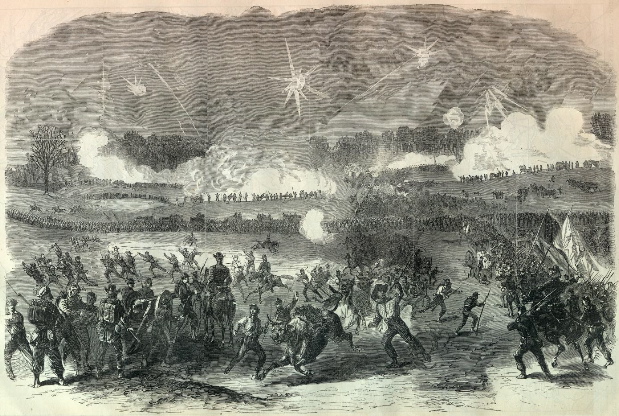
It was not detected, it took the Union forces totally by surprise and sent them into a full-on rout. It turned what was a stalemate at best into an impossible victory.
I associated this with the movie Kevin was about to make because I knew that Kevin had conceived of a film which would be both stunning, artistically, and wildly commercial. Hollywood would not know what had hit it. Kevin had revived the craft of storytelling from Hollywood's Golden Age, brought it forward into the modern era and opened a way back into films that were both entertaining and powerful, exhilarating and profound.
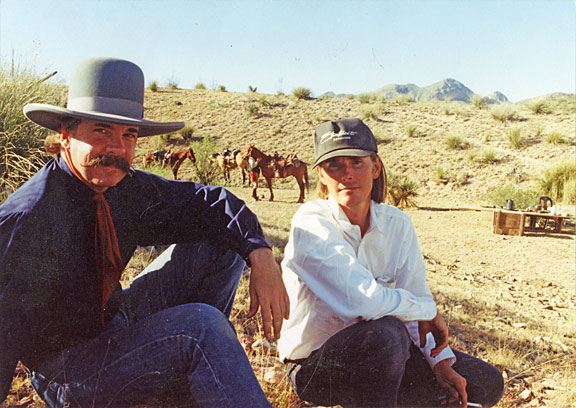
Kevin (above right, on the set) lasted only a few weeks as director of the film. I can't say of my own knowledge why he was replaced. There are stories of eccentric behavior on his part, and of falling behind schedule. I do know that the power on the production shifted to mediocrities, and that they trashed his vision. Enough of it remained to make the film beloved by fans of the Western and a solid hit at the box office, but enough of it remained also to make clear what it could have been.
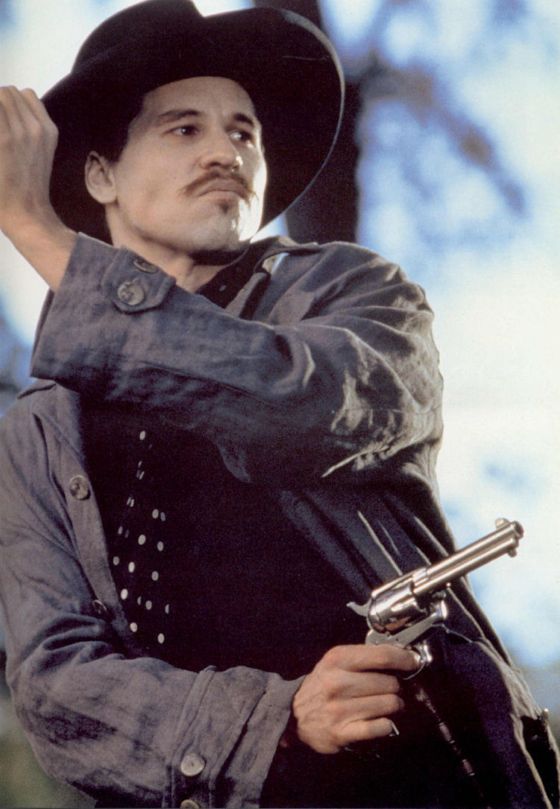
Kevin cast the film, of course, and supervised the design of the production. Every choice he made on those fronts was pitch-perfect. Some of the footage he shot remains in the film, and all of it is breathtaking, worthy of John Ford, a comparison I don't make lightly. The rest of the film looks like crap, like a high-class TV movie. About 30 pages of Kevin's script were discarded, and Kurt Russell and Val Kilmer worked with the director who replaced Kevin, George Cosmatos, and with a journeyman screenwriter named John Fasano to “improve” existing pages.
Everything done after Kevin was fired cheapened and diminished the film. After the film was favorably received by critics and audiences, the mediocrities were proud to take credit for the cheapening and diminishing, as though these things had actually been what “saved” the picture and made it work.
These people didn't just want to take the miraculous gift Kevin had given them — they wanted to pretend that they had given it to themselves.
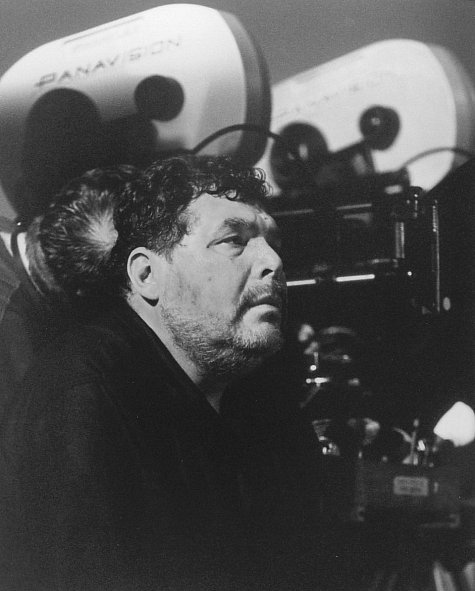
In his director's commentary on the DVD, George Cosmatos (above) takes full credit for the historically authentic details of the story and look of the film, even though he had nothing to do with these things. He also reveals the secrets of his approach to shooting the film, which involved using multiple cameras to record each scene, so the editor could make the choices he didn't know how to make on the set, and varying the style of the shots as much as possible, to create “interest”. This is the craft of a journeyman, at best. Cosmatos was a competent journeyman.
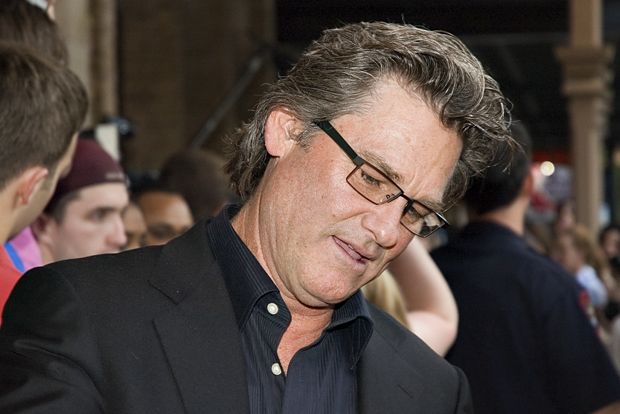
After Cosmatos died, Kurt Russell “revealed” that in fact he himself had directed the film after Kevin left, using Cosmatos as a front. He did it by stealth, giving the stooge Cosmatos shot-lists the night before each day's work and executing his ideas on the set by a series of hand signals he and Cosmatos had worked out. This would constitute the first time in film history that a movie has been secretly directed by someone without anyone else on the production suspecting the fact. The idea that you can direct a film with shot-lists and hand signals is beyond ludicrous — it's pathetic.
Russell and Cosmatos seem to have known so little about what directing a film actually entails, or I should say what directing a film well actually entails, that they may have believed their sad fantasies of themselves at the true auteurs of Tombstone. In any case, Cosmatos probably knew he could get away with retailing his fantasies on the DVD because Kevin was never much interested in re-fighting the battle of Tombstone in public. Russell certainly knew that he could get away with trashing Cosmatos's contribution to the film, such as it was, because Cosmatos could not argue back from the grave.
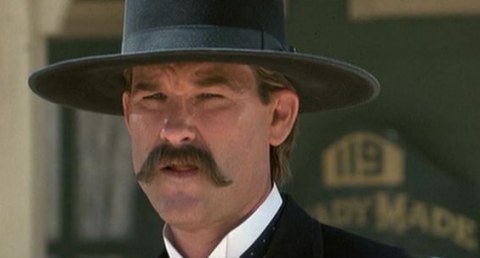
I knew Cosmatos slightly, and I know he was extremely proud of having directed Tombstone. It's not easy to replace a director while a shoot is in progress, and Cosmatos got the job done, however one might evaluate the quality of his work. I have a lot of respect for Russell as an actor, and he gave a fine performance in Tombstone — but even if he did secretly direct the very badly directed film, the fact remains that decimating Cosmatos's legacy the way he did, when Cosmatos was no longer around to defend it, strikes me as just this side of nauseating. Russell should have put his name on the film as its director or kept his mouth shut. If the film had tanked at the box office and had no reputation today, I strongly suspect that he would have kept the secret of his extraordinary accomplishment to himself.
People are used to merely throwing up their hands at dishonorable behavior like this because “it's just the way Hollywood works”. But it only works that way because enough people throw up their hands, and in many cases actually respect the yacks for possessing enough power to behave like insolent curs and get away with it.
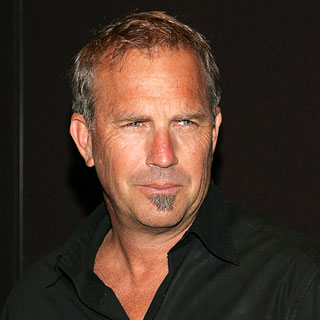
In the interview in which Russell revealed his secret authorship of Tombstone, he said he respected Kevin Costner for trying to prevent the release of Tombstone, so it couldn't compete with Costner's (far inferior) version of the tale, Wyatt Earp. “He was playing hardball,” Russell said. No, he wasn't playing hardball. In hardball, as Earl Weaver once said, “you've got to put the ball over the plate and give the other fellow his chance”. Men play hardball. Collapsed males play the Hollywood game.
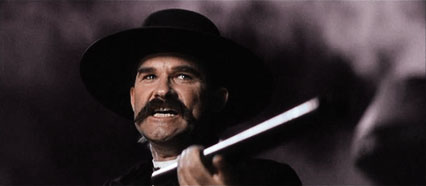
I think the rage I felt watching Tombstone again is useful — following the principle that “the tygers of wrath are wiser than the horses of instruction”. The moment has come when filmmakers, and the culture, need to say, as Wyatt Earp says in Kevin's script, when he's had enough of the insolence of the curs, “You tell 'em I'm coming . . . and hell's coming with me, you hear? Hell's coming with me!”
Anyone who has a problem with this can step right up and get their time. I'm your huckleberry.
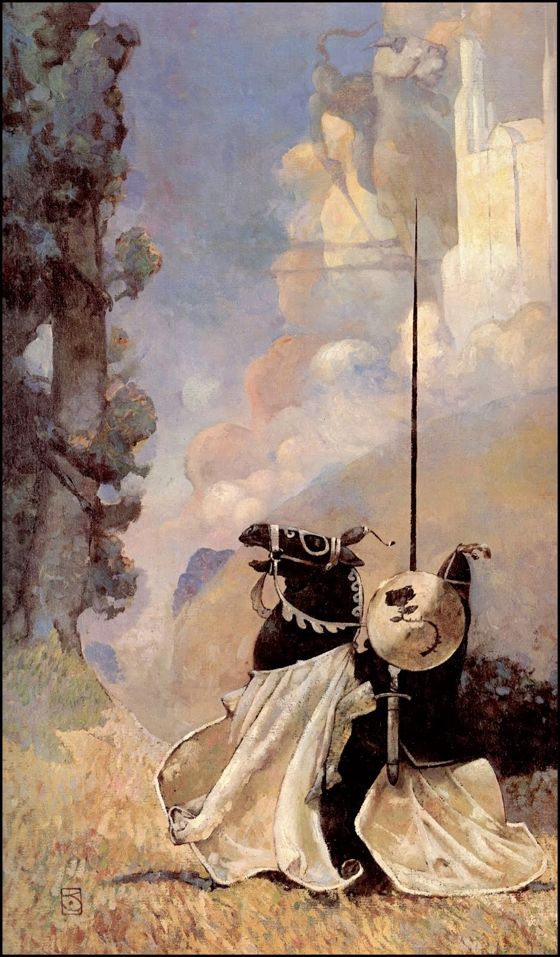
Jeffrey Catherine Jones died yesterday at the age of 67. Born male, Jones had a sex change operation later in life. Her style of illustration often echoed Frank Frazetta's, though she had great range and Frazetta once called her “the greatest living painter”. The influence must have gone both ways.
Jones admired the illustrators of the generation before hers and Frazetta's, especially those of the Brandywine school, and the image above, Black Rose, from 1972, is a kind of homage to the greatest of the Brandywine artists, N. C. Wyeth.
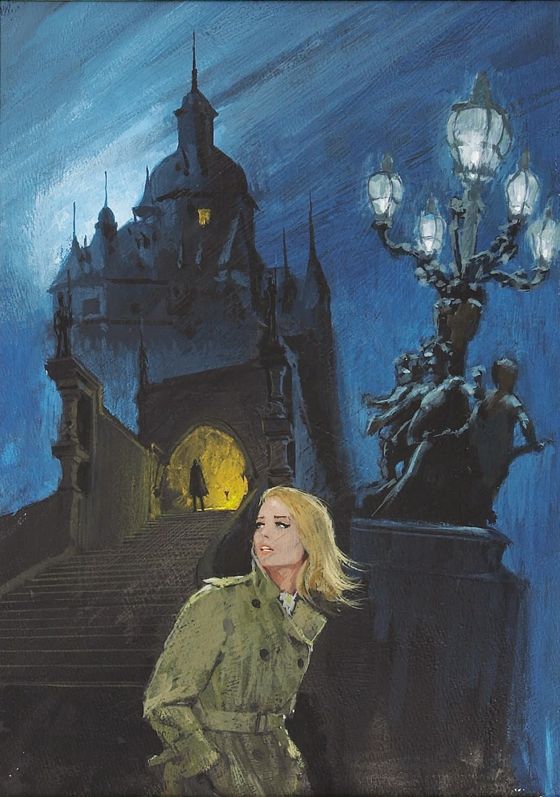
Paperback cover, The Evil Of Time, 1967.
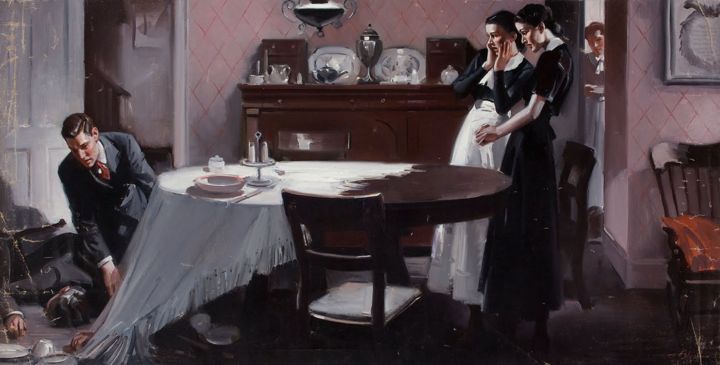
Mishap In the Dining Room
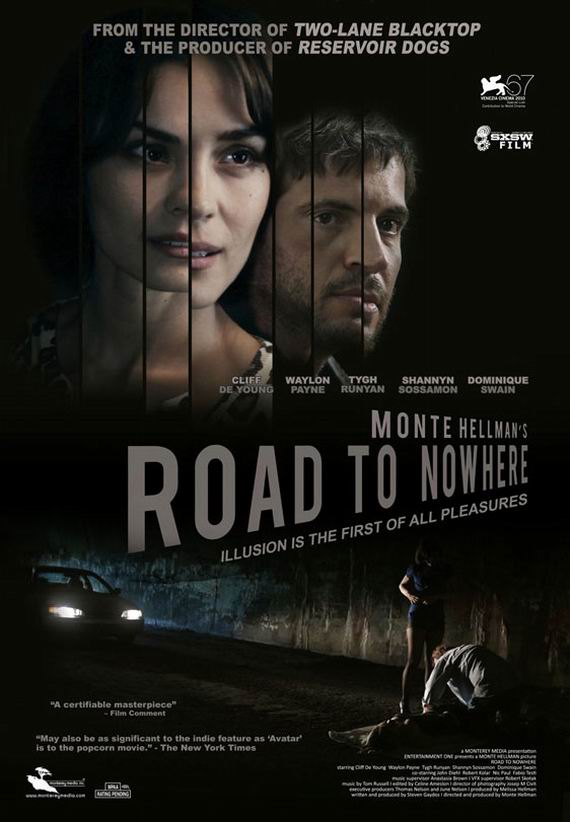
If John Ford had ever made a rock and roll road picture, it would probably have looked a lot like Monte Hellman's Two-Lane Blacktop, from 1971 — which is a crude way of trying to evoke Hellman's unique blend of formal mastery and eccentric invention.
Hellman was one of the directors who re-invented American movies in the Sixties, applying a deep understanding of film history and film technique to new subjects and attitudes. Unlike a number of the other rebels of his generation, Hellman never became a mainstream commercial director. His highest profile film, Two-Lane Blacktop, became an instant cult classic and remains one to this day, considered one of the seminal works of Seventies cinema, but the studio distributing it refused to promote it and it did not make money.
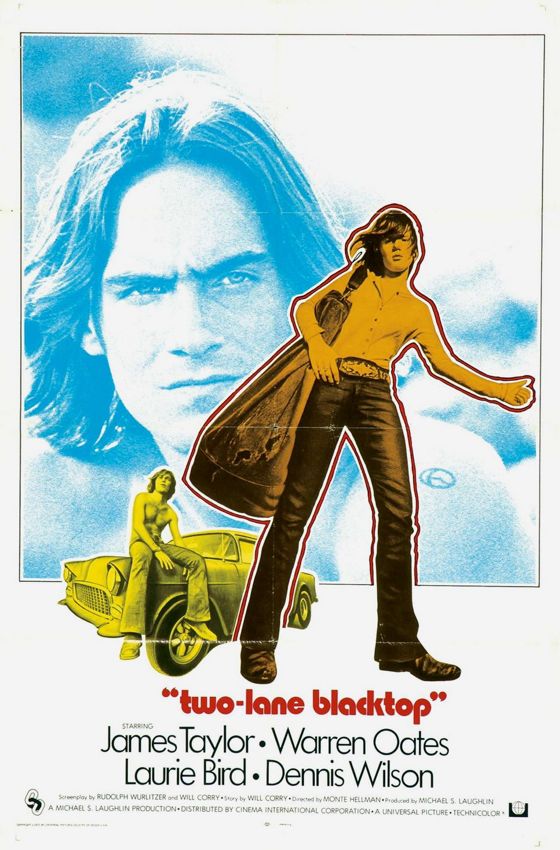
Hellman has made a number of highly-regarded independent features since then, but there was a twenty year gap between the last of them and his new feature Road To Nowhere, which was released in 2010 on the festival circuit and has been hailed as Hellman's return to the height of his powers. It has been theatrically released in France and is about to get a limited theatrical release in the U. S.

It's an extraordinary film — the first feature shot on the Canon 5D, essentially a still camera with breathtaking HD video capabilities, in locations all over the world, but mostly in North Carolina, and starring the stunning Shannyn Sossamon, who here achieves the status of an authentic screen goddess.
It's a film about filmmaking, in which a real-life crime infects a movie being made about that crime. The tale becomes a hall of mirrors, a complex intellectual puzzle that nevertheless delivers a shocking visceral jolt at the climax. You won't, however, walk away from the film dwelling on its devious structural intricacies. What you will remember instead, I suspect, is a film that delights and amazes from shot to shot, sequence to sequence, with the pure joy of making images, pictures that move, spaces that seduce you into emotional involvement with characters and situations with or without your conscious consent.

I think you will feel privileged to have spent a couple of hours with a cinematic master, someone who reminds us that it's still possible to make real cinema today. This is a proposition that can only be argued on screens in darkened theaters, by an advocate who is both passionate and supremely skillful — by an artist like Monte Hellman.
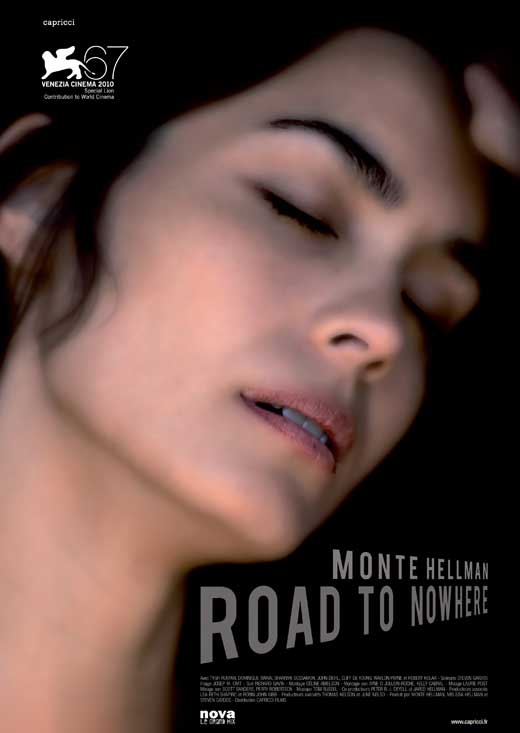
. . . on the road to nowhere.
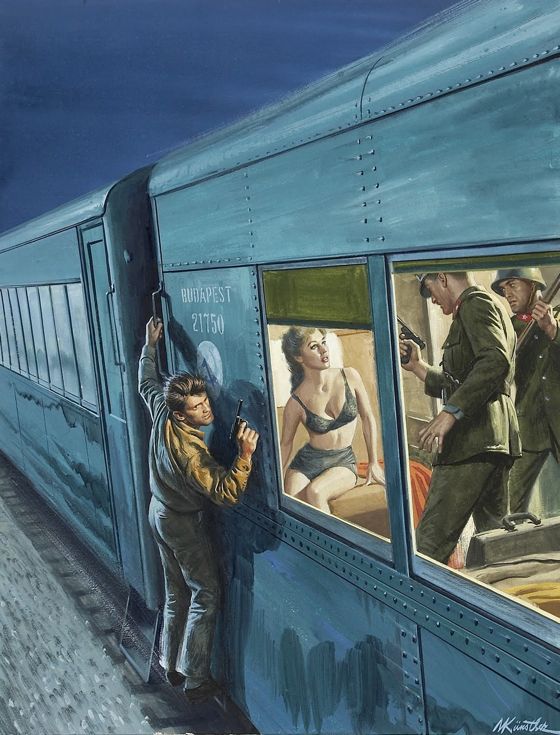
“Freedom Girl's Iron Curtain Escape”, For Men Only cover, June 1964.
[With thanks to Archie Waugh.]
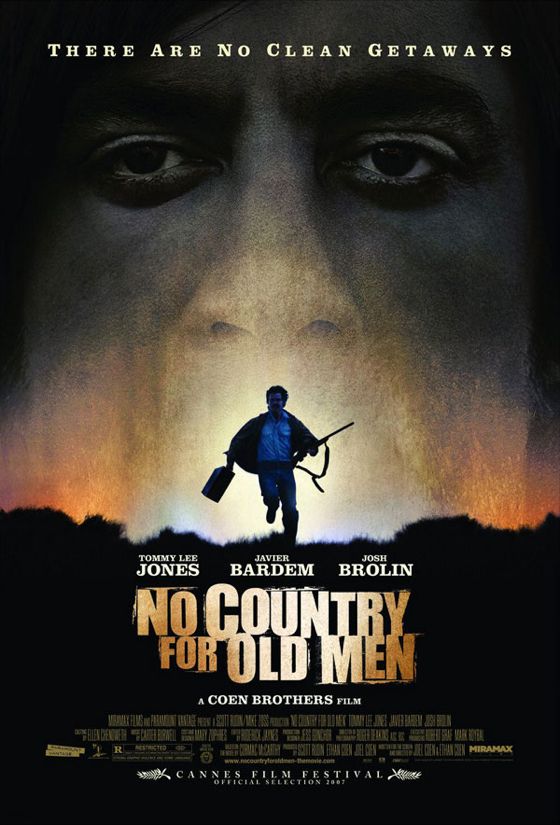
[Warning — plot spoilers below . . .]
The first time I saw No Country For Old Men, in a theater when it originally came out, I found it extremely disturbing. I couldn't quite identify a coherent theme or point of view, and part of me wished I hadn't seen it, because it was so harrowing. It was much the same reaction I had the first time I saw Taxi Driver.
I suspected in both cases that I had seen a great film, an important film, and subsequent viewings have confirmed those suspicions.
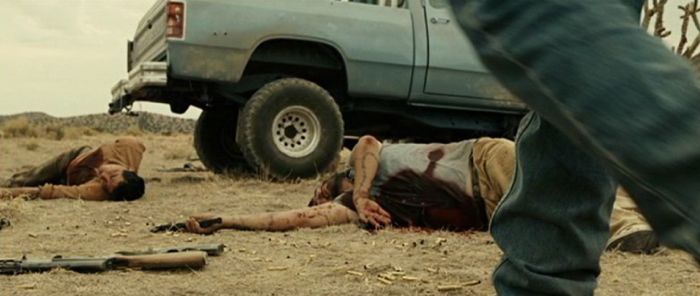
The link between the films has to do with violence, of course, and the way it is presented, which is unusual. It is not in either film overly aestheticized, and it's not used as an occasion for relief from suspense or moral outrage. It is there to disturb and sicken, to create suspense rather than resolve it, to raise moral questions rather than answer them.
Many films, such as the classic Western, use violence to resolve a moral conflict, and I don't object to this, because the Western, like the fairytale, is a fable, a dream — and the violence found in both forms is read as fabulous, as it is in dreams. I do object to most modern thrillers, in which violence is used for sensation — in which a villain is demonized only to arouse our blood lust, to make us rejoice in his demise, with no deeper moral issues involved.
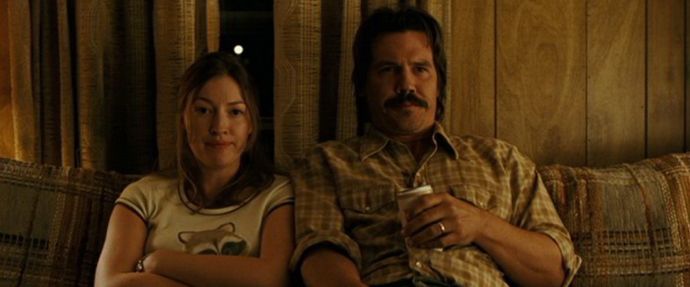
On subsequent viewings it's become clear to me that No Country For Old Men makes a very deliberate and calculated break from the usual formula of a modern thriller, violating convention in a shocking way, and that this is the key to its meaning. In the first two-thirds of the film, the story sets up a duel between a vicious psychopathic killer and a sort of anti-hero, likable but morally compromised. Hovering in the wings is a moral presence, in the form of a thoroughly good local sheriff, who is not directly involved in the duel.
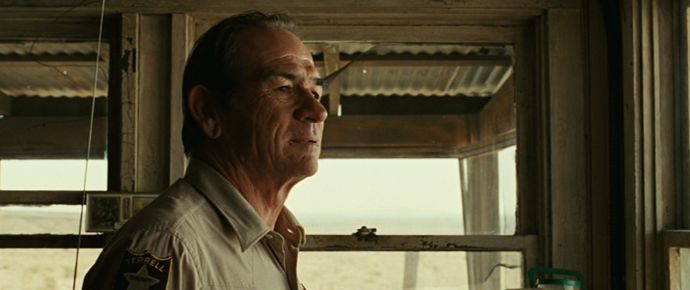
Then, without warning, at the beginning of the third act, the anti-hero is killed, and the decent man takes his place as the film's protagonist. He never engages the psychopath — doesn't outwit or outfight him, doesn't bring him to justice. He simply stands against him as a kind of witness.
Things get almost mystical towards the end. It seems as if the mere presence of goodness can make the killer vanish into thin air — as if the fact of goodness diminishes him, makes him vulnerable, saps his power. He “gets away” but seems to have lost his existential substance.
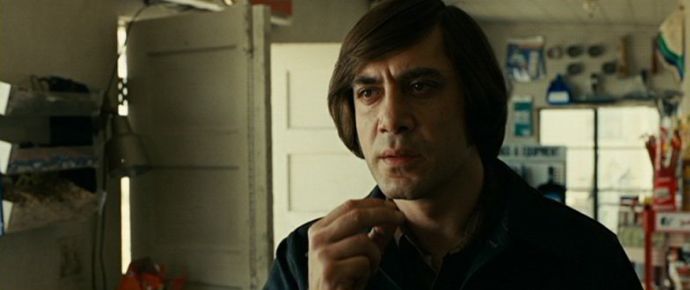
The universe of the film is very bleak, its violence incomprehensible and thus utterly terrifying. We are not told that countervailing violence on the side of justice can defeat it, only that moral rectitude can stand in the way of such violence becoming the definition of human existence. The film's denouement is purely spiritual, not practical.
It's not much, I guess, but it's so much more than the lies about violence told in most movies today, which do not prepare us for the world as it actually is and thus do not offer us any authentically hopeful or honorable way to live in it.
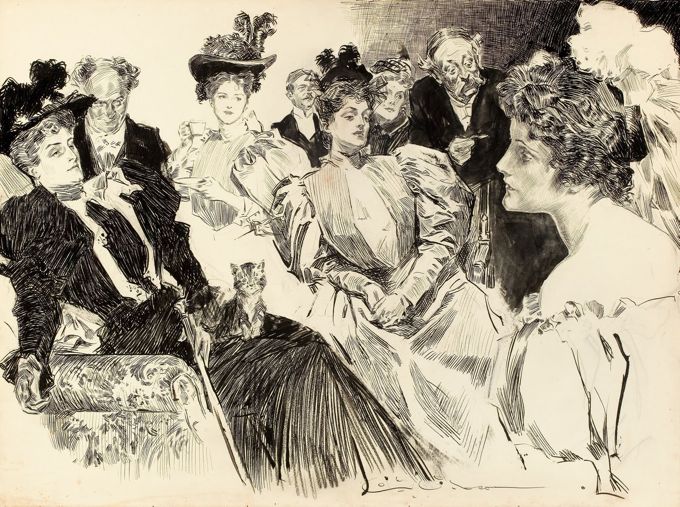
Tea Room