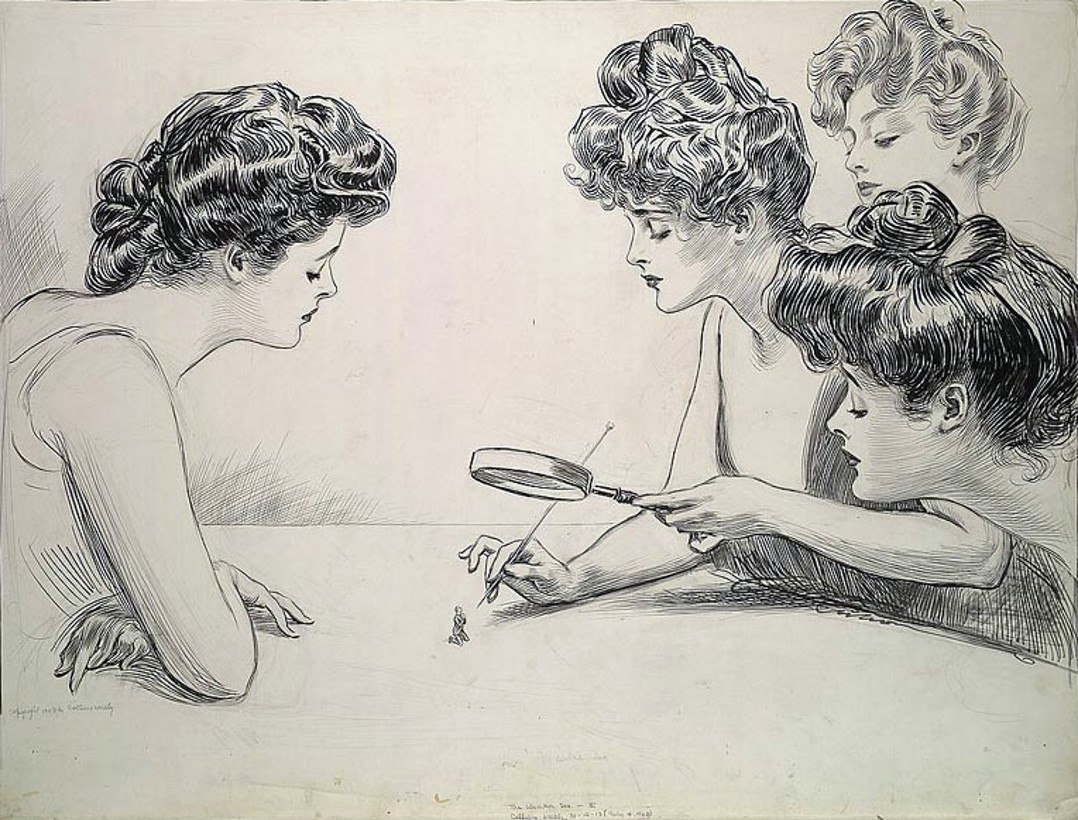
For women, the study of the human male has always been a subject of keen fascination . . .
Click on the image to enlarge.

For women, the study of the human male has always been a subject of keen fascination . . .
Click on the image to enlarge.
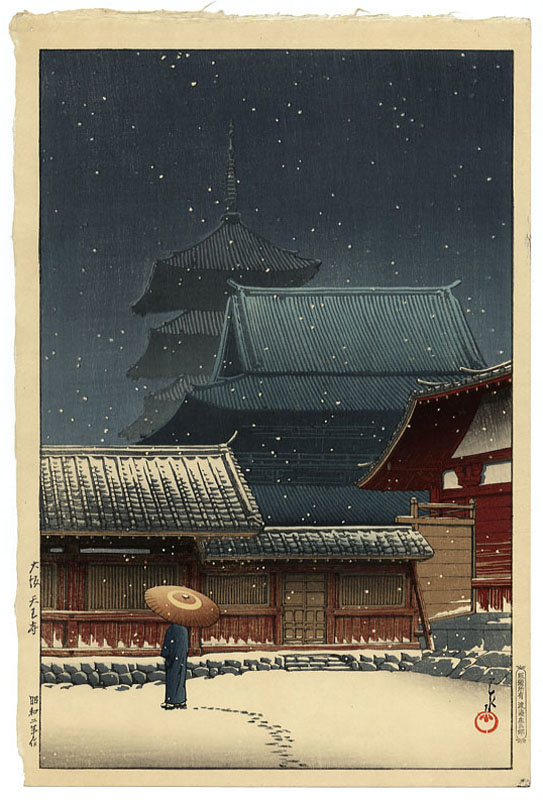
Tenno Temple In Osaka, with thanks to Brandon Taylor . . .
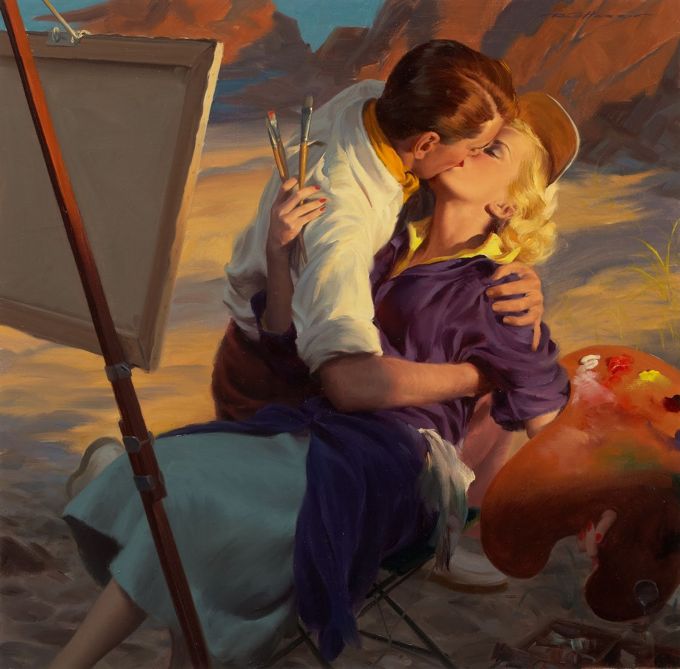
“A Kiss From Johnny”, story illustration, McCall's Magazine, 1952.
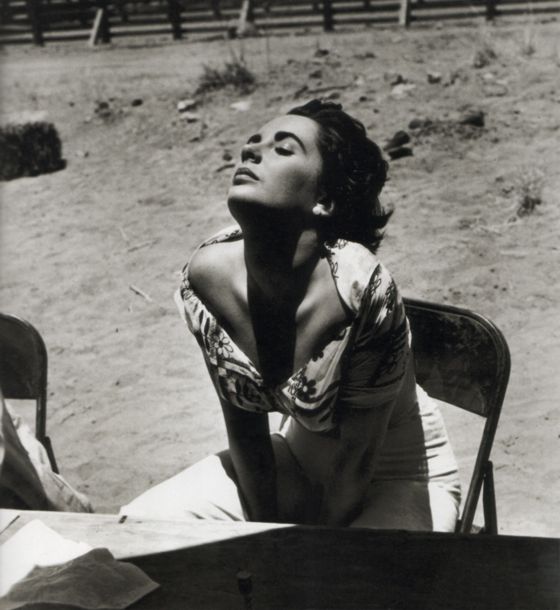
In an appreciation of Elizabeth Taylor at salon.com, on the occasion of her death, Camille Paglia had some valuable things to say about screen acting:
. . . both Ava[Gardner] and Elizabeth [Taylor] at the beginning of
their careers didn't have command of basic technical skills,
particularly dialogue. That's what people laud Meryl Streep for —
“Oh, her accents are so great; oh, her articulation is so perfect.”
But she doesn't really live in her characters, she merely costumes
them. Meryl Streep is always doing drag. But it's so superficial. It
all comes from the brain, not the heart or body. Richard Burton, who
was supposed to become the next great Shakespearean actor after
Laurence Olivier, used to say how much he had learned from Elizabeth
about how to work with the camera. Cinematic acting is extremely
understated. The slightest little flick of an eyelid says an enormous
amount, and that's where Elizabeth Taylor was far superior to Meryl
Streep. Streep is always cranking it and cranking it, working it and
working it, demanding that the audience bow down and “See what I”m
going through! See what I'm doing for you!” Streep is an intelligent,
good actress, but she doesn't come anywhere near Elizabeth Taylor on
the screen. Because she wasn't a trained stage actress like Streep,
Taylor has vocal weaknesses — at high pitch, she can get a bit
screechy — which is perfect for Martha in “Who's Afraid of Virginia
Woolf” but not so good for Cleopatra.
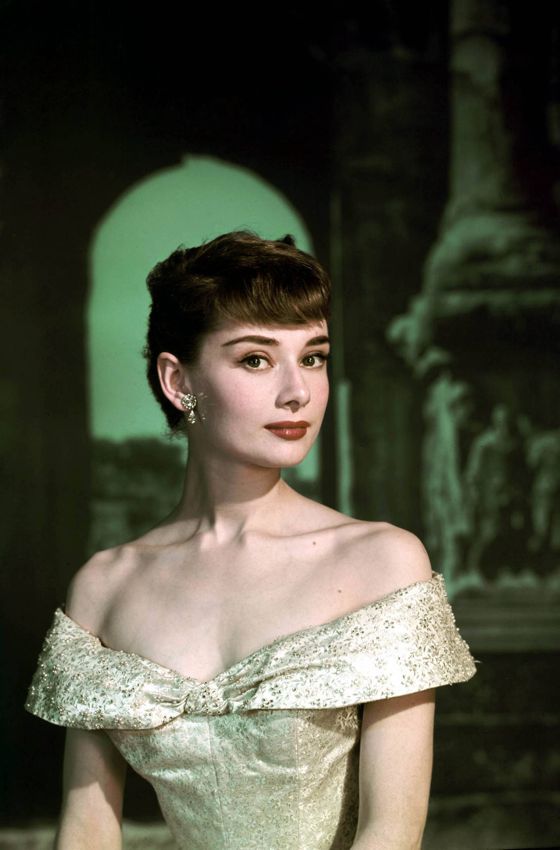
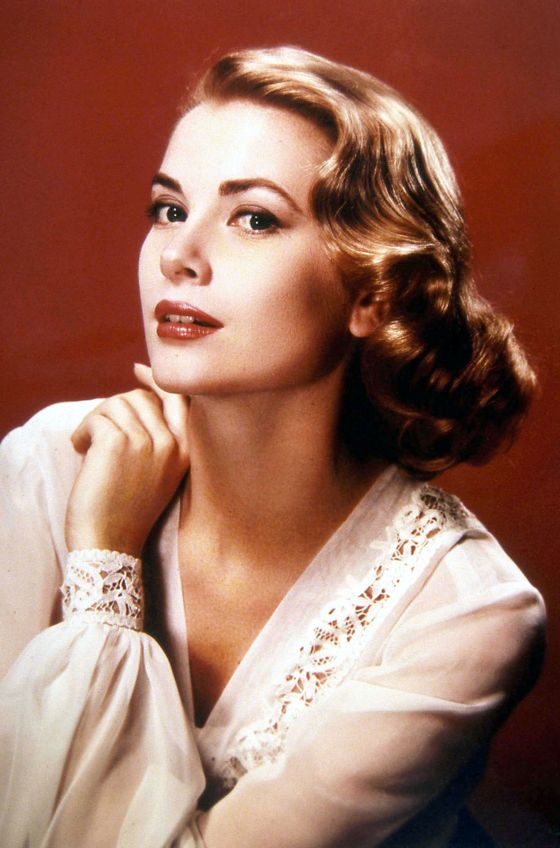
Vocal technique can be learned, but the kind of instinctive knowledge about how to present oneself on screen, which Taylor had, seems to be innate. If you look at early performances in bit roles by Grace Kelly, or at Audrey Hepburn's screen tests for Roman Holiday, you will note deficiencies in vocal technique which brand the actors as inexperienced in their craft, but you just don't care. They are already stars. John Ford saw it when he cast Kelly in Mogambo (below), her first important leading role in a film. William Wyler saw it when he cast Hepburn in Roman Holiday (above), her first role of any kind in a film.
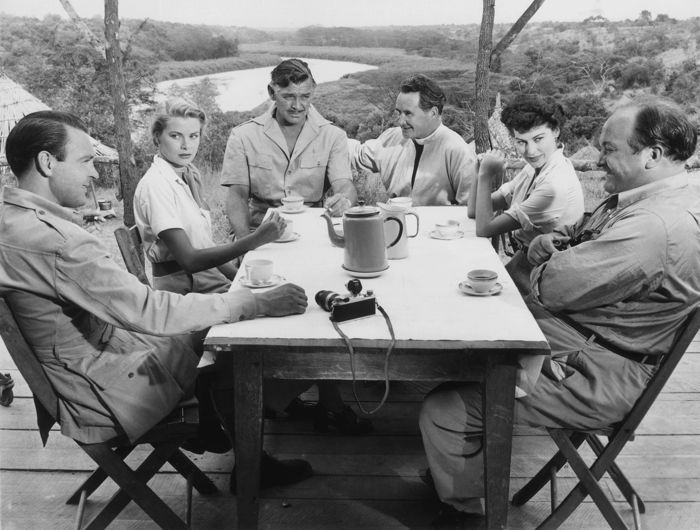
Those two wily old veterans knew that what these actors had was magic, the kind that can't be acquired by any amount of training or experience.
In the studio era, new female acting prospects were put immediately into vocal training classes. The techniques they learned were simple. Young, inexperienced female actors have a tendency to speak in too high a register and don't know how to project when speaking softly, tending to swallow their words when trying to convey intimacy. Lowering the voice and developing the capacity to project an intimate tone are tricks which almost anyone can learn.
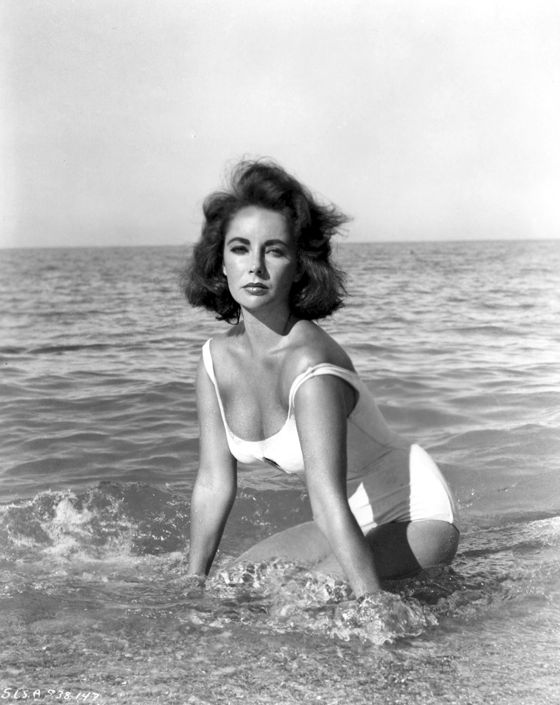
Knowing how to move in cinematic space in a way that conveys character, knowing how to project thought (or just the illusion of thought) through the eyes — these are things an actor either has or doesn't have. Vocal proficiency, as Paglia suggests, is the criterion many people use to judge acting, but it's other qualities that determine the ultimate effectiveness of a screen actor, and make actors stars.
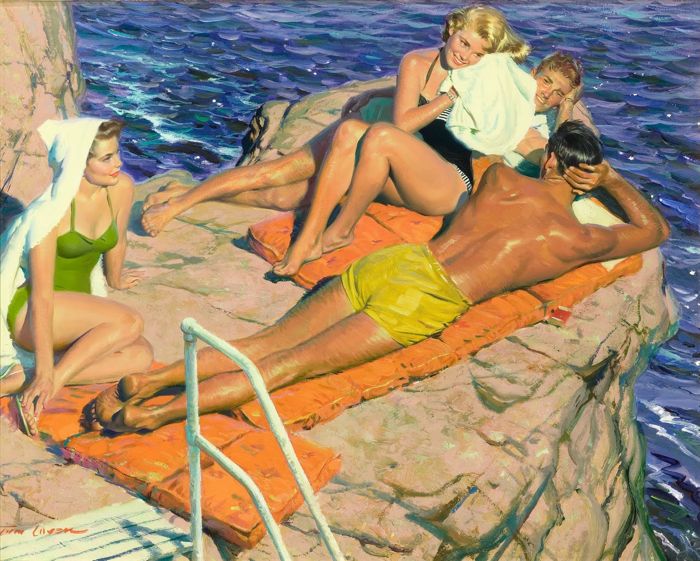
“On the Rocks”, story illustration, Good Housekeeping, 1956.
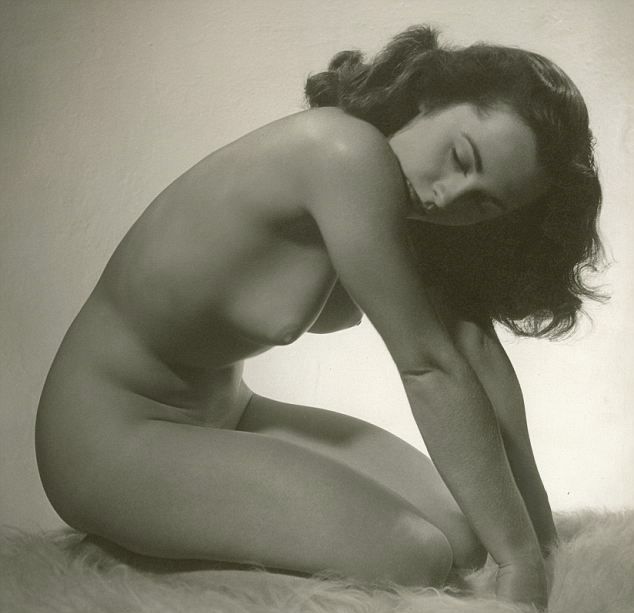
. . . to think about Lee Evans, with no clothes on.
“The nakedness of woman is the work of God.” — William Blake
[Photo © Peter Gowland]
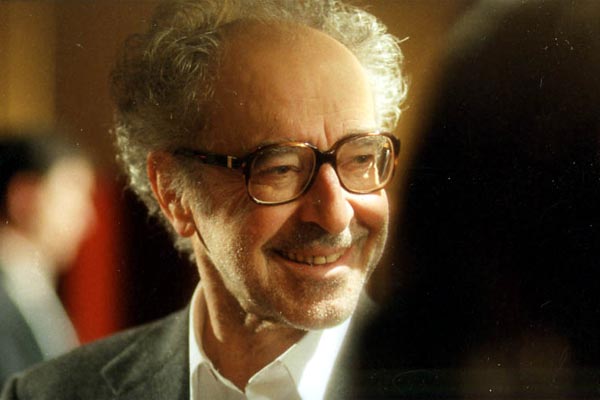
Disappointed by the box-office performance of his latest film Sucker Punch, Warner Brothers executives have quietly moved to replace Zack Snyder as the director of the new remake of Superman, which will star Amy Adams as Lois Lane. Insiders at the the studio report that a deal is close to finalization which will bring Jean-Luc Godard aboard as director of the film. Superman would be the first major Hollywood assignment for the New Wave legend, who is reported to be thrilled by the prospect.
“I have worked outside the mainstream for too long,” Godard says. “Now I am ready to cash in. My whole career in cinema has been a prelude to this. I am very excited about meeting Amy Adams and using CGI to place her in thrilling situations on screen.”

The unmanned drones being used against targets in Pakistan today are controlled from Creech Air Force Base in Nevada (above), about fifty miles from Nellis Air Force Base — just north of Las Vegas, where I live. This is very surreal, but is it also immoral? Paul Zahl offers some thoughts on the subject:

IS ANYBODY OUT THERE?
Stage Direction:
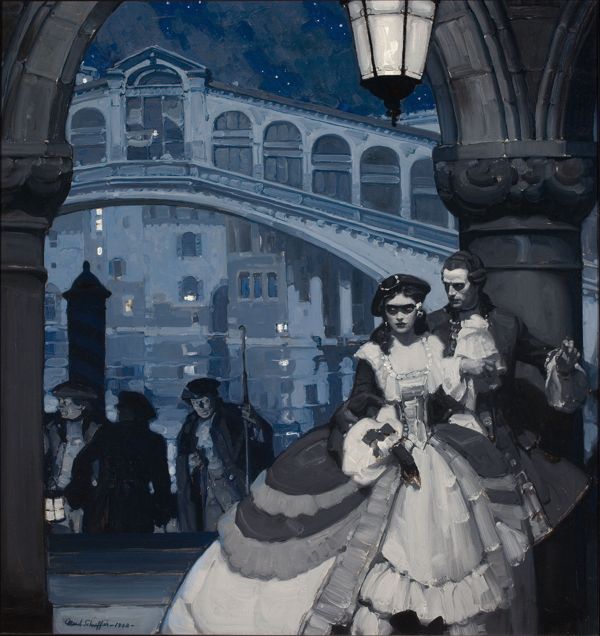
“Forbidden Lover”, illustration from The Ladies Home Journal, 1932.
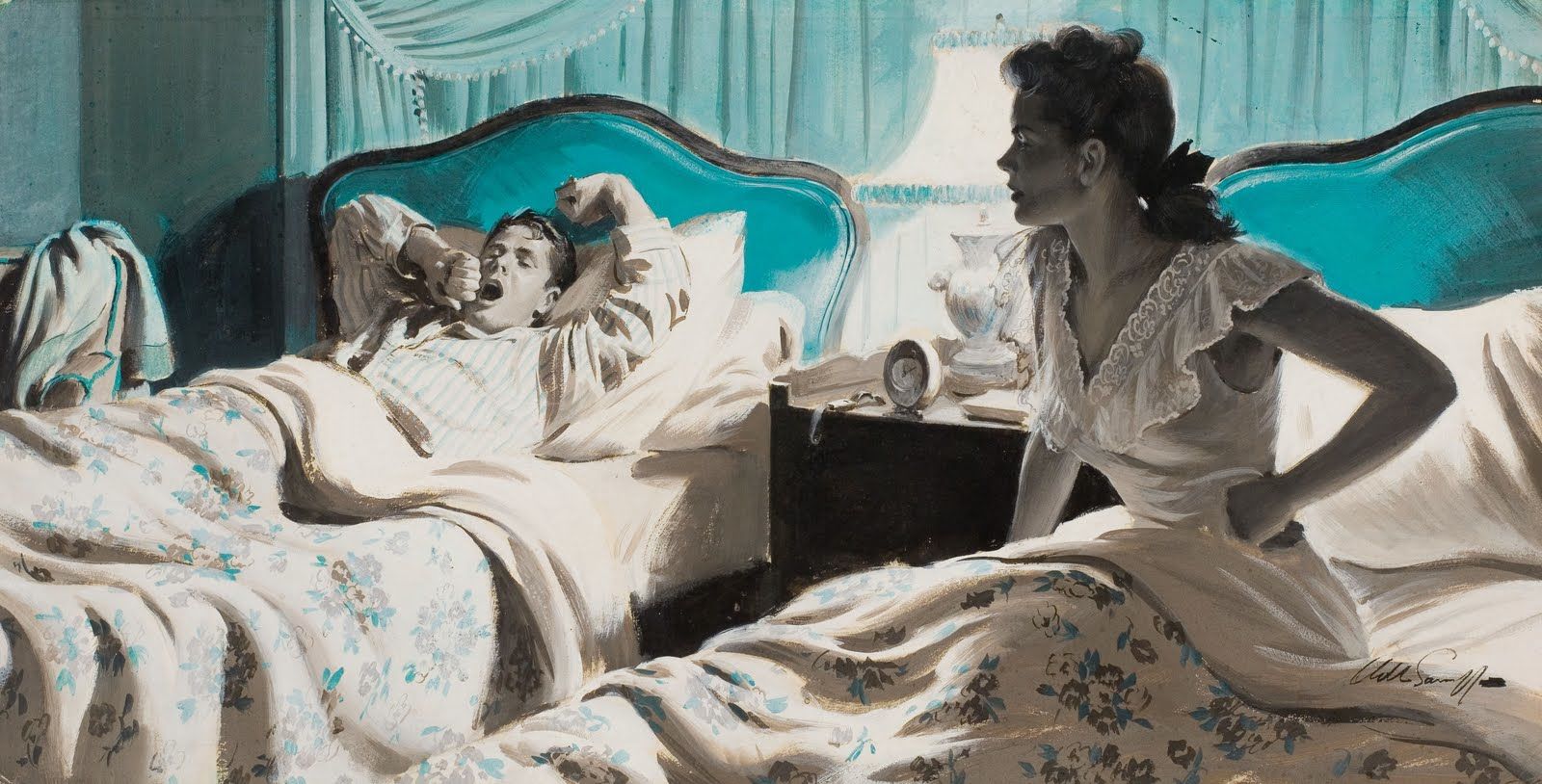
Story illustration, “Be Sure To Stop”, Redbook magazine, 1947.
Click on the image to enlarge.
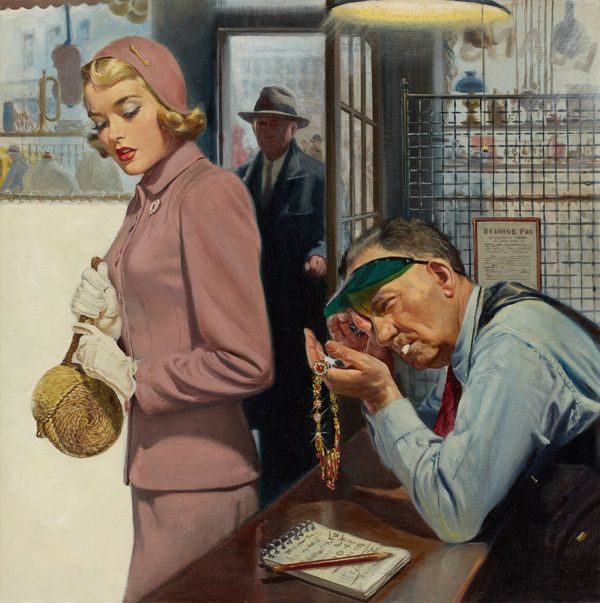
Pawn Shop
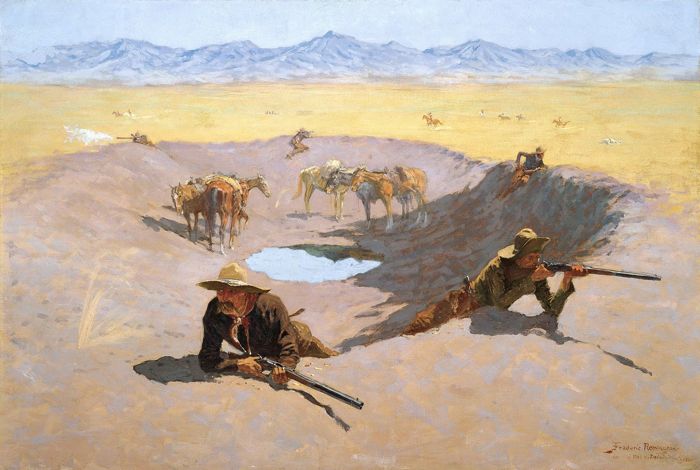
The Fight For the Water Hole — a narrative image that became a staple in Western movies. The painting dates from 1903, the year of the wildly popular short film The Great Train Robbery, a Western, which helped establish the story film as the dominant genre of cinema. This was the era when the mythic iconography of the Old West was becoming codified. Coincidentally or not, the coda of the Coen brothers' True Grit is set in 1903.
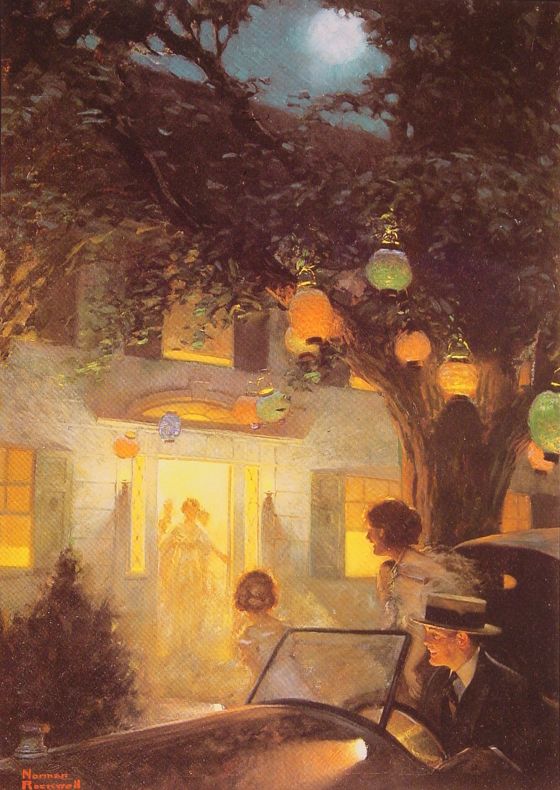
And the Symbol Of Welcome Is Light — an early advertising illustration.
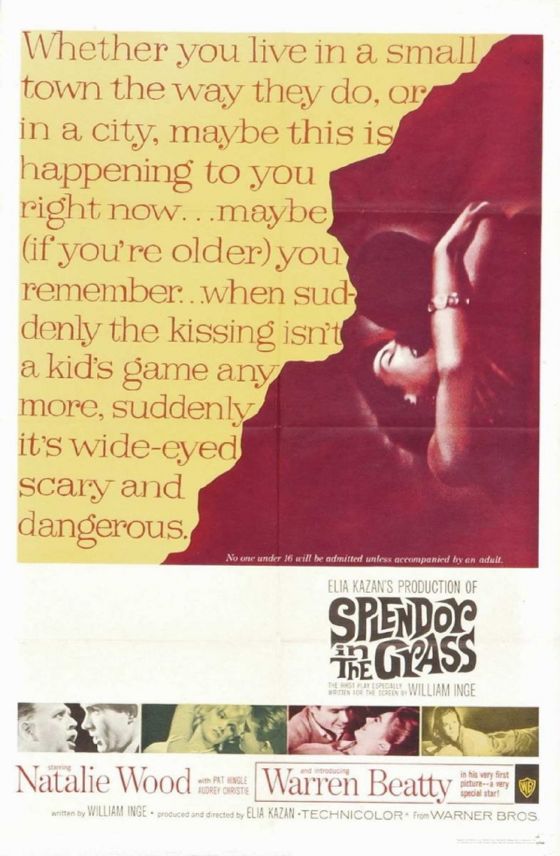
The hinge of the plot of Splendor In the Grass — two young lovers all but destroyed by socially enforced sexual repression — wouldn't work today. That kind of sexual repression no longer exists. I'm a little surprised that the plot device worked in 1961, when the film was made. Though the film is set in the 1920s, its tale of misunderstood teens was meant to speak to audiences of its time, and it did.
1961 was just before the sexual revolution, but it was hardly the Victorian era. Yet the film is on one level a passionate tirade against Victorian sexual mores, which are viewed as pathological, anti-life. This was a common modernist narrative, but it had sort of made its point by 1961, even if it had not been universally endorsed by the mainstream culture.
Was the film exaggerating the sense of sexual repression felt by
young people in 1961? I suspect so. But why?
William Inge, the author of the
screenplay, was a gay man tormented by his gayness. Surely his view of
the repression of heterosexual passion was influenced by his rage
against the repression of homosexual passion — so much stronger in
1961 than we can easily imagine today. Kazan, when he directed the
film, was living a double life — as a married man with a family and as a
libertine engaged in a series of sexual adventures outside of
his marriage. From the evidence of his autobiography, he was angered by
the guilt he felt about this — seeing it as something imposed
on him from the outside by an overly rigid society.
There is an element of special pleading in the film — a sense that Inge and Kazan are addressing personal issues indirectly through their sympathy with the tormented teens.
Curiously, neither this undertow of dishonesty nor the antiquated plot device diminishes the power of the drama in the 21st Century. Victorian sexual repression is just a premise, like the feud between the Capulets and the Montagues — it works today like a Maguffin. What's central is the confusion of youth and the brutal insensitivity of adults. The film is about the destruction of dreams, and surviving the destruction of dreams.
Those are timeless themes, of course, and the film makes us feel them on a deep level. Are kids today, in an era of sexual license, any less confused by life and sex than Bud and Deanie? Are adults any more sensitive to their anguish? I doubt it very much. That's why the film still speaks to us.