STREETFIGHTING?

Hillary
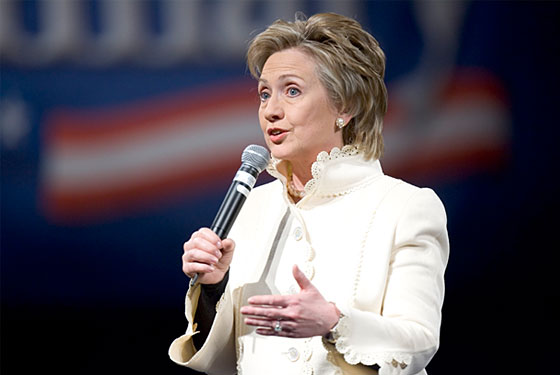
Clinton says that Barack Obama is not a secret Muslim “as far as I
know.”  It's good to see she's keeping an open mind on the
subject, unwilling to come to any definite conclusion until all the
facts are in.  That's the sort of nuanced judgment one likes to
see in an elected official.

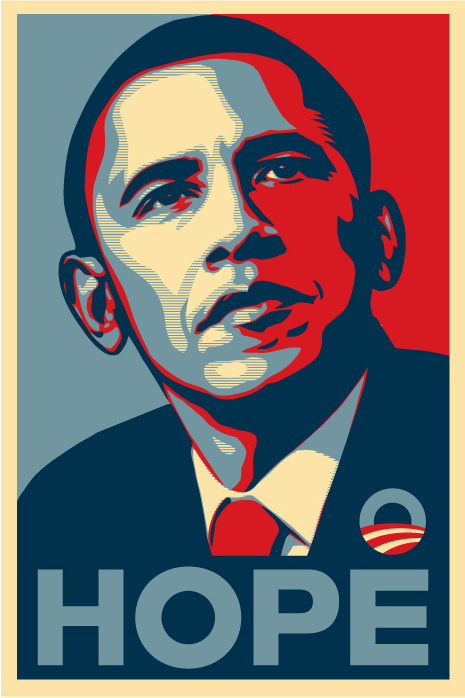
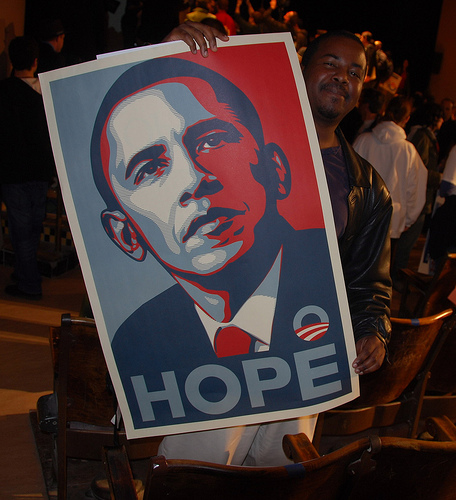
Another inspiring thing about Hillary Clinton is that while Barack Obama talks a lot about hope Hillary is running a campaign grounded
in hope — the hope that she can cut a backroom deal with Super
Delegates to override the will of the voters in the Democratic primaries and caucuses.  That should make
the streets of Denver an interesting place to be this August when the Democratic Convention assembles there.

In a box somewhere I have the headband with a peace sign on it I wore
when I got tear-gassed in front of the White House
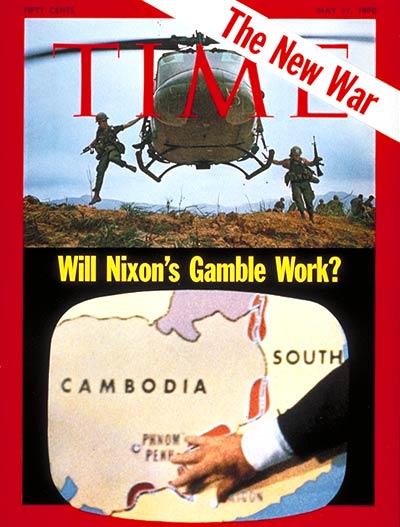
protesting Nixon's invasion of Cambodia and the Kent State killings in
1970.  (At the time I was trying to overturn one of the buses
lined up end-to-end around the executive mansion to keep me and a few thousand of my closest friends
from knocking down the wrought-iron fence around the White
House.)  To me the headband is like a campaign ribbon — a symbol of one of
the only signal services I ever did my country.

Am I going to have to pull that headband out again, Hillary? 
Am I going to have to totter through the streets of Denver like an old
Confederate veteran re-enacting Pickett's Charge at Gettysburg forty
years after the guns fell silent?  It won't be a pretty picture,
Hill — but I'm ready.

AN N. C. WYETH FOR TODAY

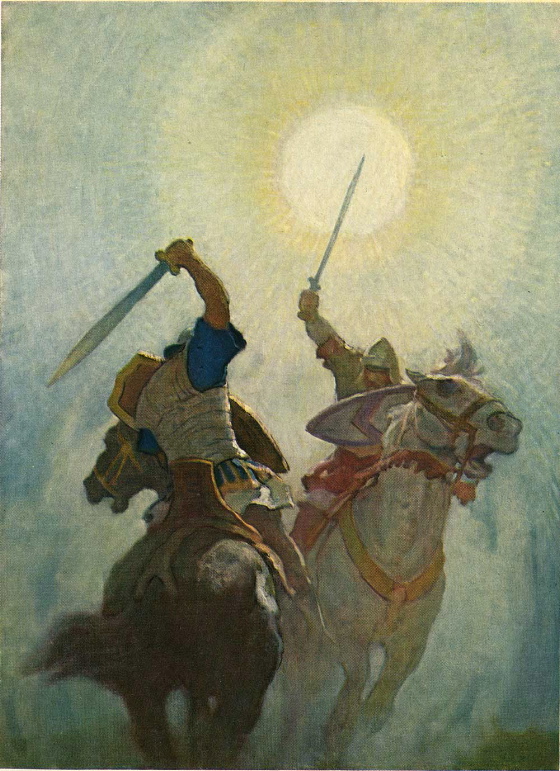
The above is an illustration by N. C. Wyeth for the book Legends Of Charlemagne
N. C. Wyeth, the father of Andrew, was the greatest of American book
illustrators and one of the greatest of American painters.  His
influence on cinema, especially the work of John Ford, cannot be
overestimated.

[The image is courtesy of the ASIFA-Hollywood Animation Archive, one of the most delightful sites on the Internet.]

EL CID

Finally . . . this extraordinary film is available on DVD, in a wonderful edition with lots of extras from The Miriam Collection, a new home video division of Miramax.

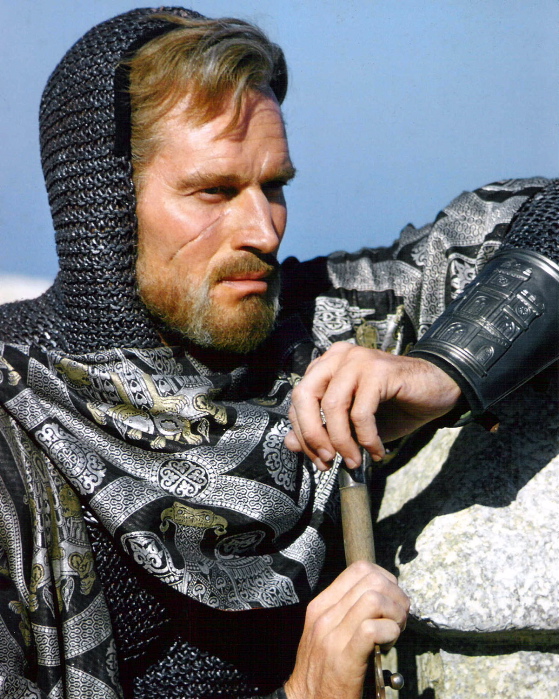
El Cid might be be the best of
all the widescreen epics.  It's visual style is bold, elegant and
often stunning, with none of the process photography that dates so
many big films from this era.  The narrative has tremendous momentum
and the melodrama is stark and wrenching, very adult for an epic,
inflected with a mature kind of eroticism.

Its tale of conflict between Christian and Moor in medieval Spain has
troubling resonances today, though the film makes an effort to
distinguish between humane and fanatical Muslims and to posit the idea
of an alliance between Christians and Muslims of goodwill.

The action sequences, stage by second unit director Yakima Canutt, who essentially directed the chariot race episode in Ben Hur,
are gripping and the choreography of the armies on the move and in
battle is both elegant and stirring.  No amount of computer
genius could ever dispose CGI soldiers and armies in virtual space this
beautifully and convincingly.

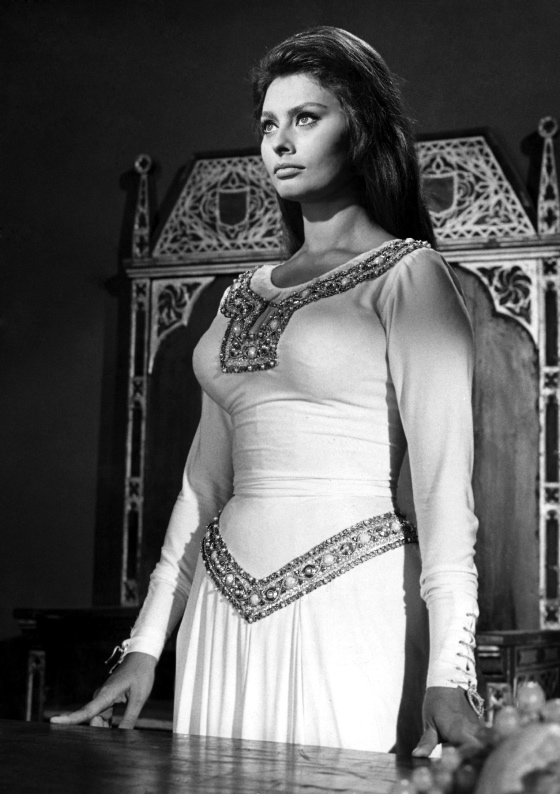
As a kid on the edge of puberty I had my first recognizably sexual
feelings while watching Sophia Loren in El Cid — she's a
breathtaking incarnation of the Eternal Feminine, with a power beyond
rational challenge.  Heston does what he does best — hold his own
plausibly against backdrops (and, in the case of Loren, bosoms) of epic
size.

The film has a dark, macabre undertone but is still wildly entertaining, and a great work of art and craft in the bargain.

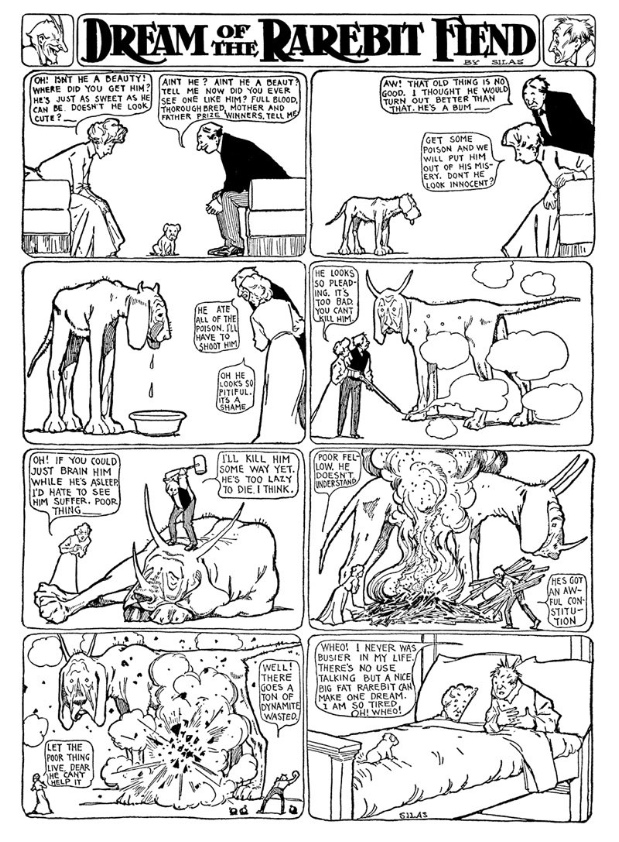
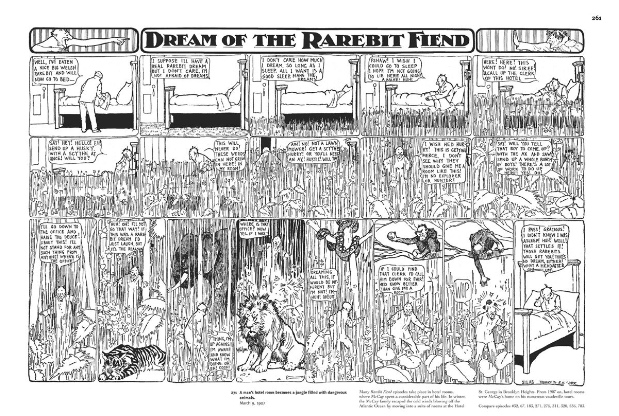
UNSPEAKABLY COOL: DREAM OF THE RAREBIT FIEND

The fourth of the four coolest books published in the last few years, like
two of the others, collects the work of Winsor McCay — in this case
the extraordinary strip Dream Of the Rarebit Fiend — but unlike the other three wasn’t put out by Sunday Press Books.  Privately published by Ulrich Merkl, it
includes all of the strips from the series — those not reproduced in
the book itself are supplied on a DVD that comes packaged with the book.

The book is gigantic and presents the strips, published between 1904
and 1913, in their original size.  It also has a wealth of other
illustrative material showing McCay’s sources and documenting the
enormous influence his images have had on America’s visual culture,
especially that of the movies.

The draftsmanship of the strips is stunning, the visual imagination exhilarating.  Its central gag involves the dreams of people given indigestion by eating Welsh Rarebit, making it a kind of run-up to McCay’s masterpiece strip Little Nemo In Slumberland, which illustrates the dreams of a restless little boy.

Merkl’s book, published in a limited edition, is expensive but worth every penny.  It lovingly documents a brilliant and endlessly enchanting work of popular art.

Check out my reports on the other three coolest books of recent years:

Little Nemo

Little Sammy Sneeze

Walt and Skeezix

BACK TO THE FUTURE


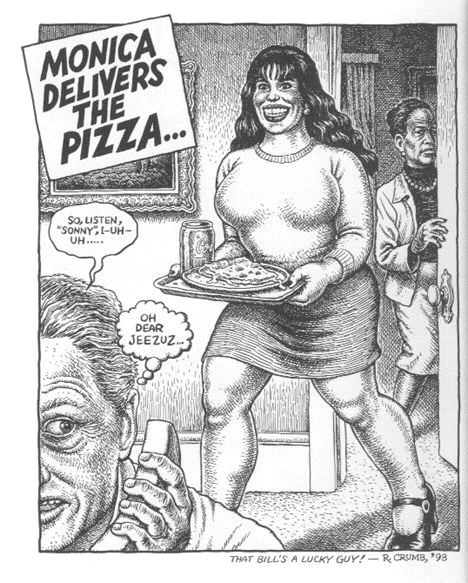
[Image © 1998 R. Crumb]

With the circulation of the photo of Barack Obama looking silly (and oh
so “other”) in traditional Somali garb, it's clear that the Bill and
Hill machine is back on message, delivering its urgent warning to all
real Americans:

“The Negroes are coming!  The Negroes are coming!”

Bill and Hill have now officially used up all their passes for creepiness.  Voters of Texas, please — make them go away.

HOLLYWOOD: ART VERSUS COMMERCE

One
of the enduring myths of Hollywood is that the town is an eternal
battleground between art and commerce — between studio executives who
only care about money and filmmakers who only care about art.

The truth is that movies have been, almost since the moment they were
invented, a popular art form.  They attracted, for the most part,
popular artists — which is to say, artists who wanted to reach large
audiences.  Long before there was an established studio system run
by corporate functionaries, filmmakers courted a mass audience and
reached it.  The financial returns that followed created the industry that corporations at once set about dominating and
controlling.

The art of cinema was created by the same people who created the mass
market for films — Griffith, Chaplin, Pickford, Keaton, Lloyd. 
Because they were popular artists, commerce was an intimate aspect of
their endeavor.  The corporate executives who took over the
industry these artists created were by no means more
interested in the box office than the artists had been — they were
interested in power and turning the art form into a more predictable
revenue source . . . interests which often conflicted with maximum
box-office potential.

When executives and filmmakers clashed over the content of films, it
was not a battle between art and commerce — it was a battle between
popular artists who actually knew how to make popular films and
bean-counters who thought they knew better.  Since the
bean-counters quickly gained a virtual monopoly over the distribution
of films, they had the last word, and also the ability to insure that
this word could never be challenged, since the overruled filmmakers had
no practical way of getting films before the public without the
bean-counters' consent.

John Ford fought constantly with studio executives and, by his account,
never won a single battle with them — but does anyone seriously
believe that Ford, one of the most consistently successful popular
artists since Dickens, was fighting for some
private, noncommercial artistic vision?  Ford did make a few films, like The Fugitive,
which he may have known in advance would not be wildly commercial, but
for the most part he wanted to address a mass audience as effectively
as possible.  For a genuine popular artist like Ford — or Dickens, or Shakespeare, for that matter — there is no
conflict between art and commerce.

Ford was fighting against executives who could not have created a
popular work of art if their lives depended on it, executives who only
managed and bullied and second-guessed those who could create such
works.  The real issue was not art or commerce — it was
power.  Without their corporate control of the means of film
distribution, these executives would have remained in the realm of
exhibition, from which most of them emerged and where they belonged.

Hollywood in truth has been a battleground between monopoly and a free
market, between corporate standardization and homogenization and
entrepreneurial innovation.  The conflict between art and commerce
has been nothing more than a smokescreen.

PIERROT'S EMBRACE

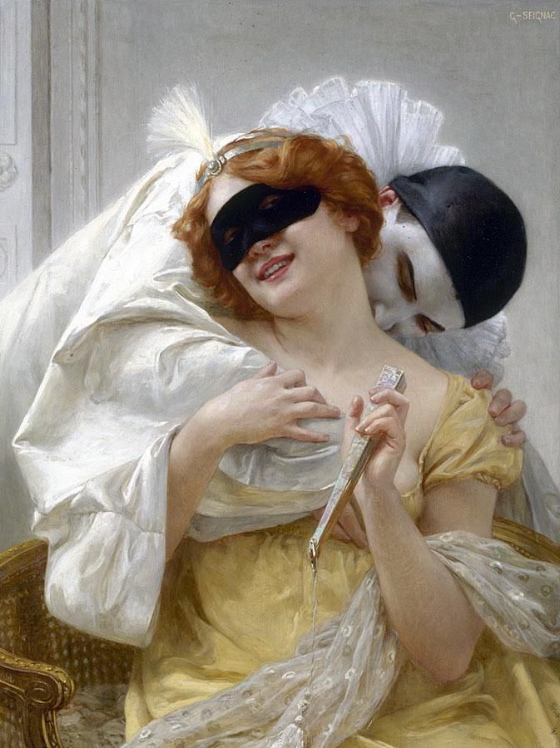
Guillaume Seignac
was a late Victorian painter (he died in 1924) who mostly turned out
undistinguished but sometimes amusing imitations of Bouguereau. 
His draftsmanship could be flabby and his images didn't have the
über-photographic authority of his master.

The image above is different, though.  It has an odd suggestive
power, almost perverse, that's rooted in theatrical gesture.  I
find it haunting, for reasons I can't quite put my finger on.

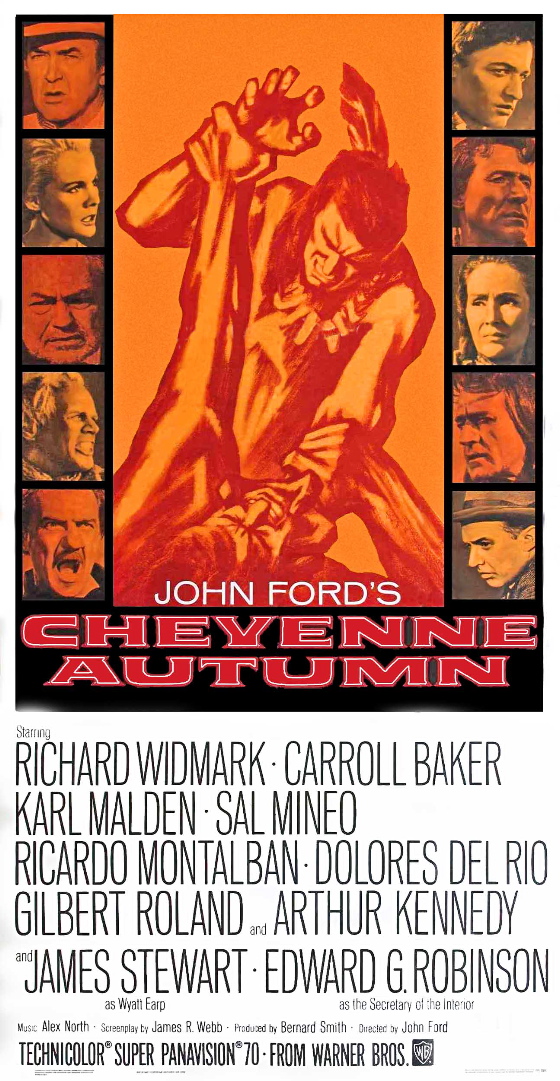
CHEYENNE AUTUMN

This
was the next to last feature film John Ford completed, in 1964, when he
was 69 years-old.  It doesn't work as a drama, much less a
melodrama, or as a character study or as an historical epic . . . but
it's one of the most sublime visual poems in the history of movies and
a very great work of art.

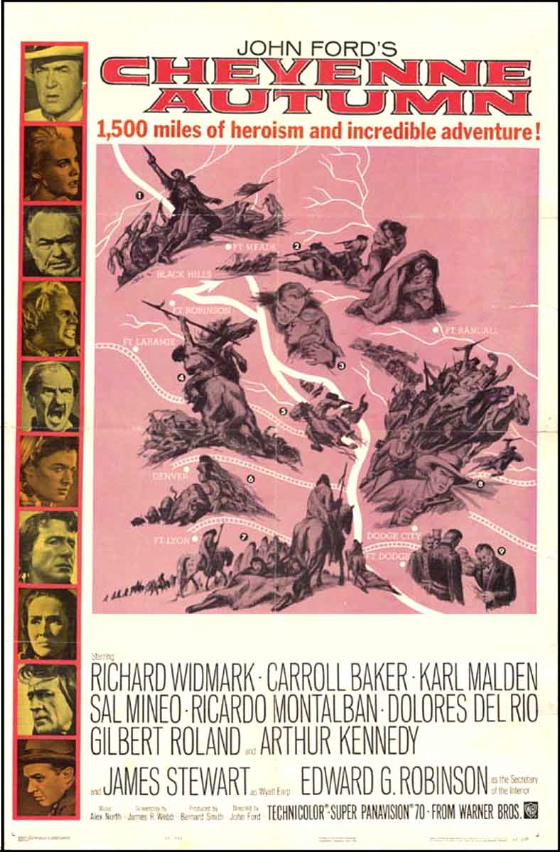
It tells the once little-known story of a band of Cheyenne who, in
1879, broke out of confinement on a reservation in Indian territory,
present-day Oklahoma, and made a 1500-mile trek back to their homeland
in Montana.  Pursued and harried by a succession of cavalry
expeditions, starved and near death, the band made it to its old home where
it was allowed to remain.

In his excellent commentary on the wonderful new DVD edition of the film, Ford
biographer Joseph McBride says that Ford originally intended to make Cheyenne Autumn
as a small, black-and-white film, an intimate study of the Cheyenne
pilgrims, but that he was persuaded by the studio to expand it into a
big wide-screen Technicolor extravaganza.  It was, says McBride, a
“Faustian bargain” which led to a film that was neither fish nor fowl,
since Ford lost sight of the Cheyenne characters yet failed to create a
genuine epic.

This may indeed reflect the development of the project but I think it
misses the essence of the film that Ford finally made.  All
of the characters in the film, both Cheyenne and white, recede into the
images, become secondary to the images.  Ford doesn't lose sight
of them as dramatic personae because he has no real interest in them as
dramatic personae.  They're just narrative markers that guide us
through the landscape of the film.
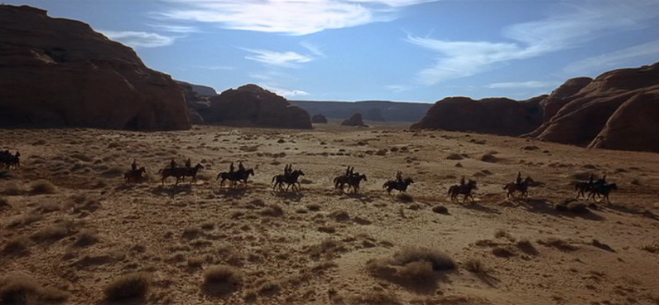
Landscape was always a character in
Ford's Westerns, a kind of Greek chorus commenting on the relative
smallness of human intention and desire.  It stood in, one might
even say, for the regard of Eternity, in which human endeavor held an
insignificant place.  It transformed the melodrama of his stories
into tragic
absurdity.

In Cheyenne Autumn, as in
Shakespeare's late romances, the author lost interest in the mechanics
of plot altogether, in the centrality of individual character, and became enchanted by the
mystery of his medium — the magical poetry of words, in Shakespeare's
case, and of images in Ford's.  The
progress of the Cheyenne through the magnificence of the landscape, the
evolutions of mounted cavalry on the march or at the charge, fill
Ford's imagination fully — the characters dissolve into the beauty of
movement itself.  They are elevated into a transcendent glory not
by the specificity of self but by their possession of space.  They
are dancers, sculptures in motion.
This is not an abstract vision, however, a celebration of
technique.  In his old age, disillusioned with the legends of the
West he did so much to reinforce, Ford lost his faith in man's
essential goodness, or at least in that part of it related to his
will.  Primal values, transcending individual human character,
were all he could believe in — the dumb urge to go home, to preserve
community, to do one's duty.

At the center of the film Ford inserted, unaccountably to many critics,
a 21-minute sequence set in Dodge City which mercilessly satirizes the
myth of the Western hero, of the frontier town.  Jimmy Stewart
appears as a corrupt and cynical Wyatt Earp leading the hysterical townspeople on an
absurd pursuit of the phantom Cheyenne, who in truth are nowhere near
Dodge.  The familiar narrative of the old West is deconstructed, revealed as
a tale told by an idiot, full of sound and fury, signifying nothing.

After this strange interlude, the film switches back to the story of
the Cheyenne, doing what they have to do, and the horse soldiers, doing
what they have to do.  When the Cheyenne are restored to their
ancestral Eden, Ford shows us how much they have lost recovering it,
just as
he shows us how much honor the soldiers have lost in fulfilling a duty
that's been applied to a meaningless and inhuman mission.

The triumph on both sides was only in the journey, the movement, the dream — all of
which vanish in the end, as the eternal landscape looks on impassively.

The
film has a nominal “upbeat” resolution in its penultimate episode in
which
Secretary of the Interior Carl Schurz, wonderfully played by Edward G.
Robinson, goes to visit the escaped Cheyenne in Montana and promises to
help them stay there.  This scene, oddly, is shot against
cheesy-looking back-projections — such a radical violation of the look
of the rest of the film that it almost seems deliberately surreal . . .
as though Ford was asking us not to take this superficial “climax” too
seriously.  Perhaps it can be compared to the improbable events
that “resolve” the narrative of Shakespeare's The Winter's Tale,
in which the playwright seems to be asking us to laugh with him at the
conventions of the stage — to remind us that the true heart of his
work lies elsewhere.

DUDLEY NICHOLS AND JOHN FORD

With the notable exception of Stagecoach,
I'm not a big fan of the movies John Ford made with screenwriter Dudley
Nichols, even though these include some of Ford's most celebrated and
entertaining films.

Nichols was an extremely skillful writer, with a sound sense of story structure and a good ear (usually) for
colorful dialogue.  But he also had a self-conscious, “literary”
style — he tended to see situations and characters in emblematic,
metaphorical terms.  This aspect of Nichols' work encouraged Ford
to indulge his gorgeous visual expressionism at the expense of what he
did best — create cinematic spaces and places of mesmerizing
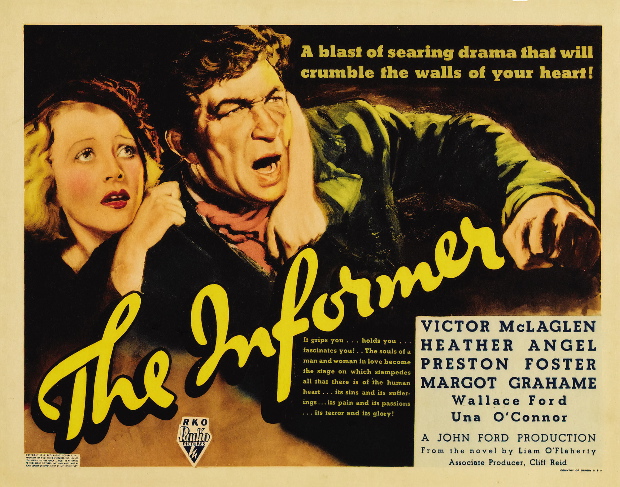
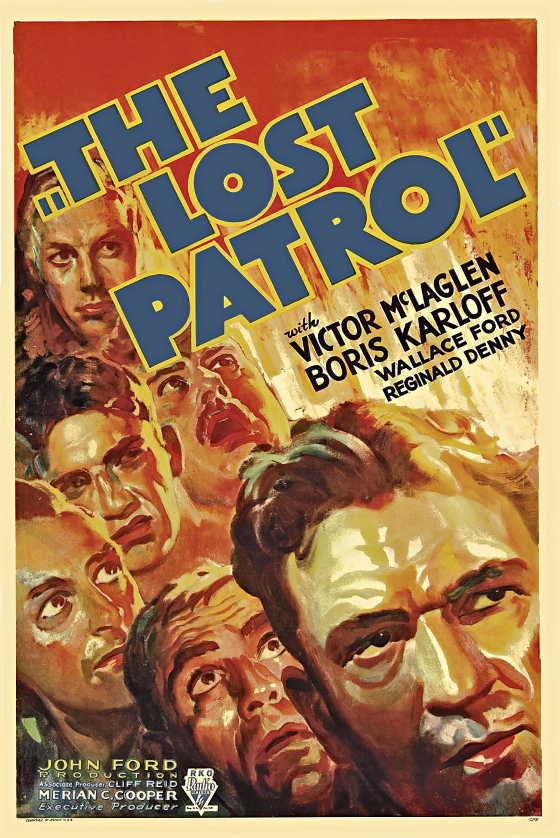
specificity.  The images of The Lost Patrol and The Informer
are supremely beautiful but they grow claustrophobic after a
while.  The desert and the fog-bound city are too obviously
surrogates for existential states, symbolic and airless.

In his best work Ford found ways of imbuing interiors and landscapes
with an uninsistent symbolic quality — we read them as real spaces and
feel their emotional resonances on a subliminal level.  We have a
sense of discovering and exploring these spaces on our own, no matter
how many times we come back to them.  The shadowy streets of Gypo
Nolan's Dublin in The Informer, the merciless desert that swallows up The Lost Patrol, are places we visit with a guide, always reminding us what these environments “mean”.

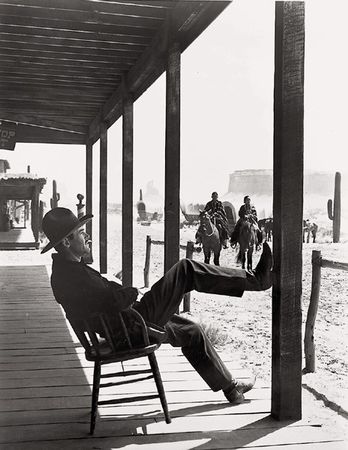
The streets of Tombstone in My Darling Clementine,
the unfinished church on the edge of town, the maze of the O. K.
Corral, are every bit as charged with meaning and significance, but
Ford lets us tease them out for ourselves — he lets us inhabit them at
our ease, until the places seem to speak to us in their own voices.

POLITICAL POKER UPDATE

The
flop on 5 February didn't favor either Democratic player — Clinton was
still ahead with her AK to Obama's AQ.  Obama spiked another queen
in the Potomac primaries, however — not because he won all three of
them by big margins and not because it gave him the lead in pledged
delegates . . . he paired his queens because for the first time he made
big inroads into Clinton's base, older white women, Latinos and
non-black lower-income voters.

If he can keep doing that in the primaries to come, his queens will
hold up.

Clinton will pair her kings and take the lead if she
wins big in Ohio, Texas and Pennsylvania, getting close enough to make
a brokered convention acceptable to the party as a whole — or at least
not totally unacceptable.  Clinton would be likely to win a brokered convention.

However, if Obama leads significantly in vote totals, states won and pledged
delegates after the primaries, I suspect that Clinton will take the card room manager
aside and argue that AK high beats a pair.  If he rules in her
favor, the card room will riot and the Democratic party will be
finished for the foreseeable future — which might not be a bad thing
at all.

Obama represents the Democratic Party's last chance to reform itself
from within and from the bottom up.  If he fails, a more radical
solution will be required — a new party altogether.

THE FIRST

I keep having to remind myself how exciting it is that this year America
might elect its first female President, or its first African-American
President.  It takes a certain amount of effort.  The truth is that such excitement doesn’t have a lot of genuine substance.

I think back to JFK’s election as America’s first Catholic
President.  It seemed like such a big deal at the time, but five
minutes after JFK took the oath of office it was a non-issue.
Nobody cared anymore.  We forget how stupefyingly boring prejudice
— whether religious or sexual or racial — really is . . . because
it’s not underpinned by anything real or relevant to the actual world we
live in.  Its consequences can be horrific, but its core is empty,
illusory, meaningless.  Like all ideas based on irrational
concepts, it has no roots — any strong wind can blow it away.

Five minutes after Hillary Clinton is sworn in as the first female
President, if that happens, five minutes after Barack Obama is sworn in
as the First African-American President, if that happens, the era in
which such a development seemed extraordinary will instantly pass into
ancient history.  Fifty years from today kids will have no
imaginative grasp of that era, just as today they have no imaginative
grasp of the era of legal apartheid in America.

For America, with its knuckle-headed orientation towards the future —
itself somewhat irrational — the lunatic evils of the past have a
tendency to enter the realm of science fiction.  In America, for example,
women and blacks have always had the vote — any time when they didn’t
have the vote unfolded in an alternate universe.  I grew up in
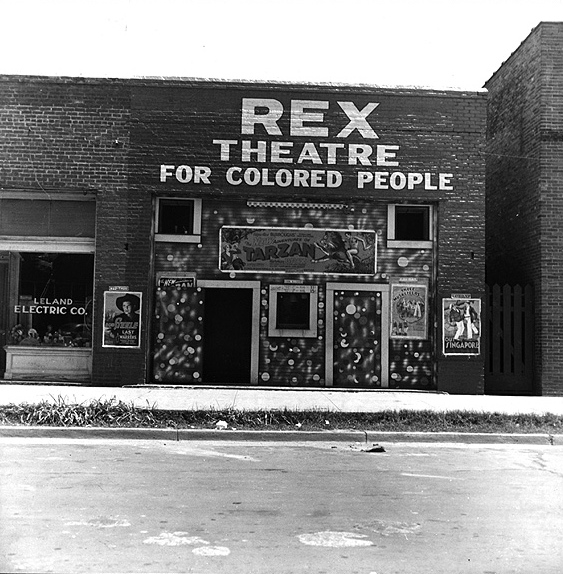
such an alternate universe — North Carolina in the 1950s.  I saw
signs like the one above every day of my life.  Today they seem
more like something I read about in a book than like memories of real things.

Perhaps it’s an example of the narcosis of hope . . . and perhaps, in a
strange way, that’s part of the genius of America.  We started
with these words — “We hold these truths to be self-evident, that all
men are created equal . . .” and it may be that on some level all the
rest of our history has just been a process of finding our way home
through a vale of treasonous delusions.

THE SIXTIES BEGIN

9 February 1964 — I’m 13 years-old, an 8th-grader, in my first year at
an all-boys New England boarding school.  No access to television
— required to be in study hall between dinner and lights out in our dorms.
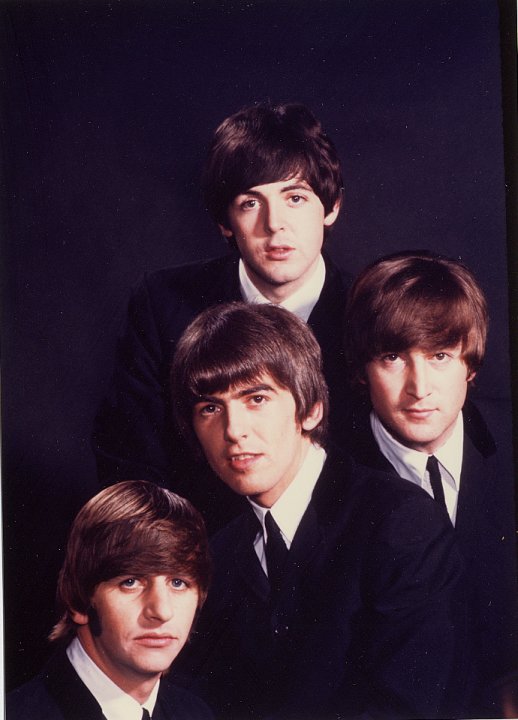
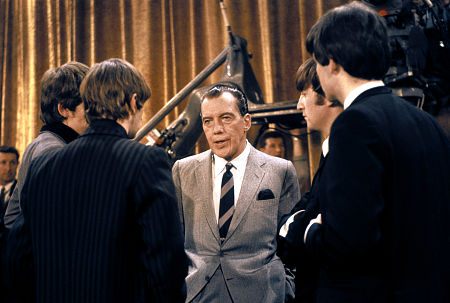
The Beatles are appearing on the Ed Sullivan show for the first time.

What to do?

It’s possible to sign out of study hall to work in the library.
Three friends and I do this.  Just before the Sullivan show goes
on we sneak out of a bathroom window in the library, move from shadow
to shadow across the campus to the math building, where there is a
television which juniors are allowed to watch.  We enter the room
with the television where about twelve juniors are gathered.  The
moment of truth arrives.  If the older boys decide to bust us,
we’re in serious trouble with the school authorities, with so many
demerits it will take us the rest of the term to work them off on
campus maintenance details, with all privileges suspended.

For the first time it strikes me what a strange thing it is I’m
doing.  I was a nerdy straight-arrow of a kid back then — I don’t
think I’d ever knowingly broken a school rule in my entire life.
Somehow, though, the Beatles seem bigger than school rules.

The juniors smile and stare at us for a few moments, giving us time to sweat — then wave us in.  We watch the Beatles on the show.

This is the same television, in the same room, where we were allowed to watch coverage
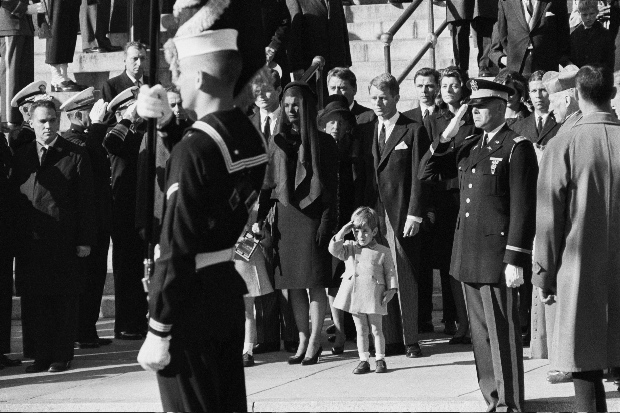
of the JFK assassination not quite three months earlier.  Hard not to process the Beatles, purveyors of joy, as a kind of answer to Lee Harvey Oswald.

We sneak back across the campus, climb back in the library window . . .
undetected.  The librarian, a plump, genial woman, looks at us
wryly as we sign out — I’ve always suspected that she noticed our absence over the
course of the evening but decided not to bust us, either.

The decade of rock music and assassinations, desire and transgression had begun.  The Sixties were on.

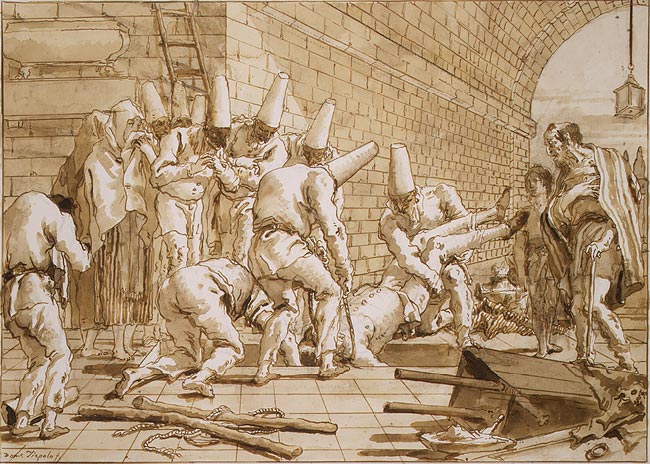
A PUNCHINELLO FOR TODAY

Giovanni Domenico Tiepolo (1727-1804) was the son of the great painter and master of the fresco Giovanni
Battista Tiepolo.  Domenico painted and did frescos as well, but
his most amazing work was series of drawings featuring the
commedia dell'arte character Punchinello, done towards the end of his life.

The series comprised 104 pen and wash images which explored the
character in unexpected ways.  Domenico showed him in childhood,
in the kitchen cooking polenta, imprisoned, and finally dead and buried
(see above.)  Indeed, Domenico treated Punchinello as an early
version of Krusty the Clown, but with a depth of feeling that
transformed him from a stock figure of the comic stage into an image of
everyman, a clown of Shakespearean dimensions.

The drawings are free, almost casual, but incredibly beautiful. 
The series was sold and dispersed in 1921 but in 1986 77 of them were
collected and superbly reproduced in a book, which is out of print but
still available, for a price, through online booksellers.  It's
well worth tracking down.