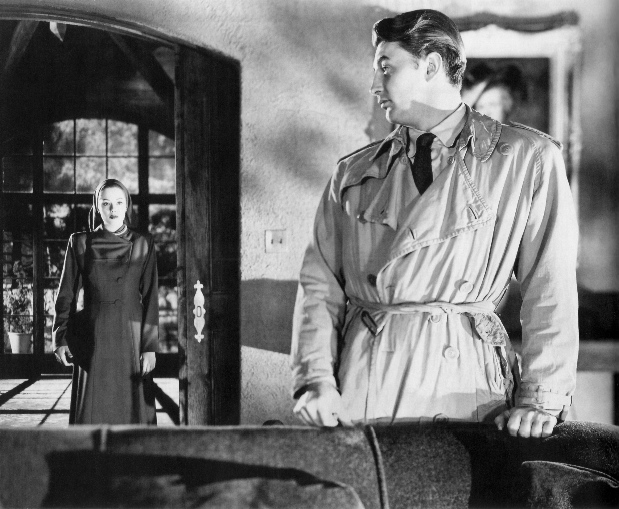
THE DIFFICULTY OF DEALING WITH GOD

A guy is talking with God and he says, “God, what is a million years to you?”

God says, “A million years is a second to me.”

The guy says, “God, what is a million dollars to you?”

God says, “A million dollars is a penny to me.”

The guy says, “God, could I have a penny?”

God says, “Sure — just a second.”

MORE ON FILM NOIR AND THE DEATH OF GOD

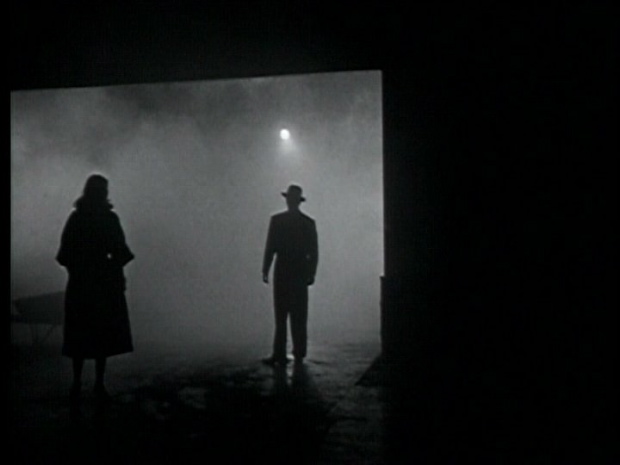
Although, as I wrote earlier, I don't see film noir
as expressly concerned with theological issues, there is a
sense in which the idea of “the death of God”, as a kind of
metaphorical expression for existential bewilderment, gets close to the
heart of the tradition.

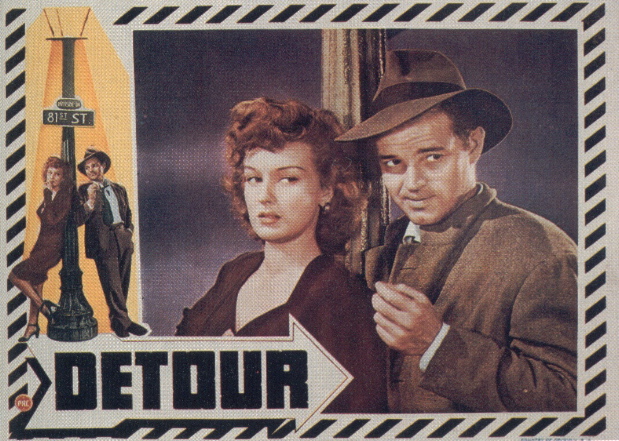
Edgar G. Ulmer's Detour, a low-budget thriller from 1945, was arguably the first true film noir
It offered a vision of the world as a moral maze from which there was
no exit — an image that accorded well with the unconscious dread which
gripped America in the wake of WWII and in the shadow of nuclear
apocalypse.

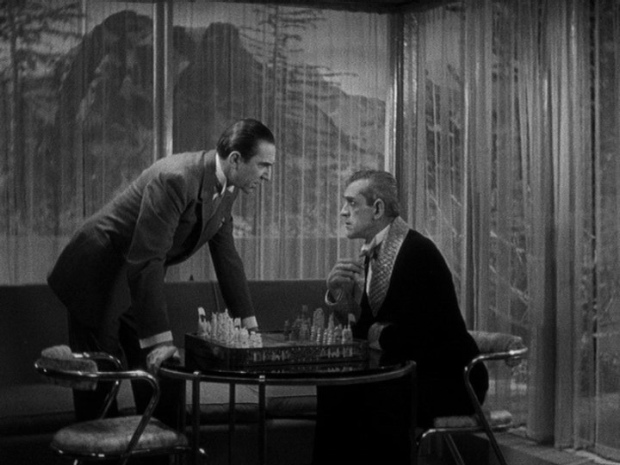
In this light, it's interesting to look at Ulmer's The Black Cat,
a strange Universal “horror film” from the early 30s.  There, the
source of the horror that ensnares its innocent protagonists is a
modernistic version of the old dark house — which sits on the site of a
ghastly battle from WWI, somehow infected by the mass slaughter that
took place there.

This may not be enough to prove that Ulmer saw a connection between the moral chaos of Detour and the horrors of WWII but it certainly suggests
that there may have been an unconscious association of the two
ideas in Ulmer's mind.

Certain modern commentators want to see film noir
as a phenomenon with essentially political implications — something
that's not hard to argue given the leftist leanings of many of the
great masters of the noir tradition, a number of whom were eventually blacklisted.  But seeing film noir
as essentially political expression I think sells the phenomenon short.  Film noir reflected
an existential dread far deeper than politics could encompass. 
“The death of God” gets closer to expressing this than “the corruption
of Capitalism”.

Curiously enough, the French critic Luc Mollet said that Ulmer's whole body of work
expressed “the loneliness of man without God”.  A recent essay on
Jules Dassin's Brute Force, included in Criterion's DVD edition of the film,
quotes Mollet dismissively and ironically, suggesting that he was just
offering a kind of smokescreen for the political underpinnings of the noir vision.  But I think it makes more sense to see the nutty, irrational Stalinism of many noir
filmmakers as a smokescreen for the more comprehensive psychic
dislocations of post-WWII America, in which Communism and Stalinism
were just faddish, ill-conceived replacements for a God who seemed to
have abandoned the world in the desert outside Los Alamos, New Mexico,
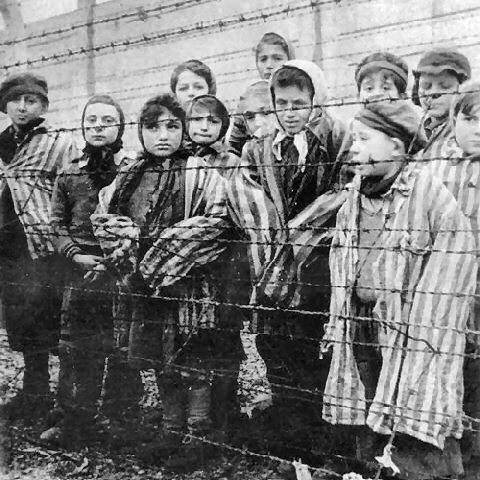
after clearly announcing, at places like Auschwitz, his plans to retire
permanently from the world's affairs.

If film noir were simply a
reflection of the politics of its leftward-leaning makers, it ought to
be terribly dated today, after the demystification of Communism and
Stalin, those ephemeral
shibboleths for which the Hollywood radicals martyred
themselves.  But film noir
still speaks to us as strongly as it ever did — perhaps because “the
loneliness of man without God” still troubles the spirit, while the
passing of Stalin and Communism go conspicuously unlamented.

[Thanks again to Tony D'Ambra of films noir whose posts on film noir and the death of God prompted the thoughts above — and to Michael Mills' classic film blog for the Detour advertising art.]

EMILE FRIANT: A VICTORIAN ARTIST YOU SHOULD KNOW

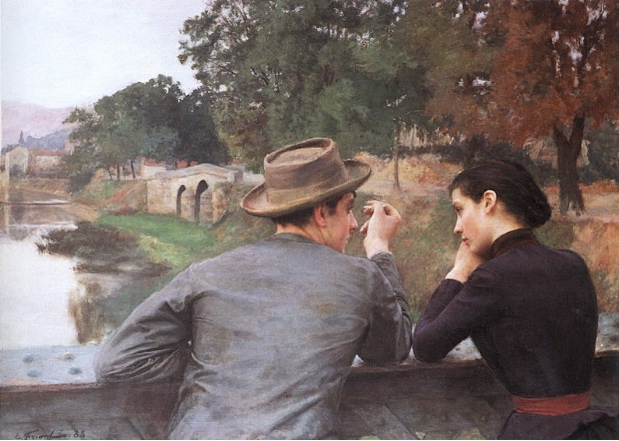
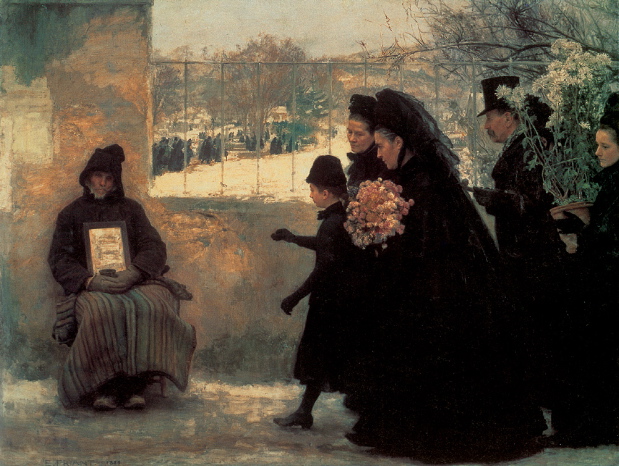
Émile Friant painted portraits and scenes of the French countryside.  He
had, to me, a decidedly cinematic eye — his genre paintings are not
sentimentalized and they have a bold, dynamic quality based on spatial
compositions of great though subtle power.  They remind me of Bertolucci’s
images in 1900.

The painting above uses a technique Tissot was fond of — creating a
space in the foreground that instantly occupies one’s attention but
which also opens up into a deep space beyond.  Spaces opening up
into deeper spaces instantly summon up the idea of movement, of the
potential for movement — they almost produce a sensation of movement.  This
and their photorealistic quality are what to me give them a cinematic
quality.

Friant was a late Victorian — he lived until 1932, well into the era
of the Impressionist triumph.  Like John Singer Sargent he
borrowed a freer approach to brushwork from the Impressionists while
remaining true to the basic aesthetic ideals of the Victorian academy.

FILM NOIR AND THE DEATH OF GOD

In
a comment here (and currently on his own web site films noir) Tony
D'Ambra posts an intriguing quote from Mark Conrad about the connection
between film noir and existentialism:

“My proposal, then, is that noir can also be seen as a sensibility or
worldview which results from the death of God, and thus that film noir
is a type of American artistic response to, or recognition of, this
seismic shift in our understanding of the world. This is why Porfirio
is right in pointing out the similarities between the noir sensibility
and the existentialist view of life and human existence. Though they
are not exactly the same thing, they are both reactions, however
explicit and conscious, to the same realization of the loss of value
and meaning in our lives.”

[This is from Conrad's book The Philosophy of Film Noir: Nietzsche and the Meaning of Noir: Movies and the ‘Death of God’.]

I agree with the gist of the quote, and with Tony's assertion that film noir
and existentialism have a lot in common — though I'm not sure
that there was a direct influence on the former by the latter.  I
think Conrad is on the right track when he locates the essence of film noir in a particular moral orientation to the universe and not in a style or in subject matter.

I'm also not sure that the death of God is quite the right way to explain film noir, though — except as a metaphor for “the loss of value and meaning in our lives”.  Film noir,
to me, is more about moral bewilderment as a social phenomenon, with
social causes, than about loss of faith in God.  It's about male
insecurity and fear of women, about a creeping dread that the world
isn't what it seems to be, doesn't work anymore — if it ever did.

These sorts of feelings have theological implications of course, but
they don't lead automatically to atheism or to existentialism — not in America, with its
strong Protestant tradition, which has always preached what the
theologian Paul Zahl calls a “low anthropology”, holding that the world
is intrinsically corrupt, redeemable only by supernatural Grace.

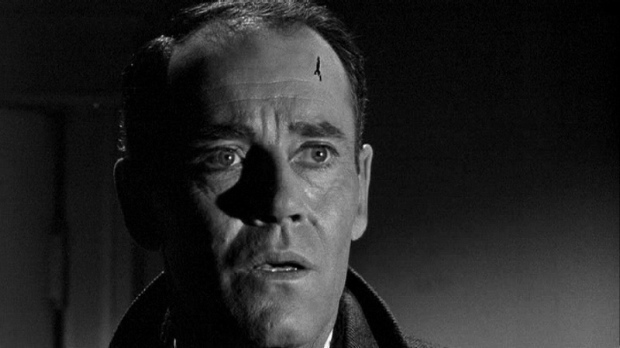
Hitchcock's The Wrong Man is an apt illustration of what I mean.  The film is pure noir
— except in its denouement, when the protagonist is saved not by a
good woman or luck or some kind of desperate action but by the direct
intervention of Jesus.  This is not a whole lot more improbable
than the ways some other protagonists get saved in the
film noir tradition.


We needn't go this deep, however, to find the core, and the enduring appeal, of film noir
The feelings it deals with, though brought to the surface by the
peculiarly horrific experiences of the generation that suffered through
WWII and afterwards lived in the shadow of nuclear annihilation, are
common to all men and women at some moments of their lives.

Such feelings may lead to atheism, to philosophies like existentialism
— or to religious epiphanies like the one Saul had on the road to Damascus.  Because film noir
is art, not theology or philosophy, it is not concerned with such
outcomes.  It is only concerned with the feelings, with certain particular conditions of the heart — with bringing
them to the surface and allowing us to engage them.

THE DARK FIFTIES

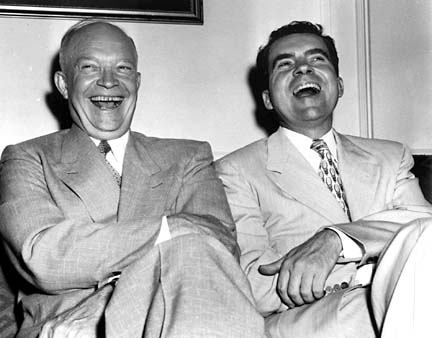
We sometimes think of the Fifties, the Eisenhower years, as a time of
blandness, naive optimism and conformity.  As a kid in the Fifties
that’s how it seemed to me — I took everything at face value.  I
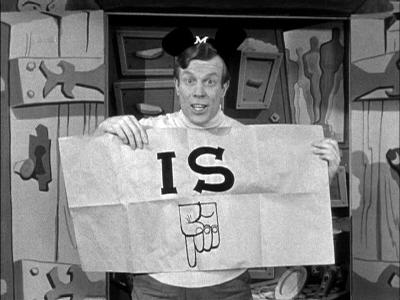
was a member of the Mickey Mouse Club — I had the ears.

Looking back today at the popular culture of the Fifties, with wiser
eyes, perhaps, the picture is much different.  The sunny side of
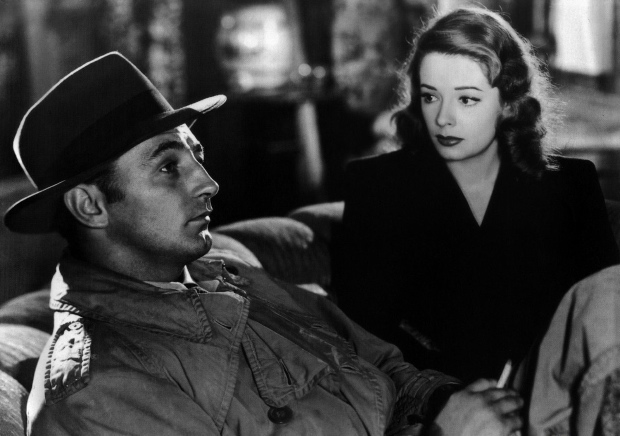
things looks like the thinnest of veneers.  Film noir
flourished in the Fifties.  Pulp fiction got unspeakably bleak and
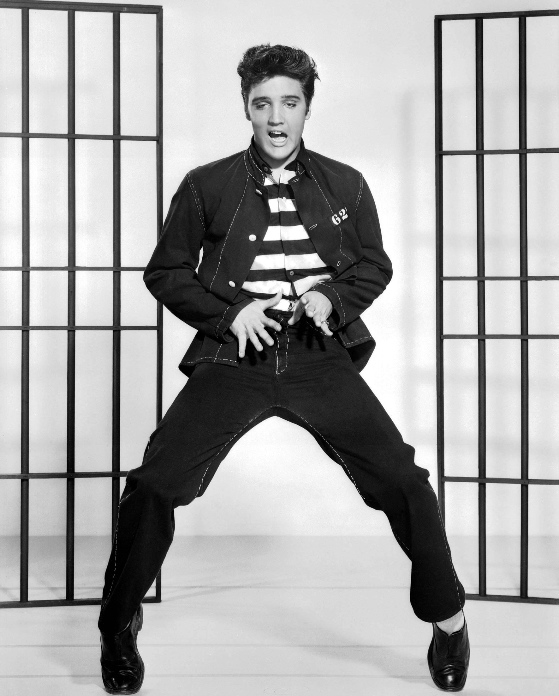
harrowing.  The subversive sexuality and energy of rock and roll
bubbled up from the black underclass with astonishing ferocity.
Some white performers tried their best to tone it down, but it stayed
dirty.  Ed Sullivan could present it as a kind of vaudeville
novelty act, but kids knew better — soon it would become the
soundtrack for everybody’s life.

The Beats had already started turning on and dropping out, in an unsettling but
compelling rehearsal for the Sixties.  At the time it seemed like a bizarre aberration.

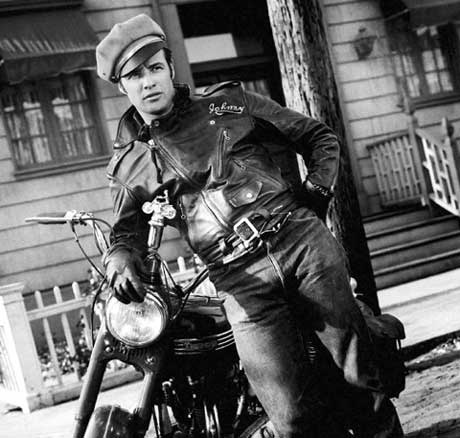
The film cycle depicting middle-class teen-aged angst and rebellion was born.

A girl to the Brando character in The Wild One: “What are you rebelling against?”

Brando: “What have you got?”

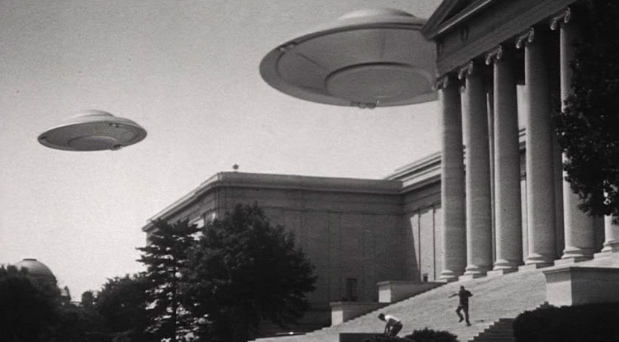
Low-budget sci-fi movies retailed images of apocalypse by the score.

Even the kinder, gentler manifestations of popular culture reveal, on
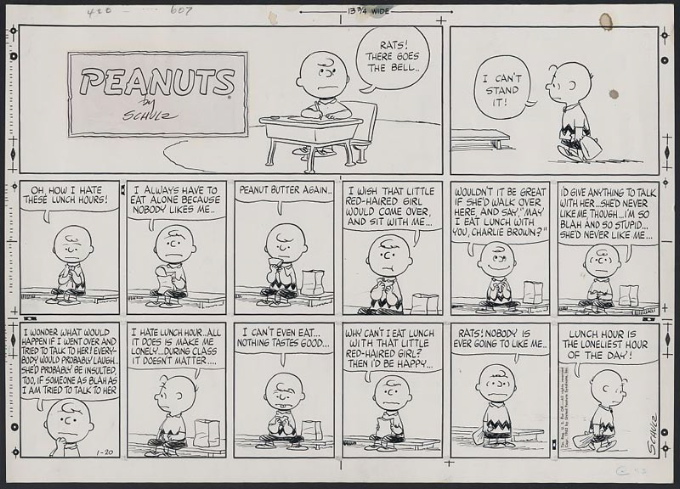
closer examination, dark undercurrents.  Charles Schulz said this
of his mildly satirical comic strip Peanuts:
“All the loves in the strip are unrequited; all the baseball games are
lost; all the test scores are D-minuses; the Great Pumpkin never comes;
and the football is always pulled away.”


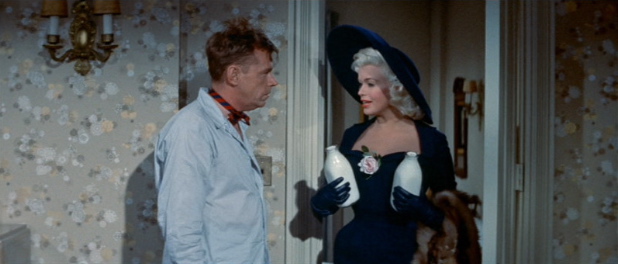
And consider the apparently frivolous comic visions of Frank Tashlin —
which are, if examined closely, savage deconstructions of popular
American culture.

Indeed, the more you look at Fifties culture the more it comes to seem
that those mouse ears weren’t at the heart of it — they were
distractions from a deep national anxiety, a brooding sense of dread that permeated everything.

THE WOMEN IN FILM NOIR

In my last post I quoted James Ellroy's brilliant summation of the message of film noir — “You're fucked.”  One of the ways “you're fucked” in film noir is that most of the women you're going to meet in the shadowy backstreets of noir's
dark city are going to be smarter and stronger than you are.  They
may use their power to save you, they may use it to destroy you, but
the situation is going to be beyond your control.


This view of women was obviously a projection of male anxiety and
insecurity in the post-WWII era.  There are some extraordinary
female characters in the film noir
tradition, but usually they're not quite real — they are demons, or angels,
summoned up out of troubled male psyches.  A film doesn't need a femme fatale to be noir
— they're absent in many classic films in the tradition — but it does
need a sense of male helplessness.  It's a comprehensive
helplessness, in the face of society and the universe itself — tough,
powerful women are just one manifestation of a general existential
dread.

When the situation is looked at from the woman's point of view, we leave the territory of noir
— move into another tradition, typically that of the psychological
suspense thriller, of the Hitchcockian variety, which is often
presented from the viewpoint of the female, with whom we
identify.  This tradition predated noir and is in fact connected to works of Victorian Gothic fiction, such as Jane Eyre
It deals with more traditional female anxieties arising out of the
contradictions of an insecure patriarchy.  To me it makes no sense
to call this sort of movie film noir, even though it may tap into the same mood of existential dread that pervades the classic noir.

As I've observed before, it took the neo-noir Chinatown to look back on the noir
tradition and try to imagine the effect of its male insecurities on
women — but this was never really a conscious concern of classic film noir.

THE MESSAGE OF FILM NOIR

In my last post I wrote:

I would argue that pulp fiction, hardboiled fiction, from the
20s and 30s is something different from the wartime and post-war films that are, to me at least, the heart of the
film noir tradition.  Film noir
drew on that fiction, just as it drew on the 30s-era crime melodrama
and conventional detective fiction, but it became something new.

So what was new about it?

James Ellroy summed it up best when he observed that the basic message of
film noir
is “You're fucked.”  It's an existential message, philosophical
(or perhaps theological) in nature.  Another way of putting it
might be “The world is fucked, at its core, and there's nothing you can
do about it.”  You might temporarily survive the predicament this
puts you in, or it might destroy you, but the predicament isn't going
to change.

This represents a profound divergence from the traditional “hero's
journey”, in which an everyman faces tests and ordeals in the pursuit
of wisdom, of meaning.  It also represents a divergence from the
“outlaw ballad” tradition of the 30s-era crime melodrama, in which we
explore the underworld and revel in the transgressive behavior of
society's rebels — all the while confidently expecting the rebel's
death and a reassertion of humane values.  In true noir, those traditional values have evaporated.

You have to ask yourself why such a radical divergence from earlier
traditions happened in the post-WWII era, and the answer to me is
obvious.  The basic message of war, and particularly of combat, is
“You're fucked.”  The soul-shaking experience of hearing this
message delivered in the most brutal terms doesn't go away after the
war ends, even if it ends in victory.  It is not subsumed in
feelings of patriotism or in the satisfaction of having done one's duty.

It endures forever.  In the case of WWII it had a macabre
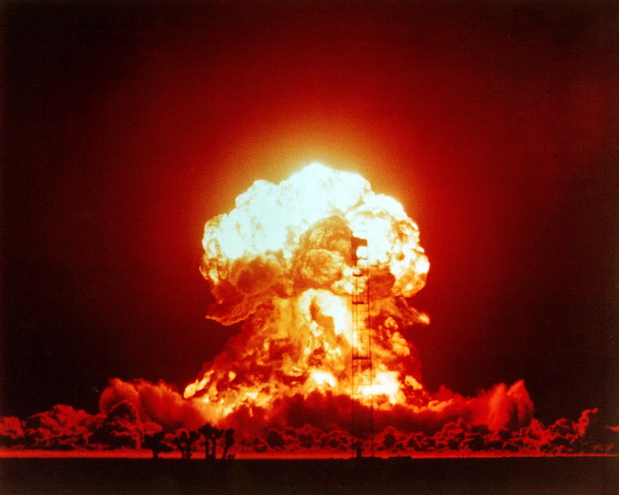
objective correlative — the atomic bomb, the image of the mushroom
cloud, which summed up the enduring sense of existential dread that had
infected American society, and in particular its returning war vets.

Film noir was an arena in
which that existential dread could be engaged safely — and there was
something exhilarating about the exercise, the exhilaration of dealing
with an urgent but buried anxiety.  The existential dread I'm
speaking of here didn't define post-war America but it was there, and
it couldn't be talked about directly in a world that was desperately
trying to get back to normal.  But it could be faced in art — most especially in film noir.

WHAT IS DOMESTIC NOIR?

Tony
D'Ambra of the ever useful films noir web site posted an interesting
comment about my Film Noir Master List which I'm eager to respond to:

Tony wrote:

I doubt you will welcome this comment, but here goes.

I'm delighted by all thoughtful comments!

He continued:


I don't see the point of your classification system: it has meaning for
you only and no film can ever be categorised to such a degree.

I realize that my list violates convention, but others have found it
useful, if only as a provocation to further thinking about the
subject.  It's primarily intended to provoke a new conversation about film noir, which in my opinion has gotten to be such a vague term that it's losing its usefulness.

And Tony wrote:


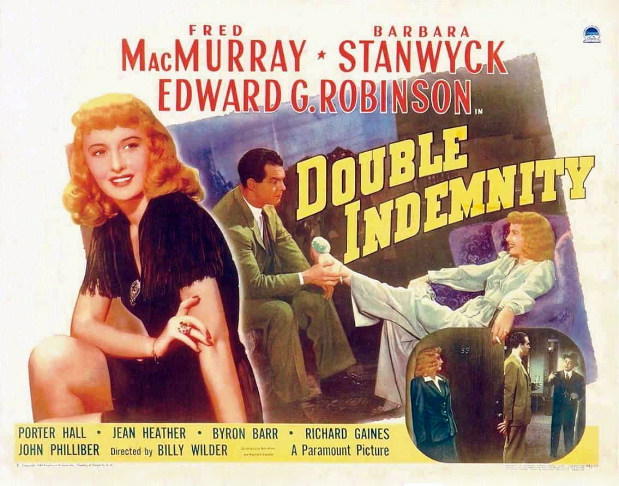
For example, there is wide agreement that Wilder's Double Indemnity
is an elemental film noir, yet you describe it as a “domestic noir”?
Neff is an unmarried loner and Phyllis an amoral gold-digger whose
marriage was a sham from day one, so how does domesticity gone bad come
into it? There is “no moral confusion” or “existential dread”: both
protagonists are motivated by greed and each has no scruples when it
comes to making sure that only one of them makes it to the end of the
line. Marriage has nothing to do with the dramatic imperative of the
plot. Remember Phyllis murdered Dietrichsen's first wife, so she could
marry him for his money. Neff was ready to be seduced and she knew it:
this is the essence of the noir paradigm of the femme fatale, which has
little to do, if it ever to did, with the role of woman in WW2 and its
aftermath. Remember, the great noir novels by Hammett and Cain, were
written before WW2.


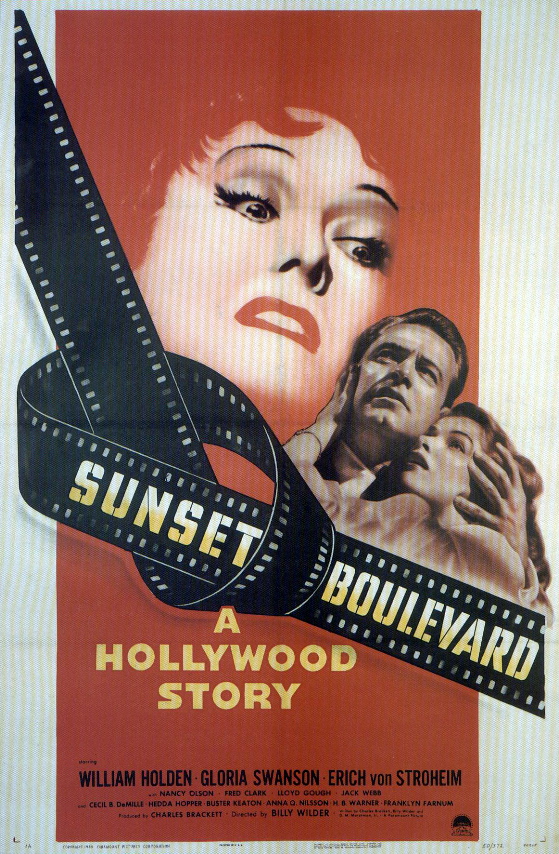
Domestic noir, to me, from Double Indemnity to Sunset Boulevard,
is characterized primarily by a rancid view of domestic life, and
especially married life.  It's not about good marriages gone bad
— instead it reflects a jaundiced view of the domestic realm, sees it
as corrupt, no longer viable, infected by the moral chaos, the
existential bewilderment, of the wartime and post-war world.

Double Indemnity takes place primarily in middle-class homes and offices — not in the typical urban jungle of the classic noir, the labyrinth of the dark city.  In the domestic noir, the existential dread symbolized by noir's dark city has penetrated the “normal” world, transformed
it.  Both traditions are dealing with the same existential dread,
but viewing it from different angles — different enough to constitute
two distinct traditions.
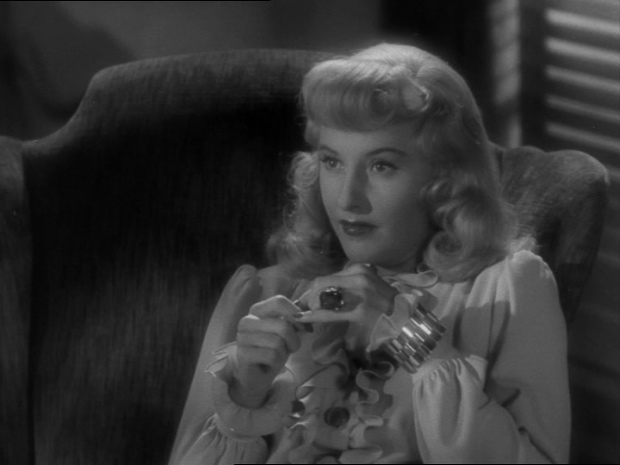
Phyllis Dietrichsen is indeed a femme fatale, one of the most fatale in all of movies, but the presence of a femme fatale doesn't automatically make a film noir, anymore than the lack of one excludes it from the category.  The femme fatale in the person of the vamp was a staple of silent cinema, featured in films we would never think of calling noir, and many classic films noirs have heroines who save the protagonist.

Finally, I would argue that pulp fiction, hardboiled fiction, from the
20s and 30s is something different from the wartime and post-war films that are, to me at least, the heart of the film noir tradition.  Film noir
drew on that fiction, just as it drew on the 30s-era crime melodrama
and conventional detective fiction, but it became something new. 
My underlying argument in all this is that we lose sight of what made film noir
new and distinct when we confuse it with its antecedents and with other
films that were dealing with the same cultural anxieties in different
ways and in different contexts.
THE CIVIL WAR

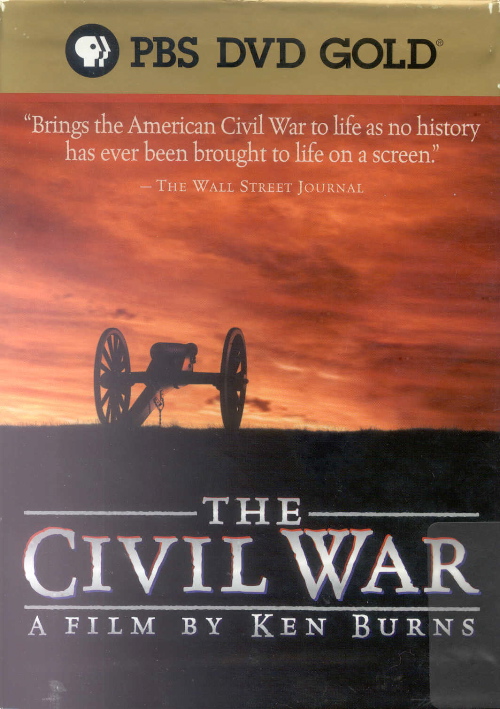
As a prelude to watching Ken Burns' new film about WWII, The War,
I decided to have another look at his film about the Civil War. 
This isn't really a documentary, or a work of history — it's a poem,
made up of very beautiful words, both newly written and derived from
historical sources, of images and of music.  It's in fact an
example of a new art form — a new extension of what a movie can be,
but so organic and effective that you wonder why no one ever tried it
before.

One of its glories is that it so boldly deviates from the conventional
filmmaking wisdom of its day.  It constitutes a contemptuous
defiance of MTV-style cinema.  MTV-style cinema is founded on the
proposition that none of its constituent images has any inherent
quality or interest — none of them is worth your serious
attention.  But the resulting strategy is to simply bombard you
with vaguely engaging images which pass so quickly that you don't have
time to evaluate them — thus producing the impression that perhaps you
have actually seen something worth seeing.  The art of it is the
art of the three-card monte mechanic.  You aren't exactly the
audience for this sort of cinema — you're the sucker, the mark.

Burns, by contrast, doesn't need to use cinematic techniques to
distract you from the fact this his basic material is shabby and
second-rate — because it isn't.  This allows him to step back,
let the material breathe, speak for itself.

His primary technique is extraordinarily simple and extraordinarily
effective.  It is simply to marry one image with one
sentence.  Sometimes he will vary this rule, cutting to a new
image on a phrase ending, or showing different details of the same
image within the same sentence.  Occasionally, for purposes of
emphasis or surprise, he will cut to a new image illustrating a single
word or name in a sentence.

But the primary strategy is  generally maintained — one sentence,
one image.  Once you get used to this, subliminally, it allows you
to absorb the contrapuntal lines of word and image in a kind of
composure of attention.  There
is a third line, of course — the music.  But Burns does something
unusual with that as well.  He recorded the music first and then
conformed the pace and tone of the spoken quotes and narration to the
music, and adjusted the images accordingly.

The result is dense and many-layered — each line of Burns' film has a
life and momentum of its own and does not dominate the other lines . .
. but it has the wholeness and integrity and logic of a fugue.

It's a remarkably fine piece of work.

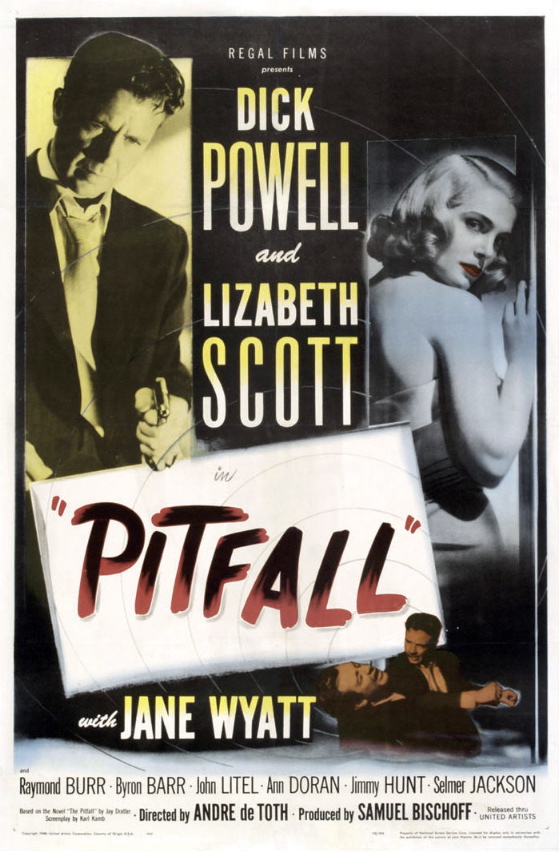
ANTI-NOIR: PITFALL

Through
the good offices of Joe D'Augustine, of the excellent Film Forno web
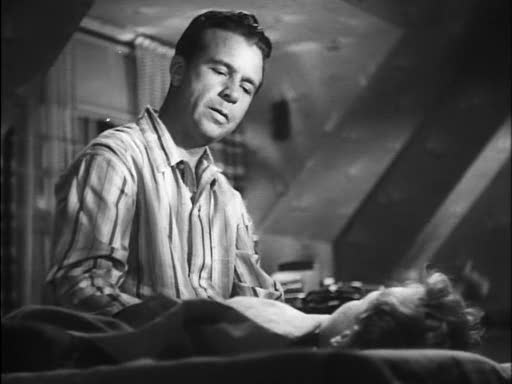
log, I was recently able to view André de Toth's remarkable film Pitfall, from 1948.

Joe thought I might find it an interesting example of domestic noir
— and on many levels that's just what it is . . . a taut, harrowing
thriller about a man whose good marriage is threatened in violent ways
by a moment's indiscretion.  The film's tough, snappy, cynical
dialogue bears favorable comparison with the dialogue in Double Indemnity — and the moral confusion of the protagonist, played by Dick Powell, is pure noir.  (We also get to see Raymond Burr in one of his earliest noir villain roles.)

But there's something unusual about this film — something that distinguishes it from true noir and from the films I think of as domestic noir.  It's the way that the institution of marriage, and the women in the film, are portrayed.

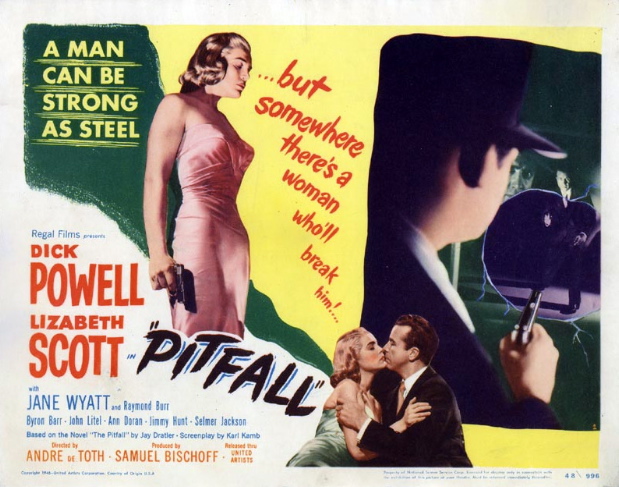
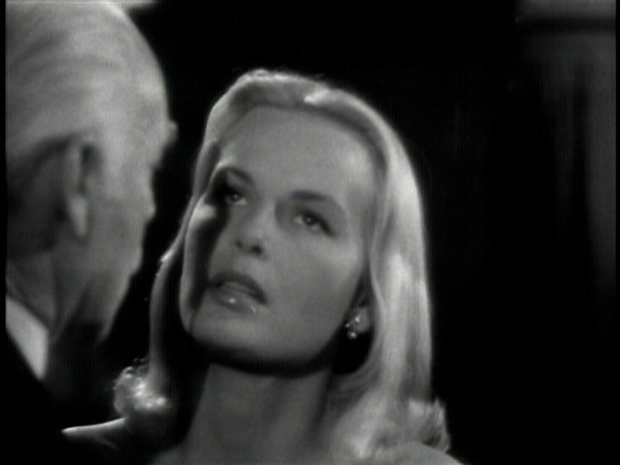
Lisbeth Scott, in what ought to be the femme fatale role, isn't fatale
at all, in the end.  She's the victim of male obsession and
mendacity, who's destroyed when she tries to strike back.  What's important, though, is that we see
the predicament she's in from her point of view — not from the point
of view of the men who don't understand her or fear her, as we would in
a classic noir
(The oddness of this is only reinforced by the copy on the lobby card
above, which tries to sell the Scott character as a typical femme fatale — assuming that that's what audiences of the time were looking for.)

More remarkably, Powell's wife in the film, wonderfully played by Jane Wyatt, is a
true partner — neither delivering angel nor destructive goddess, the
two poles of womanhood in the classic noirPitfall
offers one of the best and most convincing portraits of a good marriage
in all of cinema — which takes it far from the rancid view of married
life found in almost all domestic noirs.

This film, in fact, presents marriage as a viable refuge from the moral
maze, the existential dread, of post-war American life — and it does
so without a trace of piety or sentiment.  Like young Charley in Shadow Of A Doubt, Powell's character in Pitfall
feels trapped by family life at the beginning of the film — only to
discover in the end that it's the only thing in his life that makes any
sense at all.  It's a way out that's almost always denied to the protagonist of a classic noir, lost in the labyrinth of noir's dark city — and a view of marriage that's unknown in the moral chaos of a classic domestic noir.

I guess this film belongs in a category all its own — anti-noir.

[In honor of Pitfall I've added a new category to my Film Noir Master List — Sui Generis, for noirish films that aren't like any other films noirs.  So far it has two entrants, the anti-noir Pitfall and the schizo-noir Trapped.]

A NORMAN ROCKWELL FOR TODAY

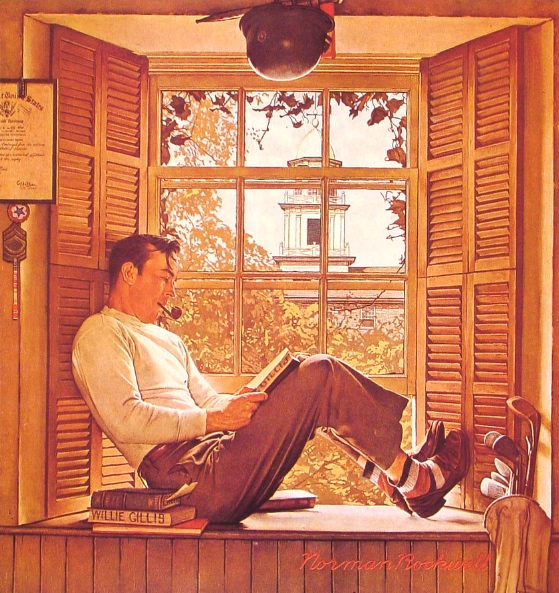
During the WWII years Norman Rockwell created a character named Willie
Gillis — an ordinary guy from a small town who joined the army. 
Rockwell chronicled his experiences in the war in a series of Saturday Evening Post
covers.  After the war, he showed us Gillis returned to civilian
life — above you see him in college, on the G. I. Bill, having
survived and put on a little weight.

It's a poignant image, for all it doesn't say.  Gillis is
preparing himself for a “normal” life in post-war America, with his
pipe and his golf clubs — but the war souvenirs hanging over his head
suggest that he will always be haunted by memories out of place in a
“normal” world.

One of the virtues of Ken Burns' newest documentary The War
is that it addresses the sort of post-traumatic stress disorder that
returning vets, and the whole civilized world on some level, suffered
in the wake of WWII.  For the vets it was peculiarly disorienting,
with feelings of triumph, guilt and shame all mixed up together. 
It was
not something that could be talked about in the world Willie Gillis was
trying to become a part of.

All of this I think reinforces my notion that it was in art, in film noir
particularly, that such disorientation could be engaged in a safe way,
a socially acceptable way.  You can read more thoughts on
the subject here.

TRUE NOIR: THE BIG COMBO

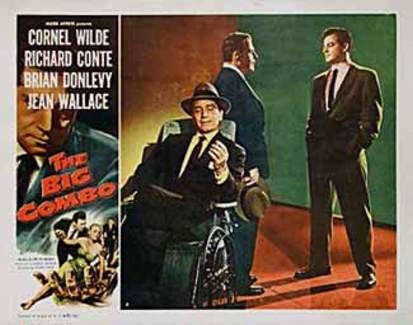
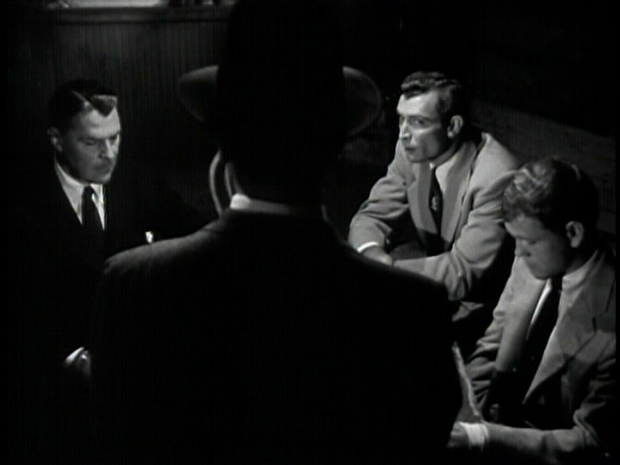
The subject matter of The Big Combo, a terrific B-picture from 1955, might have easily been treated within the confines of a late-era crime melodrama or a police procedural —
instead it lurches instantly into the territory of the classic film noir and never leaves it, at least not for long.  It’s something you might expect from its director Joseph H. Lewis, who also directed Gun Crazy, one of the darkest and bleakest of all noirs.

The Big Combo is about a policeman’s attempt to bring down a modern crime lord, Mr. Brown — a man so rich and powerful that he never has to soil his own hands with
the dirty work.  The police don’t have the financial resources to investigate his multifarious organization, the big combo of the film’s title, and Brown has enough friends in high places to put pressure on any cop who does try to go after him.

Cornell Wilde plays the one cop who won’t give up, won’t buckle under the pressure, and his boss thinks he’s lost his mind.  Fighting Brown is fighting the corruption of the whole world — a fool’s errand.  It’s Wilde’s essential loneliness that makes him a classic noir protagonist.  He doesn’t represent the decent forces in society opposed to “respectable” thugs like Brown — those forces simply don’t exist.  This is what distinguishes The Big Combo from a traditional crime melodrama or police procedural.

At the same time, Wilde’s detective is hardly pure himself.  It’s suggested that he secretly admires Brown, is secretly in love with Brown’s moll — that his crusade is motivated more by jealousy and resentment than by morality or a love of justice.  This is what distinguishes the protagonist of this film from the traditional “tarnished knight” hero of traditional hardboiled detective fiction.  The code of honor of the Wilde character is suspect.

At one point the moll, explaining why she can’t leave Brown, says, “I
live in a maze . . . a strange, blind and backward maze, and all the
little twisting paths lead back to Mr. Brown.”  That’s the
predicament of Wilde’s character as well.  By the end of the film,
the view of the world we’ve been given makes it quite irrelevant
whether or not Brown is ever brought to justice.  There’s no sense
that the world will be a better place if he is, because it will still
operate by the same rules — Brown’s rules.

The Wilde character’s fight to extricate himself from the maze is
heroic.  He will save a few lives and avenge a few others along
the way, but his existential dilemma will never be resolved, because
the big combo is the world and it won’t change.  It will stay noir.

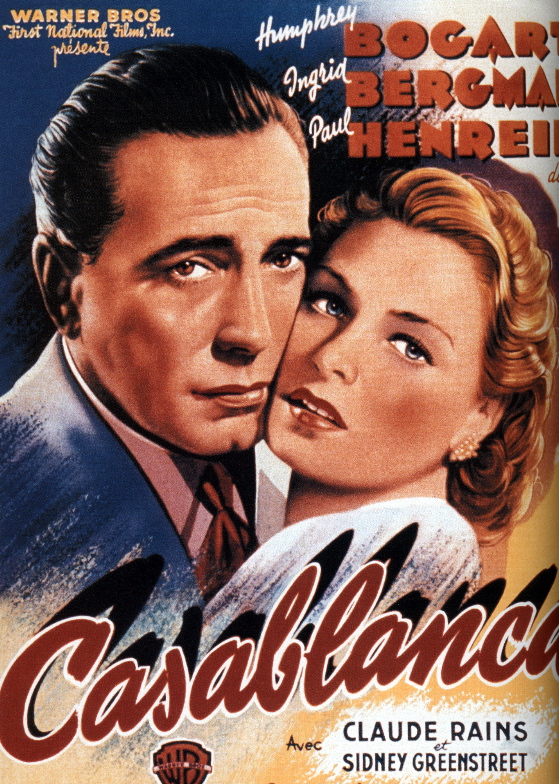
The ending of The Big Combo echoes the ending of Casablanca visually.  But what different moral universes the two films inhabit.  In 1942, Casablanca could make idealistic sacrifice look glamorous and sexy.  By 1955, ten years after the end of WWII, the cost of such sacrifice had been measured.  We had defeated the Axis evil, but to do so we had had to summon up reserves of evil within ourselves, and the ghost of it hovered, in the shape of a mushroom cloud, over everything.

The Big Combo has been added to my film noir canon.  Sadly, there isn’t a satisfactory DVD edition of the film, although the Geneon release is watchable and cheap.  The Big Combo deserves better, if only for the wonderfully inventive cinematography of the
great noir master John Alton.

DIGGING UP DISNEY

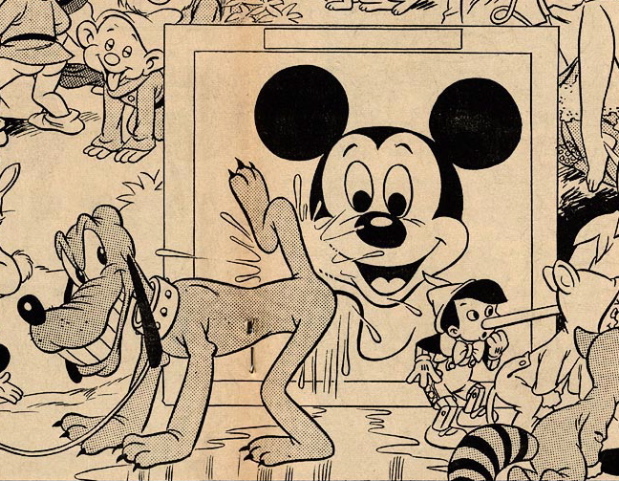
Above is a detail from a cartoon published in The Realist in 1967.    [Mature viewers not offended by moderately graphic sexual and scatological satire can click here to see the whole thing.]  I'll
never forget how happy it made to see this cartoon for the first
time.  I was seventeen then — I saw it in the dorm room of a
fellow student at my prep school who had a staggering
collection of underground publications, including a complete run of
Paul Krassner's The Realist. 
I can't believe the school authorities knew how much subversive
literature he had stowed away in his room — or how widely it was
corrupting the imaginations of his fellow students.  The Realist was truly shocking stuff in 1967.
The image made me happy not because I hated the classic Disney cartoons
and characters — but because I loved them.  I loved them too
much, and unconsciously.  They were embedded in my psyche on
deeper levels than I ever suspected.  To see them dragged
unwillingly into the light of an adult consciousness, mocked and
defiled, sexualized, allowed me to engage them as an adult — to try
and assess how they had affected me.  And it allowed me to
appreciate them as great works of art — not just as cultural
baggage.  That appreciation has only grown over time.

Transgressive, subversive
culture works in counter-intuitive ways.  By breaking spells, it
can lead to deeper realms of magic and enchantment . . . which
themselves will one day have to be transgressed and subverted.

Issues of The Realist are being archived on the web now — you can peruse them here.

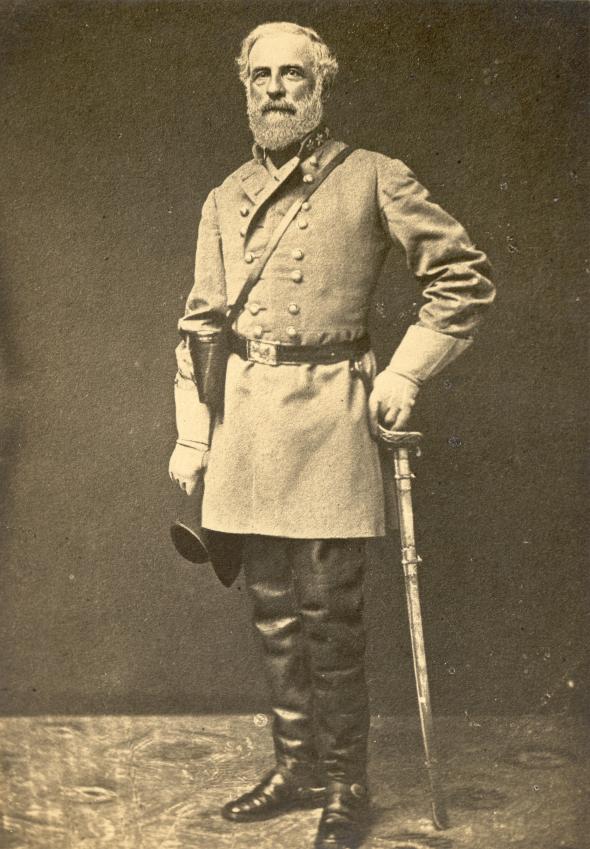
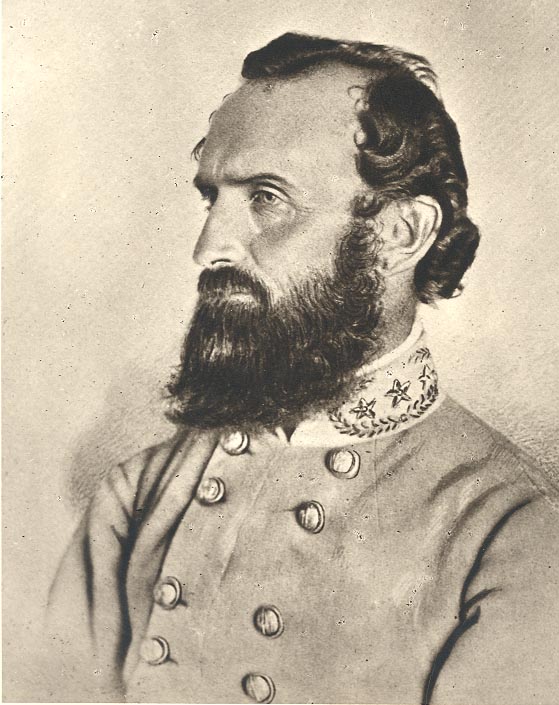
CHANCELLORSVILLE

If
you visit the Civil War battlefield of Chancellorsville, in the
Virginia countryside west of Fredericksburg, you can find at the
intersection of two small country roads a marker at the place Robert E.
Lee and Stonewall Jackson met around midnight between the 1st and 2nd
of May of 1863 to plan the next day's action.

They had between them 40,000 men and they were facing a Union army of
70,000 men.  Jackson had a startling proposition for Lee. 
His scouts had found some dirt roads through the woods that twisted
around the right flank of the Union position.  Jackson proposed
that he lead his 28,000 men over these roads and fall upon the Union
flank from behind.

Lee pointed out that while Jackson was marching, he himself would have only
12,000 men with which to hold the 70,000 Union troops in place. 
Jackson nodded — yes, that was about the size of it.

I like to think of the look in Lee's eyes as he contemplated this more
or less insane idea —  they must have burned with joy at the
boldness and fearlessness of Jackson plan.  Lee thought about it
for a moment and told Jackson to go ahead.

Jackson made the march pretty much undetected — reports of it that
reached the Union officers on the right of their line were
disbelieved.  They were just too preposterous.

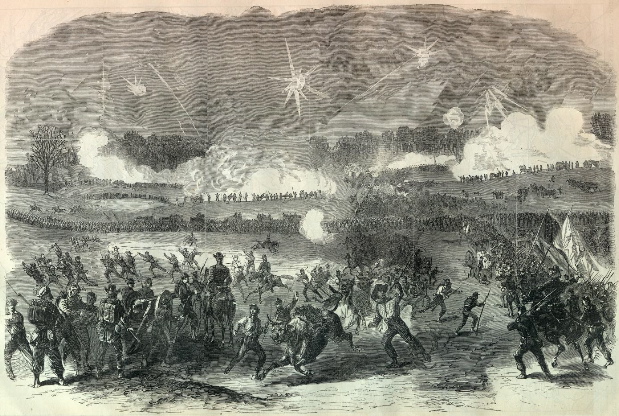
Jackson rounded the Union flank and attacked at dusk.  The whole
Union right collapsed and the whole Army of the Potomac was set in a
panic that was just barely contained.  It was one of the most
stunning victories for an outnumbered army in all of military history
— but it's costs were high.

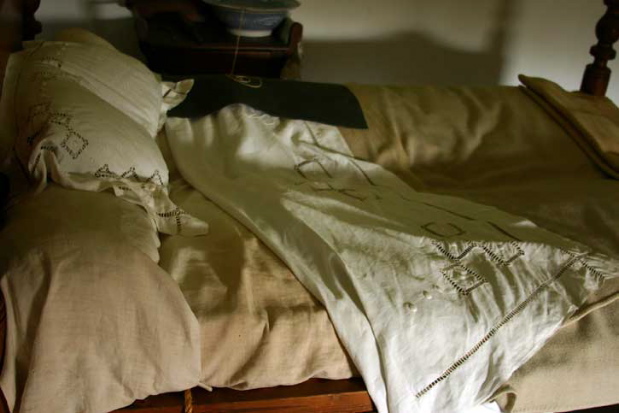
Riding to the front to assess the progress of the action, Jackson was
accidentally shot in the darkening woods by his own men, and would
later die of his wounds (in the bed pictured below,) never resuming his command.  The victory
also emboldened Lee to make his second invasion of the north, resulting
in the catastrophe at Gettysburg.

Ironically, it is the death of Jackson, and the defeat of the South,
which allows one to admire the feat of arms that Lee and Jackson pulled
off at Chancellorsville.  Their cause had a great wrong mixed up
in it — the institution of slavery — and no one can look back and
wish they had won.

But Jackson's death was a measure of expiation — enough to let us love
him and Lee for their genius and audacity and courage.  It fixes
the moment of their greatest triumph in amber, in a beauty outside of time.

FILM NOIR: A MASTER LIST

Below is a provisional master list of what to me are the canonic films noirs, followed by lists of films that are often identified as films noirs
but which I think fall into different categories.

THE FILM NOIR CANON

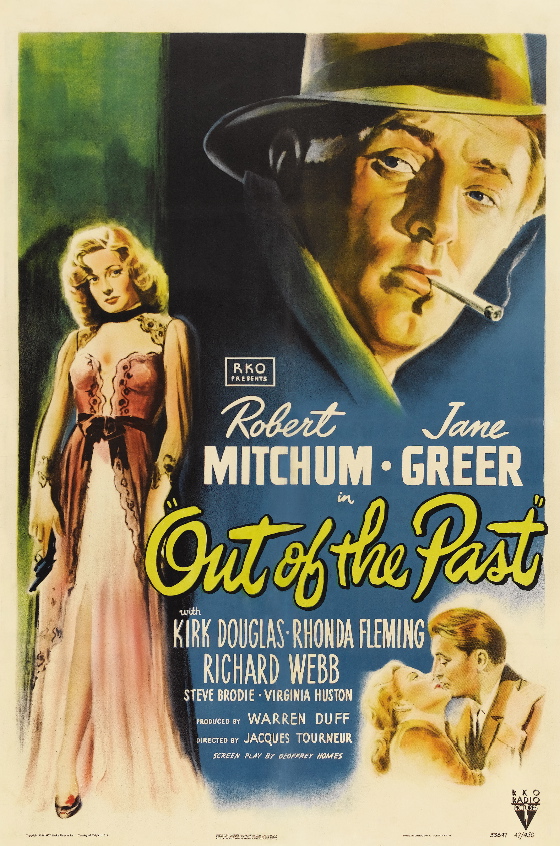
Out Of the Past
The Killers
His Kind Of Woman
The Dark Corner
The Set-Up
Gun Crazy
Fallen Angel
Angel Face
Touch Of Evil
Detour
The Wrong Man
Criss Cross
The Killing

In A Lonely Place
On Dangerous Ground
Crossfire
Where the Sidewalk Ends
Brute Force
The Sweet Smell Of Success
Night and the City
Thieves Highway
The Lady From Shanghai
14 Hours
The Long Night
Nightmare Alley
Odds Against Tomorrow
Act Of Violence
Crime Wave
They Live By Night
Decoy
The Big Steal
Side Street
Where Danger Lives
Tension
Kansas City Confidential
The Big Combo
Gilda
Road House


HARD-BOILED DETECTIVE THRILLERS

Murder, My Sweet
The Lady In the Lake
I Wake Up Screaming

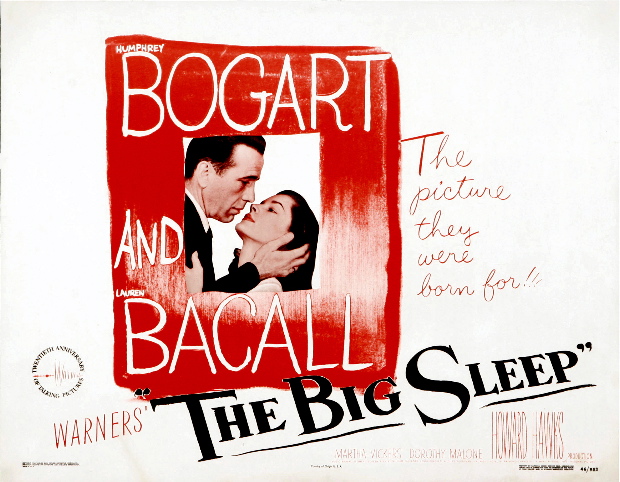
The Big Sleep
Behind Closed Doors
The Mask Of the Dragon
Vicki


DOMESTIC NOIR

Shadow Of A Doubt
Clash By Night
Leave Her To Heaven
Sunset Boulevard
The Night Of the Hunter
Blonde Ice
Daisy Kenyon
The Bad and the Beautiful


POLICE/AGENCY PROCEDURALS (DOCU-NOIR)

House On 92nd Street
The Racket
Call Northside 777
Panic In the Streets
Border Incident
The Narrow Margin
Mystery Street
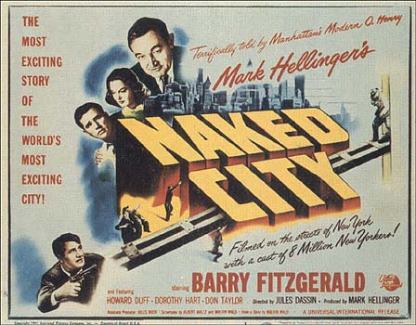
Naked City
Arson, Inc.
Loan Shark
Fingerprints Don’t Lie
F. B. I. Girl
Portland Expose
A Bullet For Joey


PSYCHOLOGICAL SUSPENSE THRILLERS

Whirlpool
The Big Clock
House On Telegraph Hill
The Blue Gardenia
Shock
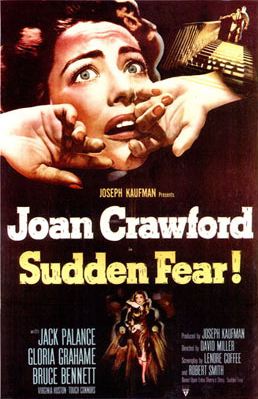
Sudden Fear
Shadow Man
The Stranger

LATE-CYCLE CRIME MELODRAMAS

They Drive By Night
High Sierra
The Asphalt Jungle
Key Largo
Railroaded
Shoot To Kill
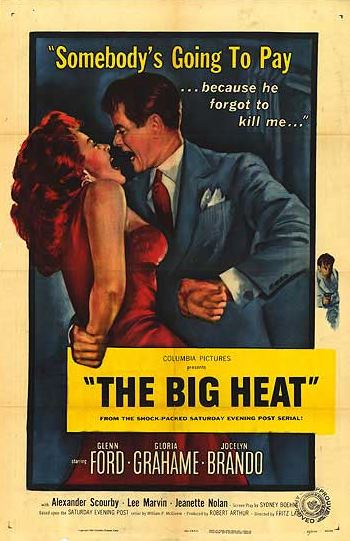
The Big Heat
Tough Assignment
Force Of Evil

FILMS OF INTERNATIONAL INTRIGUE

Contraband
Casablanca
To Have and Have Not
Notorious

Macao
I’ll Get You
The Man From Cairo
They Were So Young
Mr. Arkadin (Confidential Report)


SUI GENERIS (NOIRISH BUT NOT LIKE ANY OTHER NOIRS)

Trapped
(Schizo-Noir)
Pitfall
(Anti-Noir)