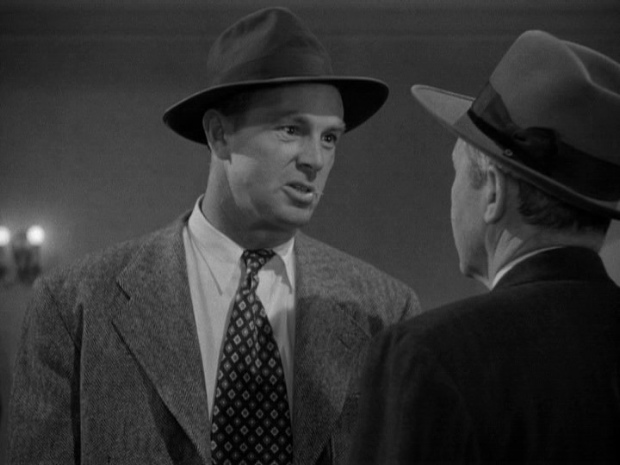
CARNE ASADA TACOS

The
next time you feel like fixing yourself a hamburger, try a carne asada
taco instead, which is sort of the equivalent of a hamburger south of the border,
fast, ubiquitous and comforting.

Here's how to make the ultimate carne asada taco, courtesy of Rick Bayless' indispensable Mexican Everyday:

Get yourself some skirt steak, a 7-ounce can of chipotle chiles in
adobo sauce, a few medium white onions, some flour or corn tortillas
and some olive oil.  (A bottle of hot sauce is optional.)

Put the chipotle chiles and their sauce into a blender and purée
them  Remove the fat and white membranes from the meat and then
brush the chipotle purée over both sides of it.  Let this sit for
a while.  (You will have lots of the purée left, but it will keep
for weeks in the fridge.)

Eventually . . . turn your oven on at its lowest setting.  Cut up
an onion into quarter-inch thick slices.  Heat two tablespoons of
the oil in a skillet over medium to high heat and sauté the onions
until they're lightly browned but still crunchy.  (Takes about
five minutes.)  Transfer them to an oven-safe container, leaving
as much of the oil in the skillet as possible, and place the container
in the oven.  Return the skillet to the burner at the same heat
setting, add another tablespoon of oil and cook the chipotle-smeared
steak until it's well done.

Cut up the steak into thin slices,
mix it with the onions from the oven, salt it to taste, add some hot
sauce if you want (the chipotle sauce is fairly spicy to begin with)
and roll it all up in a tortilla.  Eat it with a cold beer or a
Mexican Coca-Cola (which is still made with real sugar and can be found
at many of the smaller Latin markets in the U. S.)

This is just about as easy to make as a hamburger with grilled onions
and way more interesting — Mexican food at its most basic and most
delicious.

LEAVING LA PAZ

We
hated to leave La Paz but the hotel bill, even with the discount rate,
was mounting and the kids had stories they wanted to tell their dad and
their friends back in Los Angeles.  So we packed our frozen fish
in a cooler and headed north again, a prospect made more pleasant by
the thought of re-visiting the towns we'd stopped at on the way down.

There was much excitement about the first night's stop in Loreto,
because of that great pool, but the La Pinta inn there was booked —
which turned out to be a happy circumstance in the end because it drove
us to the Hotel Oasis, which was wondrous:

A great bar where the
kids were welcome to hang out, playing darts and pool, a great seaside
restaurant, hammocks strung up between the palm trees and on the
porches.  Nora took advantage of one of them to finish the magical
book Half Magic:

On subsequent days, San Ignacio and Catavina proved to be every bit as
charming as we remembered them.  There was even a horse grazing outside our rooms this time at the La Pinta in San Ignacio:

But we made a fatal miscalculation at
the end of the journey.  We decided to drive north of Ensenada and
stay at Rosarito, and then take the toll roads across to Tecate, to
save some time.

It was fun to drive by the Fox studio outside Rosarito, where Titanic
was filmed, but the town itself was a nightmare of traffic and hustlers
and tourists.  We stayed at a bland motel, whose only advantage
was that it was across the street from a famous old restaurant
specializing in carnitas, slow-roasted pork, which we hadn't run into
often in Baja California (it's not a specialty of the region.)  The carnitas was good, and so was a
shrine near the restrooms to Nuestra Señora de Guadalupe:

Driving the next day proved to be a nightmare.  The toll road
north was fine and fast, but there were no signs for the turn-off to
the toll road to Tecate and we got lost in the shabby maze of a Tijuana
suburb.  Between the hideous condos on the coast and the wretched
poverty of Tijuana, we felt as though we'd entered another
country.  It made me think of the old saying — “Poor
Mexico!  So far from God, so near to the United States of
America!”  Things in this part of Mexico are probably just going
to get worse in the years ahead, and I don't think the condo-sized
Jesus, below, is going to help much.

We eventually made it to Tecate, where we waited for over an hour in a
long line of cars to cross the border.  The crossing itself was a
breeze.  The U. S. guard, who spoke English with a Spanish accent,
asked us a few questions then waved us through — and suddenly it was
all over.  We were back in the States.

All that was left was to miss Mexico — something I haven't stopped doing since.


For previous Baja California trip reports, go
here.


[Photos © 2007 Lloyd Fonvielle & Harry Rossi]

THE NARROW MARGIN

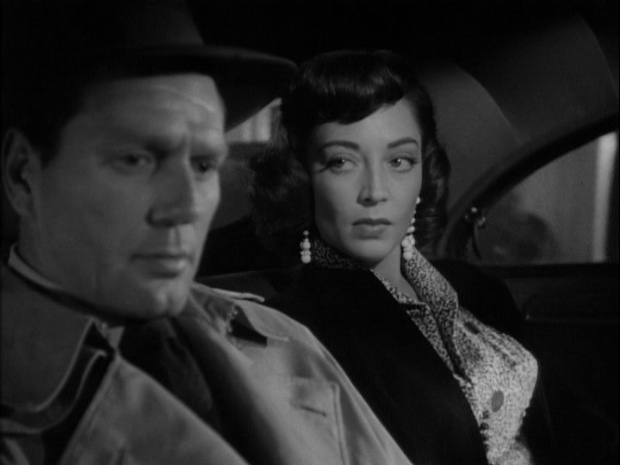
An excellent brief review (with plot spoilers) of The Narrow Margin on the ever-useful films noir web site.  I personally classify this film as a police procedural, not a genuine film noir — which I think helps explain why the treatment of the apparent femme fatale, played by Marie Windsor, is so unsatisfying.  Femmes fatales
serve no real dramatic purpose in a police procedural — they're just,
if anything, red herrings . . . and who wants to see Marie Windsor
treated as a red herring?

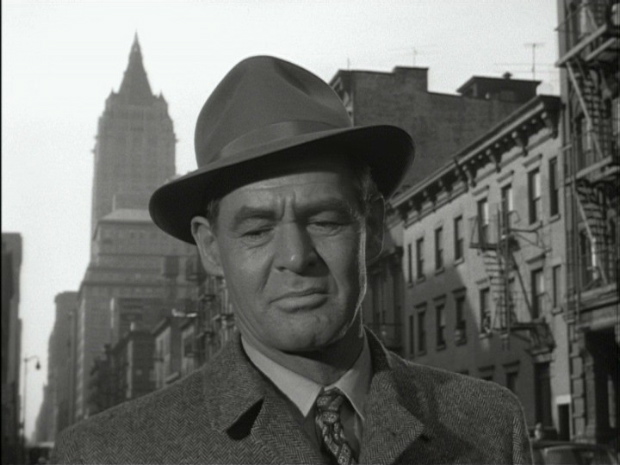
Meanwhile Joe D'Augustine from Film Forno sends this comment on Odds Against Tomorrow:


“This
is a great movie! One of Jean Pierre Melville's favorites. Ryan and
Belafonte are amazing. Bravo to HB for financing it, that took guts and
no wonder it dealt with the frustrations of a black American male so
honestly. It was also one of the first films edited by DeDe Allen, her
next was The Hustler. The old cop who got screwed out of his pension is
excellent as well. Ed Begley, Is he corrupt or was he turned corrupt by
a corrupt system? I guess he is on a friendly basis with the
bookie/gangster. And he is the mastermind of the big steal. Great
locations, it is one of Wise's best! He really made all kinds of films
and made them well.”

PESCADORES

The
Mar de Cortés is one of the world's great fishing grounds and we
decided we couldn't end our time in Baja California without at least
one fishing expedition.  Morning is the best time to catch fish in
the waters around La Paz — the earlier the better — so we decided to
arrange the expedition through the hotel, which meant we'd get picked
up there instead of having to drive ourselves to a distant rendezvous at some
ungodly hour.

Captain Jack, the hotel's agent for such things, confirmed the wisdom
of this when he told us we had to be ready to leave at quarter to five
in the morning.  We would be driving an hour to the beach we'd set
off from.  The 4:45 departure and the long drive sounded grim
but encouraging — we would be in the hands of people who were serious
about catching fish.

We stumbled into a van with four other pescadores
at the appointed hour and headed off towards the west, across the
peninsula that forms one side of the Bahía de La Paz.  The last
part of the trip took us over bone-rattling unpaved roads to a remote
beach lined with pangas.  The sun had not yet risen but Jorge, the
captain of the panga we'd rented, appeared out of the darkness and
rounded us up, loaded rods and a drink cooler into his boat, dragged
the boat into the ocean, helped us on board and set off towards the
Isla Cerralvo, about a half hour away by sea.

Just off the island he rendezvous-ed with two men in a skiff who sold
us our live bait for the day.  The two men wore baseball caps and
slickers and had the exact demeanor of Maine lobstermen — with faces
that seemed carved from granite.  (People who work the sea tend to become mythological.)

The sun was well up by now, and our taciturn captain finally asked us
what sort of fish we were looking to catch.  “Fish to eat,” I
said.  “Only fish to eat.”  His face lit up, he smiled
happily and began replacing the big hooks on the poles with smaller
ones.  I don't know if he was happy because he thought catching
fish to eat made sense, or because it meant he wouldn't have to deal
with the sort of egos that can't be satisfied with anything less than
impressive sporting trophies, but he was incredibly kind to us from
then on, warm and solicitous.

There were several other chartered boats out in the channel looking for
fish — all open pangas like ours.  Our captain looked around to
see who was catching what and finally stopped at a likely spot. 
He baited our lines for us and spooled them out by hand to the
indicated depth — he said that the channel here was about 60 feet
deep, its bottom lined with rocks which attracted marine life of all
sorts.

It's always so dramatic and mysterious to set a fishing line out into
the ocean — it seems wildly improbable that it will ever connect with
anything swimming down in that alien realm.  I was so happy just
to be out on the surface of that enchanting sea that I wouldn't have minded if we never
caught a thing.  But almost instantly Nora's rod began to
jerk.  “Fish!” shouted the captain, and slowly but surely Nora
reeled in a big, beautiful dorado, also called a mahi mahi, one of the
tastiest fish to be found in any ocean.

Then I hooked something really big — it was all I could do to land
it.  But it turned out to be a bonito, a humongous bonito, which
is not a good a good fish to eat.  The captain said he would save
it anyway to give to a friend, for shark bait.

Then Nora landed a smaller bonito, which we threw back, and I landed a good-sized tuna — which of course we kept.

By this time Harry had
become seasick.  He was truly miserable but the beach was too far
away to land him on — an hour's round trip.  Finally he threw up
over the side, said he felt much better, took up his rod and
immediately caught a nice tuna of his own.

Then his stomach turned
on him again and he was more or less out of commission for the rest of
the trip.  (This explains why there are no cool photos here of our time out on the water.)

I caught a parga (a red snapper), a great eating fish, and a trigger fish,
an odd-looking flat fish which I'd never heard of before.  “It makes the best ceviche,” our
captain assured us — and he was so right.  Lee caught a tuna
then, and we felt we'd had a most successful expedition.
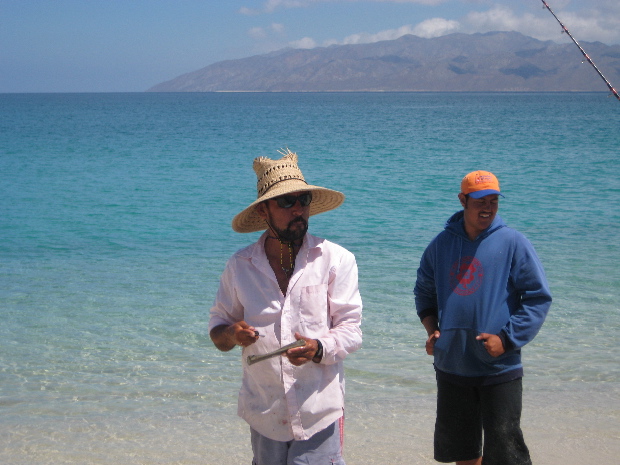
Back on shore the captain (sharpening his knife above) filleted the fish and our driver put it in a
cooler in the van.  (I gave the captain my big tuna for his family
— we had more fish than we could eat ourselves in several meals.)

In La Paz that afternoon I took our fish to the restaurant at the hotel and asked
the staff to cook up enough of it for dinner for four that evening and
to
freeze the rest.  I asked them to make some ceviche out of the
trigger fish.  The waiters had to call the chef to identify the
trigger fish, which they didn't recognize, but he beamed when he saw
it.  “Ceviche — yes,” he said.

That night we dined like kings — like fishermen.  Nora's
dorado
was generally acclaimed as the best-tasting fish of them all, which is
saying a lot when the competition is freshly caught tuna and red
snapper, and the
ceviche made from the trigger fish was sublime.  The ocean had
been generous to us, and we took no more from it than we could
use.  Life was good.


For previous Baja California trip reports, go
here.


[Photos © 2007 Harry Rossi]

NOIRISH: DOMESTIC NOIR

The dark view of the world reflected in traditional film noir
found expression in other kinds of Hollywood movies, ones which didn't
necessarily reflect a preoccupation with specifically male anxieties or
use the night-time urban underworld as an image.  A strong tradition emerged
which centered on the home and domestic relationships and the ways
these seemed to be threatened by the colossal derangement of war on a
global scale and later by the specter of nuclear annihilation.  Here are some of the films I see as representative
of this tradition:

Shadow Of A Doubt

Double Indemnity
Clash By Night
Blonde Ice


Leave Her To Heaven

Sunset Boulevard
The Night Of the Hunter

Scarlet Street
Daisy Kenyon
The Bad and the Beautiful


American homes weren't physically threatened by the violence
of WWII, at least not
directly, but millions of sons and husbands and fathers from those homes
were sent out into harm's way — and the whole scale of the war seemed
to be a threat to the very idea of social order, to the very idea of
home and family as the bonding agents of civilization.

Hitchcock's Shadow Of A Doubt was the first great expression of this sense of domestic insecurity.  Billy Wilder's Double Indemnity
offered a vision of how comfortable middle-class life might be infected
by the violence and cynicism of a world that had seemingly gone
mad.  In the post-war era, in the shadow of nuclear annihilation,
other films, like Leave Her To Heaven and Clash By Night, reflected a deep suspicion of the old domestic verities — a sense that they might no longer be viable.

I would place Wilder's Sunset Boulevard in the category of domestic noir
For one thing its action is mostly centered inside one house — but
the whole film is basically Wilder's deconstruction of his “home”, Hollywood, for which he felt both affection and
disgust.  (Wilder's cynicism was very personal and eccentric, so
its dangerous to connect it too directly with broader social currents
— but it's clear that these broader social currents made his dark
visions commercially viable, and he must certainly have had at
least an intuitive appreciation of this fact.)


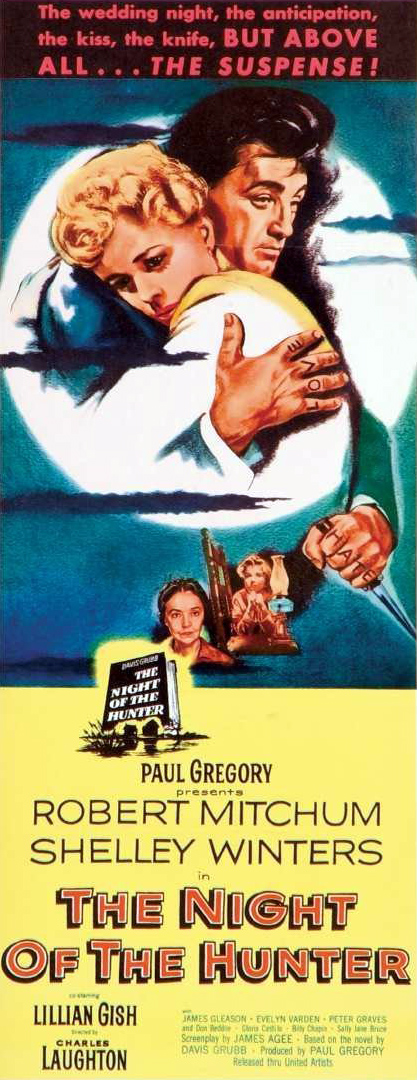
The Night Of the Hunter is, in my opinion, way too poetic, metaphorical and explicitly religious to be called a film noir, but it's certainly a dark film, and it deals with the issues of collapsed manhood that also informed the classic films noirs.  If anything it's domestic noir
It deals with the destruction of one home by a failed father, a long,
perilous journey in search of a new home, and the threat to that new
home by a demonic shadow father.  Its expressionistic visual style
harks back to the silent era, to the UFA style, and has little in
common with the harsh, jagged, tabloid-style photography of classic noir.

It's interesting to note that The Night Of the Hunter was a box-office flop on its initial release, while the general run of classic films noirs
were consistently (if modestly) profitable almost to the end of the
Fifties.  This suggests that Americans weren't prepared to
confront their post-war anxieties about manhood and the home too
directly.  The film noir
form allowed for a kind of indirect expression of these anxieties
within the context of a nominally conventional crime thriller. 
When exposed outside this context, as in The Night Of the Hunter,
they turned audiences off — the medicine was just too strong, the
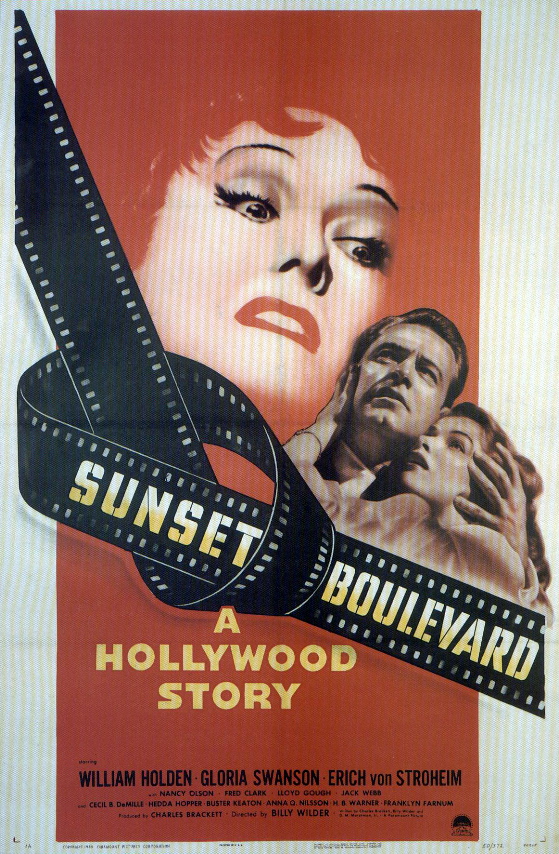
scalpel too close to the bone.  (Note that in the poster above, Sunset Boulevard
identifies itself as “a Hollywood story” whose pathology of the
collapsed male could, presumably, be imagined as confined to Tinsel
Town.)

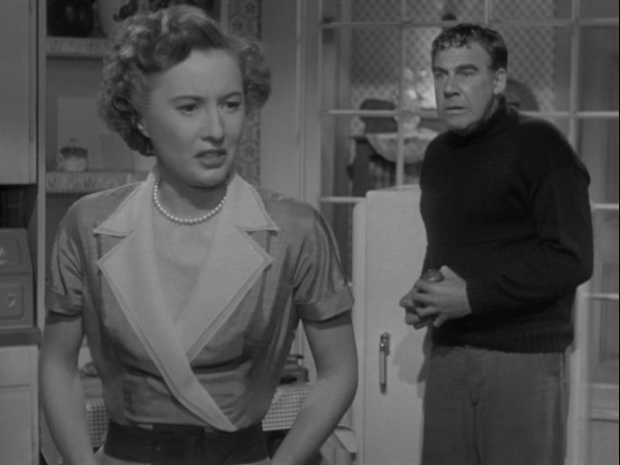
All the films listed above involve murder or the threat of murder, which is why they are often thought of as films noirs, but they differ from the classic film noir in that they offer a strong female perspective and locate the origins of their existential catastrophes inside a home or homes.

The anxieties addressed by these domestic noirs
would be addressed more subtly and ultimately more accessibly in other kinds of
films in the 50s, most notably in the work of Douglas Sirk and in the
cycle of films concentrating on teen angst.  When
filmmakers were able to deal with dark visions of American domestic
life outside the conventions of a crime thriller, the domestic noir lost much of its usefulness as a form.

[The noir credentials of the films listed above are as follows . . . Clash By Night is included in the Warner DVD noir series . . . noir expert Eddie Muller considers Sunset Boulevard one of the greatest of all noirs . . . Leave Her To Heaven, Shadow Of A Doubt and Double Indemnity are included in Nicholas Christopher's noir filmography in his book Somewhere In the Night and appear on many other lists of films noirs . . . the Wikipedia entry on the subject identifies The Night Of the Hunter as a classic-era film noir . . . the Internet Movie Database, as well as the VCI DVD, call Blonde Ice a film noir . . . Scarlet Street is included in Kino's second box set of films noirs . . . Daisy Kenyon is part of Fox's DVD noir series.]

FOOD IN LA PAZ

It's
hard to have a bad meal in La Paz, especially if you stick to
seafood.  In fact, if you stick to seafood (and avoid the Burger
King and Applebee's) it's hard not to stumble upon some of the best
meals of your life, just about anywhere.

The fanciest place we ate at in La Paz was the Bermejo, the restaurant
at Los Arcos, our hotel, but we didn't pay fancy prices there because
we dined on fish we'd caught ourselves (an experience I'll write about
in a later post.)  The hotel, which caters to fishermen, is happy
to prepare fish you supply yourself, and to freeze any of it you want
to carry home with you.

The simplest place we ate at was the Super Tacos de Baja California
Hermanos Gonzáles, an outdoor stand with a big terrace that's an
outgrowth of a sidewalk stand that got so popular it had to
expand.  My sister Lee had some stupendous fish ceviche there,
Harry and I shared some equally stupendous octopus and clam
tacos.  (Nora isn't a seafood fanatic and often had quesadillas of
one sort or another.)  We never ate better or cheaper food
anywhere in Baja
California.  One wall of the place had cool murals (above.)

One evening we took a lengthy walk along the marinas to the south of the malecón
to a medium-priced restaurant called the La Costa, palapa-roofed, right
next to the water.  We had super-fresh seafood there and Harry
felt moved to record the crab dinner he ate.  “A lot of work,” he
said, “but worth it.”

The Bismark is a rarity — an indoor seafood restaurant back several blocks from the malecón
The seafood was terrific and the decor was even better:

Harry and
I had dinner one evening at the Bismark II, which the clerk at our
hotel recommended.  It's right across the street from the
malecón,
with seating on a terrace or back under a high palapa roof.  A
charming place with the same great seafood as its parent establishment.

The only bad experience we had dining out in La Paz was at a place right on the malecón, the Kiwi.  Lee and I had fine smoked marlin tacos and Harry had a wonderful pescado entero
— a whole fish fried quickly in super-hot oil and then served whole
(but with olives replacing the fried eyes), which Harry also felt moved to
record (see the images at the beginning and end of this post.)  But Nora ordered fish and chips and the fish had gone bad
— very bad.  There's just no excuse for this in a restaurant
within spitting distance of the ocean, in a town where fresh seafood is
so ubiquitous and so cheap.  Foisting a small bit of bad fish on a
child might have saved the restaurant as much as fifty cents, I
suspect, but it lost our goodwill forever.

La Paz is a seafood lover's paradise, not just because there's so much
and such a great variety of it, and not just because it's so fresh, but because of the simple, perfect
ways it's cooked and served.  You feel you're eating the same food
the chef would make for himself or herself, or for their families,
prepared with the same unpretentious care and respect.


For previous Baja California trip reports, go
here.


[Photos © 2007 Harry Rossi]

LAND'S END

I
was leery of visiting Cabo San Lucas, reputed to be an outpost of
Orange County, but El Arco is there, the rock arch (above) that marks the
bottom of the Baja California peninsula, and it seemed unthinkable to
have driven most of the length of the peninsula and not visit its
terminal point, where the waters of the Pacific meet with the waters of
the Mar de Cortés.

We decided to make a beeline for land's end, see the cape, and head
straight back to La Paz.  This turned out to be easier than
expected because there's a new road to Cabo San Lucas from La Paz
which runs down the Pacific side of the peninsula.  (Mexico 1,
formerly the only paved route from La Paz to the cape, runs down the eastern shore of the peninsula and is a bit longer.)

The new road on the Pacific side is in superb shape, allowing for faster speeds than
normal, and we made it to Cabo San Lucas well before noon.  The
town of Cabo San Lucas still has some charm, but it's ringed about by
hideous condo compounds — enclaves for people who want the views but
don't want to live among Mexicans, in anything resembling Mexican
culture.  In forty years the whole of Baja California will
probably be encrusted with these compounds, as the Pacific coast above
Ensenada already is.  Go see it now, before the
yuppie stain grows insupportable.

The tip of the cape can only be visited by sea, unless you're an expert
rock climber.  We rented places in one of the glass-bottom
superpangas that take tourists out for a look.  Fortunately the
other passengers were one large extended Mexican family, cheerful and
friendly and good company.

As we motored out of the harbor we were greeted by the strange and
nauseating sight of huge party boats filled with tourists drinking and
listening to bad pop music from live bands blaring their sounds out
over huge amplifiers.  “We're having an experience — we're having
fun now!” was the message.  Not.  “We might as well be in Las
Vegas!” was more like it.

El Arco looks as though it might have been designed for dramatic effect
and beauty by some 19-Century landscape artist like Frederick Law
Olmstead.  It's a most appropriate and theatrical punctuation mark
at the end of the great peninsula.  Just beyond it you can
actually see the light green water of the Mar de Cortés mix with the deeper
blue of the Pacific.

The captain of our panga had his wife and kids and father on board —
his oldest son took the helm on the ride back to the docks.  His
father beamed at him and made sure we all saw how well he was doing.

We decided not to tarry in Cabo San Lucas but headed back
towards La Paz and stopped about halfway there at Todos Santos for
lunch.  Todos Santos is a lovely little town that's become
something of an artists' colony.  We looked forward to visiting
the galleries there, but they were all closed, because we came on
a Sunday.  You would think that Sunday would be the one day of the
week most likely to bring tourists into the galleries, but there is
obviously a higher law at work here — the Lord's day, and the day of
rest, trumping commercial concerns.

We did have a fine lunch at the Hotel California, a charming place
that
is often visited by Americans on the mistaken assumption that it has
some connection with the Eagles' song.  Harry had the Mexican
equivalent of surf 'n' turf — a plate of shrimp and carne asada tacos.

We got back to La Paz before dark, in time for drinks at sunset on the terrace of the Hotel Perla.

We were happy we'd visited Cabo San Lucas,
and land's end — even happier that we didn't have to spend the night
there.


For previous Baja California trip reports, go
here.


[Photos © 2007 Harry Rossi]

MORE ON MEXICO AND FILM NOIR

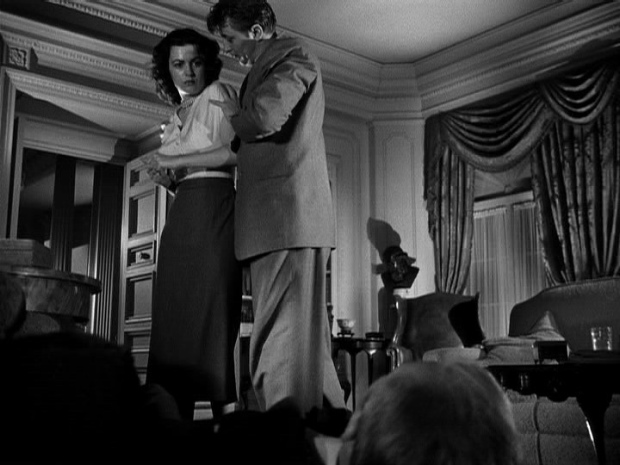
Check out the image above, from Where Danger Lives.  A fatal femme,
a trusting hunk, an inconvenient husband “accidentally”
dispatched.  What's next?  Mexico, of course — if they can
just make it across the line in time.

There are certain settings that appear over and over again in film noir
— nightclubs, dive bars, industrial plants, train yards, cheap hotels,
mostly in cities and mostly at night.  But there are also
settings that offer sunlit relief from these oppressive locales, most notably
rustic mountain or lakeside cabins . . . and Mexico.  Even more often, Mexico
is simply an impossible dream — a place to escape to, to hide out from
fate, but always just out of reach.

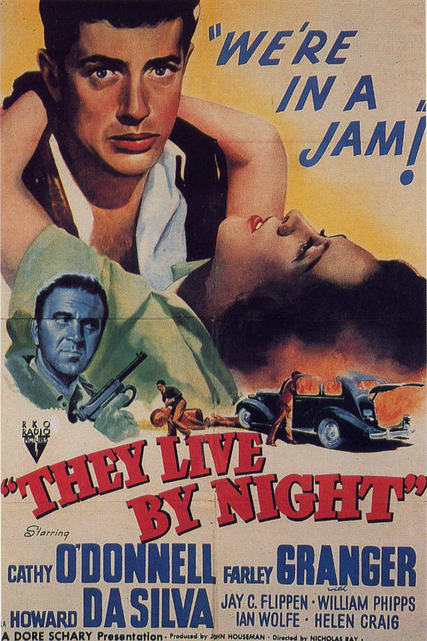
There's a rustic cabin in They Live By Night,
a temporary refuge, but the protagonists dream about making it to
Mexico, where they can leave their criminal past behind, start
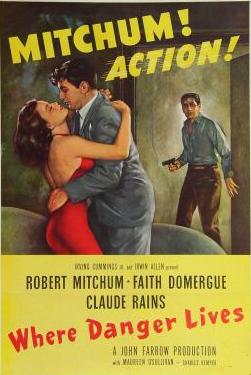
over.  It's the same dream entertained by the outlaw couple in Gun Crazy, by Mitchum and femme fatale Faith Domergue in Where Danger Lives — and just as hopeless.  Only the couple in Where Danger Lives even gets close, but they get very close indeed — fate tracks them down just inches from Mexican soil.

Greer and Mitchum in Out Of the Past
have their romantic idyll in Mexico but can't bring the magic of it
back with them to the States.  This fits in with the notion of
Mexico as a lost or unattainable paradise.  But sometimes the idea
of Mexico went to filmmakers' heads — they got giddy with the
possibilities of it.  Films that started out noir would, once they crossed south of border, turn into larks, lighthearted and feckless.

Re-teamed in The Big Steal, Greer and Mitchum venture into Mexico to try to extricate themselves from typical noir predicaments
involving betrayal and unjust accusation, but the dark clouds vanish
almost immediately — they find love and high-spirited adventure
instead of noir's dark, impenetrable maze, and all ends well.  Film noir expert Elizabeth Ward amusingly suggests that The Big Steal ought to be labeled fiesta noir — a designation that would fit His Kind Of Woman equally well.

His Kind Of Woman
also stars Mitchum, this time paired with Jane Russell.  The
malevolent fate that dogs his character at the beginning of the story
more or less evaporates in Mexico, and the film turns into something
approaching a screwball comedy.

In general, though, the rustic cabin and Mexico are tantalizing chimera in film noir — poignant, even tragic images of an unrecoverable innocence and freedom.

Read more about Mexico and film noir here.

ESPIRITU SANTO

The
early Spanish explorers of Mexico, who almost always traveled with
priests, had a habit of giving religious names to the places they
“discovered” — which was fortuitous with respect to the region of the
Mar de Cortés, which has an unearthly, supernatural beauty.  It's
hard to imagine talking about, even thinking about, the Isla Espíritu
Santo, Holy Spirit Island, under some more prosaic name.

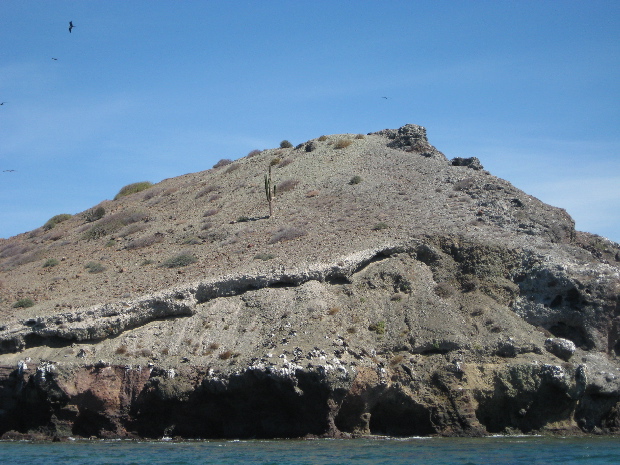
It's a severe, haunted, sublime place.  When the Spanish first
arrived there were about 300 Indians living there — they must have
been hard, solitary folk.  Disease or some other European-borne
catastrophe left the island unpopulated until a French entrepreneur set
up a camp there for pearl fishing around the time of the outbreak of
the Mexican Revolution.  Disease again intervened, wiping out the
pearl-oyster beds throughout the Mar de Cortés between 1936 and 1941.

Today there are a few shacks used by local fishermen (with solar panels
on their roofs for electricity) and a luxury tent camp for wealthy tourists.

There is something shocking, even frightening about the landscape of
Espíritu Santo.  It's a place for gods and monsters, not
people.  I kept thinking that when blind Homer imagined the
settings of The Odyssey in his mind's eye, they probably often resembled the Isla Espíritu Santo.

We rented a panga, with a captain, at Pichilingue beach for a cruise to
the island.

It was a magical journey — we flew like the wind
across miles of open sea to reach the island, then circumnavigated it
slowly, pausing to marvel at many wonders.

The captain took us
at speed through rock-bound channels barely wider than his boat, into caves and
along the seemingly endless curves of totally empty beaches, running the boat close in to the shore for dramatic effect.

We stopped to snorkel at a small island populated by hundreds of
braying sea lions, who swam close to us when we were in the water, eying us
ironically.  “You don't really think you can pass muster as an
aquatic mammal?” they seemed to say.

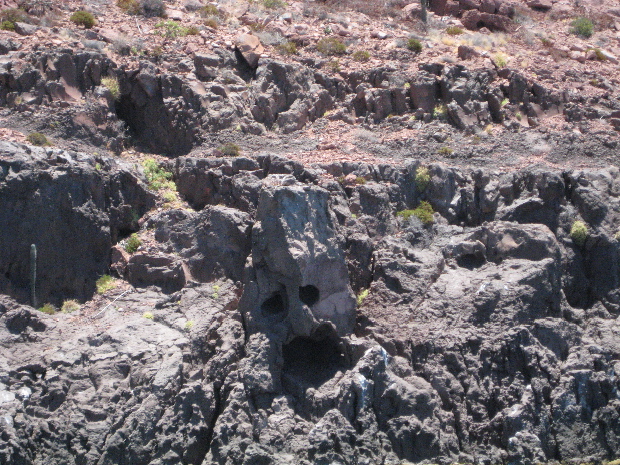
We stopped to look at what appears to be a mask carved into the rock
face of the island.  That seemed like an ironic gesture by nature
itself, vaguely threatening.

Finally we came ashore at a lovely beach.  The captain set up a
table under an umbrella and produced lunch — ham and cheese
sandwiches, exceptionally fine fish ceviche and pickled marlin.  We swam and ate and
felt utterly elated.

It was good to go to the island, and good to leave it — it didn't seem
like a place that wanted to be visited for too long by the children of
men.  All the same it might be interesting to camp out on it for a night
— like spending a night in a haunted house.  I imagine one would
hear exceedingly strange voices in the wind.


For previous Baja California trip reports, go
here.


[Photos © 2007 Harry Rossi]

THEY LIVE BY NIGHT

This film has to rank with Erich Von Stroheim's Blind Husbands and Orson Welles' Citizen Kane as one of the most astonishing directorial debuts in the history of American cinema.  It's one of the greatest of all films noirs yet also a film that looks forward beyond noir to the various traditions that would supplant it.

Like Out Of the Past, They Live By Night
is at its core a love story.  Both are hopeless love stories, but
for different reasons.  In the former, fate and moral confusion
suggest a universe in which men and women can no longer co-operate —
in which love and passion have become recipes for disaster.  In
the latter, the love at the film's center is the only good thing left
in a world that has become bewildering and malevolent.

You could say that Out Of the Past
represents the worldview of the generation of men who fought WWII and
came home with a feeling that the world didn't make sense anymore — that
there was a permanent disconnect between the central experience of
their lives and the society they now had to become a part of.  They Live By Night,
by contrast, represents the worldview of the next generation, which
would have to live with the consequences of this post-war moral
bewilderment.

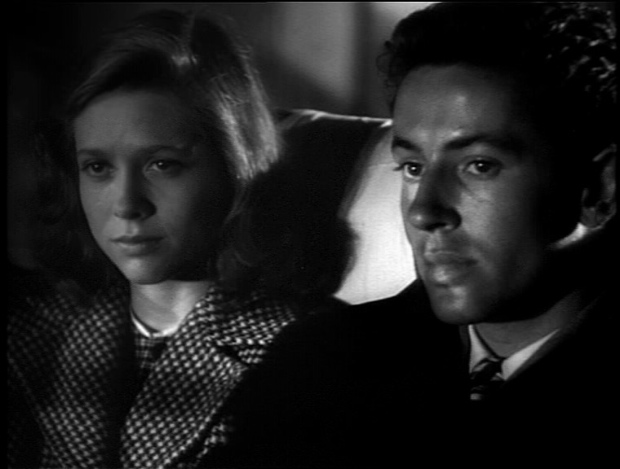
Noir historian Eddie Muller, among others, has pointed out that the Granger and O'Donnell characters in They Live By Night
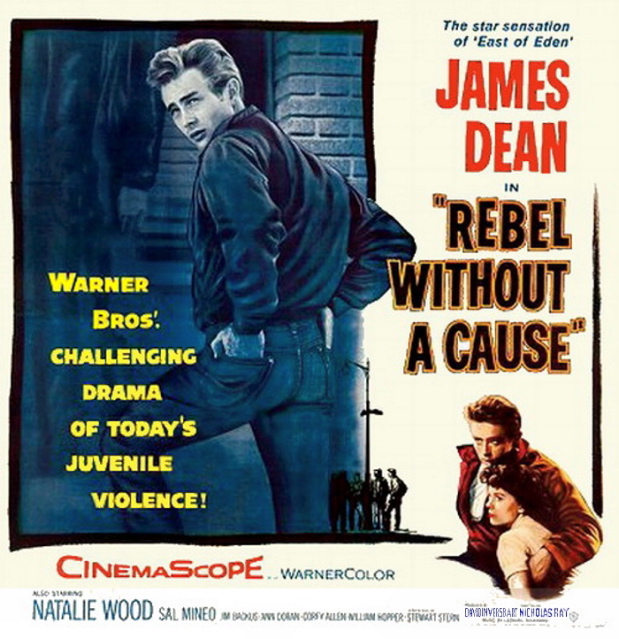
are in some sense models for the Dean and Wood characters in Nicholas Ray's later Rebel Without A Cause — that in his first film Ray was starting to invent the idea of the 50s movie teenager.  The
Granger and O'Donnell characters are not, in fact, teenagers, but they are as innocent and bewildered as teenagers
— and their “rebellion” is just as unconscious, as instinctive, as the
rebellion in the great teen dramas of the 50s, best exemplified in
Rebel Without A Cause.

In 1947, when Ray made They Live By Night, the noir crime
thriller was the only kind of film that allowed a Hollywood director to
deal explicitly with the kind of alienation and despair that Ray
clearly saw as major elements of post-war American life.  By the
time he made Rebel Without A Cause,
in 1955, he realized that he could deal with these elements in the context of
ordinary American middle-class life.  That in itself was a sign
that film noir was coming to the end of its usefulness as a form — filmmakers could explore the noir sensibility anywhere, and deal with its nature and causes more directly.

BEACHES


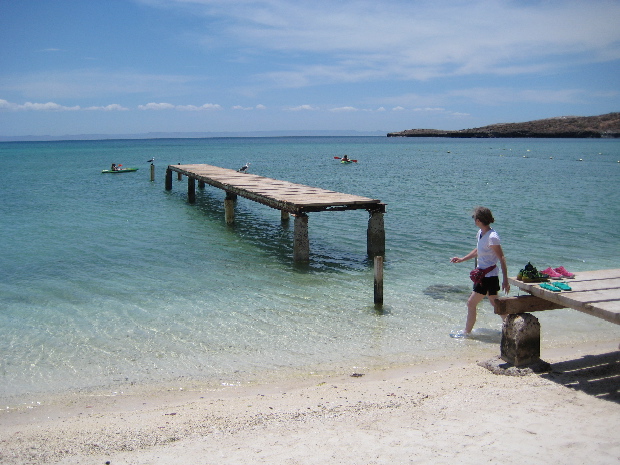
The beach along the malecón
in La Paz is narrow and the water is shallow — not good for
swimming.  But within 20 minutes of the town are beaches of
greater charm and a few of magical splendor.  The first one we
visited was Pichilingue — not a spectacular beach in itself but
featuring a big palapa-roofed restaurant next to the water with sublime
seafood.  I had some stuffed clams there that were memorable — Nora gave a very high rating to the piñadas.

Adults can sit in the shade of the palapa roof, eating and drinking
exceptionally well, while their kids frolic in the ocean, which makes
for a pleasant afternoon.  Harry and Nora went kayaking and Lee
made friends with a panga captain who offered to take us on a tour of
Espíritu Santo island for a price far lower than we'd pay if we
arranged the trip in La Paz.  We checked on this back in La Paz,
found he was right, and came back the next day to sign up for the
cruise.

On a different day we spent an afternoon at Balandra beach, which was
truly breathtaking.  It curves around a shallow bay, which you can
walk across to visit the famous mushroom rock, an iconic landmark of
the area.


There's a reproduction of it in the central square of
La Paz, across from the cathedral:

Smaller reproductions can be
bought as souvenirs, though I really can't imagine who would buy such a thing:

Some American tourists in La Paz told us
that the rock had actually toppled off its stem a few years ago and had to be
bolted back together — which turned out to be true.

For previous Baja California trip reports, go here.


[Original photos © 2007 Harry Rossi]

NOIRISH: THE HARD-BOILED DETECTIVE THRILLER

Film noir
owes a lot to the hard-boiled detective fiction of the 30s and to the
cycle of films this fiction inspired.  Like the gangster film,
this fiction mined a Depression-era fascination with the
underside of American life, examining it from a tough-minded point of
view that reflected the disillusionment of hard times.  But it
was, at bottom, a romantic genre — the detective, however, cynical,
had a code of honor that kept him untainted by the muck he had to slog
through.  He may not have trusted the police, or other
representatives of official society, but he was a law unto himself,
dispensing rough justice in spite of the failures of the established
order.  (Clearly there's a connection here, too, with the Western,
in which a lone-hand hero often must assert the values of decency and
order in the absence of official institutions dedicated to the purpose.)

This is a far cry from the existential estrangement of the classic noir
protagonist whose code of honor has broken down somewhere along the
line — whose chief problem is not doing the right thing but having no
clear sense of what the right thing is, or why it matters in a world
gone haywire.

The key to traditional hard-boiled detective fiction is a mystery to be solved,
which becomes emblematic of a moral imbalance that needs to be
righted.  Solving the mystery and righting the balance restore
hope.  In a true noir there's a sense, or at least a nagging suspicion, that hope is a fool's game.

The following detective thrillers are often identified as films noirs:


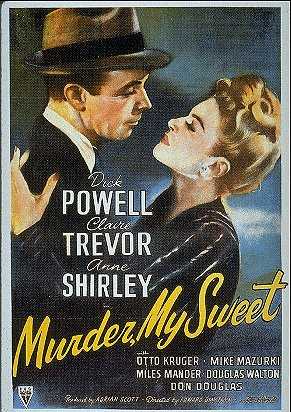
Murder, My Sweet


The Lady In the Lake


I Wake Up Screaming


Laura


The Big Sleep


Behind Closed Doors


The Mask Of the Dragon


Vicki

They all have noirish elements, and often look like films noirs, but they belong to an older tradition, one in which atomic-age angst and despair ultimately have no place.

[The noir credentials of the films listed above are as follows . . .
Murder, My Sweet
and The Lady In the Lake are included in the Warner noir DVD series . . . 
I Wake Up Screaming
and Vicki are included in the Fox noir DVD series . . . The Big Sleep and Laura are included on almost all lists of films noirs . . . Behind Closed Doors is included in Kino's film noir DVD box set . . . and The Mask Of the Dragon is included in the VCI Forgotten Noir DVD series.]

LA PAZ

Mexico
1 leaves the coast of the Mar de Cortés just south of Loreto and cuts
back into the interior of the peninsula before veering east again and
doubling back to the great sea at the Bahía de La Paz.  The city
of La Paz, nestled in the wide curve of the bay, was our main destination on this trip and Harry recorded the
attitudes of the passengers at the moment we arrived there.

Here's John Steinbeck on La Paz, as it was back in the 1940s:

La Paz grew in fascination as we
approached.  The square, iron-shuttered colonial houses stood up
right in back of the beach with rows of beautiful trees in front of
them.  It is a lovely place.  There is a broad promenade
along the water lined with benches, named for dead residents of the
city, where one may rest oneself . . .  [A] cloud of delight hangs
over the distant city from the time when it was the great pearl center
of the world . . .  Guyamas is busier, they say, and Mazatlán
gayer, but La Paz is
antigua.

We didn't approach La Paz from the water, as Steinbeck did, and it has
changed plenty since his time, but a cloud of delight still hangs over
it, purely Mexican, not fueled by American tourist dollars, and it it
still antigua, old and wise.  It's a tourist town, but it caters to
Mexican tourists, and so is graceful and slow in its rhythms, without
the frenzied party-til-you-puke atmosphere of Cabo San Lucas or the
Pacific coast above Ensenada.

There is nothing spectacular about the place, its allure is quiet . . .
but powerful.  After a day there I never wanted to leave, and I
wish I was there right now.

I thought it would be good to stay for at least a night or two at the
Hotel Perla, the first “destination hotel” in La Paz, built in the
1940s, which for a short time, into the 50s, was host to Hollywood and
literary celebrities, a kind of proto Cabo San Lucas — but the Perla was full, which led us happily
to the second destination hotel built in La Paz, not long after the
Perla, the Los Arcos.  The rooms in the main building were too
pricey for us, but we got fine rooms in a more recent extension of the
hotel across the street, the Cabañas de Los Arcos.

The main hotel was full of American fishermen, the cabañas were full of
Mexican families and so pleasant that, after a couple of days spent
searching for even cheaper accommodations, we sent my sister Lee forth
to negotiate a lower rate for an extended stay at the Los
Arcos.  This she accomplished, and when we checked out we
discovered that they had applied the rate retroactively to our first
days there as well.

This rate was cheaper than you'd expect to find at a Holiday Inn next to an
ugly Interstate off-ramp in the United States, though the big rooms had
views of the Mar de Cortés, the service was superb and the hotel was
located on the malecón, the
broad promenade along the water that Steinbeck mentions and that is the
heart of La Paz's daily public life, especially after dark.

I felt I had come home.


For previous Baja California trip reports, go
here.


[Photos © 2007 Harry Rossi]

SCHIZO-NOIR

The dramatic methods and strategies of a police procedural film, and
what might be called the moral climate, are quite different from those found in a classic film noir
— a proposition that can be demonstrated by taking a look at films
which try to combine the two forms.

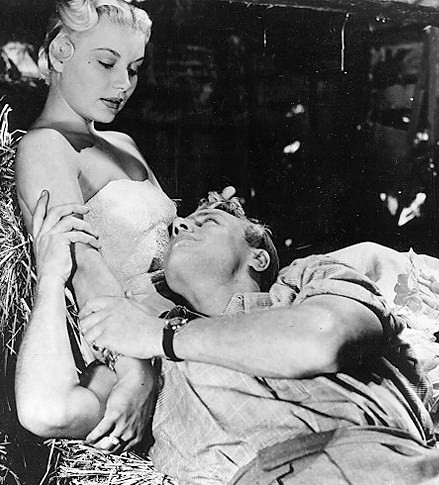
As a case in point, consider Trapped,
starring Lloyd Bridges and doomed starlet Barbara Payton.  Bridges
and Payton play a counterfeiter and his moll.  The counterfeiter
gets a chance to redeem himself by co-operating with Treasury agents
but is sucked back into his old ways and hurtled toward ruin.  We
identify with Bridges in the role because he has an appealing screen
persona and because he's the star, which should be enough to place the
film squarely in the noir tradition.

The filmmakers, however, have chosen to place the Bridges character and his story inside a docu-noir
celebrating the Treasury department, its agents and procedures.  John Hoyt,
who usually plays villains, is the chief Treasury operative, acting
undercover.  The narrative encourages us to root for him — the
casting makes this all but impossible.

This might at first seem like an interesting formula, producing a
complex tension between the two narrative traditions, but it all falls
apart in the final reel, because the filmmakers eventually have to
choose which tradition to favor when constructing the climax. 
What they do is simply eliminate the Bridges character from the final
action sequence and ask us to identify totally with the agency and its chief
representative.  The denouement therefore has no punch, since it
doesn't involve or impact the character we've been previously encouraged to identify most closely with.

Crime Wave is another conflicted noir
with a slightly different dynamic.  It starts as a straight-ahead
procedural, with
Sterling Hayden as a police officer trying to hunt down some escaped
cons who've killed a cop in the course of a bungled robbery.  The
film veers into noir
territory when it switches focus and concentrates on a character played
by Gene Nelson, an innocent ex-con who gets caught up in the
case.  (We know that the Nelson character is a co-equal
protagonist with the Hayden character because he's hooked up with the
very vexing female lead, Phyllis Kirk.)

This is when things start to get interesting, because after we switch our attention to Nelson the Hayden
character, delightfully brutal and pig-headed but undeniably
charismatic, starts making mistakes, mistakes that plunge the Nelson
character deeper into his vortex of doom.  It takes some narrative
sleight-of-hand at the end of the film to redeem Hayden's cop,
and the police, who become the agents of the Nelson character's
salvation, thus restoring the pro-police bias of a procedural.  (The sleight-of-hand involves a classic film noir
heist-gone-wrong which turns out to have been not exactly what it
seemed to be — in other words, a bit of a cheat, though still
entertaining.)

This film does manage to have it both ways, after a fashion, but the core of it is noir,
because we spend so much of the time out of sympathy with the
police.  The cop and the innocent-man-wrongly-accused both seem
trapped in a hopeless and bewildering moral maze.

I think you can call Crime Wave a true noirTrapped is so schizophrenic that it's simply unclassifiable.