THE MONEY AND THE POWER


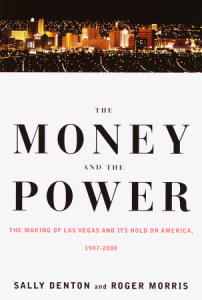
The Money and the Power: The Making of Las Vegas and Its Hold on America,
by Roger Morris and Sally Denton, Vintage, 2002, is the most important
book ever written about Las Vegas and one of the most important books
ever written about corporate-controlled America in the 20th Century.
The prose can be clunky at times but there are stunning revelations on
almost every page. The result is a clear and impeccably researched
portrait of the criminal/corporate syndicates which run America and the
role Las Vegas has played and plays in their exercise of power.

You can buy it here:

The Money and the Power

FREE BURMA

No regular post today, just a reminder to send thoughts and prayers to
the good people of Burma — especially to the Buddhist monks who are
being viciously persecuted for their peaceful protest.

TERRY AND THE PIRATES

As
I've written before, these are great times for fans of vintage comic
strips.  Publishers are bringing back into print many classics of
the genre — among them Popeye, Dick Tracy and Gasoline Alley in handsome multi-volume editions that will eventually make available complete runs of the strips.

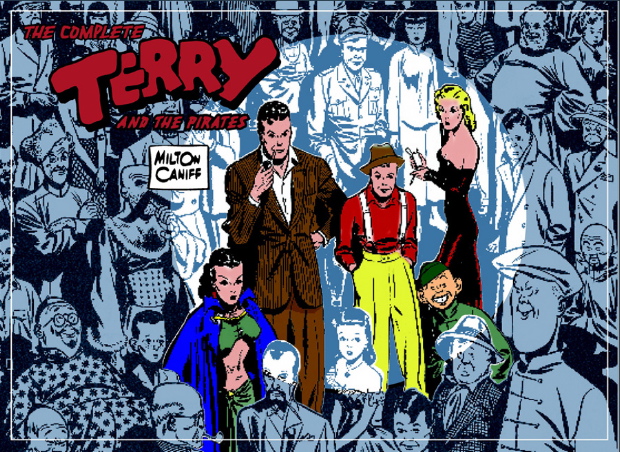
Not least welcome in this avalanche of treasures is the first volume in a series published by IDC that will cover all of Milt Caniff's wonderful Terry and the Pirates adventure
strip.  It's a big, well-printed volume with the daily strips in
black-and-white and the Sunday strips in full color.  This first
installment covers 1934 to 1936.

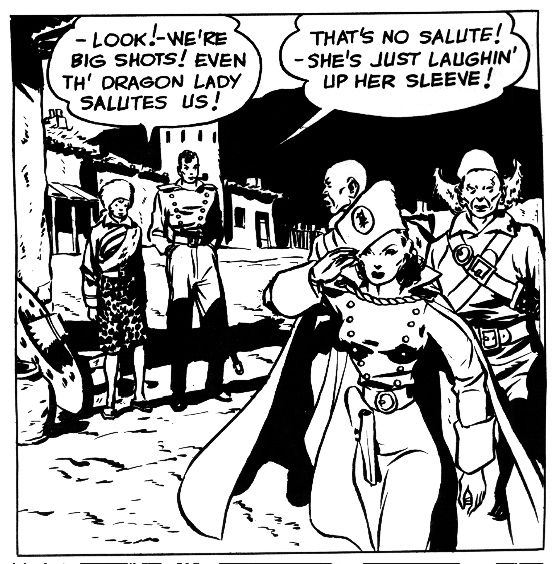
Caniff's is known as the “Rembrandt of the comic strip” for his
exquisite draftsmanship, but he has also been studied by filmmakers for
the dynamic cinematic compositions of his panels, the economy and punch
of his visual narrative style.

It's impossible to convey just how much fun Terry and the Pirates
is — a series of rattling good yarns set in the Far East that move
fast and are full of surprises, drawn with wit and elegance and bold
graphic invention.

Caniff didn't come up with idea for Terry and the Pirates and he didn't own it — so he eventually moved on to an original series called Steve Canyon, which is even more ambitious visually but, to my mind, a bit stodgier in terms of story and character.  The Canyon
strips have been available in a series which prints the panels so small
that it's hard to read the text sometimes without a magnifying glass
and almost impossible to appreciate the graphic work.  It's not worth owning.

The IDC edition of Terry and the Pirates, though, does full justice to Caniff's art.  I think it's one of the most important publishing events of 2007.

THE WORLD'S GREATEST SALSA

I'm not kidding — you've never
tasted better salsa than this, and it's so easy to make . . . there's
really no excuse not to have a supply of it on hand at all times.

What you need to make it is four medium-sized tomatillos, three or
four cloves of garlic, two canned chipotle chilies in adobo sauce, some
water and some salt.  Take the husks off the tomatillos, wash them
and cut them in half.  Place them in a non-stick skillet, cut side
down, over medium heat, along with the unpeeled garlic cloves. 
Roast them all for about four minutes, then flip them over for another
four minutes, or until the tomatillos are soft all the way through.

Put a quarter cup of water into a blender, place the roasted tomatillos
and the peeled roasted garlic into the blender along with the chilies
and a couple of pinches of salt.  Two chilies makes for a very
spicy but not overwhelming salsa.  Just add one if you want something
a little milder but still very tangy.  If you want to knock your
socks off, add three or more — but don't say I didn't warn you.

Grind this all up into a slightly coarse blend, transfer it to a bowl and add more salt to taste, if necessary.

In this salsa the flavors of the roasted tomatillos and the roasted
garlic are a perfect complement to the smoky fire of the redoubtable
chipotle.  It's good with tortilla chips of course, and on any
kind of taco.  Mexican food guru Rick Bayless, in his book Mexican
Everyday
, where I found this recipe, says he likes it on everything but
ice cream — and I'm not sure I'd rule out ice cream entirely.

It's sublime stuff.

THE GHOST CITY CHAMPIONS

Fall
is in the air — you can tell, even out here in the middle of the
Mojave Desert, because the Mets have just completed their annual Autumn
collapse.  After dominating their division for almost the whole
season, with what looked like the best team in baseball, they decided
in the end to just dry up and blow away, like leaves in the wind.

It was one of the worst late-season collapses in the history of
baseball, and the Mets didn't go down fighting — the whole team just
seemed to stand around, staring blankly into space, waiting for the
nightmare to consume them.

The Mets have been my last real connection to the city of New
York.  I have a lot of friends who still live there but they visit
Vegas regularly, so I think of them as Vegas friends now.  But the
Mets seem to have taken on the qualities of the new New York I couldn't live in anymore — rich,
bland, complacent, without grit, without character.

I think the time has come to let them go — let them fade into the old
ghost city that exists now only in my memory.  In that city, they
will always be champions.

When Willie Mays, playing for the Mets at the end of his career,
decided to retire, he said, “There always come a time when somebody
have to say goodbye.”

Goodbye.

THE GHOST OF THE RUST BELT

There
was a great middleweight fight in Atlantic City last night between the
champion Jermain “Bad Intentions”  Taylor
from Little Rock, Arkansas, and challenger Kelly “The Ghost” Pavlik (above) from
Youngstown, Ohio.  It was great because it had a three-act
narrative structure with bold contrasts and startling turn-arounds, and complicated emotional themes.

Taylor gained the championship and kept it for a while with workmanlike
victories that never seemed to challenge him in any profound way — to
test his character.  People started to think he was a champion
merely faux de mieux
Pavlik was a relatively inexperienced fighter with an unbeaten record
and a powerful punch.  The punch made it a fight fans might get a
bit excited about — the inexperience made it a fight that Taylor's
handlers weren't afraid to make.

In the first act of the drama, Taylor's handlers looked wise. 
Pavlik was aggressive coming out, using his jab well, but sloppy on
defense.  In the second round he paid for his sloppiness when
Taylor put him to the canvas with a flurry of hard, flush
punches.  Even when he managed to get up again, Pavlik looked like
he was out on his feet.  But he dodged and clinched, weathered a
few more terrifying blows and managed to survive the round.

But he actually did much more than survive.  When HBO commentator
Larry Merchant asked him after the fight how he felt down there on the
canvas, Pavlik replied, “You want to know the truth?  I thought,
'Shit, this is going to be a long night.'”  He was already gearing
up for what he had to do to stay in the contest.

What he did was recover quickly in the next round, worrying Taylor
constantly with a hard, accurate jab.  The worry was just enough to
keep Taylor from using his faster hands and superior boxing skills to
wear Pavlik down or catch him again with a terminal combination. 
Pavlik grew stronger round by round — Taylor didn't fade exactly, he
just never found a way to step things up from his end.

Finally in the 7th Pavlik hit Taylor with a right that stunned
him.  Pavlik didn't hesitate — he closed in and beat Taylor
nearly senseless.  Pavlik didn't lose his head at that point,
either.  He paused, thought about it for a moment and delivered a
clincher — an upper-cut that sent Taylor to the canvas, defenseless,
at which point referee Steve Smoger stepped in and called an end to
things, not a moment too soon.

Ironies abounded.  Taylor had fought one of his best fights ever,
delivering the kind of excitement that fans found lacking in his
earlier victories.  But when he had Pavlik hurt in the second he
lost his focus, couldn't summon the composure to put him away, as
Pavlik did in the seventh.  The less experienced fighter showed
more ring savvy than the veteran.

Youngstown was a steel manufacturing city, once upon a time, but all
that is in the past.  Now it's rusting and suffering.  It has
produced more than its share of boxing champions, including the
incendiary Ray “Boom Boom” Mancini, and now it has new champion in
Pavlik.  It must seem like a miracle — like a ghost rising from
the rust.

What a story — what a fight.

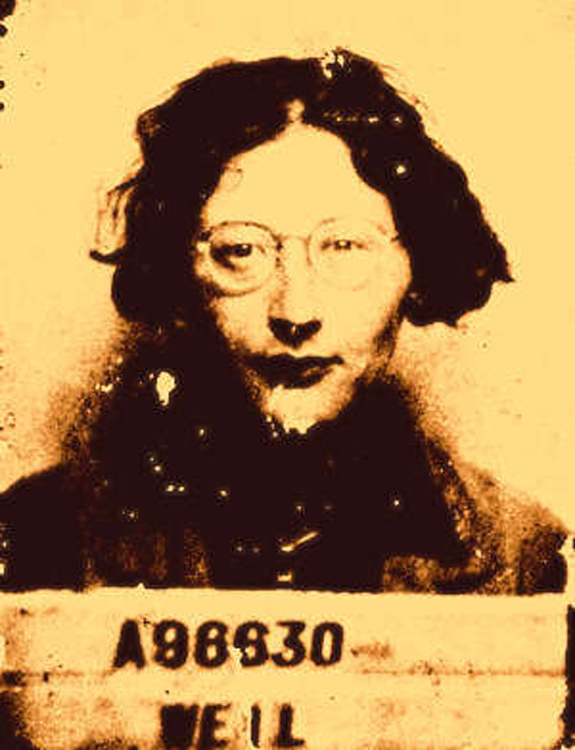
SIMONE WEIL ON BRUTALITY

Let us not think that because we are less brutal, less violent, less
inhuman than our opponents we will carry the day.  Brutality,
violence, and inhumanity have an immense prestige that schoolbooks hide
from children, that grown men do not admit, but that everyone bows
before.  For the opposite virtues to have as much prestige, they
must be actively and constantly put into practice.  Anyone who is
merely incapable of being as brutal, as violent, and as inhuman as
someone else, but who does not practice the opposite virtues, is
inferior to that person in both inner strength and prestige, and he
will not hold out in   . . . a confrontation.

                                                         — Simone Weil

A SONNET FOR TODAY

On First Looking Into Chapman’s Homer by John Keats:


Much have I travell’d in the realms of gold,

And many goodly states and kingdoms seen;


Round many western islands have I been


Which bards in fealty to Apollo hold.


Oft of one wide expanse had I been told


That deep-brow’d Homer ruled as his demesne;


Yet did I never breathe its pure serene


Till I heard Chapman speak out loud and bold:


Then felt I like some watcher of the skies


When a new planet swims into his ken;


Or like stout Cortez when with eagle eyes


He star’d at the Pacific–and all his men


Look’d at each other with a wild surmise–


Silent, upon a peak in Darien.


Chapman’s Homer seems a bit stodgy today but compared to previous
translations in English it had power and punch — and was much closer
to the supple, hard-hitting Greek of Homer.  You have to read
Stanley Lombardo’s bold new translations of Homer to get a sense of how
Chapman’s version must have sounded to Keats’ generation.


The last four lines of this sonnet are what make it memorable, even
though we may know that it was Balboa, above, who first sighted the Pacific
from the vantage point of the New World (in Panama) — not “stout
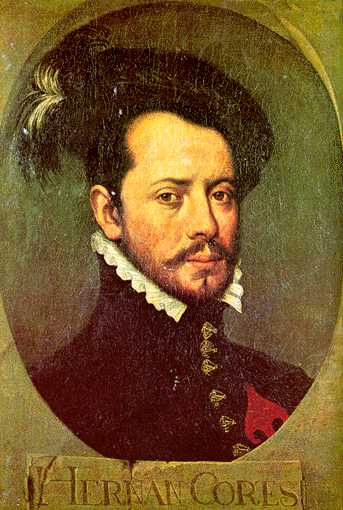
Cortez”, below.


Hernán Cortés did reach the Pacific coast of Mexico sometime
later, or rather he reached the coast of a sea that communicates with
the Pacific, now called the Gulf Of California or the Sea of Cortez or,
of
course, the Mar de Cortés.  This is the great body of water that
lies between the west coast of mainland Mexico and the Baja California
peninsula.

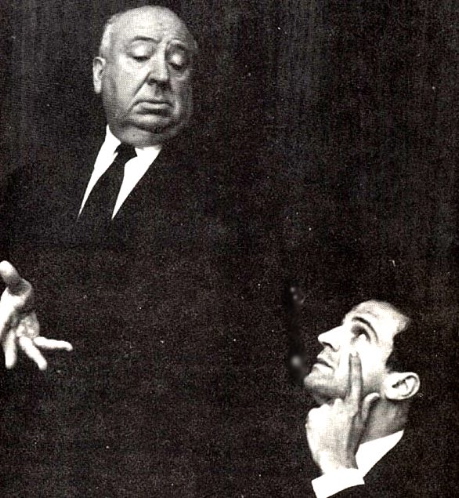
TRUFFAUT HITCHCOCK

Among the many interesting things to be found at the If Charlie Parker
Was A Gunslinger
web log are audio files of many of the
Truffaut-Hitchcock tapes, from which Truffaut's great book of
interviews with Hitchcock was compiled.


It's fascinating, and inspiring, to hear the actual voices of the two
men talking about film with such wisdom and passion — and, in the case
of Hitchcock, often enough, sly misdirection.


You can find the tapes
here.

FILM NOIR: THE HISTORY (AND FUTURE) OF A TERM

The term film noir was first used in something like its contemporary meaning in 1946 by French film critic Nino Frank.  The occasion was a particular week in which five films made earlier in Hollywood but unavailable to French audiences during the war opened in Paris.
All of them had dark themes and reminded Frank of American pulp fiction from the 30s.

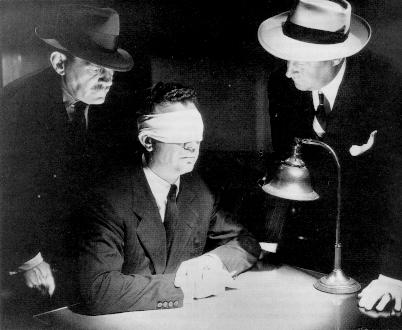
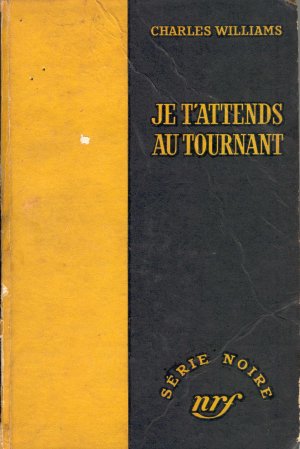
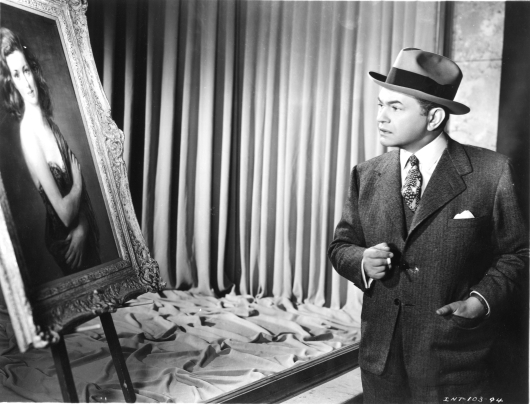
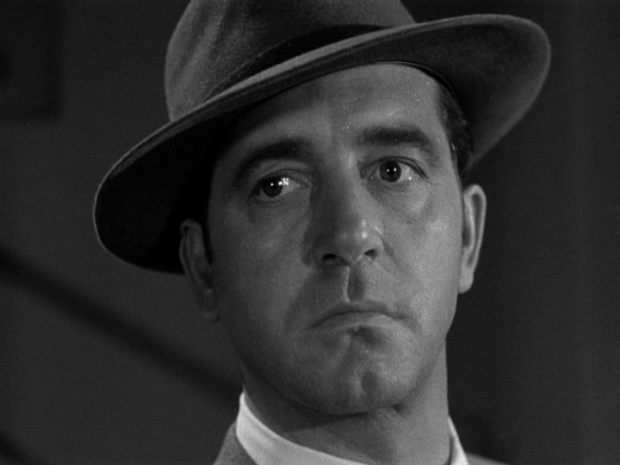
Much of this fiction had been published in France under the Série Noire (“Black Series”) imprint and so Frank, logically enough, labeled the five films films noirs.  [The term film noir had earlier been applied to a series of moody, poetic French films from the 1930s which dealt with the travails of working-class people, but these had little in common with the crime thrillers Frank was talking about.]  Three of the films, Murder, My Sweet (above, at the top of the post), Double Indemnity and The Phantom Lady were in fact based on the work of pulp fiction writers — Cornell Woolrich, Raymond Chandler and James M. Cain.  The Woman In the Window, below, was more in the line of a Hitchcockian psychological thriller, a form Hitchcock had mastered before the war.  Laura was a fairly standard murder mystery, a form that also predated WWII, though very elegantly executed.

In truth, there was nothing terribly new about the five films Frank called films noirs, though all were perhaps a little darker and edgier in tone than similar Hollywood films from before the war had been.  Because the French had not been able to see the gradual development of this tone during the war years, it came as something of a revelation.

But after 1946 a new film tradition emerged which diverged from the hardboiled detective fiction of the 30s — and from the rancid domestic dramas of Cain and from the
Hitchcockian suspense thriller and from the classic murder mystery.  It was a body of work which specifically addressed post-war, atomic age anxieties.

In this body of work, the underworld of pulp fiction seemed to have become the only world.  Its protagonists were not wisecracking knights errant who ventured onto the wild side of things to solve a crime, nor were they everymen forced to brave an ordeal to become stronger and wiser, nor were they committed criminals, following transgressive urges to an inevitable and cautionary doom, a doom which restored society’s moral norms.  They were men in a state of existential despair, unsure of how the world worked anymore, at the mercy of strong women, morally bewildered.  The doom they often met with solved nothing, restored nothing.  It was, in a sense, an expression of the post-traumatic stress disorder of the generation which had fought WWII and could never again see “normal” life in the same way again — especially not in the enduring shadow of nuclear annihilation.

This new tradition naturally enough inheirited the label film noir, even though it was quite distinct from the kinds of films that inspired Frank’s use of the label, the kinds of films out of which the new tradition emerged.

The imprecision of the term film noir was thus built into its history, so to speak.  Most of the films we now think of as classic films noirs were made after the term was applied by Frank.  They eventually came to constitute a distinct cycle, which flourished for more than a decade before it played itself out toward the end of the 50s.

I think the time has come to consider this cycle apart from the kinds of films that were first called films noirs — and I think the only sensible way to do this is to violate the history of the term film noir and to apply it only to the distinct cycle that emerged, for the most
part, after the term’s invention.  In fact, I would argue that none of the five films that inspired Frank’s application of the term really belong to the tradition of the classic film noir.

In the interest of clarity and a sharper kind of analysis, we need to distinguish film noir
from the various traditions out of which it developed.  [And we certainly need to distinguish it from the poetic proletarian French tragedies that were first called films noirs back in the 30s.]  Pulp fiction, or hardboiled detective fiction, are terms that serve perfectly well to label the sort of films made from the works of writers like Chandler, Woolrich and Cain.  Hitchcockian is a term that serves perfectly well to label the sorts of thrillers he specialized in.  Murder mystery is a term that serves perfectly well to describe a film like Laura.  The cycle of films that emerged after WWII, what might be called the atomic-age crime thriller, was something else again and it needs its own label . . . film noir.

WITNESS


[Photo © 2007 Paul Kolnik]

In his great book The Labyrinth Of Solitude,
Ocatvio Paz remarks that “architecture is a society's unbribable
witness.”  If you want to know the truth about any society, look
at what it builds.

So what is the witness of Las Vegas, the most popular tourist
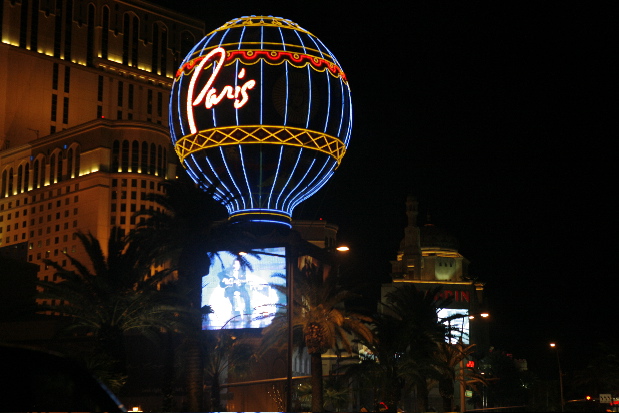
destination in America?  As you sit on the terrace of a French
bistro, attached to a replica of Paris, and look across the street at an
evocation of an Italian lake, or down the street at a replica of New York,
or up the street at an evocation of ancient Rome, the message is clear —
“We don't know where we are.”

Everyone in America feels this, along the strip developments and in the
malls that all look the same, whether they're in Georgia or California
— even though they might not feel it on a conscious level, or admit it to themselves.

That's why they come to Las Vegas in such great numbers, and why they
love it.  Las Vegas tells us the truth, let's us admit the truth
— we don't know where we are — and the truth is always
exhilarating.  It makes you want to party.

[A note to readers: I apologize
for the site's being out of commission for a while — it exceeded its
bandwidth once again, even though my hosting service allowed me double
the usage I was paying for.  They finally decided that I needed to
pay them more money — that now done, the site should be functional for the
foreseeable future.  Thanks for the interest!]

STAGE AND SCREEN

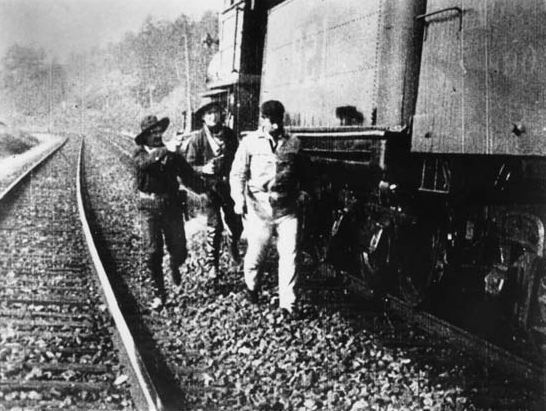
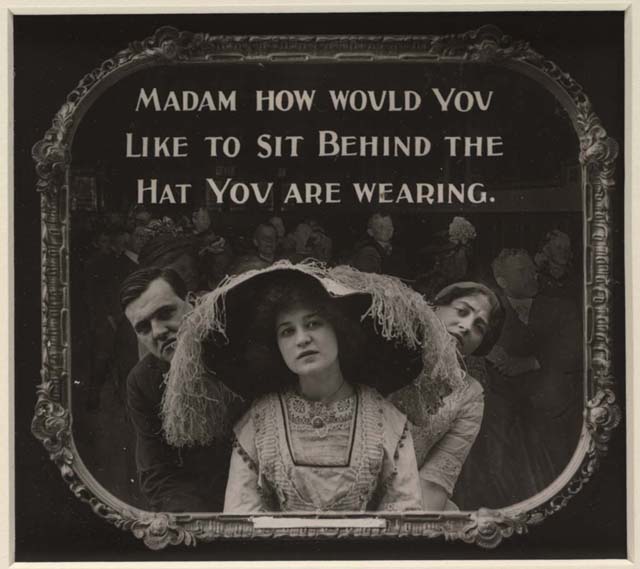
If you look at narrative films made in the first decade of the 20th
Century you'll be struck by a very odd aesthetic anomally.  Scenes shot
out of doors will often be dynamically composed, emphasizing spatial
depth in the image — they look modern and can be extraordinarily
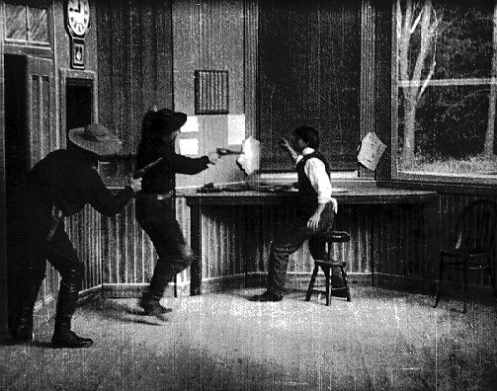
beautiful.  Scenes shot on interior sets will, by contrast, be framed
head-on, creating the impression of a shallow space — this, combined
with the obviously painted sets, mostly using flats, looks decidedly
cheesy to modern eyes.


Why did audiences accept this violent contrast of cinematic practices
within the same film?


One reason, of course, is that the interior sets reminded audiences of
the stage, where painted sets and proscenium framing were familiar. 
They could think of these scenes as filmed stage-plays, which is how
story-based movies were often defined and sold.  The exterior scenes,
on the other hand, reminded viewers of pre-narrative cinema — the
“actualities”, short scenes of picturesque places and real events,
which were the primary content of movies presented as novelty
attractions.
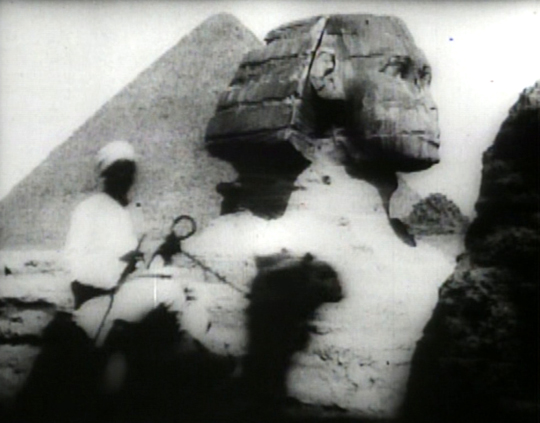
These actualities tended to be agressively “cinematic”,
emphasizing the illusion of spatial depth to show off the magic of
movies — their ability to create the convincing illusion of a real
place on the other side of the screen.

Novelty-attraction actualities were often part of a theatrical
presentation
which featured live performers as part of a variety bill — so viewers
were accustomed to an alternation of cinematic actualities with
theatrical stage-bound scenes.


The narrative structure of early story films was apparently enough to
knit the two types of cinematic practice into an aesthetic whole for
viewers of the time.  Indeed there's a curious Edison film from
around 1904, not part of the regular Edison release schedule, which
shows a
group of people making its way by various means of transport from one
end of Manhattan Island to the other.  There's no connecting narrative
— the shots just seem to be a series of “actualities” linked only by
the presence of the same characters in each sequence.  It's been
suggested by film scholars that these sequences may have been shot as
“entr' acts” for a stage play, showing the play's characters moving
from location to location in the story — something to pass the time
and amuse an audience while the stagehands shifted sets behind the
projected images.


If in such a production you just replaced the scenes on the stage sets
with filmed interiors, shot head-on against painted theatrical
backdrops,
you'd have a pretty fair paradigm for an early narrative film.


Even imagining how such anomalous cinematic approaches could have been
reconciled for viewers within the same film, it's hard not to see the
results as crude.  But such anomalous approaches have almost always
been a part of cinematic practice — and the momentum of narrative has
always been able to reconcile them.
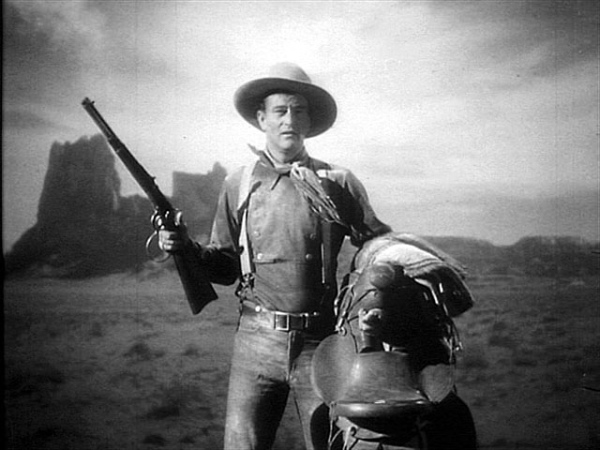
Look at John Ford's Stagecoach
again and see how stunningly photographed images of real locations
alternate with studio work (above) in which sets and back-projections stand in
for exterior locales.  It's objectively weird, aesthetically
inconsistent, but our eyes, accustomed
to back-projections in films of this era, don't read it as such.
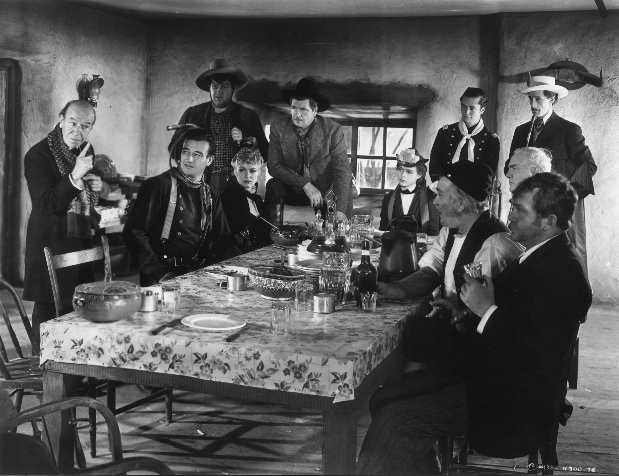


The conventions are always shifting, of course.  The studio-built
interior sets of Stagecoach (above) are fully three-dimensional and
convincing as actual locations — a far cry from Edison's patently
two-dimensional interior sets painted on flats.  But Ford's
back-projection exteriors are convincing only to the degree that we
choose to be
convinced by them, as Edison's audiences chose to be convinced by his
artificial interior sets.

The history of the shift from “theatrical” to fully dimensional interiors in movies would be fascinating to chart.

One of Griffith's main formal concerns in the Biograph years was
developing a way of staging and photographing interiors on sets in
spatially interesting ways, to create a stronger illusion of being in
real rooms — but he never totally abandoned proscenium framing.
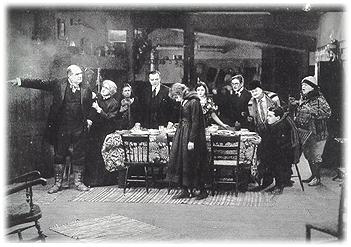
Why?

I'm beginning to think that proscenium framing for interiors continued
to have a degree of glamor for filmmakers throughout the silent era, by
evoking the prestige of the stage.
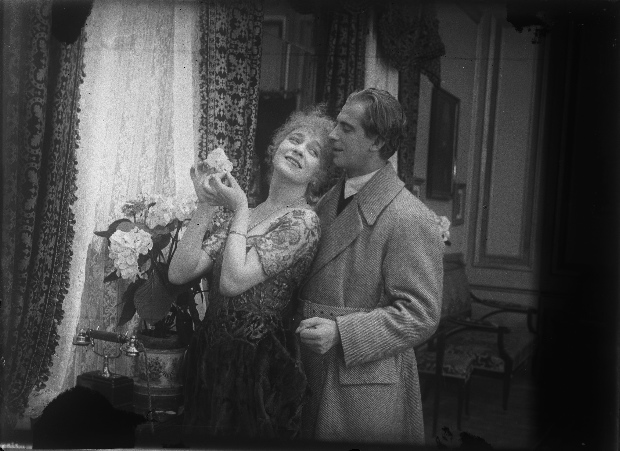
Twice in Erotikon, from
1920 (above), which has elaborately constructed and
convincing interior sets, such a set is introduced by a wide, head-on
proscenium type shot — before Stiller moves in and starts shooting the
room as though it were a practical location, sometimes even shooting in
mirrors that reflect the wall behind the camera, utterly abolishing the
theatrical mode by showing us the “fourth wall”.
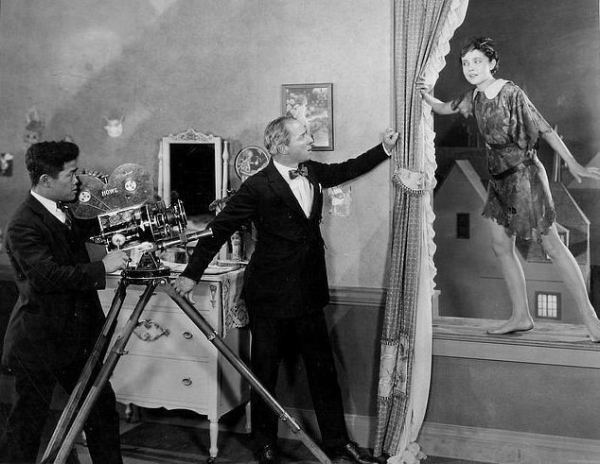
In Peter Pan, Herbert Brenon (above, with camerman James Wong Howe and Betty Bronson) does something similar with the opening sequence
in the nursery — which he starts out showing only from angles that
would have been available to members of an audience seated in front of
his set, but then proceeds to penetrate from angles only available to
performers inside the set.

Both Erotikon and Peter Pan were adaptations of popular stage
plays, and the filmmaker in each case may have wanted to remind viewers
of the film's prestigious theatrical provenance.
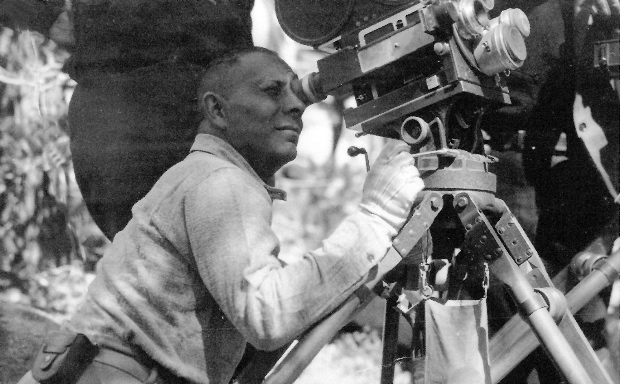
Von Stroheim seems to have been the first film artist to abolish the
theatrical mode for interiors as a matter of basic aesthetic principal,
and he was followed in this approach fairly consistently by Murnau as
well.  From them derive the dynamic spatial interiors of Renoir
and Welles.
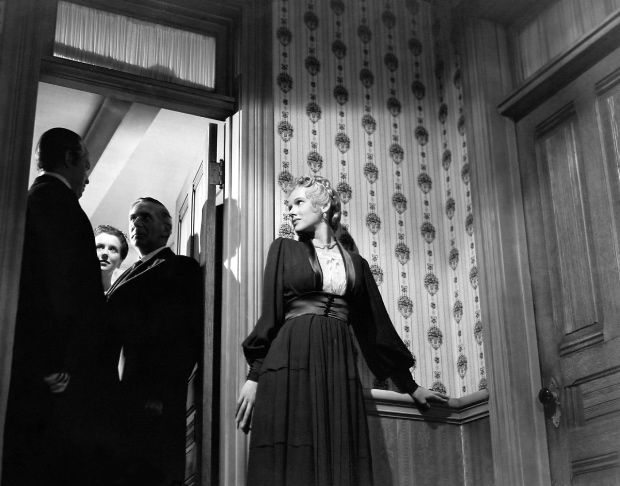
[With thanks to shahn of sixmatinis and the seventh art for a recent post which got me thinking about this subject again.]

OFF THE ROAD

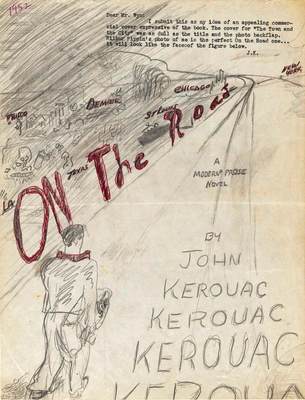
This month marks the 50th anniversary of the publication of Jack Kerouac's On the Road
and the book is getting a lot of attention.  (That's Kerouac's
design for the book's cover above.)  It was certainly an important
book — crystalizing the odd malaise that gripped America after WWII
and presenting an image of the way American youth would react to it, in
increasing numbers, by cutting loose from everything, drifting into a
world of sensuality and drugs, hitting the road in search of . . .
something.  The book's freewheeling, lyrical prose was brilliant
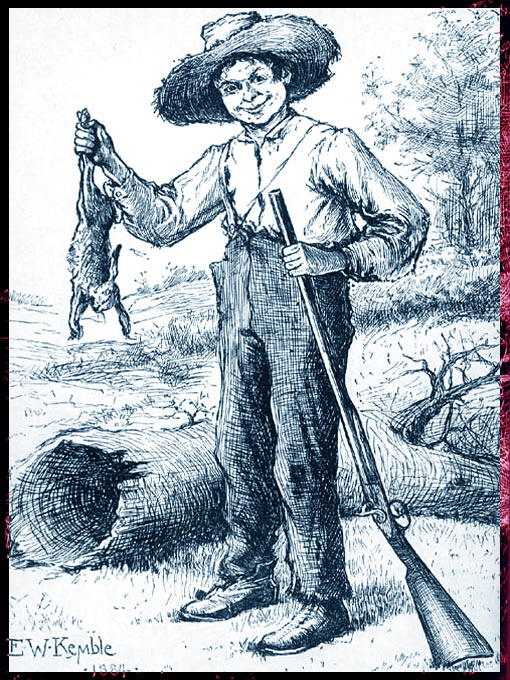
enough to allow one to take it seriously as a work of art, to place it
in the picaresque tradition of Huckleberry Finn.

The moral and spiritual emptiness of On the Road's
protagonists was part of the
book's truth, of course, but that truth, to me, was a thin one, without
any deep humane dimensions — and this is nowhere better revealed than
in
the book's depiction of women.  It's not just that Kerouac's
protagonist's treat them badly, or indifferently, but that they don't
seem to see them as human beings — and, more importantly, that the
author himself doesn't seem to see them as human beings.  This is
quite a different thing from writing women characters badly,
unconvincingly — quite a different thing from ignoring women or even
raging against them for their otherness, as Henry Miller sometimes
did. 
Kerouac simply seems to see women as an existential nullity.

Some women say this doesn't bother them — that the freedom
and exhilaration of the book's spirit is an inspiration to them as
women, however the women in the book are drawn.  I can appreciate
the sense of that — but it doesn't lessen my revulsion at the way the
women in the book are drawn.  It strikes me as revealing a basic
truth about almost all beat fiction and poetry — that once you get
past the attitude, the style, there's very little underneath it, and
what
there is underneath it is often repellent.

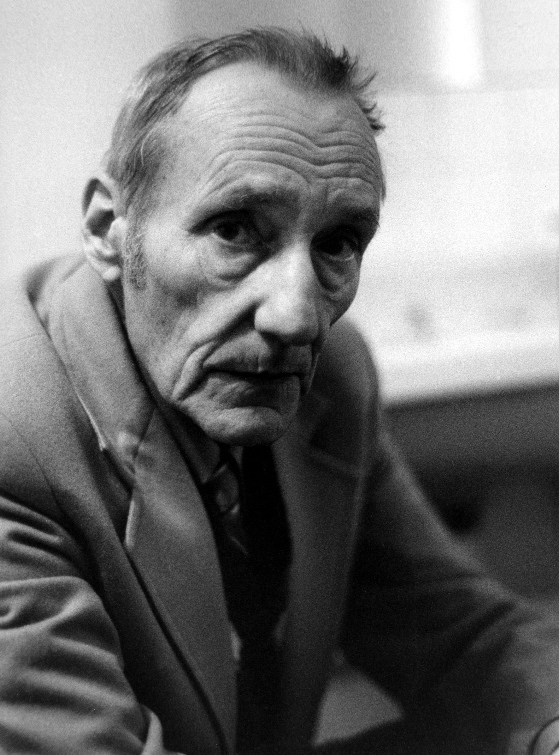
William Burrough's magical, fractured prose, best appreciated in his
recorded readings of it, is invigorating and exciting — but a little
of it goes a long way.  It's like a jazz improvisation on a melody
that the musician has forgotten, or never knew in the first
place.  It's a gesture, an exercise, not an artistic creation.

Bob Dylan was the great inheritor of the beat tradition, but he
grounded his improvisations firmly in the blues and folk traditions —
he was engaged, with a great deal of humility, in a conversation with something beyond himself. 
His early work is marred by some of the same misogyny one finds in the
beats, by images of women that alternate between goddess and destroyer,
with no convincing human presence in either.

But Dylan, unlike the beats, grew as an artist.  He listened to
the culture around him, its roots and moods, and talked back to
it.  His work wasn't just an interior howl, a negation — he was a
rolling stone who could step outside of himself and watch himself roll.

When Kerouac tried that he was appalled by what he saw — or didn't
see.  He ended his life drunk, stoned, in a state of utter decay and
despair.  We can see the roots of that in On the Road.  Kierkegaard said that the precise quality of despair is that it is unaware of itself.  On the Road
is a harrowing portrait of a despair that is unaware of itself — one
its author shared, unawares, with the book's protagonists.

Kerouac's defenders say that only the work matters — not the
life.  But I say that with Kerouac the life is in the work — is
not
transcended in the work.  Which is not to say that the book isn't an
extraordinary thing, with passages of true greatness, depictions of
places and moods that are indelible, an authentic and often moving
voice with it's its own kind of feckless grandeur.  It's just to say that there's something missing from it —
some element of heart and soul and sympathy that is crucial to any great work of art.

ALWAYS CHRISTMAS

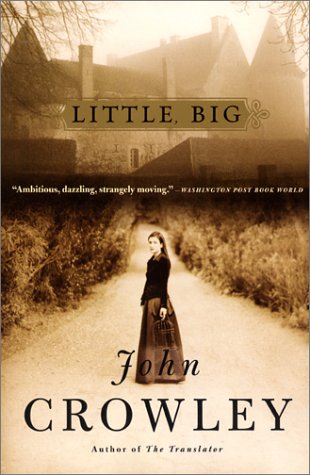
In his fascinating novel Little, Big, John Crowley proposes the idea that time does not actually elapse between
Christmases — that at Christmas we simply flip into another time frame
in which it is always Christmas and always will be.  Then we flip
out of it again.


This is certainly how Christmas
feels, and it ties in with some ideas Octavio Paz proposes in The Labyrinth Of Solitude, his great meditation on Mexican history and the Mexican character.


In the book, Paz discusses the importance of the
fiesta
in Mexican life, as a time when Mexicans cast off their masks, the
barriers they erect against any penetration of their characteristic
solitude, and feel free to commune with others, sometimes socially,
sometimes erotically, sometimes violently.


Paz suggests that
fiestas, and
all ritual celebrations, don't commemorate an event but recreate it —
recreate a transcendent moment when time is dissolved and masks are
discarded.  This of course ties in with the theological
proposition that Jesus is actually present in the wine and the host at
Christian communion services — and more broadly with Kierkegaard's notion that
Christian believers are literally contemporaries of Christ.


And of course it explains why time does not pass between Christmases.